
Are You a Cocooner?
A look at people who prefer to watch the latest movies at home

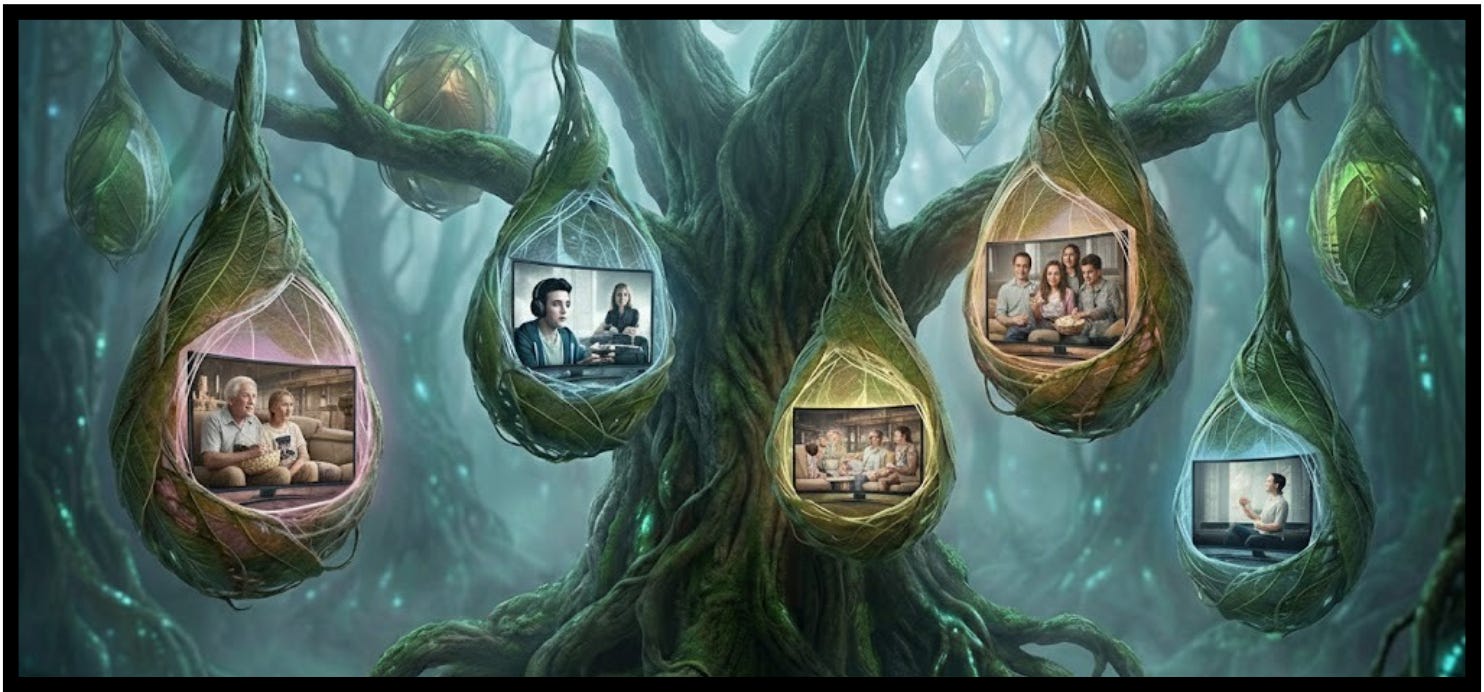
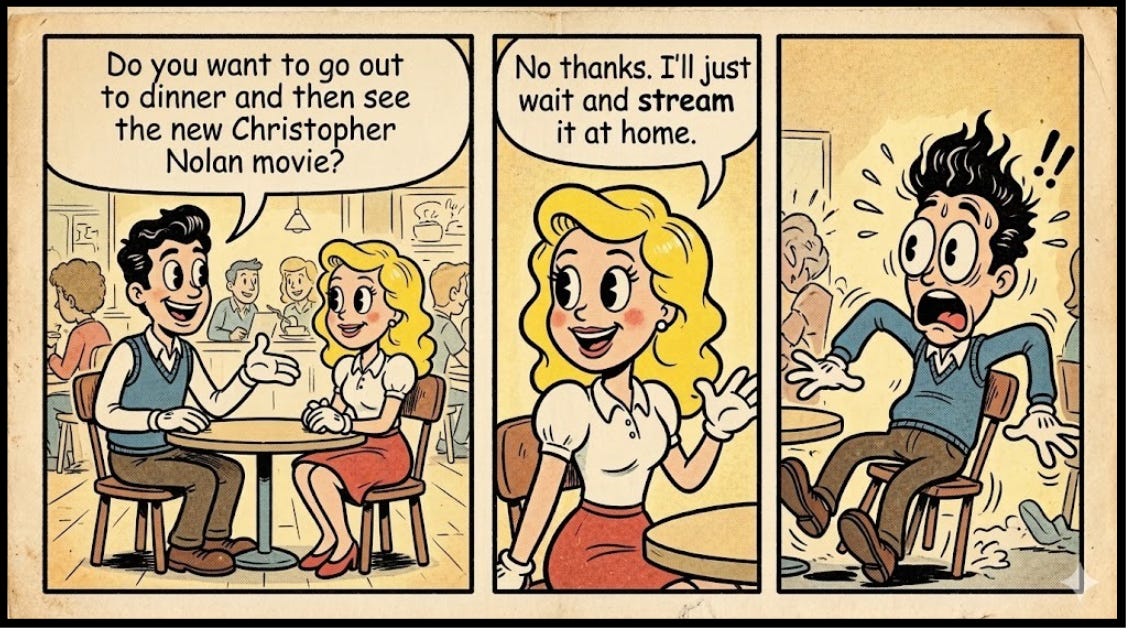
Recently, when it looked like Netflix was going to succeed in its quest to buy Warner Brothers, a friend of mine was concerned it would mean the end of theatrical distribution for movies. To express his frustration, he wrote a facebook post about the disdain he had for the deal. He blamed the forthcoming sale on a specific group of people by using a term I had never heard of before:
Cocooners.
So what is a cocooner?
According to my friend, it’s someone who doesn’t go see new movies in theaters but prefers to wait and stream them at home. He specifically blames seniors (those of us over 65, like myself) for this practice, stating that our age group does it the most often.
But is that really true?
After doing some digging around, I discovered that statistics show that seventy-five percent of all adults over 21 have streamed a recently released movie in the past year instead of watching it in a theater (APNORC, August 2025).
In addition, 56% of Americans would rather pay to watch a newly released movie by streaming it at home, while only 44% prefer to go to a movie in a theater (Marist Poll, July 2025).
Interestingly, only 35% of those surveyed said they enjoyed both seeing new movies in theaters and streaming new movies at home equally (MX8 Labs, March 2025).
Using the surveys above, I broke down theater attendance by age groups. Here are the results:
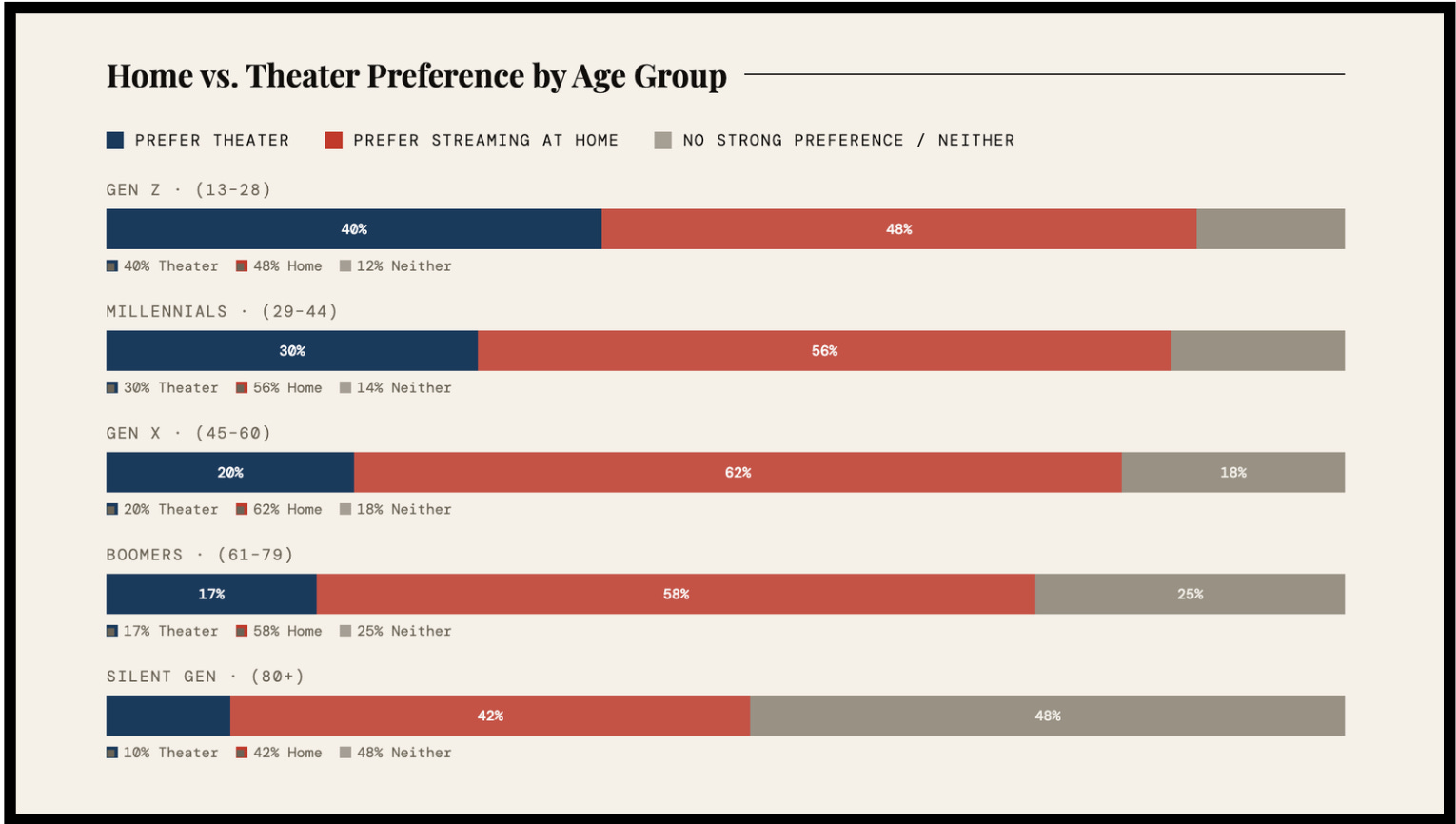
Gen Z ( ages 13–28) is puzzling because they’re the age group most likely to prefer streaming (48%), but they’re also the only age group whose theater attendance is actually growing. Their theatrical attendance is up to 20% per year and they watch movies in theaters slightly more than six times a year. They also tend to be choosey about which movies they see in theaters, but when they go, they go often and pay more in ticket prices to see films in IMAX.
Millennials (ages 29–44), believe it or not, are becoming cocooners because 56% of this age group prefers streaming movies at home, and only 30% of this age group prefers to see movies in theaters. In addition, their theater visits have dropped to about three times per year.
Gen X (ages 45–60) are actually the largest age group of cocooners (and not boomers like me) because 62% of this age group prefers to watch movies at home. According to the surveys cited above, only 20% of genxers prefer to see new movies at the theater. This means they only go to theaters once or twice a year.
Boomers (ages 61–79), on average only go to one movie or less a year. In fact, only 17% of this age group prefers to see new movies in theaters, while 58% of them would rather stream new films at home.
Silent Generation (80+). Given their age and perhaps other health issues, only 10% of this age group sees new movies in theaters while 42 percent of them prefer to watch movies at home. In addition, nearly half of this age group expresses no preference for watching movies in either format, which means they rarely watch movies at all.
In short, today, many people in every age group (including Gen Z) prefer streaming new movies at home instead of watching them in a theater.
Why?
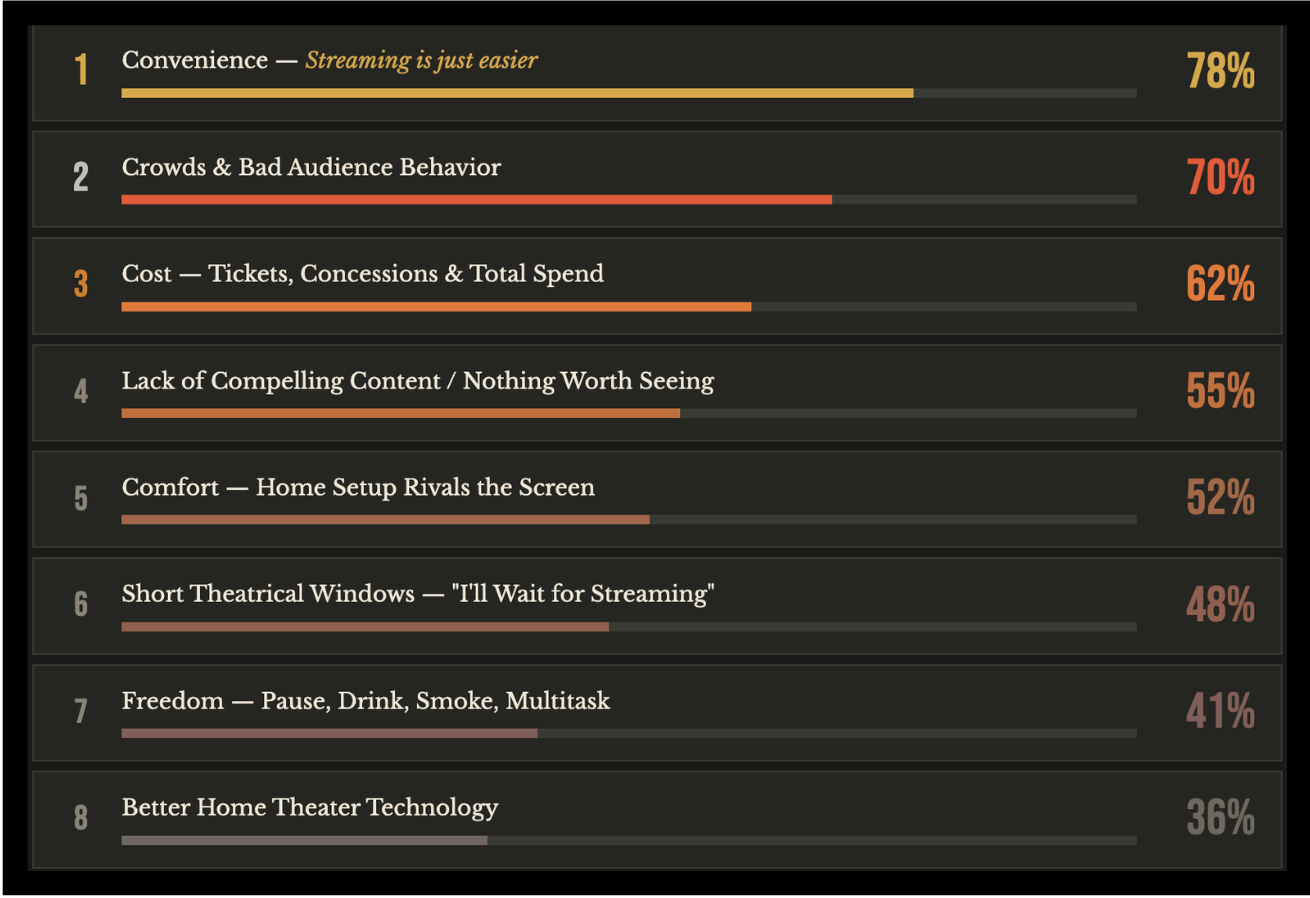
According to the website, The Numbers, convenience was the top factor for streaming movies at home, cited by 78% of surveyed viewers of all ages, and rising to 90% among those aged 55–64.
With streaming, all people have to do is press play on their remote control.
Staying home and watching new movies in the comfort of their living room allows people to choose when they’ll watch a film instead of following the schedule at their local multiplex.
85% of college-educated viewers chose convenience as the main reason they avoid seeing movies in theaters. For people like myself who live in the midwest, that number rose to 86%. (Maybe that’s because of all the bad weather we have to deal with here in Nebraska). And, for people between the ages of 55-64 years old, that number rose to 90%.
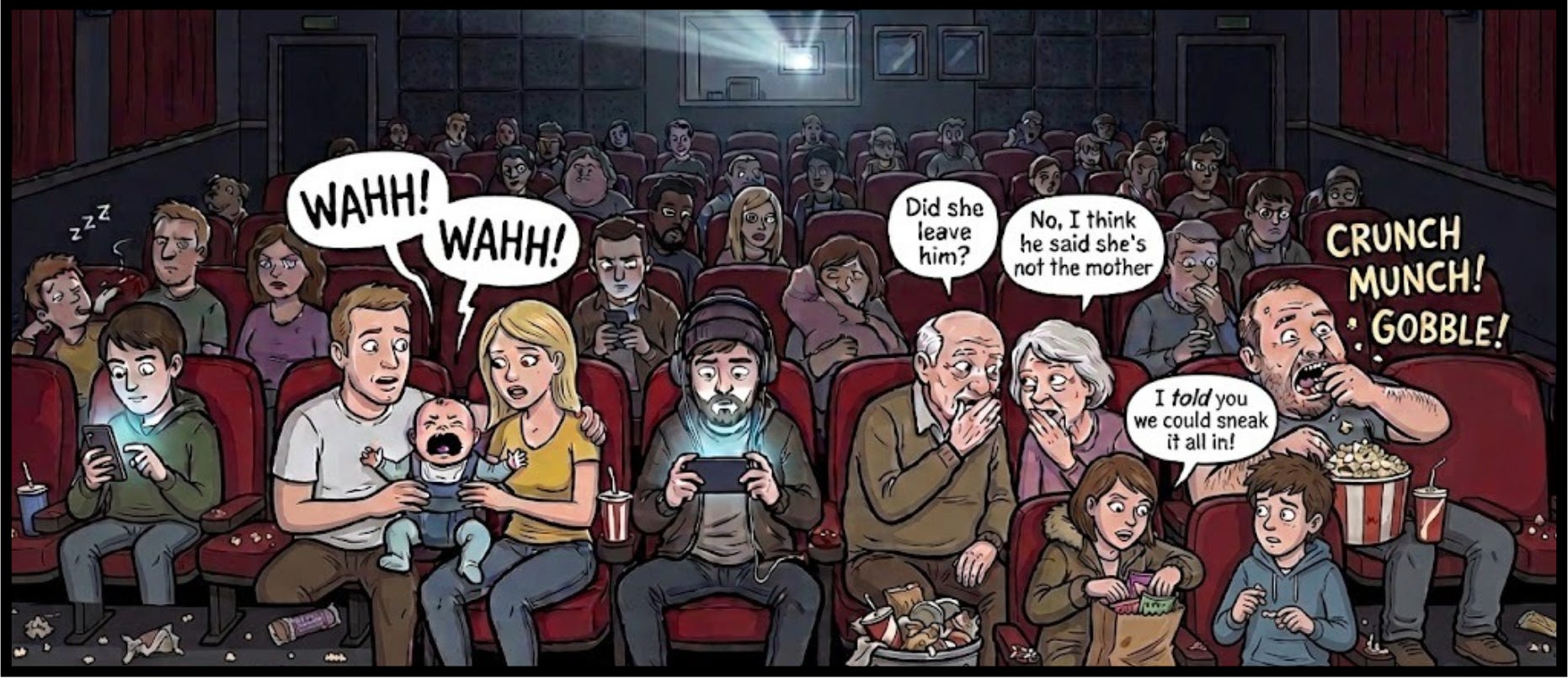
Avoiding crowds and disruptive/noisy people was cited by 70% of total viewers who participated in a survey conducted by Variety. That number rose to 81% of people over 65 and 87% for those living in the Western U.S. Talking, phone use, coughing, crying babies and other types of disruptive behavior can all be avoided by staying home, although I wonder if those things also happen anyway when families watch movies together.
Cost savings ranked third, noted by 62% of all respondents in the survey conducted by The Numbers. In fact, from the responses in this survey, only 1 in 10 Americans earning under $50k a year still prefer to see new movies in theaters.
With tickets averaging $12.00-$15.00 or higher (not to mention the high cost of concessions), a family of four could easily spend more than $60.00 on tickets and concessions. Of course, that price increases if they live in larger, more expensive cities.
In comparison, it’s now possible to rent new films online for $15.00 or less, which is basically the cost of only one movie ticket. For new movies streaming on platforms like Netflix or HBOMAX, the cost per movie is even lower, depending on the subscription.
For many Americans, another reason to avoid going to see new movies in theaters is because they feel there is nothing worth seeing.

Over half of respondents to a poll by IndieWire cited a lack of interest in what’s being shown as their biggest reason for avoiding theaters. I guess Bruce Springsteen’s classic song, “57 Channels (and Nothin’ On),” doesn’t apply to streaming platforms?
And, according to TheWrap, even though the nation’s theater chains have spent a fortune installing new seats that are the equivalent of La-Z-Boy rocking recliners, 52% of Americans say movie theaters can’t compete with the comfort of their living room couch and 75” widescreen television.
Respondents to this survey also said the ability to pause a film to go to the bathroom or out to the kitchen to get snacks is extremely or very important to their movie-watching decision.
Another factor affecting whether movie fans see a movie at home or in the theater are the shortened theatrical windows.
Before the covid pandemic, movies would play in theaters for a minimum of 90 days. Now, it’s only 30-45 days at most. With films hitting streaming channels just a month after they’ve been in theaters, Deadline reports that 48% of the people they surveyed said there’s less reason to go see them at their local movie theater.
Also, 41% of movie watchers stay home so they have the flexibility to drink alcohol, smoke, vape, or multi-task during a film, according to TheWrap. For younger viewers, especially members of Gen Z, that number rises to 52% compared to just 29% of Boomers.
Finally, according to a survey by Octane Seating, 36% of Americans now feel their home theater set up offers a comparable, or even superior, visual and audio experience compared to their local multiplex, especially when compared to non-premium IMAX screens.
Octane Seating also notes that sales of high end home theater equipment have grown by 32% since 2023. 4K TVs, Dolby Atmos sound systems, and smart projectors have dramatically narrowed the quality gap that once made theaters feel special and unique.
So, where do I fit in?
Going back through my Letterboxd diary of films I watched in 2025, I only saw 7 films in movie theaters (I saw twice as many in theaters back in 2024). I also watched over 50 films on streaming or on blu-ray/4k, and although I didn’t log them, I also watched many of my favorite films over and over throughout the year (I usually watch 2001: A Space Odyssey, All That Jazz, and Singin’ In The Rain at least once a month).
Suddenly, I realize I’ve more-or-less become a cocooner.
How did this happen?
As a kid in the 60s and later a teenager in the 70s, going to the movies was always a special event. Theaters back then only had one screen, usually 50-60 feet wide and 30 feet tall. Some of these theaters were former movie palaces built in the 1930s and were falling apart, but many of the theaters I frequented back then were built in the early to mid-60s and had a wonderful mid-century look to them.
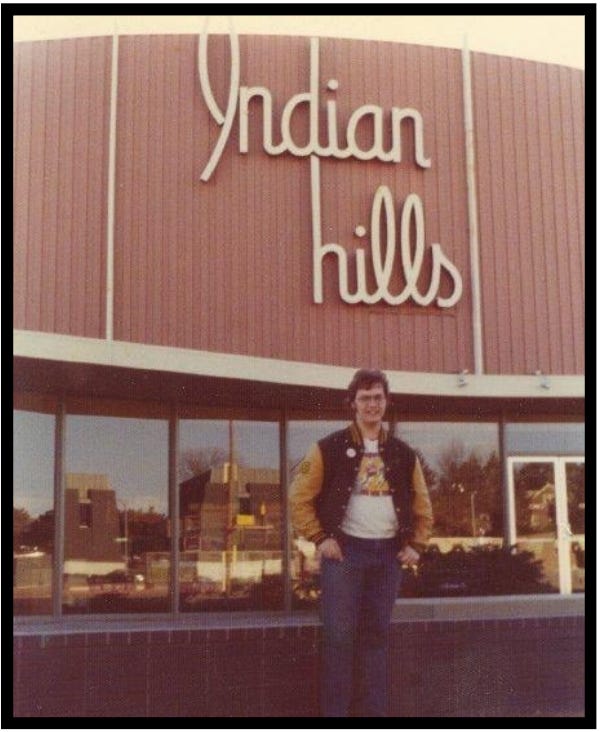
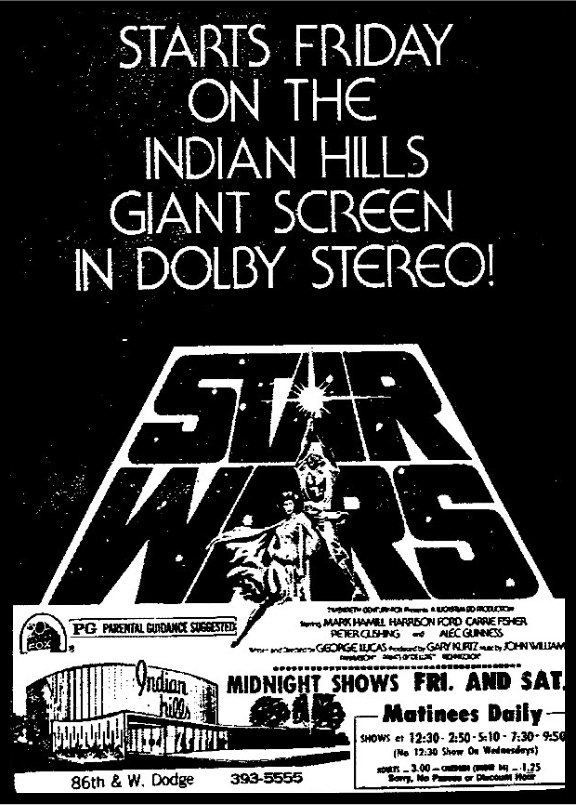
This is especially true for my favorite movie theater, The Indian Hills.
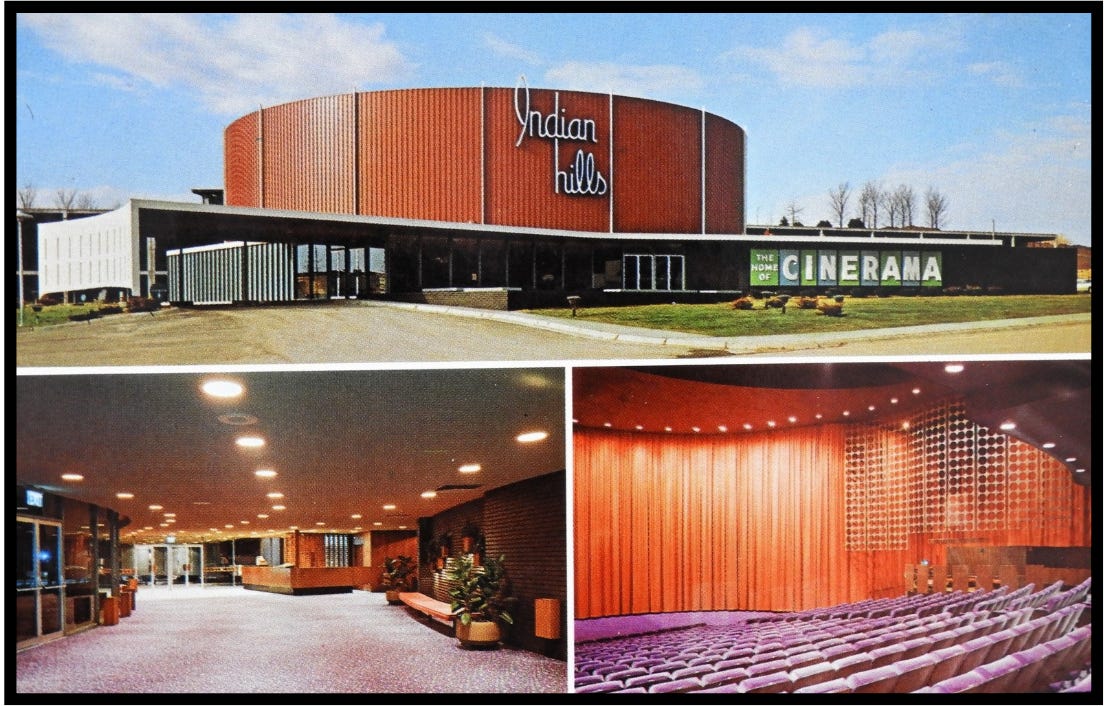
The Indian Hills was one of three round “hatbox” theaters designed and built by a company called Cooper for Cinerama. (The other two Cooper hatbox theaters were located in Denver and Minneapolis). It could seat slightly over 800 patrons and featured a large curved screen that was 105 feet wide and 35 feet tall. It also had a 6 track sound system and an acoustical ceiling, so the sound in this theater was amazing.
I saw my first film at The Indian Hills in 1967 when my parents took me to see Grand Prix. To see a movie there back then, you had to make reservations in advance, and you were expected to wear nice clothes. The movies they showed during this time were in the roadshow format, so every movie had an overture, intermission, and an Entr’acte before the second half of the film began. You could also buy a souvenir program for $1.00 too.
It was like going to a Broadway show.

I vividly remember the experience of seeing films like Krakatoa: East of Java, Ice Station Zebra, and later when they were re-released in the 70s, Lawrence Of Arabia, Dr. Zhivago, and 2001: A Space Odyssey, which quickly became my all-time favorite film. Experiencing Kubrick’s masterpiece on a 105 foot curved screen with state of the six track stereo was truly “the ultimate trip.”
In the late 70s, The Indian Hills and other large single screen theaters showed movies in 70mm and 6 track stereo, such as the original Star Wars, Close Encounters of The Third Kind, Apocalypse Now, and Ridley Scott’s Alien. Back then, it wasn’t uncommon for me to see 2-3 movies every week.
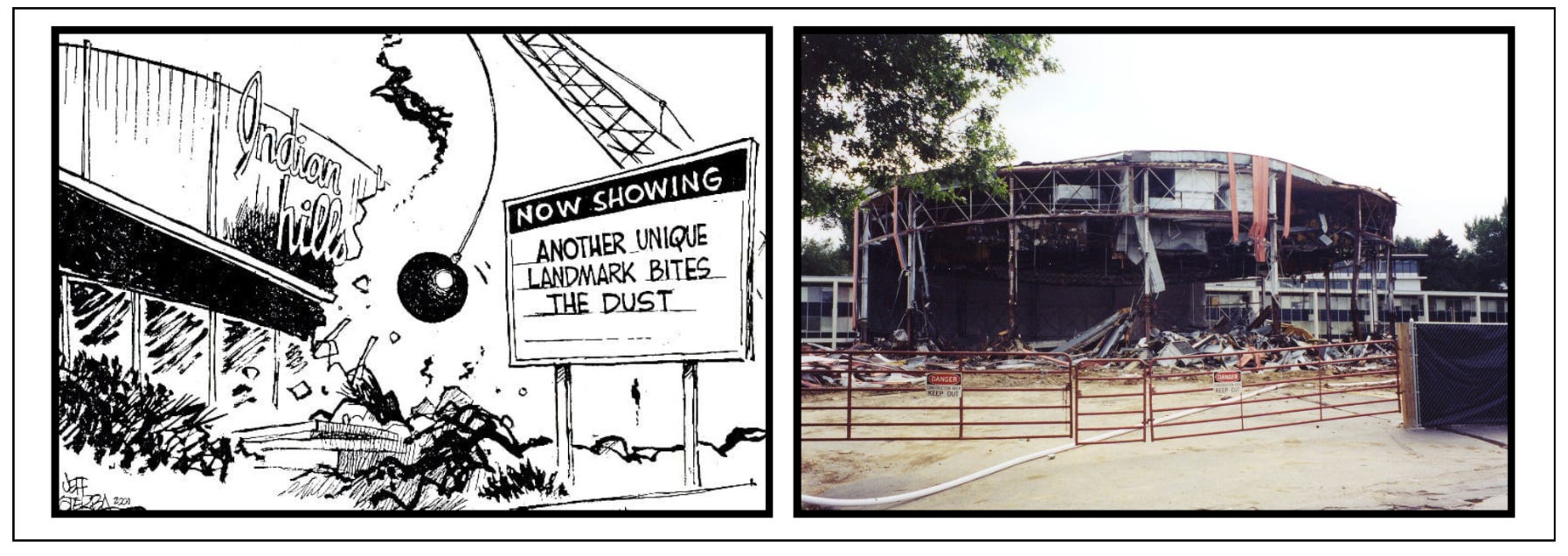
Sadly, by the late 70s and early 80s, single screen theaters throughout the country were eventually twined, turned into multiplexes with three or four screens, or demolished.
For the Cooper hatbox theaters, other auditoriums were added around the main theaters, which worked for a while, but when 15 to 24 screen megaplexes began being built, these theaters couldn’t compete, so they closed and were torn down for big box stores or turned into parking lots. (You can see my documentary about the effort to save The Indian Hills and other historic theaters here).
So, for those of us who grew up in the 60’s and 70s, (during what I think was the last golden age of movie theaters), going to the movies today can be a painful experience.
First, unless you live in a town that has preserved some of its historic theaters like The Heights in Minneapolis or The Music Box in Chicago, today’s multiplexes have been built with a cookie-cutter design that frequently reminds me of a fast food restaurant or shopping mall.
Usually, the lobbies are huge, but the auditoriums and screens are quite small, and again, unless it’s a historic theater, there are no curtains, which I think takes away the mystery of the experience.
Today, I live in Lincoln, Nebraska, which is a medium sized college town with four multiplexes that are all owned by the same company.
All of the city’s historic theaters are gone except for two; one was gutted and turned into a rock music club, and the other one is now only used for occasional music performances and stand-up comedy shows.
We don’t have any IMAX theaters or Alamo Drafthouses in my town. There aren’t any AMC or Regal theaters here either. However, there is a theater at the state university downtown, (which also doubles as a classroom), but by the time they get the top arthouse movies, I’ve usually seen them already on Mubi or The Criterion Channel.
Instead, all four of our city’s multiplexes are owned by Marcus Theatres, and they all show the same four or five mainstream movies (no indie or foreign films allowed!) at each location. So if you’re like me and want to see something other than Scream 7, Wuthering Heights, Hoppers, or Bride! you’re out of luck.
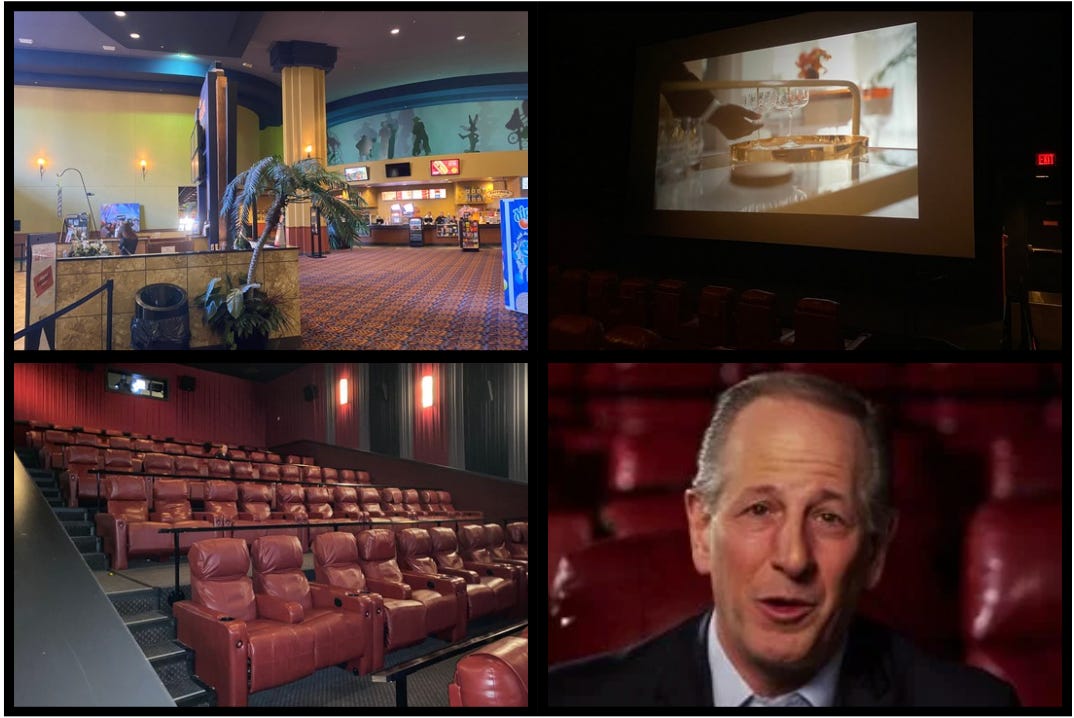
Unfortunately, going to a Marcus theater means you’re subjected to an endless amount of ads and public service announcements (often repeated more than once) until showtime.
Then, you have to endure even more ads and an overly long assortment of trailers (almost always for movies you don’t want to see). And then after 30 or 40 minutes of all this, you still have to watch the company’s owner, Greg Marcus, share a public service message and thank you for coming to his theater.
Sadly, these Marcus multiplexes, like most new theaters today, are now almost indistinguishable from our living rooms.
To me, the movie screens in these multiplexes are like giant televisions filled with flashy commercials trying to sell us things we don’t want or need. Since all movies are now digitally projected, once the movie actually begins, it’s really no different than pressing “play” on your remote control (only at a modern multiplex it’s automated on the theater’s hard drive).
In addition, we sit in thick leather recliners, and if you go to a theater like The Alamo Drafthouse, food and drink will be brought directly to your seat, which has a small table in front of it, just like the snack tray in front of your La-Z-Boy recliner at home.
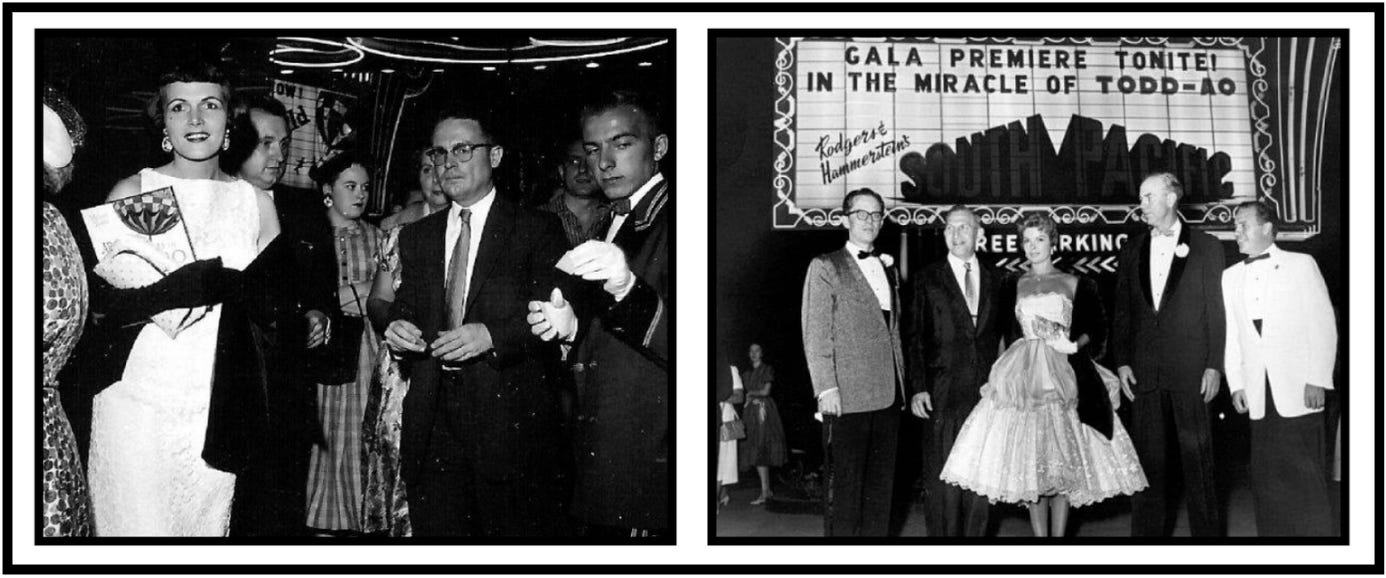
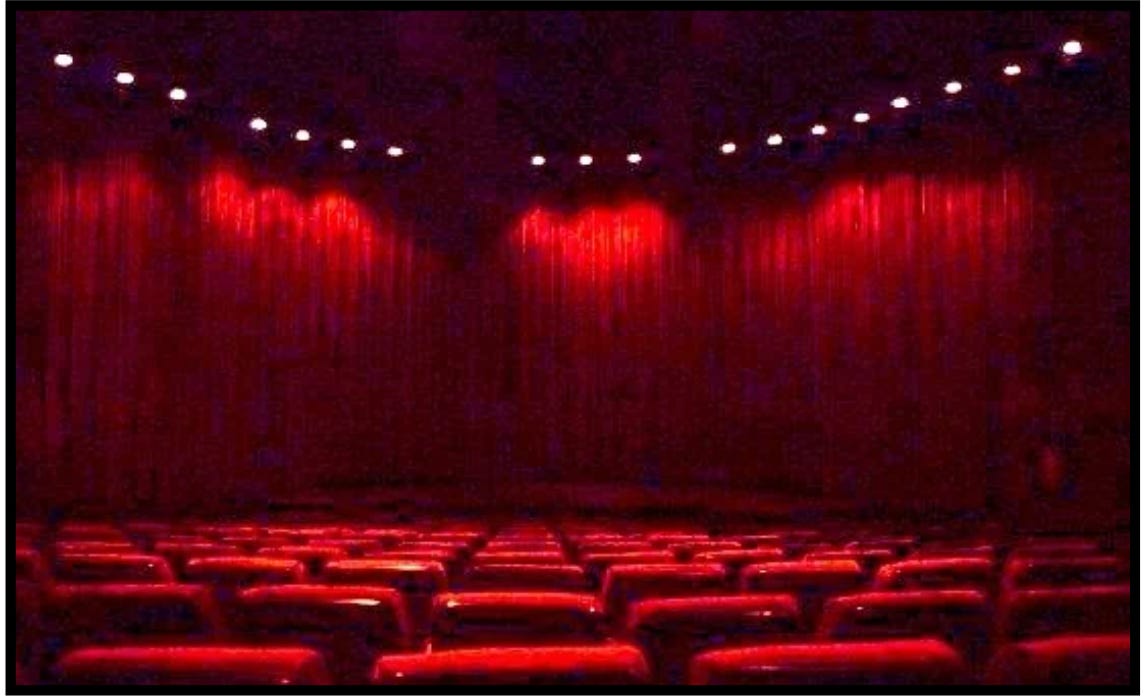
I miss the allure of going to a movie theater where you’re required to wear nice clothes. I miss the sense of wonder as the lights dim, and the curtains open to reveal a hundred foot screen.
I miss the sound of film whirring through the projector from the back of the auditorium.
The famous movie theater mogul, Marcus Loew, once said, “people buy tickets to theaters, not movies.” I wonder what he would think of our theaters today.
Even so, I don’t want the theatrical experience to die, so now that spring is coming and the weather is about to get warm again (we have brutal winters here in Nebraska), I’m going to make more of an effort to go see movies in theaters, even if I have to drive back to my hometown of Omaha, an hour away, in order to catch the films I want to see.
But I’m still going to miss the sight of curtains opening and the sound of film whirring through the projector.
If you enjoyed this post, check out these other articles:


For me it's mostly about the kinds of films I want to see. Most are independent, international, and documentaries which are not typically screened at multiplexes these days. I also prefer the comfort of being at home and the lack of commercials before I watch something! It also helps that as a critic I do get a lot of screening links to be viewed at home!
What a tragedy. I'm glad you got to see your favourite film in your favourite theatre. It's moments like those that stay with us cinephiles for a lifetime.