
Five Masterpieces, One Oscar: Was the Academy Wrong in 1975?
A look back at the 48th Academy Awards race for Best Picture

1975 was an amazing year for American movies. At the Oscars, the five nominees for Best Picture of 1975 (in alphabetical order) were: Barry Lyndon, Dog Day Afternoon, Jaws, Nashville, and One Flew Over the Cuckoo’s Nest.
These were all great films. Each one was directed by an auteur of American cinema: Stanley Kubrick, Sidney Lumet, Steven Spielberg, Robert Altman, and Milos Forman.
I was in high school back then and already a huge film nerd. On the night of the Academy Awards, I sat glued to the television in breathless anticipation, waiting to see which movie would be crowned the best of the year.
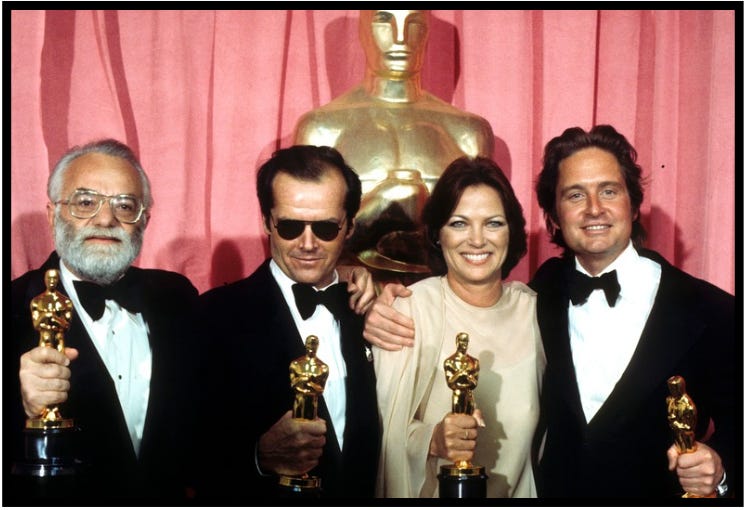
As you might know, One Flew Over the Cuckoo’s Nest swept the awards show, winning a total of 5 Oscars, including Best Picture, Best Director (Milos Forman), Best Actor (Jack Nicholson), Best Actress (Louise Fletcher), and Best Adapted Screenplay (Lawrence Hauben and Bo Goldman).
It was only the second time in film history that a single film won Oscars in every major category.
Did the Academy get it right? Or did One Flew Over the Cuckoo’s Nest simply win because it was the easiest film to love, overshadowing four films that were arguably more daring, more original, and more lasting?
Let’s take another look.
Barry Lyndon: Kubrick’s Candlelight Dream
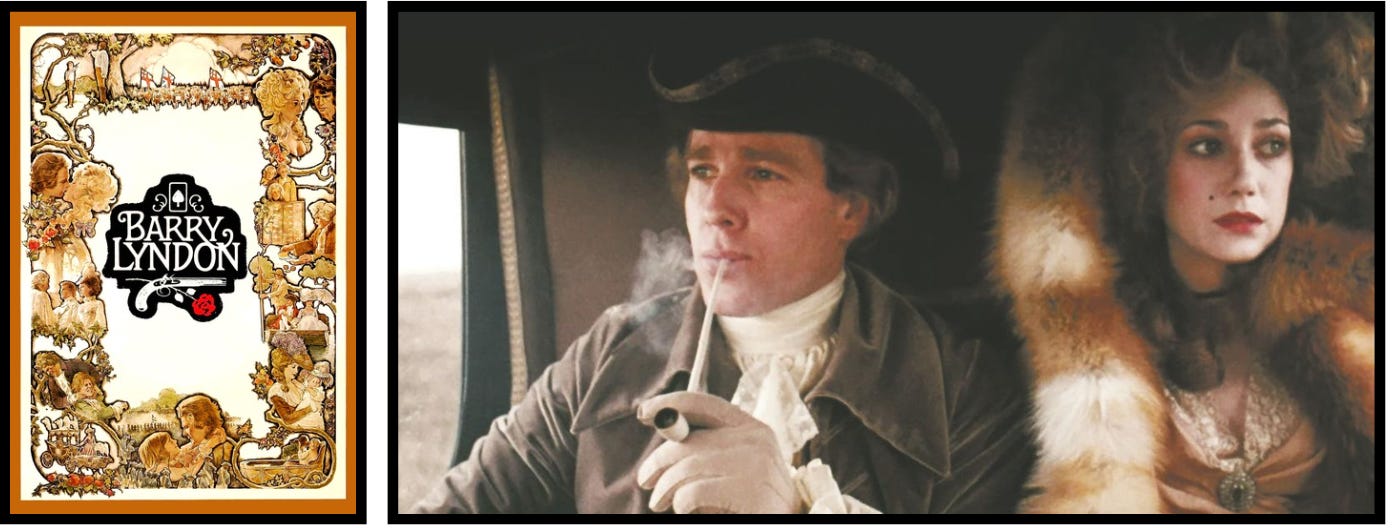
Stanley Kubrick’s adaptation of William Makepeace Thackeray’s 1844 novel focuses on the rise and fall of Redmond Barry (Ryan O’Neal), an Irish rogue from a poor family who schemes his way through eighteenth century Europe. Barry goes from being a runaway to becoming a soldier, a gambler, a fortune hunter, until he eventually seduces and marries a wealthy widow. This allows Barry to acquire both a title and the respected name of Lyndon.
However, Barry’s attempts to win over British high society fail and eventually everything falls apart, leaving Barry back to where he started at the lower rungs of the social class.
At 185 minutes, Barry Lyndon is Kubrick’s longest film, and his most elegant. It’s also Kubrick’s most alienating film. The famous cinematography by John Alcott, (with interiors mostly shot by candlelight using specially modified NASA lenses), makes every frame look like a classic painting.
Barry Lyndon is a film of extraordinary visual beauty that deliberately withholds the emotional warmth audiences usually expect in movies.
However, this coldness is deliberate because Barry Lyndon is a film about the emptiness at the center of social ambition, the way the pursuit of status requires the sacrifice of everything genuine in a human being. The characters are beautiful but hollow. The landscapes dwarf them. The narration is ironic and detached.
It’s a deliberately cold film and in 1975 audiences hated it, commonly referring to the movie as “Boring Lyndon.”
Why It Was Nominated:
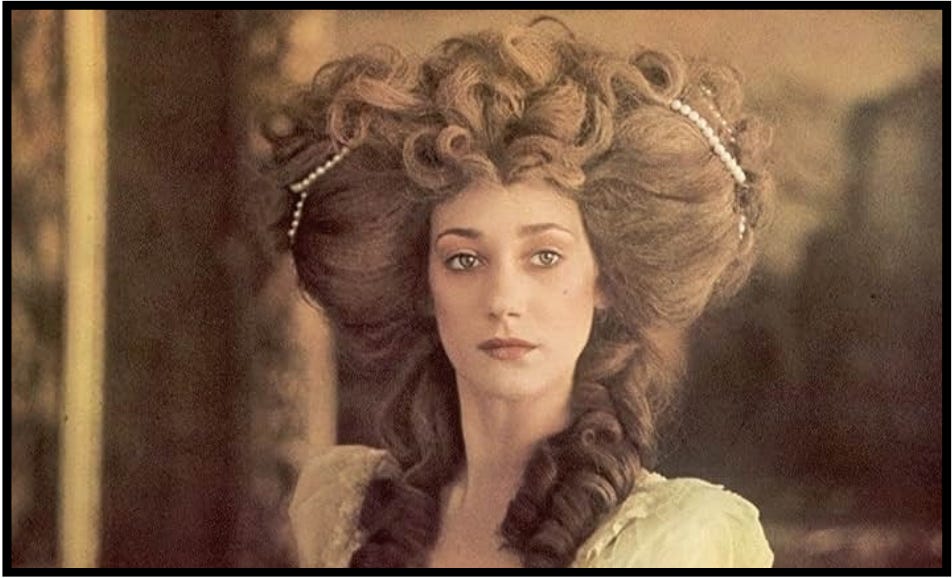
The academy recognized the technical achievements Kubrick had accomplished in this film, even though the film alienated most moviegoers. The film ended up winning four Oscars: Cinematography, Costume Design, Art Direction, and Adapted Score.
No other film made in 1975 or years later looks as beautiful as Barry Lyndon.
Its nomination for Best Picture reflected the Academy’s acknowledgment that Kubrick’s work could not be ignored. However, the fact that the Academy didn’t bother to nominate Kubrick for best director for his work on Barry Lyndon is still rather shocking.
Why Some Thought It Should Win:
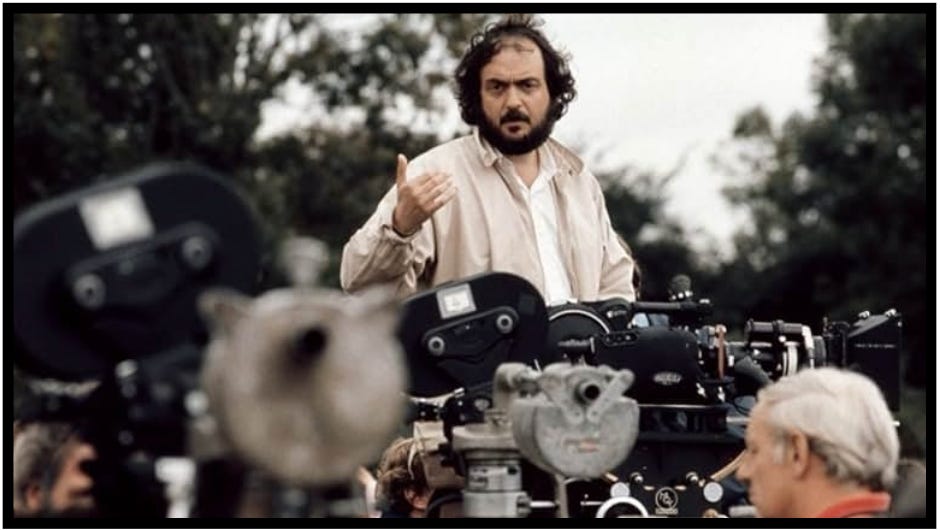
Although many people were turned off by the film, Barry Lyndon still had its supporters, including a small but influential group of film critics and cinephiles.
They argued that Barry Lyndon was the most formally accomplished film of 1975 because Kubrick had solved a set of filmmaking problems, such as shooting by candlelight, capturing the visual world of eighteenth-century paintings in motion, and maintaining an ironic distance from its main character. This is something no other filmmaker attempted to do that year.
Over time, Barry Lyndon’s reputation has grown. The film now regularly appears on the lists of the greatest films ever made, and critics who dismissed it at the time of its release have often changed their minds about the film.
Why It Really Should Have Won:
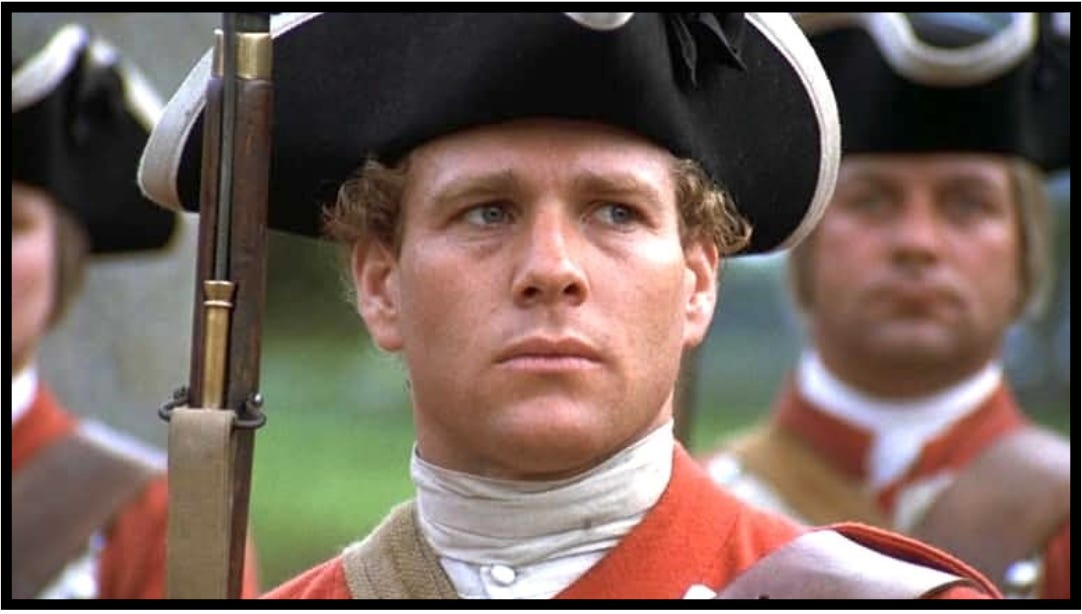
I think Barry Lyndon is the only one of the nominees for best picture that has fully transcended the time in which it was made. It’s not a film about what was happening in America in 1975 like Nashville, One Flew Over The Cuckoo’s Nest, and Dog Day Afternoon. And, it’s certainly not a film that defined America’s pop culture that year like Jaws.
Barry Lyndon is a film that exists outside of time; it’s a true work of art.
I first saw Barry Lyndon in the spring of 1975 at a theater located in a local shopping mall. While the rest of the family was out buying clothes and toys, I was mesmerized by Kubrick’s vision of the past. It’s still one of my all-time favorite films.
Dog Day Afternoon: Lumet’s Heist Gone Wrong
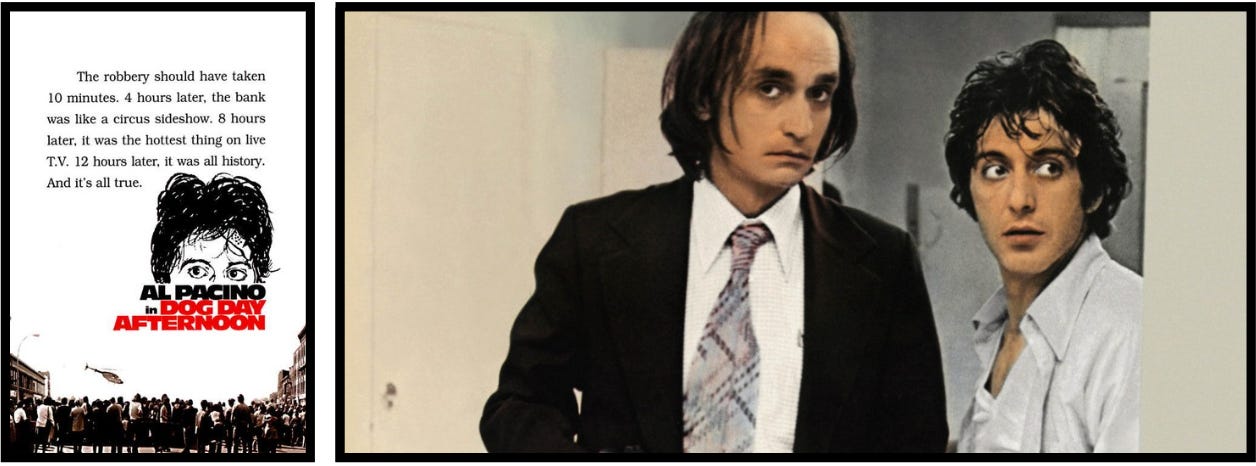
Based on true events from 1972, Dog Day Afternoon follows Sonny Wortzik (Al Pacino) and Sal Naturale (John Cazale), who are two amateurs attempting to rob a Brooklyn bank. Almost immediately, they botch the robbery and eventually find themselves in a standoff with the police that lasts all afternoon and into the evening.
Soon, television cameras arrive and the whole scene turns into a media circus.
As the hours stretch on with no resolution in sight, Sonny’s motivations are gradually revealed: he needed the money to pay for his partner Leon’s (Chris Sarandon) gender reassignment surgery. The film is simultaneously a thriller, a tragicomedy, a love story, and a testament of a specific moment in New York City’s decline as a major city.
Shooting the film on location in Brooklyn, Sidney Lumet directed the picture with a sense of urgency and with a deep respect for his actors. Like almost all of Lumet’s films, he was able to get great performances from the entire cast.
I believe that Al Pacino gives one of the best performances of his career as Sonny. He’s manic, funny, heartbreaking, and magnetic; often, all at the same time.
The film is a portrait of a man who becomes an accidental hero to a crowd of onlookers. It’s a character study of a man forced to live out his most desperate moments in public.
To me, the film is a masterpiece because it focuses on the way Sonny falls apart as he tries to manage the growing chaos in the bank that eventually expands to include the media, the police, and the crowd of onlookers.
And, as he tries to hold everything together, Sonny’s desperation becomes increasingly obvious and public, which makes his eventual downfall even more tragic.
Why It Was Nominated:
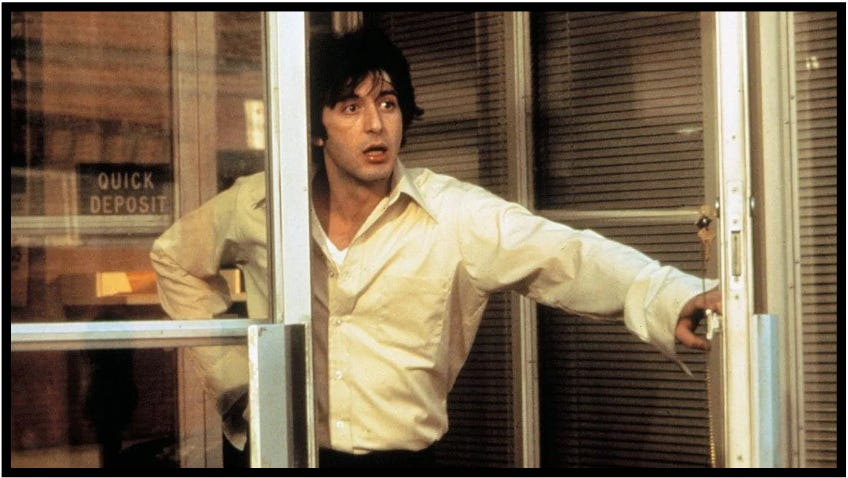
Dog Day Afternoon was hit both with critics and at the box-office. Its success was probably due to the fact that it’s about real people, real failure, and the way it didn’t hesitate to show what New York was really like at the time.
Its focus on the vulnerability of its characters, especially Al Pacino’s Sonny and John Cazale’s Sal, give the film a sense of immediacy and emotional truth.
In addition to the strong directing and performances, the film’s screenplay by Frank Pierson was highly praised and won the Academy Award for best original screenplay, which became the only award Dog Day Afternoon earned at the Oscars that year.
Why Some Thought It Should Win:
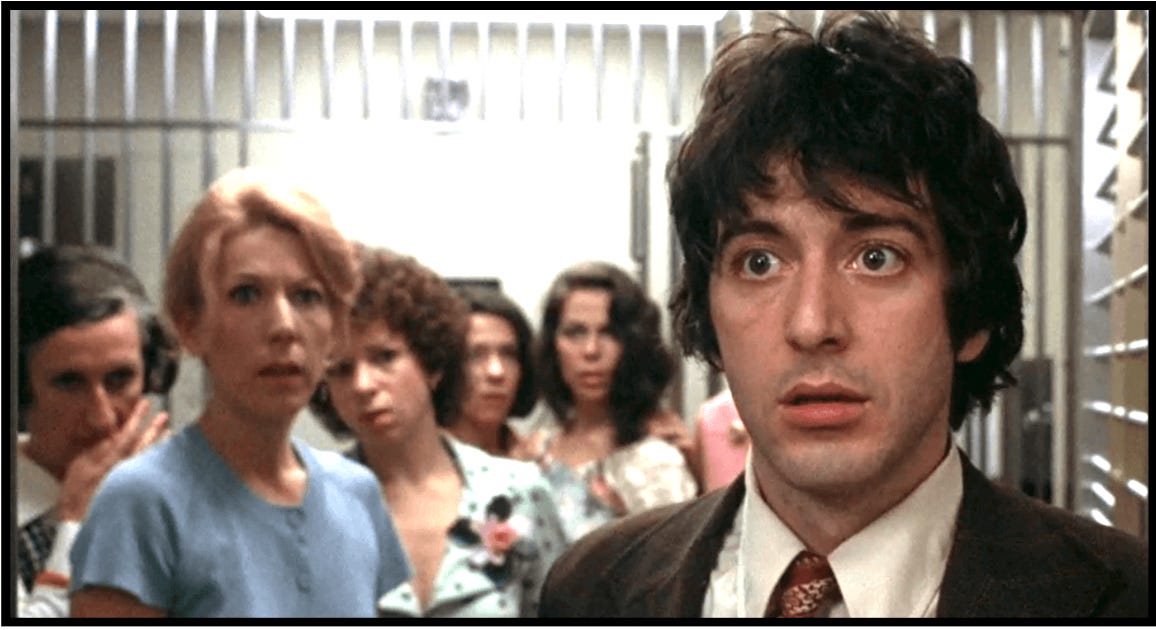
No other film among the group of nominees for best picture in 1975 focused on the humanity of its characters like Dog Day Afternoon. The film was one of the first major Hollywood movies to treat homosexuality and gender identity with genuine sympathy and complexity, building on the ground-breaking success of Midnight Cowboy, which won the Oscar for best picture six years earlier in 1969.
In addition, Dog Day Afternoon asks moviegoers to care about a man who is breaking the law, and it extends empathy to all of its characters: not just Sonny and Sal, but also to the hostages and the cops without being sentimental.
For people who believe in the power of cinema to bring about social change and expand empathy to others who may not always deserve it, Dog Day Afternoon was the best film of the year.
Why It Really Should Have Won:
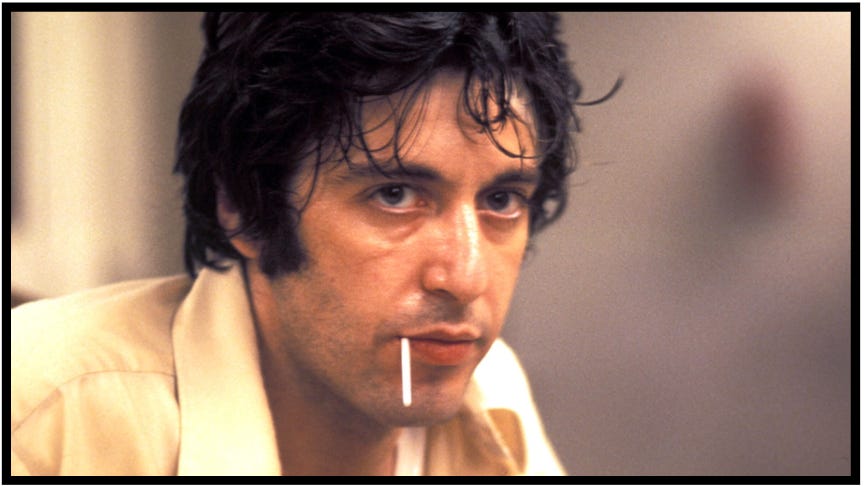
Looking back at Dog Day Afternoon now, one can make a historical argument for why the film should’ve won the Oscar for best picture in 1975.
Back then it was a radical decision for Warner Brothers to finance and release a film with a gay protagonist and treat him with dignity and deserving of love. It also told their story to a mainstream audience without pulling any punches or making any apologies.
The film was made at a moment when gay Americans were beginning to build a visible political and social identity that began with the Stonewall riots.
In addition, it gave Al Pacino, fresh off the two Godfather movies, one of the best roles of his career. I still find it puzzling that the film didn’t win any awards for its acting and directing.
Jaws: The Summer Blockbuster Is Born
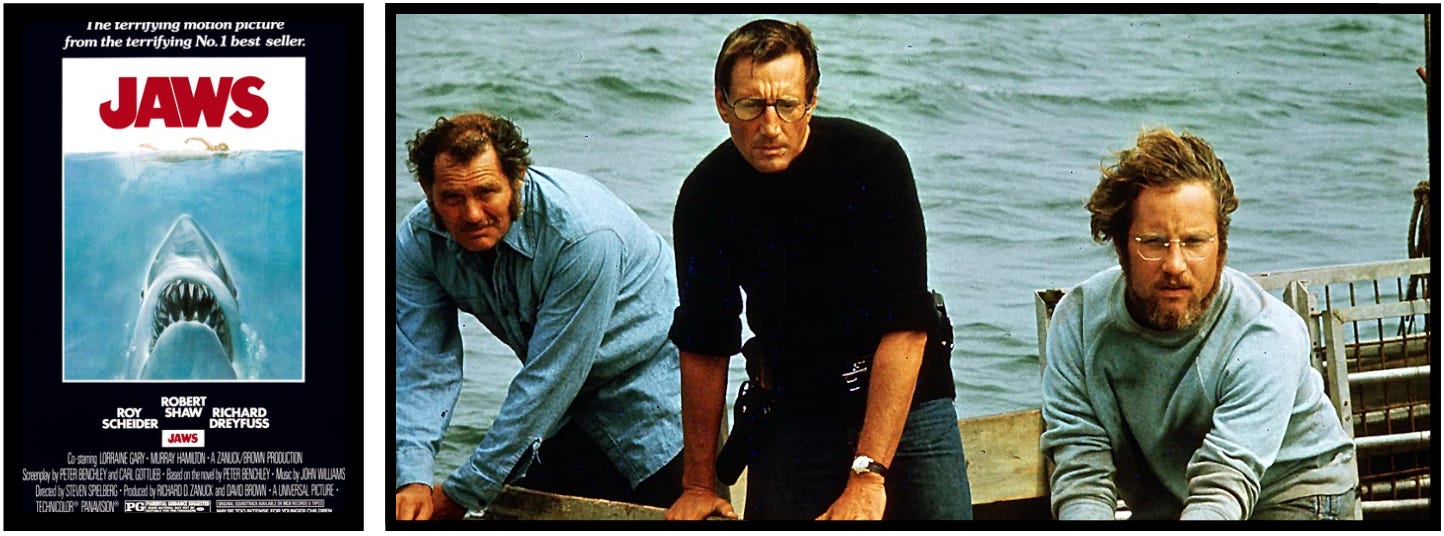
There are two types of movies in American cinema today: those made before Jaws and those made after it. You see, before Jaws, summer was just another season. There was no such thing as a summer blockbuster. Jaws changed all that.
Based on Peter Benchley’s bestselling novel, Jaws follows Police Chief Martin Brody (Roy Scheider) as he confronts a great white shark terrorizing the resort town of Amity Island. Eventually, Police Chief Brody teams up with marine biologist Matt Hooper (Richard Dreyfuss) and a grizzled shark hunter named Quint (Robert Shaw) to kill the deadly animal.
At its core, Jaws is a monster movie. But it’s also a film about masculinity, corporate cowardice, small-town politics, and the primal terror lurking beneath the surface of one of America’s favorite leisure activities.
As most people probably know, the production was very troubled. The mechanical shark malfunctioned so often that Spielberg was forced to keep it out of sight for most of the movie, a creative limitation that in hindsight helped make the film better.
By leaving the shark to the audience’s imagination for much of the film’s running time, Spielberg created something far more terrifying than any rubber prop could have achieved. The result was a film of extraordinary suspense and thrills.
The Indianapolis monologue delivered by Robert Shaw is one of the greatest scenes in American cinema. It’s a ghost story within a thriller, delivered by Shaw over a quiet drink below deck while Roy Scheider, Richard Dreyfuss, and everyone in the audience, hold their breath.
Of course, Jaws became a cultural phenomenon. It grossed over 470 million dollars worldwide against a budget of approximately 9 million dollars. It became the highest-grossing film of all time, which was a record it held until Star Wars came along two years later. In addition, it’s widely credited with creating the concept of the summer blockbuster.
And, although Jaws wasn’t the first movie to ever use television advertising, it is widely recognized as the first film to use extensive, nation-wide, prime-time TV commercials to create the first summer blockbuster.
Jaws revolutionized film marketing, because it relied less on print ads and word-of-mouth and instead flooded television with non-stop commercials.
I remember seeing those commercials, which began around Memorial Day and lasted up to the movie’s release in June. It got to the point where I would see an ad for Jaws every 15 minutes.
As a teenager back then, seeing ads for Jaws on television over and over in an endless loop made me obsessed with the movie before I actually saw it. And once I was finally able to see Jaws (after standing in line for hours), I couldn’t wait to see it again and again.
Why It Was Nominated:
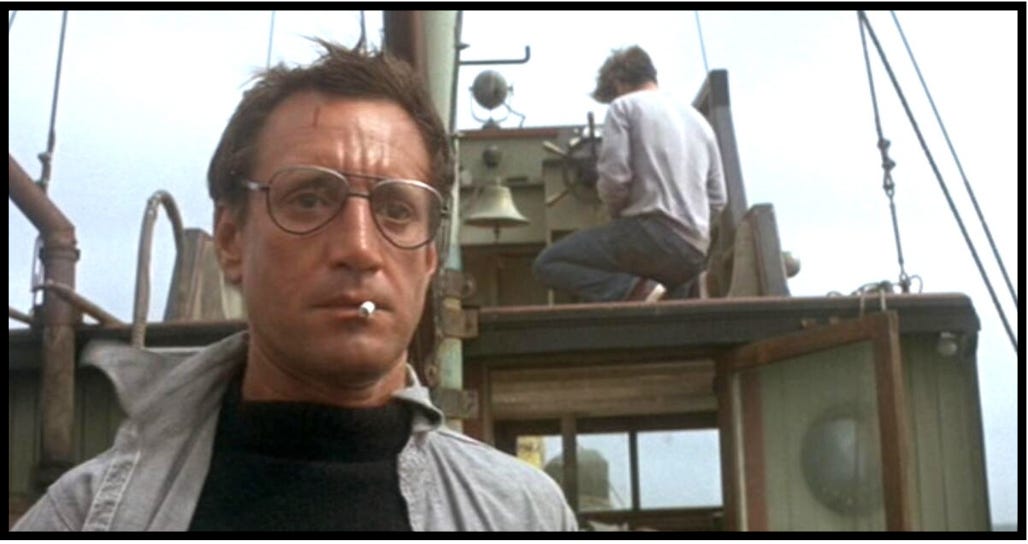
The Academy couldn’t ignore Jaws for the simple reason that no film in recent memory had captured the American public’s imagination so completely. It was the first film in history to gross over 100 million domestically, a milestone that made it impossible to dismiss as mere entertainment.
But box office alone doesn’t earn a Best Picture nomination. By nominating Jaws for Best Picture, the Academy was also recognizing the high level of filmmaking craft on display. Spielberg had taken a troubled production with a malfunctioning mechanical shark, a ballooning budget, and a near-mutinous crew, and turned it into one of the most technically accomplished and viscerally exciting films Hollywood had ever produced.
In 1975, that combination of mass appeal and genuine filmmaking mastery was something the Academy felt compelled to honor, even if it wasn’t quite sure how to reward it.
Why Some Thought It Should Win:
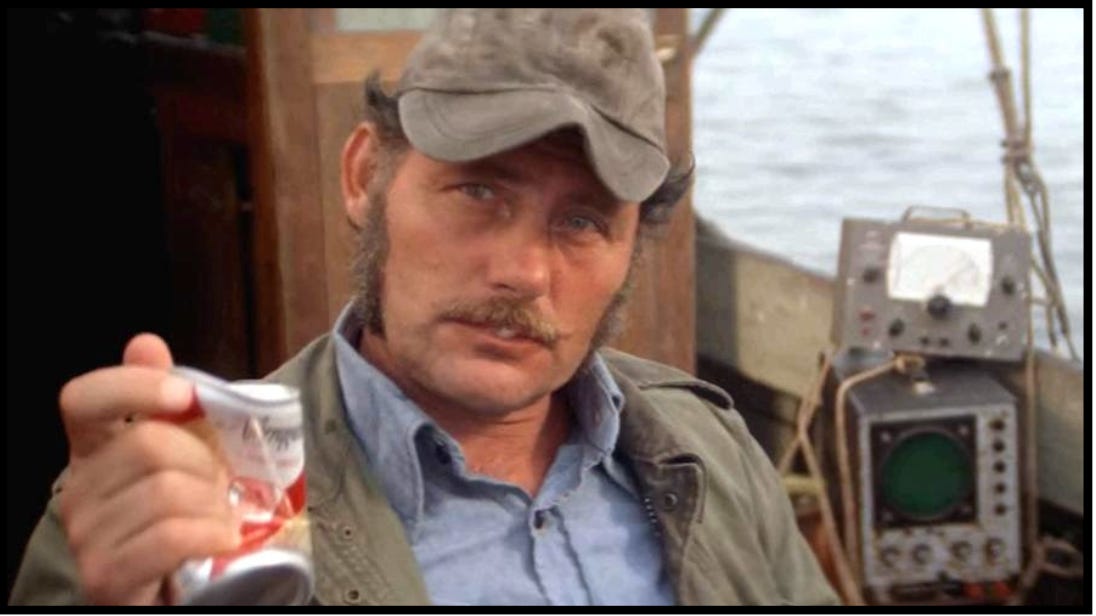
Fans of Jaws have argued that great popular art is still great art. This is something I agree with too. I think that those who believe that Jaws should have won the Oscar for Best Picture make a simple but important point: Jaws does everything a great film is supposed to do, and it does it better than almost anyone had a right to expect.
Spielberg weaves together terror, humor, and genuine emotional warmth within a single film, shifting between all three registers without ever losing his footing.
The three central performances: Roy Scheider’s everyman police chief, Richard Dreyfuss’ eager young scientist, and Robert Shaw’s haunted fisherman, Quint, give the film an emotional core that most blockbusters rarely bother with. And then there is Robert Shaw’s Indianapolis monologue, which stops the film cold and turns it, briefly, into something closer to tragedy.
A film that can do all of that (and still have audiences gripping their armrests) is more than a crowd-pleaser.
For many of Jaws’ most fervent defenders, dismissing it as unworthy of the top prize simply because it was enormously popular is nothing more than cultural snobbery dressed up as critical judgment.
Why It Really Should Have Won:
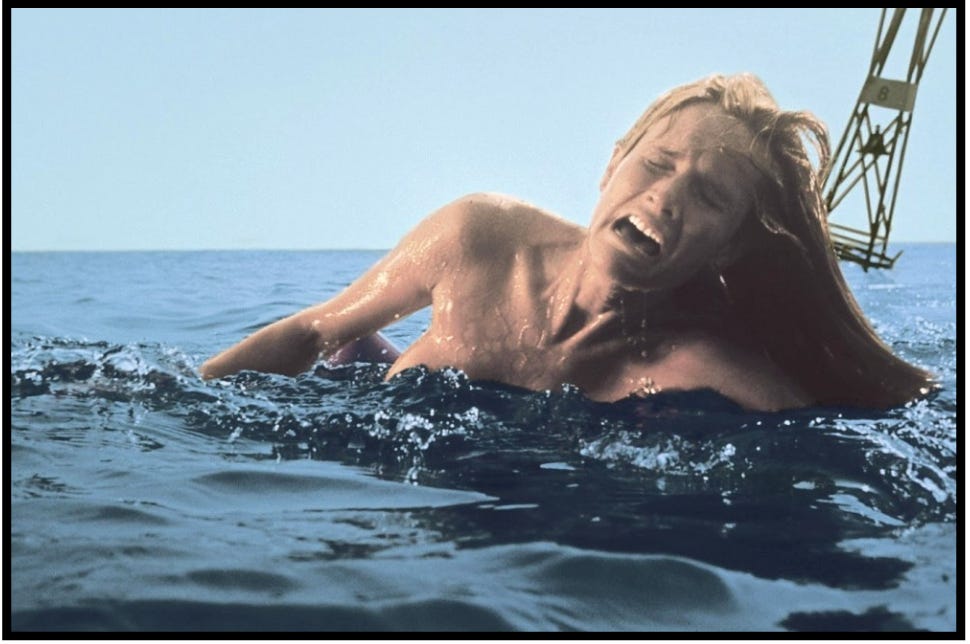
Jaws is the one film on this list of nominees that changed cinema history the most. If you measure a Best Picture winner by its lasting influence on the art of film and the culture, Jaws has arguably the most substantial claim.
That said, looking back, it’s rather shocking to discover that Steven Spielberg (like Kubrick) wasn’t even nominated for Best Director for his work on Jaws, which is something I think every movie fan should find bewildering. (He wouldn’t win an Oscar for Best Director until Schindler’s List in 1993).
Even though it didn’t win the Academy Award for Best Picture, Jaws did win Oscars for best film editing (well deserved!), best sound, and for best score (composed by John Williams - also well deserved).
Nashville: The Fragmented American Dream
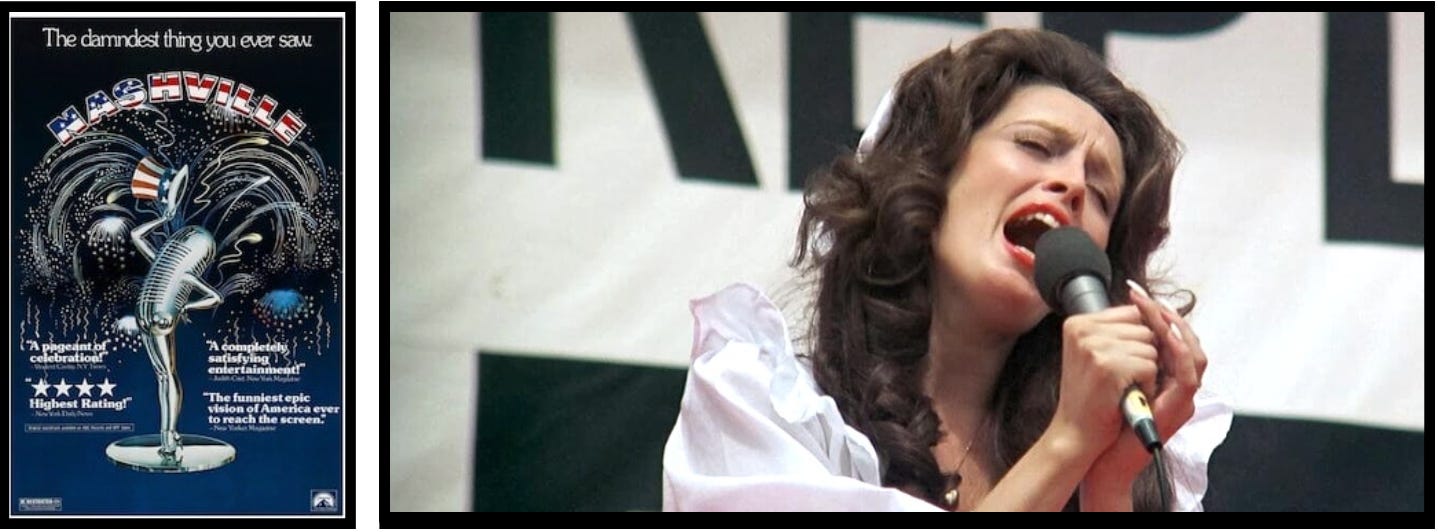
With Nashville, director Robert Altman invented his own genre: a tapestry of 24 interlocking characters whose lives intersect in Nashville, Tennessee, over five days leading up to a political rally for a presidential candidate.
By taking a documentary-like approach to the story and using his trademark over-lapping dialogue, Altman created the most original movie of 1975.
The film is a musical, a satire, a tragedy, a comedy, and a portrait of a fractured America in 1975, just one year after Watergate. Among the large cast are Lily Tomlin, Ronee Blakely, Henry Gibson, Keith Carradine, Ned Beatty, Shelley Duvall, Geraldine Chaplin, Barbara Harris, Karen Black, Jeff Goldblum, Allen Garfield, and many more actors in small but integral roles.
This large cast improvised many of their own lines and for those playing country music performers, even wrote their own songs. In fact, the song Keith Carradine wrote for his character in the film, “I’m Easy,” won the only Oscar the film would receive that year for best original song.
Nashville isn’t strong on plot; instead, it’s a character driven mosaic that focuses on the interpersonal connections of its characters as they confront fame, music, and politics. The film builds to a political rally that results in an act of violence, and perhaps even more shocking, is the reaction of those in attendance to that violence as they break into song.
Why It Was Nominated:
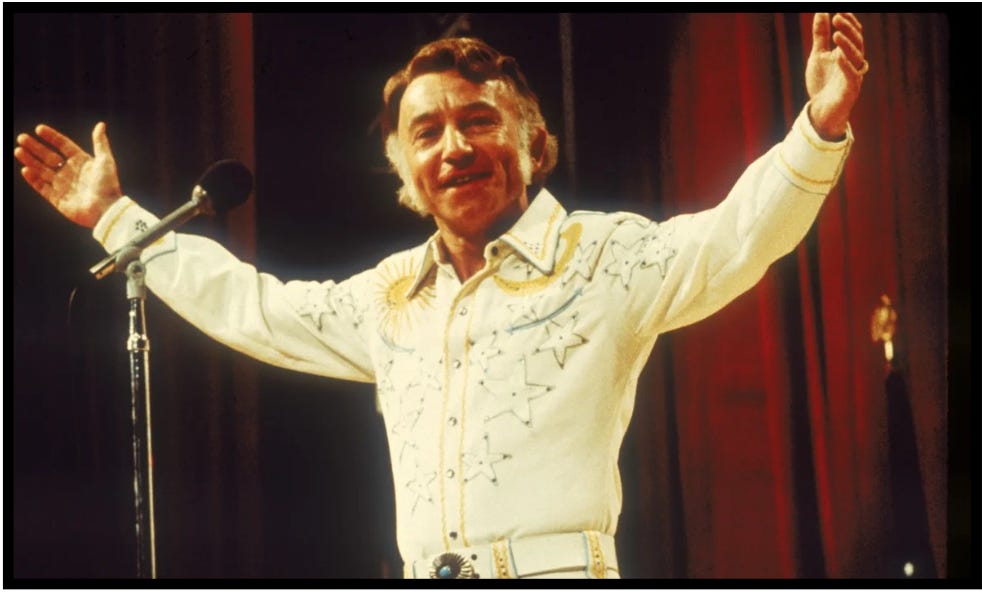
Critically acclaimed by almost every major film reviewer in the U.S. at that time, Nashville won the New York Film Critics Circle award for Best Film and Best Director. It was just the type of ambitious, sprawling, socially conscious movie that the Academy was inclined to honor during the 1970s.
Why Some Thought It Should Win:
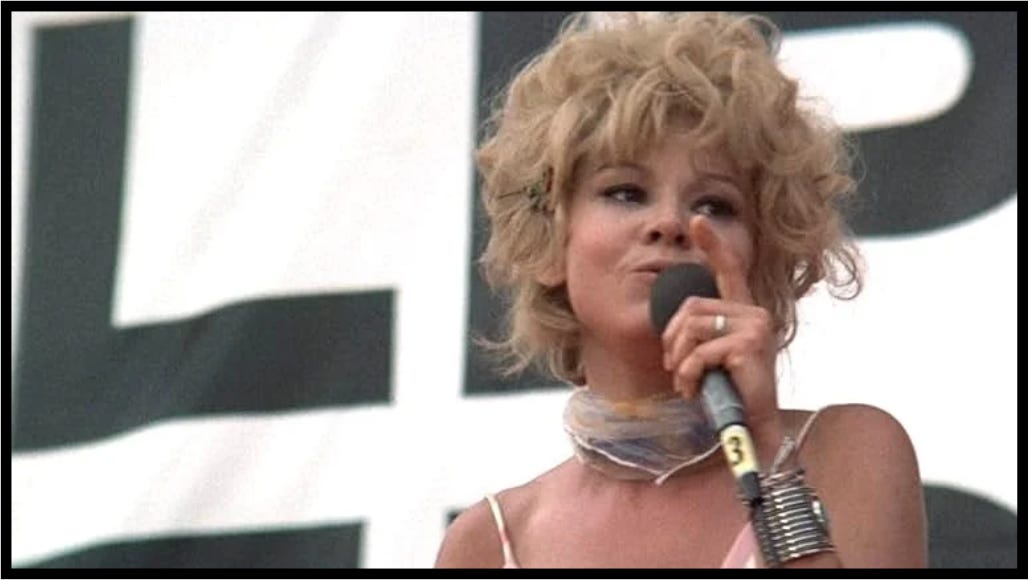
No other American movie in 1975 (or for years after) attempted to do so much in a single film. Nashville is essentially about America itself: its myths, yearnings, self-deceptions, and especially its capacity for violence. It portrays politics and entertainment as the same business, a prescient observation that has only grown more true with time.
To me, Altman’s direction is astonishing because he maintains complete control over twenty-four characters across 160 minutes, never losing focus on a single person. At the same time, Altman is also able to keep both politics and music at the center of the film.
Why It Really Should Have Won:
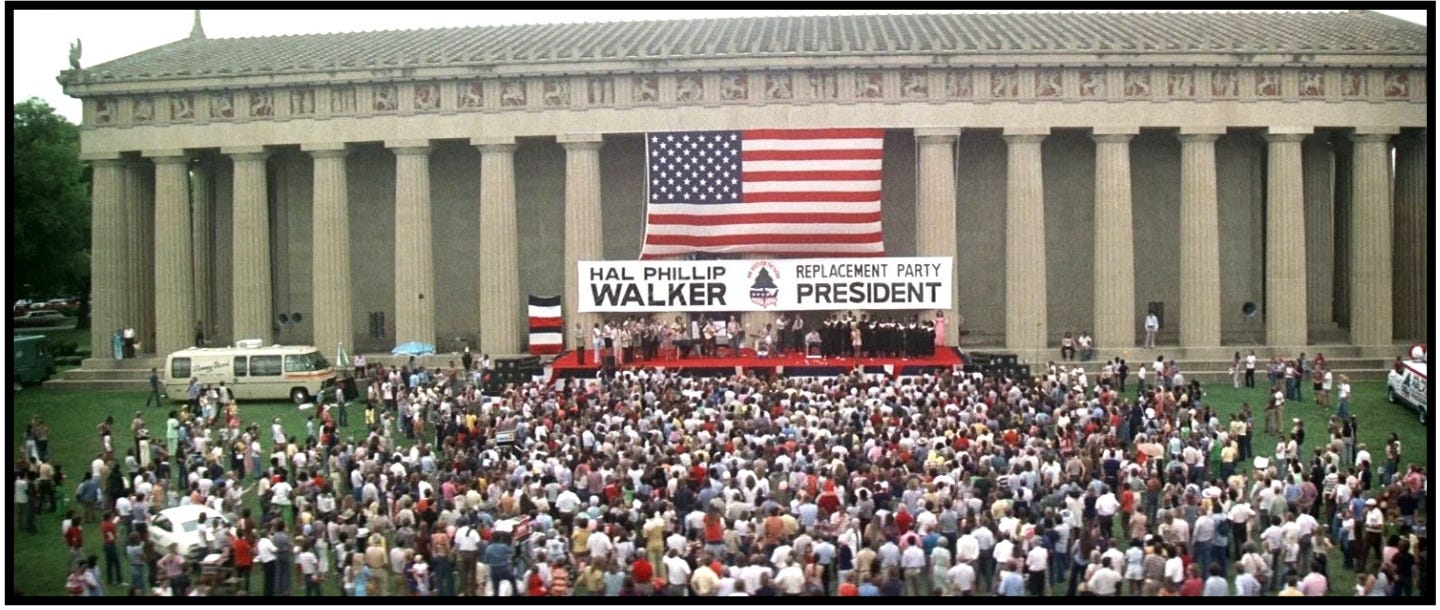
In my opinion, Nashville, along with Barry Lyndon, are the only films on this list that have most fully survived the passage of time as a work of art rather than a dated cultural artifact. It’s portrayal of political life and the way celebrity, populism, and violence feed off of one another is just as timely today as it was over 50 years ago.
I didn’t get to see Nashville until I was in college in the late 70’s when my university had a summer retrospective of Altman’s films. For me, seeing Nashville for the first time was almost a life-changing experience because I had never seen anything like it before. Now, it’s a film that I revisit often.
Not only does Nashville seem more relevant today than when it was made, every time I re-watch the film I notice more things tucked inside of it that make it more fascinating than ever before.
Cuckoo’s Nest: Milos Forman’s Big Five Sweep
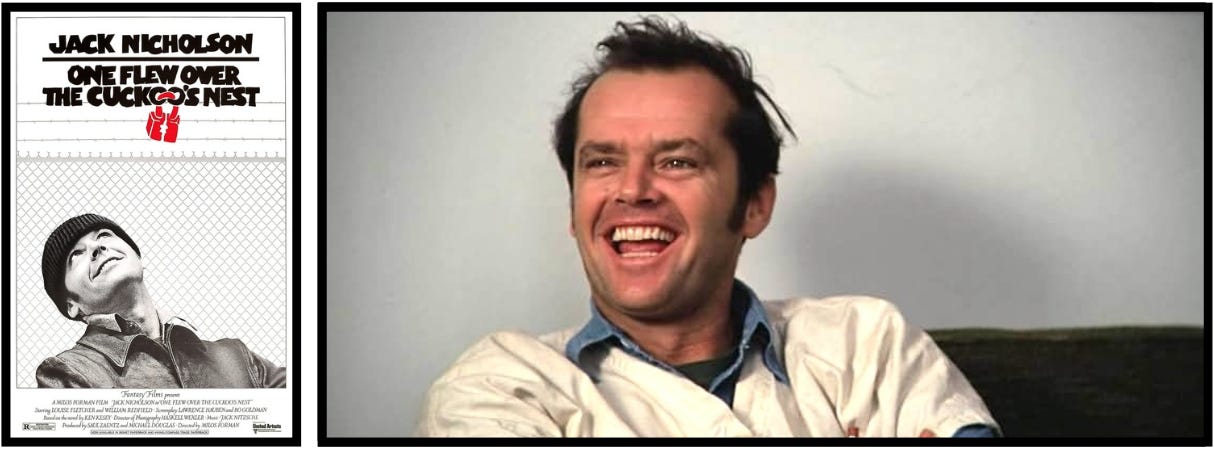
Adapted from Ken Kesey’s 1962 novel by Czech emigrant Milos Forman, One Flew Over the Cuckoo’s Nest follows Randle Patrick McMurphy (Jack Nicholson) a convict who feigns mental illness in order to serve his sentence in a psychiatric hospital rather than in a prison. However, soon after his arrival at the mental facility, McMurphy finds himself in conflict with the hospital’s authoritarian head nurse, Nurse Ratched (Louise Fletcher).
The film is a parable about institutional power and individual freedom, about the way conformity is enforced and resistance is punished, and about who gets to define sanity and madness.
Why It Won:
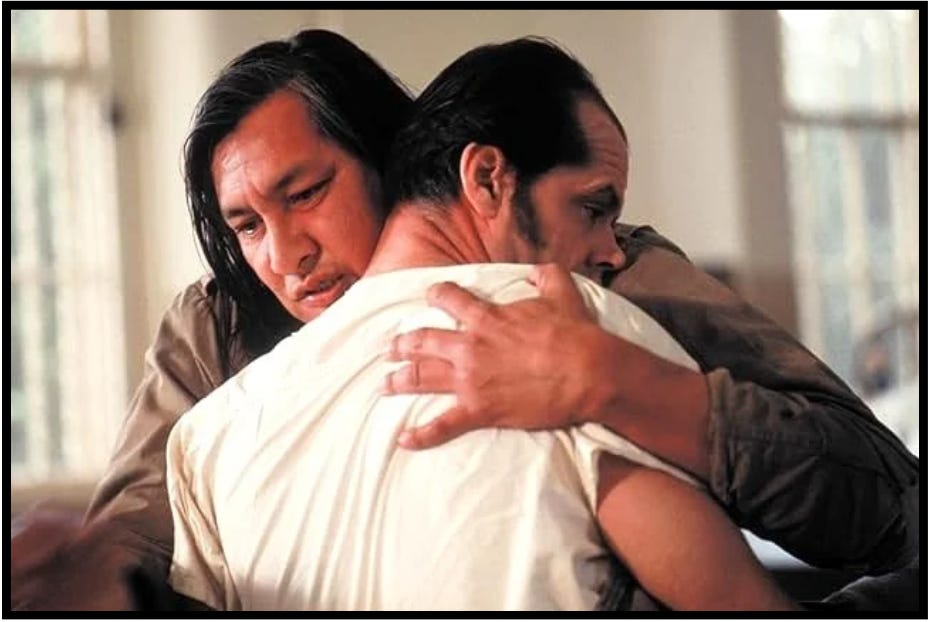
A demanding but accessible drama based on an acclaimed novel, One Flew Over the Cuckoo’s Nest combined critical acclaim and strong box office (it grossed over $108 million dollars in its initial release) to propel it to Oscar victory.
One Flew Over the Cuckoo’s Nest was the type of film the Motion Picture Academy always loves: a prestige drama about important issues, perfectly executed, with great performances, that was also seen and appreciated by moviegoers across the country. As stated earlier, Cuckoo’s Nest was only the second film in Oscar history to win all five major awards: Best Picture, Best Director (Milos Forman), Best Actor (Jack Nicholson), Best Actress (Louise Fletcher), and Best Adapted Screenplay.
Why It Shouldn’t Have Won
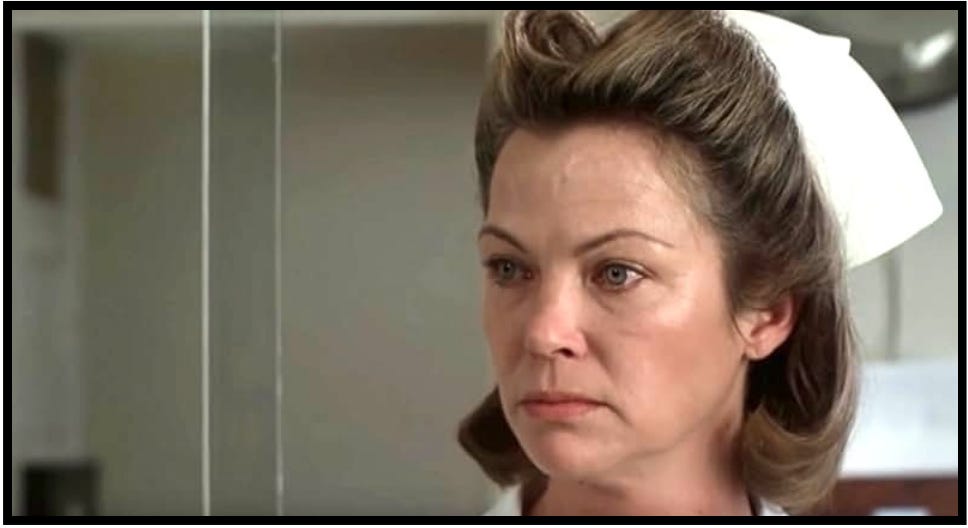
Although it’s a well-made film, a case can be made against One Flew Over the Cuckoo’s Nest as the best picture of 1975 because its ideas aren’t original.
As a story about powerful archetypes: the rebel vs. the institution, the free spirit broken by bureaucracy, the film is rather simple: McMurphy represents freedom; Nurse Ratched is oppression. Naturally, the audience cheers for the rebel and boos for the evil authoritarian nurse. But this lack of moral ambiguity works against the film, especially when compared to the other Best Picture Nominees that year.
For example, Dog Day Afternoon presents a protagonist who is both victim and perpetrator without resolving the issue. Barry Lyndon makes its protagonist irredeemable and asks us to mourn for him anyway. And finally, Nashville refuses to offer viewers any hero at all.
In addition, One Flew Over the Cuckoo’s Nest romanticizes mental illness and reinforces the idea that psychiatric patients are simply free spirits crushed by the system, rather than people who suffer from mental illnesses and need treatment.
Because of this, One Flew Over the Cuckoo’s Nest has dated itself more than any of the other nominated films: Jaws remains as thrilling and fun as it was back in ‘75; the subject matter of Dog Day Afternoon and Nashville have become more culturally important than ever; and Barry Lyndon has now been recognized as a masterpiece.
One Flew Over the Cuckoo’s Nest, for all its craft and performances, feels rooted in a specific cultural moment that has passed. On Oscar night, the Academy chose the film that was the easiest to love. Whether they chose the best film is another question entirely.
I was in high school when One Flew Over the Cuckoo’s Nest played in one of our local movie theaters right before the Oscars that year. My English teacher had us read the book and wanted to take us to see the movie together as a class. But first, we all had to get permission from our parents.
Unfortunately, my parents wouldn’t sign the slip because the movie was rated “R.”
Back then, my mom and dad refused to take me to see any movie that wasn’t “G” or “PG.” My parents and I got into some heated arguments over it. I made it clear that as the biggest movie fanatic at my high school, missing this field trip simply wasn't an option. Eventually, my parents gave in and I got to see my first R-rated film. The essay I had to write afterwards comparing the book to the film even got the highest grade in our class.
A few years later, after I had graduated from high school, I ran into my former English teacher at a local bookstore and he told me how my parents were so angry about the field trip that they tried to get him fired. Of course, I didn’t know that had happened. I was mortified. He was my favorite teacher in high school. Thankfully, he wasn’t fired, and he got a kick out of my reaction.
Final Thoughts
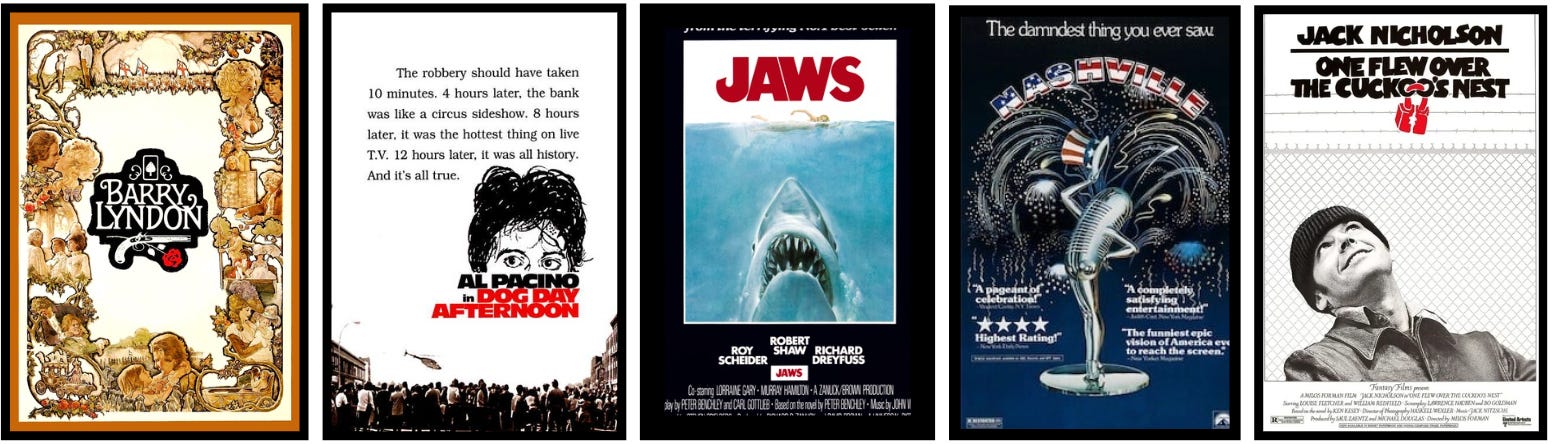
Which of the nominees would you vote for now?
My vote goes to Barry Lyndon, with Nashville running a close second. But honestly, any of these five films had a legitimate claim to the prize, and reasonable people will disagree. That’s precisely what makes 1975 so extraordinary.
What’s harder to argue with is this: the Academy chose the most accessible film of the five, the one with the clearest heroes and villains, and the one with the most straightforward emotional payoff.
That’s not a crime. But fifty years on, it’s worth remembering that the four films One Flew Over the Cuckoo’s Nest beat that night were just as remarkable, and in some cases have proven even more enduring.
If you enjoyed this post, check out these other articles:


Every time I rewatch Nashville I think it just might be the best movie ever made
This is an interesting piece. I have seen all of these films multiple times with the exception of Cuckoo's Nest. I only saw it once but I read the book long before I saw the film and loved the book. In my mind the book and the film are radically different because of the POV shift. The book is told from the Chief's POV and for me it was incredibly moving. They took that out and turned it into the Jack Nicholson Show. I disliked the film at the time because of that. This film is the reason I rarely see a film that I loved the book it is based on. (A notable exception obviously is To Kill A Mocking Bird, both versions are fantastic!) So I am sure I judged it unfairly at the time. I also have no interest in going back and viewing it again. The other 4 films are all fantastic in their own way and any of them could have won. The Oscars are a big popularity contest, which is fine as I no longer take film awards seriously on any level, especially because the best films of any year are rarely nominated in my mind. I guess it's my independent mind frame and having worked in the business for so many years that has lead me to that conclusion. I still love films although I rarely see the big Hollywood films anymore, especially the blockbusters. I really appreciate the research you did on this piece and did find it wonderful to read. Of the group I would probably go with Nashville as it blew me away when it came out. And it was so different and still holds up today. Keep writing my friend I enjoy reading your take on films. Take care.