
Z.P.G. (Zero Population Growth)
The future is so bleak that "Soylent Green" looks like paradise

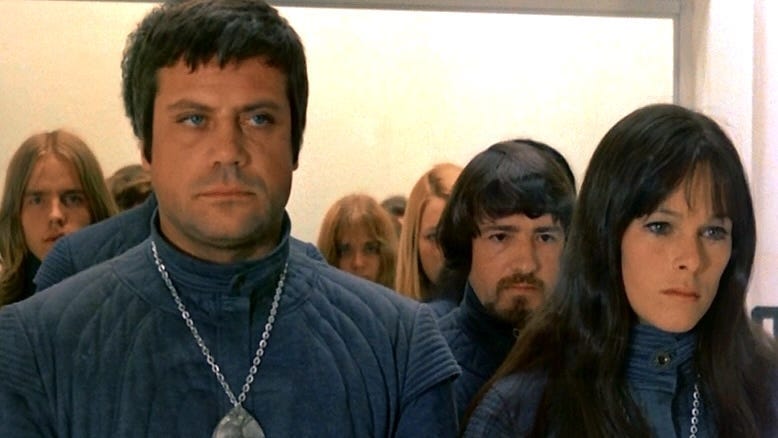
For those of us who became teenagers in the early 1970s, the future looked grim. In addition to the daily news reports about the Vietnam War, there were endless reports in both newspapers and on television about the dangers of overpopulation and the environmental dangers of pollution.
These concerns were also prevalent in pop culture as well. First, there was the book, Future Shock, with its frightening portrayal of a post-industrial society. Later that same year, the documentary, The Late Great Planet Earth, also painted a disturbing portrait of the future as well. On top of that, there were ecological concerns, such as what would happen once all the grass stopped growing in the 1971 film, No Blade of Grass, or a future where the few survivors of a nuclear holocaust were turned into zombies as portrayed in the classic film, The Omega Man. And, there was also the famous TV commercial of a lone Native American looking out at a smog-filled city landscape and river full of trash as a single tear falls from his eye.
But there is no other movie released in the early 1970s as bleak as Z.P.G., which stands for Zero Population Growth.
A Danish-American dystopian nightmare, Z.P.G. was dismissed by critics and was also a box-office flop. Yet, this is a highly under-rated movie that has a lot on its mind. It features an imaginative script with a harrowing vision of the future and fine acting from everyone involved.
In short, this is a film that deserves to be rediscovered today.
Directed by Michael Campus and co-written by Frank De Felitta and Max Ehrlich (who wrote episodes of the original Star Trek series as well as the movie, The Reincarnation of Peter Proud), the film stars Oliver Reed and Geraldine Chaplin as a married couple without a child.
Set in an unknown country during an unknown time (but supposedly in the present or near future), Z.P.G. is just the opposite of Margaret Atwood’s The Handmaid’s Tale.
You see, instead of being forced to give birth, women in the society portrayed in Z.P.G. are forced not to give birth, due to concerns about over-population and the lack of natural resources.
In this futuristic society, things have gotten so bad that the government has banned all women from giving birth for the next three decades. To help facilitate this, the government provides every home with its own abortion machine that women should use after they have sex.
So, instead of having children of their own, married couples like the film’s main characters, Russ (Oliver Reed) and Carol (Geraldine Chaplin), buy a mechanical doll that they can nurture and raise as their own.
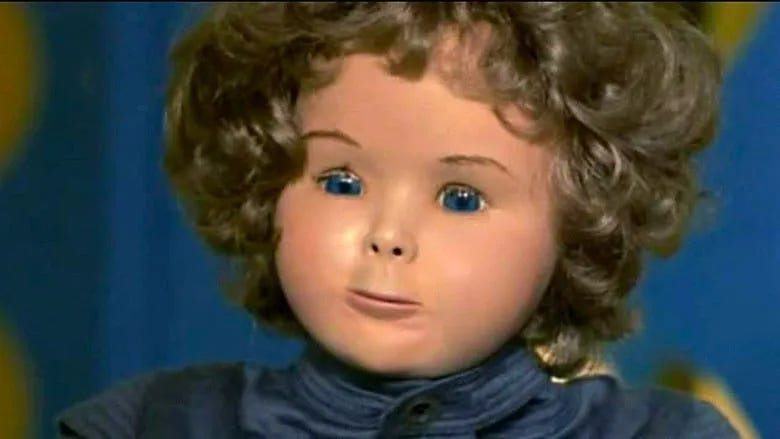
After shopping around at their local baby mall, where potential customers (or parents) can buy mechanized infants, toddlers, or pre-teens (along with a variety of extra add-ons), Russ and Carol purchase a model they like and take it home. Since these robotic dolls can be programmed to behave just like real children (sort of like Pinocchio in reverse), soon the cries of Russ and Carol’s very own infant fill their home.
Yet, there is something very creepy about these dolls and even creepier about the “parents” who actually enjoy “raising” them.
In the film, it doesn’t take long before Carol isn’t satisfied with this purchase and eventually talks Russ, her husband, into getting her pregnant. Fortunately, they’re able to find an older, sympathetic doctor who helps them and Carol is able to give birth to a healthy baby.
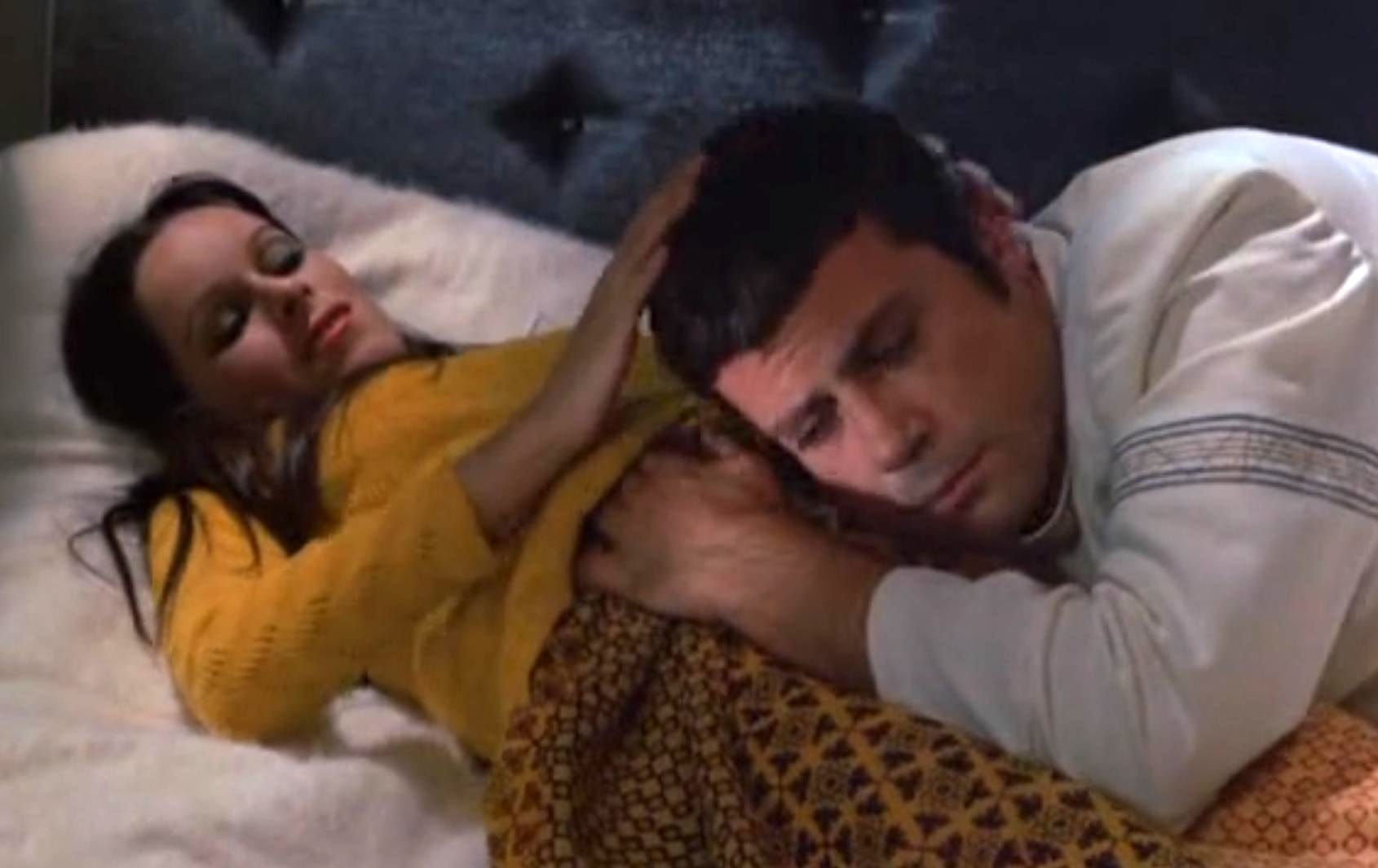
Of course, this puts both Carol and Russ, along with their newly born child, in severe danger.
In this smog-filled totalitarian society where nobody can go outside without a gas mask on, the police roam the streets searching for illegal children (an even more frightening version of The Child Catcher from the classic children’s movie, Chitty, Chitty, Bang, Bang). When parents with real children are spotted by others, these model citizens will chant, “Baby, Baby, Baby,” until the authorities arrive to take away the culprits.
For a while, Russ and Carol are able to keep their new-born child from being discovered by hiding the baby in their apartment. However, after their nosy neighbors, George (Don Gordon) and Edna (Diane Cilento), realize the wailing they’ve been hearing through the walls is real and not a recording in one of the mechanical babies, Russ and Carol are forced to share their baby with their neighbors.
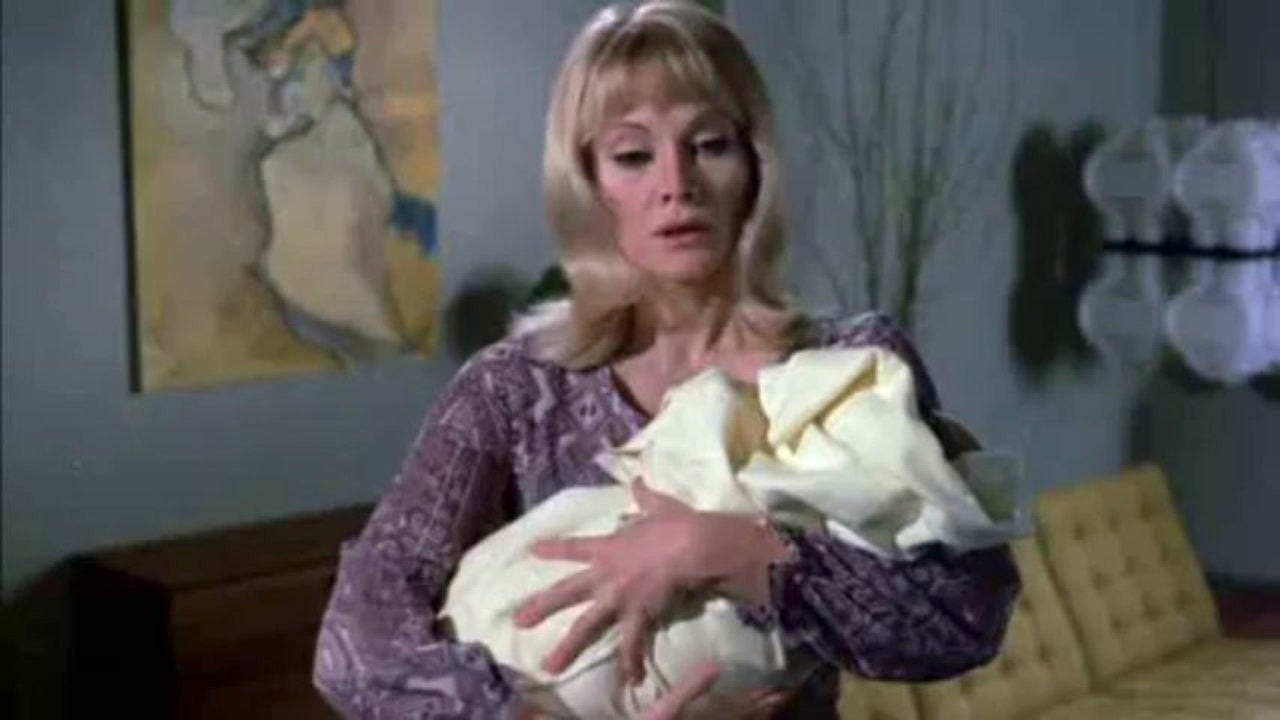
Naturally, it isn’t long before George and Edna want the baby for themselves and threaten to blackmail Russ and Carol. As Russ and Carol, along with their child, try to make a harrowing escape, the authorities find them and use a dome-like tent to trap them inside it. Yet, Russ and Carol are resourceful and find a way to escape.
At the end of the film, the family arrives by canoe to a deserted, radioactive island (like the pilgrims of old) to begin a new life in the wilderness.
In conclusion, Z.P.G. is a thoughtful, provocative film full of ideas and philosophical questions that’s worth seeing today.
However, be warned that the sets and costumes are very 70’s future chic, and the cityscape and airships are all models so badly done they make the ones in Logan’s Run look like ground-breaking special effects.
Even so, Z.P.G. is still a powerful film with a story and theme that has perhaps influenced more recent films like A.I. and Children of Men.
I encourage you to visit this dystopian world and feel glad you don’t have to live there.
(Although the Kino blu-ray is now out of print, there are still copies of it avaialble on ebay. In addition, Z.P.G. can still be found on various streaming sites).