
French Fries, Gravy, and Girls
Revisiting Barry Levinson's first film, "Diner."

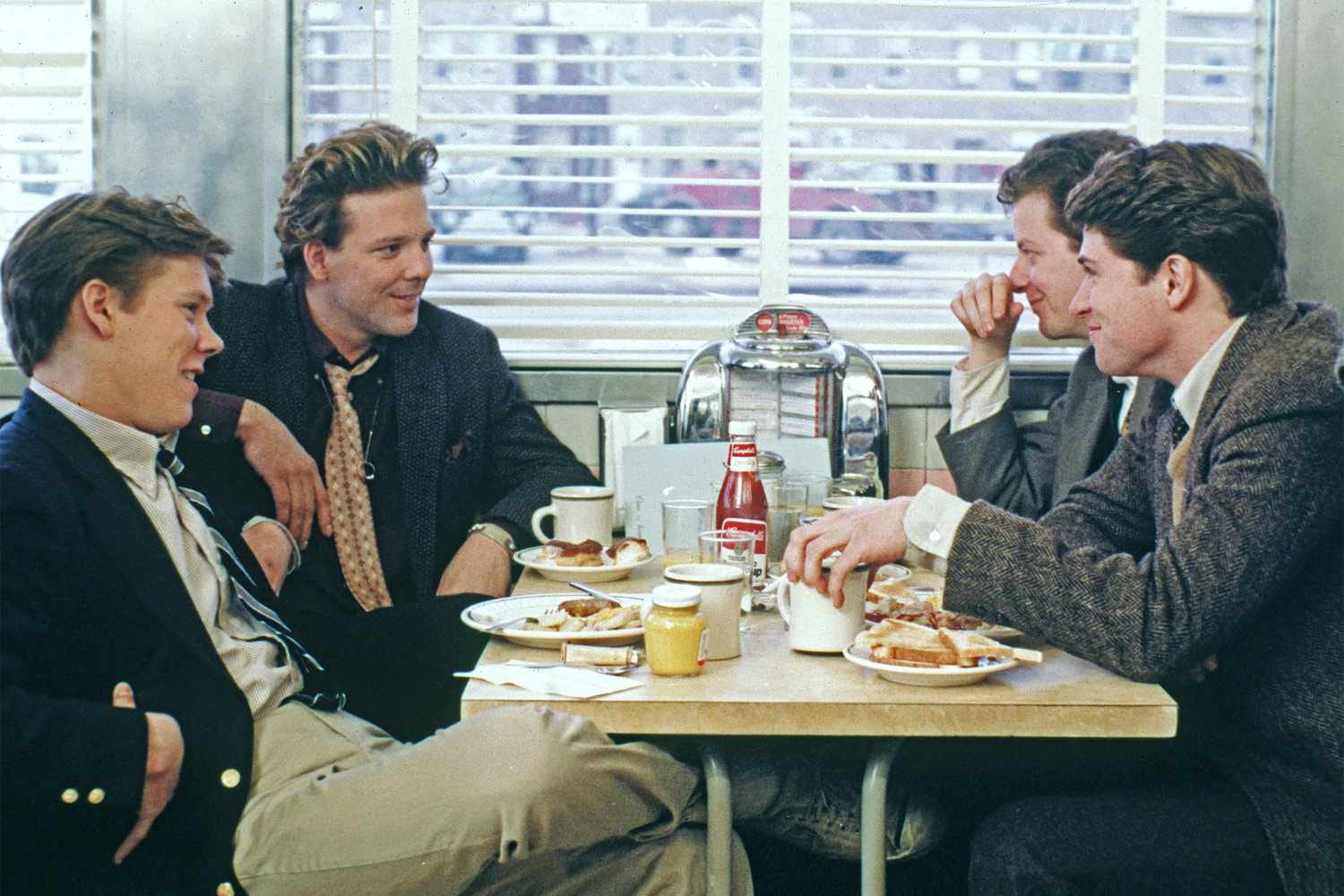
The 1982 comedy-drama, Diner, is the type of movie Hollywood no longer has any interest in making today.
Filmed in writer-director Barry Levinson’s hometown of Baltimore, Maryland, the production was modestly budgeted at five million dollars and featured a cast of young actors before they became famous stars.
But even back in 1982, MGM, the Hollywood studio that financed Diner, had reservations about releasing the movie. This was partly due to the fact that Diner is a dialogue driven film that relies less on plot and more on character development to tell its story.
In addition, Diner wasn’t like any of the other films playing in theaters at that time, such as Conan The Barbarian, Porky’s, Rocky III, or The Road Warrior.
The studio had grave doubts that anyone would pay to go see it.
In fact, MGM was about to shelve the project until critic Pauline Kael gave Diner a rave review in The New Yorker.
Initially, the film was only released in a handful of theaters in May of 1982. However, positive word of mouth soon helped propel Diner into a critical and commercial hit.
But do people who saw the movie back then even remember it? And does anyone under the age of 30 have any interest in seeing the movie now?
They should because Diner is one of the best films of the 1980s.
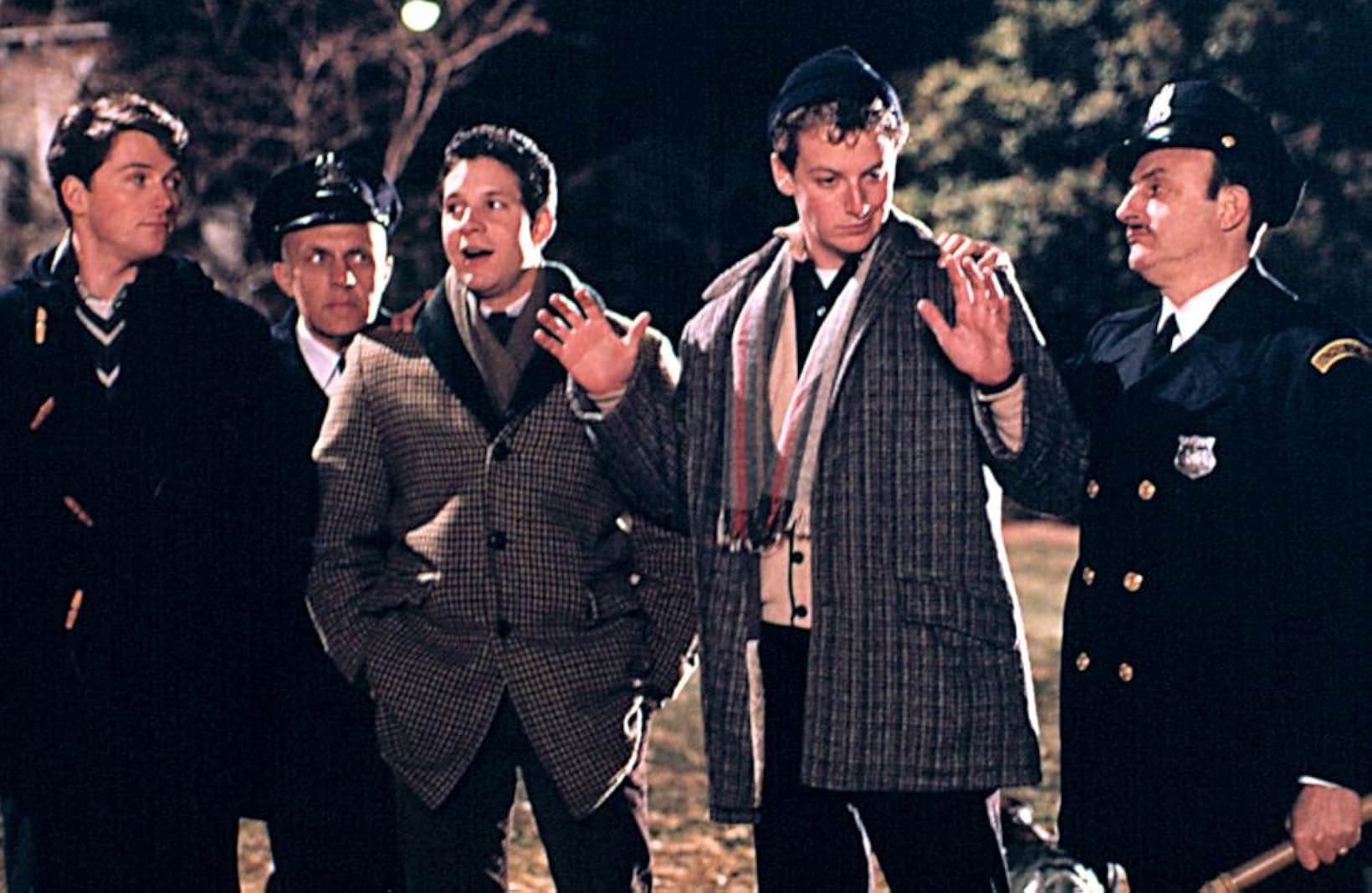
Set in Baltimore during the week between Christmas and New Year’s in 1959, Diner is about a small group of young men in their twenties who have known each since high school. Although they’re on the cusp of adulthood, the group still hangs out together at the local Fell’s Point Diner.
They spend their nights at the diner having important discussions about such topics as the hottest girls in town, whether Sinatra or Mathis is the best make-out music, and reminiscing about the past. They also frequently joke and tease each other, trading barbs so quick-witted and sharp that the group of friends often comes across as a 1950s version of Algonquin Round table.
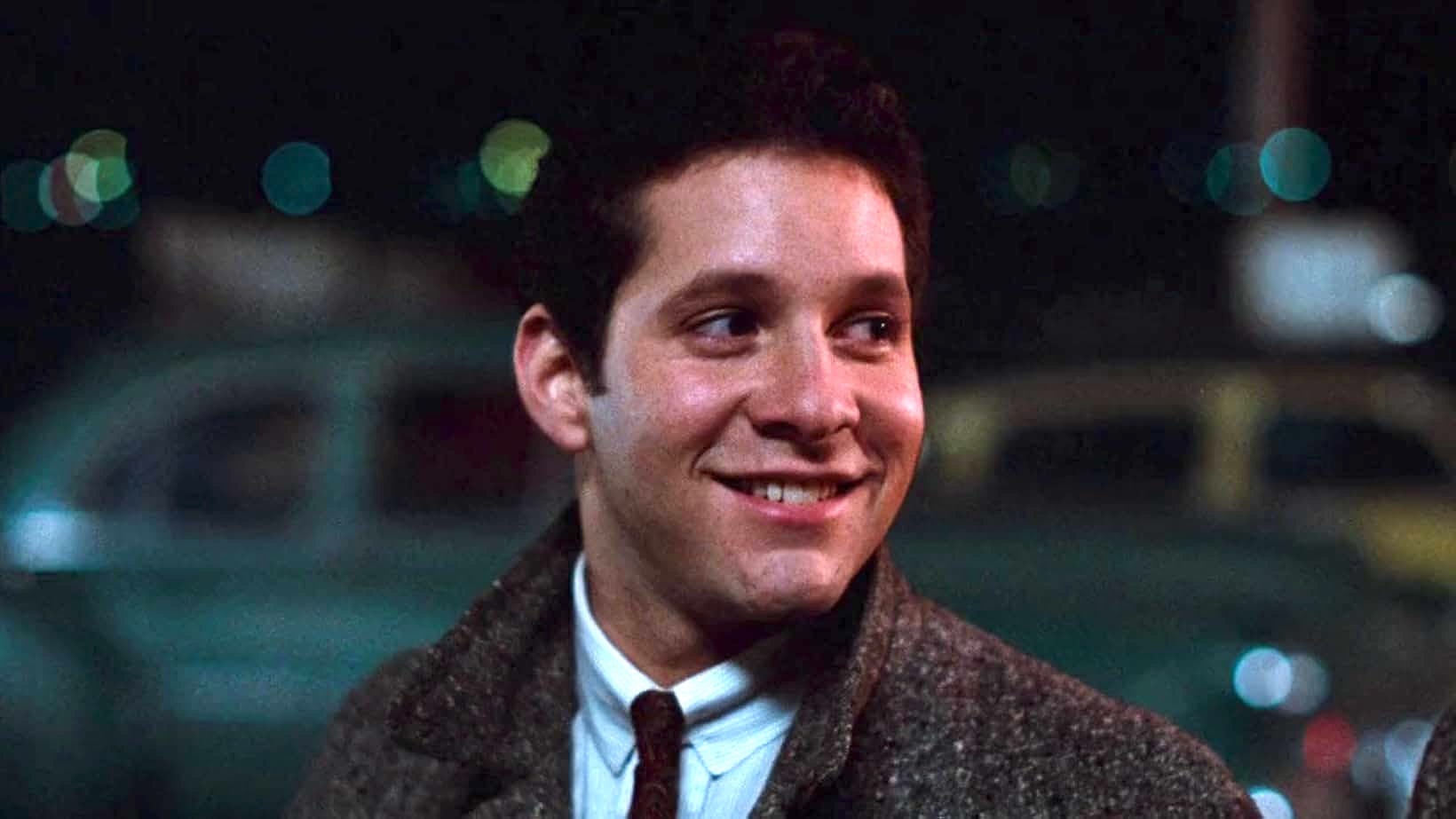
The group is made up of Eddie, (Steve Guttenberg), who still lives at home and sleeps till noon everyday. Eddie is scheduled to get married on New Year’s Eve, but only if his fiancé, Elyse, can pass a challenging football quiz Eddie has put together about his favorite team, The Baltimore Colts.
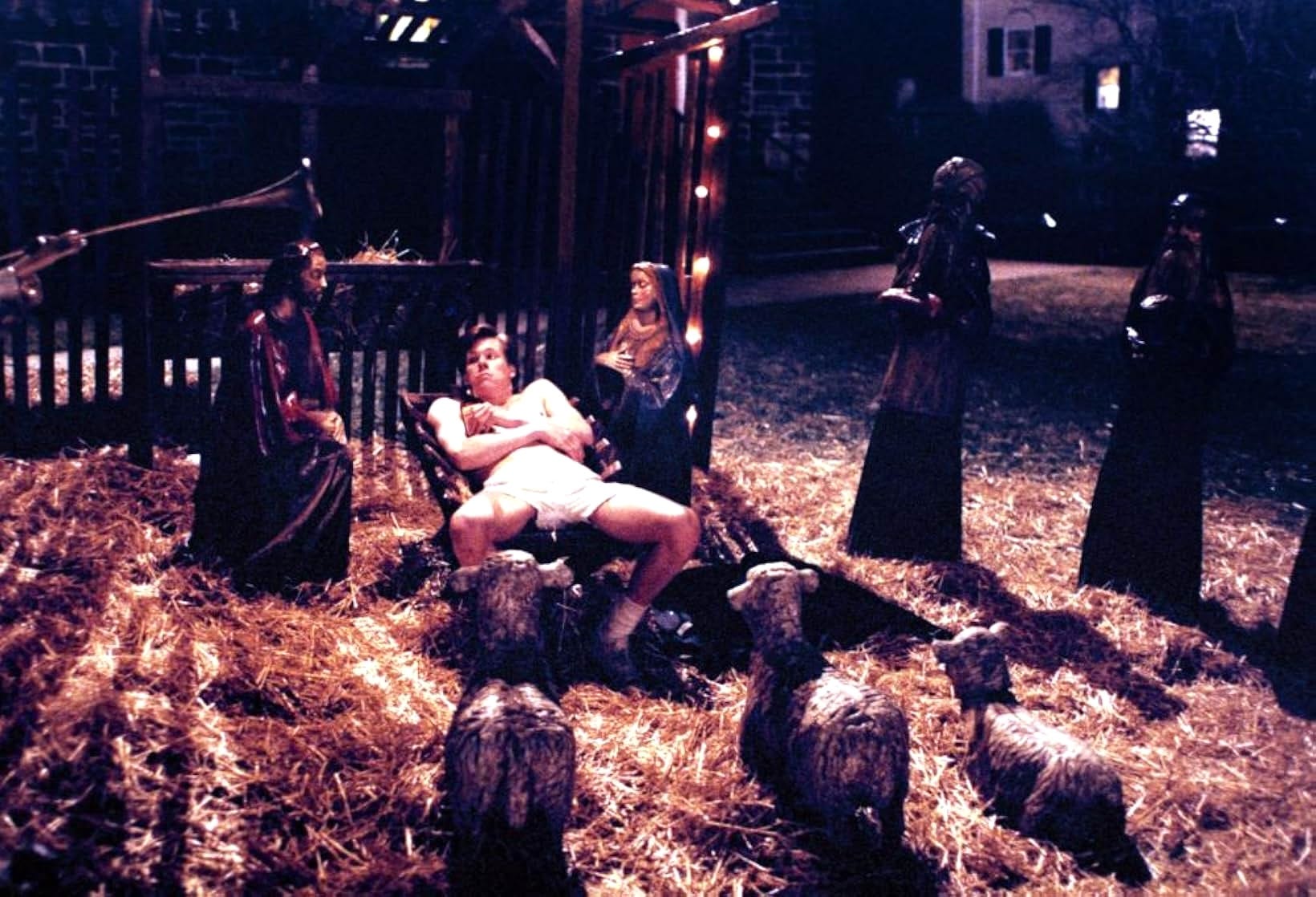
Then there’s Fenwick, (Kevin Bacon), a college dropout who’s smarter than everyone else in the room, yet wastes his life getting drunk and pulling practical jokes that nobody finds very funny. For example, his latest prank involves him stripping down to his underwear and replacing the baby Jesus in a local church’s outdoor nativity scene with himself. Of course, he and the gang all get arrested.
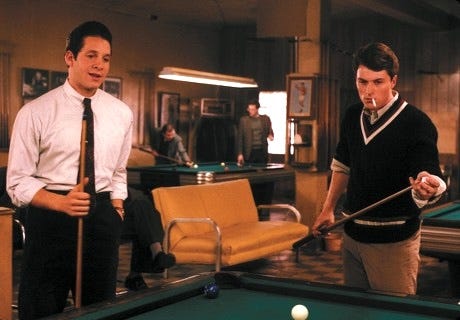
Billy (Tim Daly) has returned home from grad school to attend Eddie’s wedding. He’s also come back to deal with an unplanned pregnancy with an old girlfriend too.
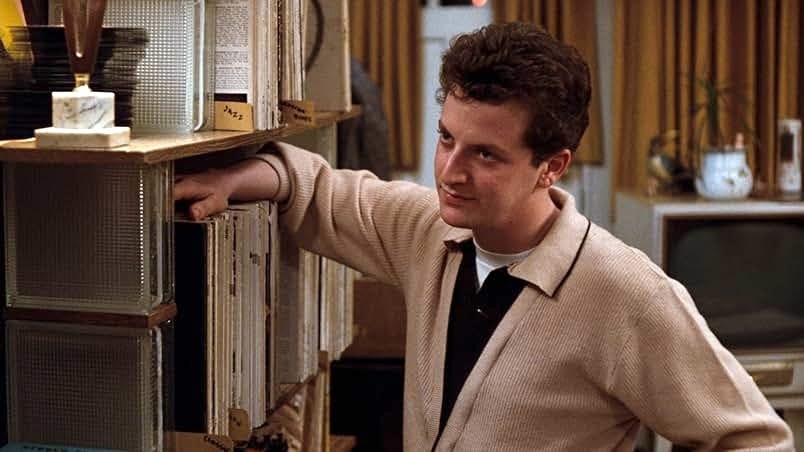
Shrevie (Daniel Stern) is the only married man in the group. He works as a salesman at a t.v. appliance store but spends most of his time obsessing over music and arguing with his wife. The scene where he confronts his wife for mixing up the detailed arrangement of his record collection is a classic.
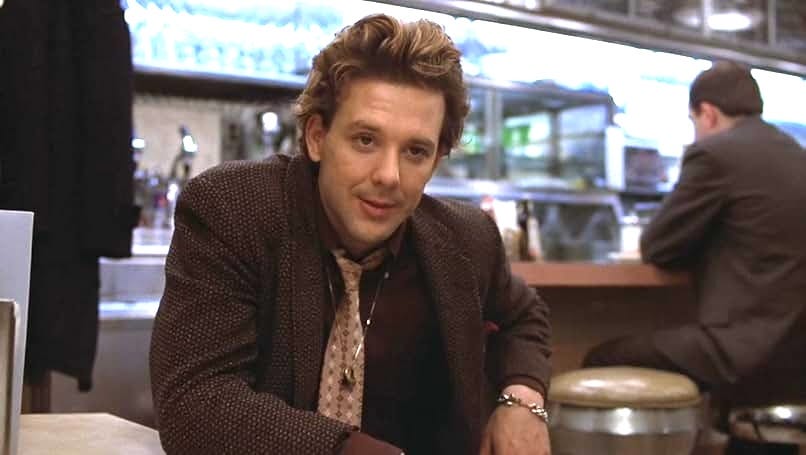
Then, there’s Boogie (Mickey Rourke), the most charismatic member of the group. Boogie is a ladies’ man who works at a beauty salon cutting hair, (what better way to meet women?), attends law school at night, and is a gambler who owes thousands to his bookie.
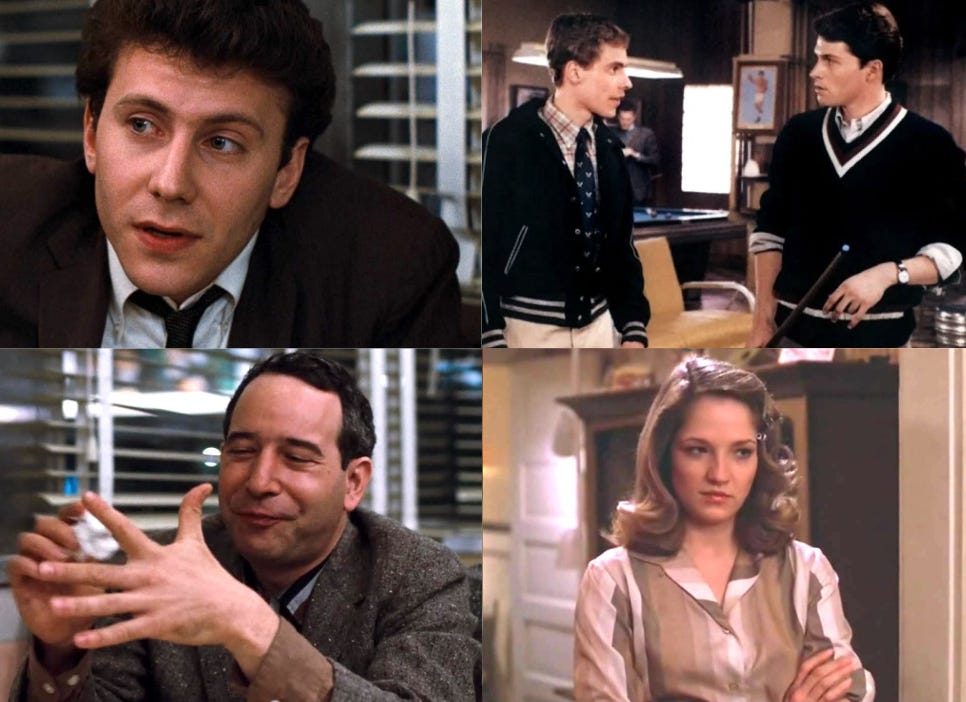
Hanging around at the fringes are Modell (Paul Reiser) who offers witty observations and is always happy to finish an unwanted sandwich, Methan (Tait Ruppert) who walks around quoting lines from the movie, The Sweet Smell of Success, Bagel (Michael Stewart) an older tin salesmen who also spends his nights at the diner, and Shrevie’s wife, Beth, (Ellen Barkin), who worries that she got married too soon and perhaps to the wrong man.
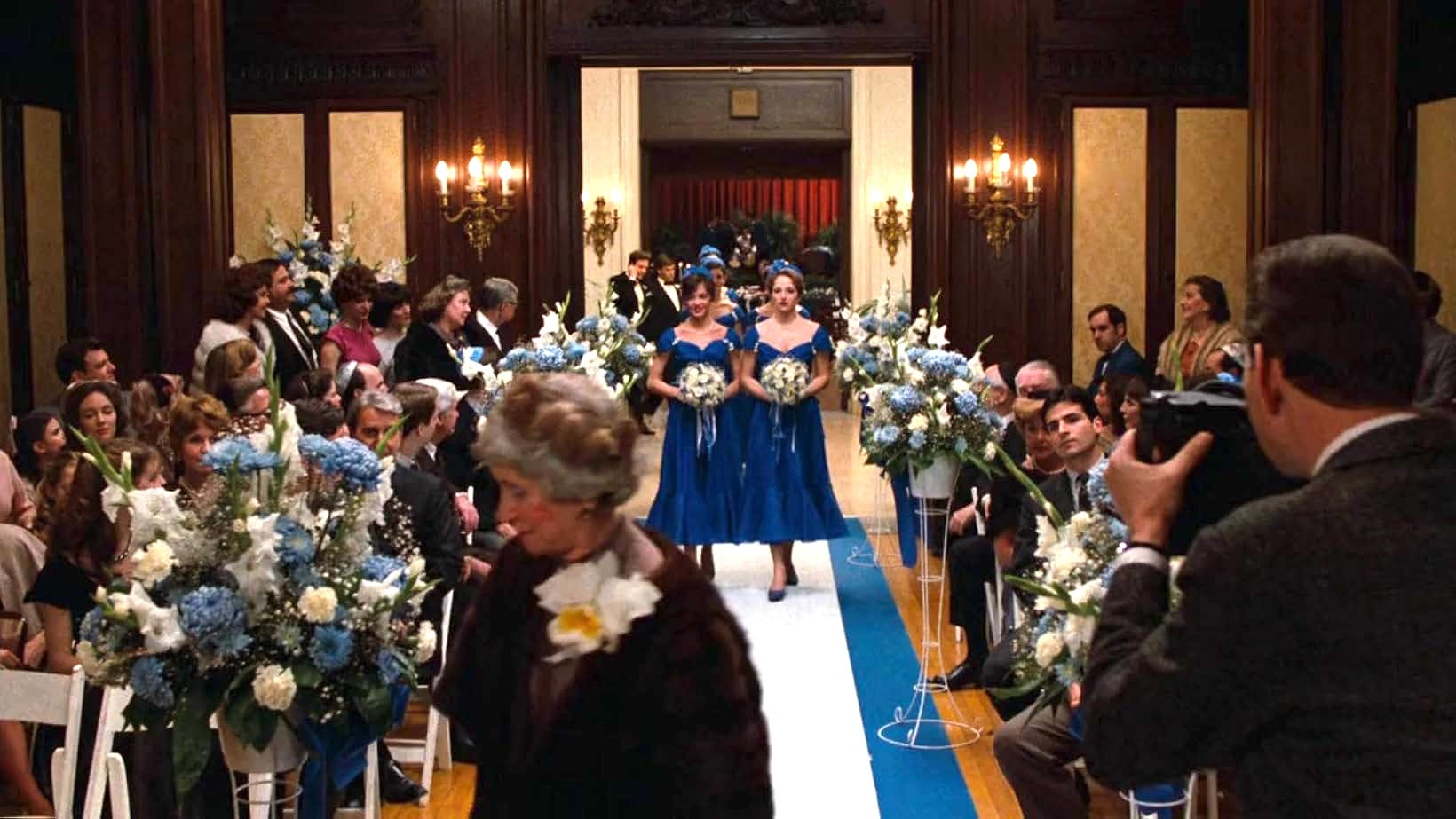
All of the main characters in Diner will face a crisis during the course of the movie and the way they handle it will determine their future. Thankfully, by the end of the film, Elyse has successfully passed the football test and the film ends with she and Eddie’s wedding.
So what makes Diner such a great movie worth seeing today?
First, the film has strong performances by its talented young cast.
It’s hard for us to watch Diner in the same way moviegoers saw the film back in 1982 because almost everyone in the cast is now famous. But at the time, the ensemble cast of Diner were all unknowns with only a few credits to their name.
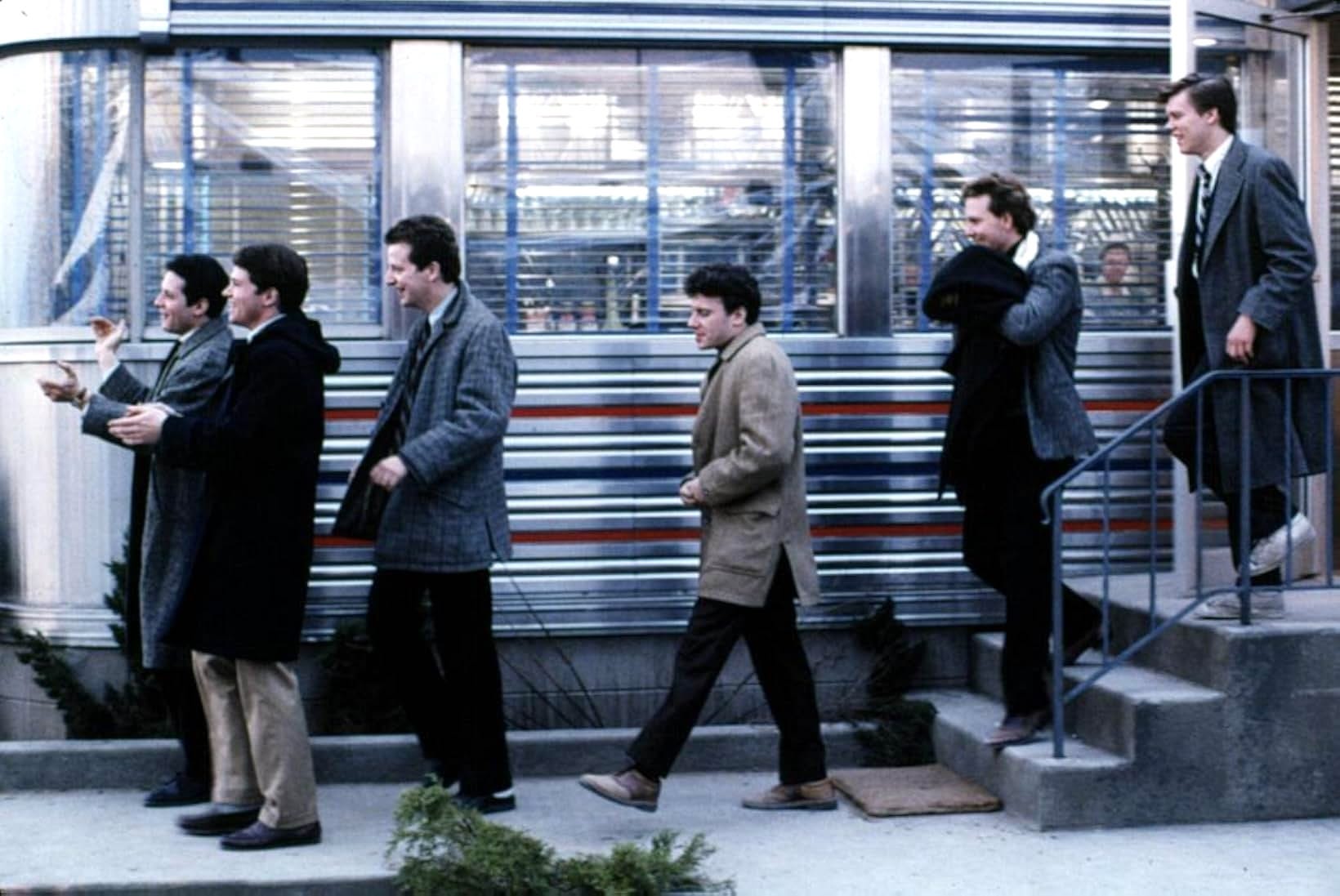
For example, before Diner, Daniel Stern had only made the acclaimed comedy, Breaking Away. Mickey Rourke had only played small roles in Heaven’s Gate and Body Heat. Steve Guttenberg had only played supporting roles in t.v. movies and in the disco movie-musical, Can’t Stop The Music. Likewise, Kevin Bacon had only played minor roles in movies like Animal House and Friday the 13th. Tim Daly and Ellen Barkin had only done a few things on television and Paul Reiser hadn’t done anything before making his debut in Diner.
Even so, all of them were able to give carefully nuanced performances that added depth to each of their characters while capturing the awkward and confusing period between adolescence and adulthood.
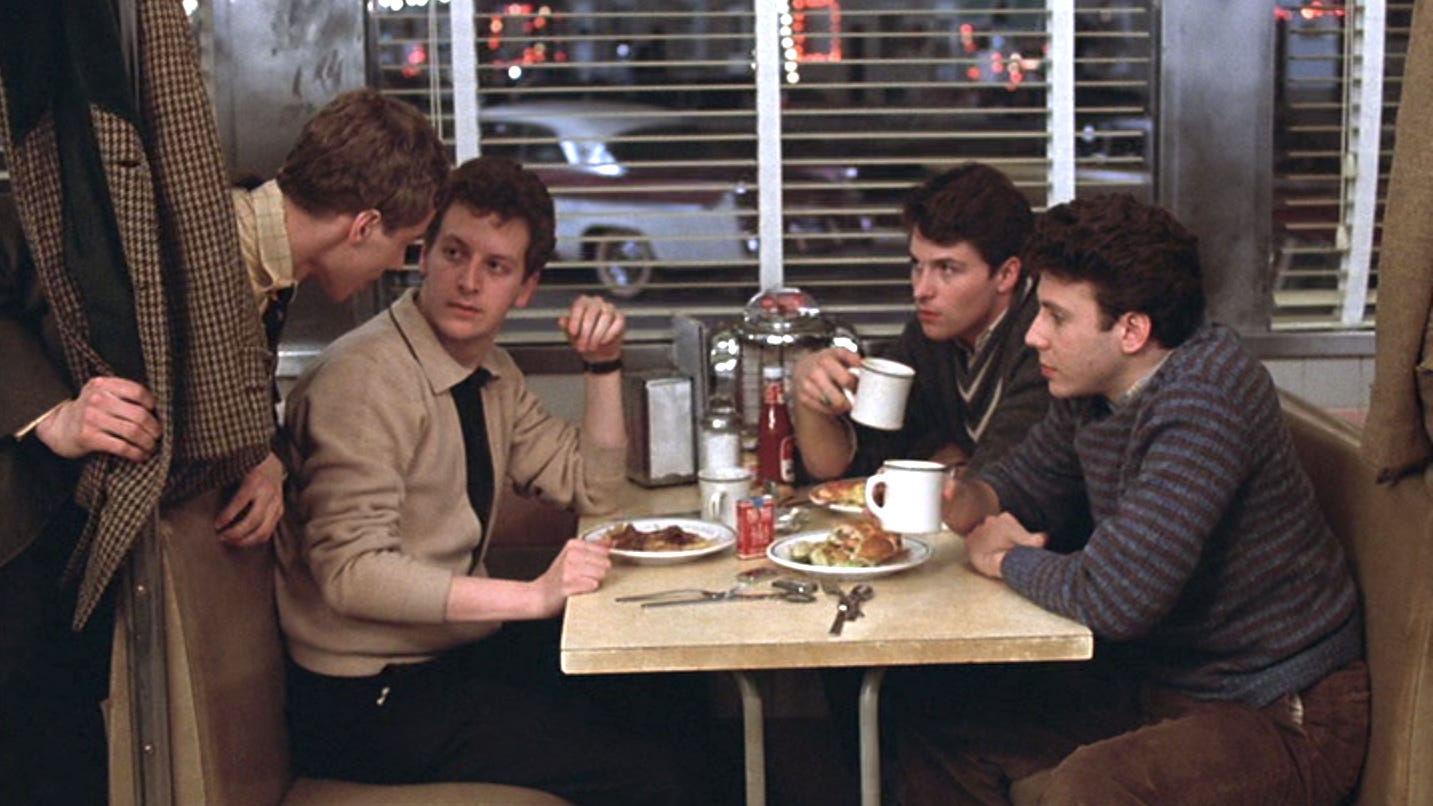
For the group of friends who hang out every night at the Fell’s Point Diner, Bacon, Guttenberg, Stern, Rourke, Daly, and Reiser all display a chemistry that makes viewers believe these guys are close friends who have known each other their entire lives.
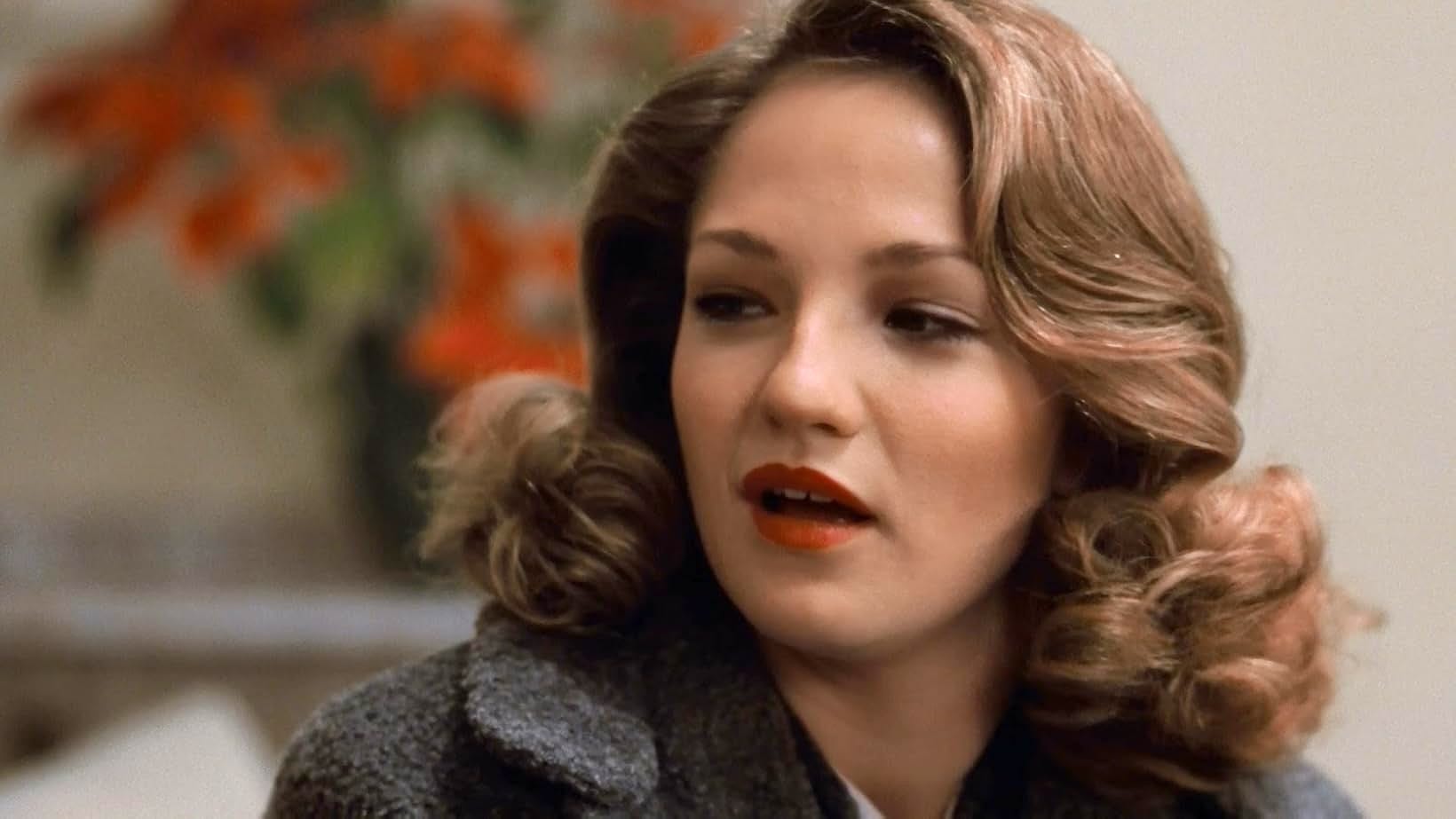
And, in a movie dominated by young men, Ellen Barkin gives a wonderful performance as Shrevie’s wife, Beth. Throughout the film, Barkin is able to capture the frustrations of the 1950s housewife, along with the self-doubts many of those women felt at the time about getting married at a young age.
Another reason why Diner is a great film is the excellent screenplay and direction by Barry Levinson.
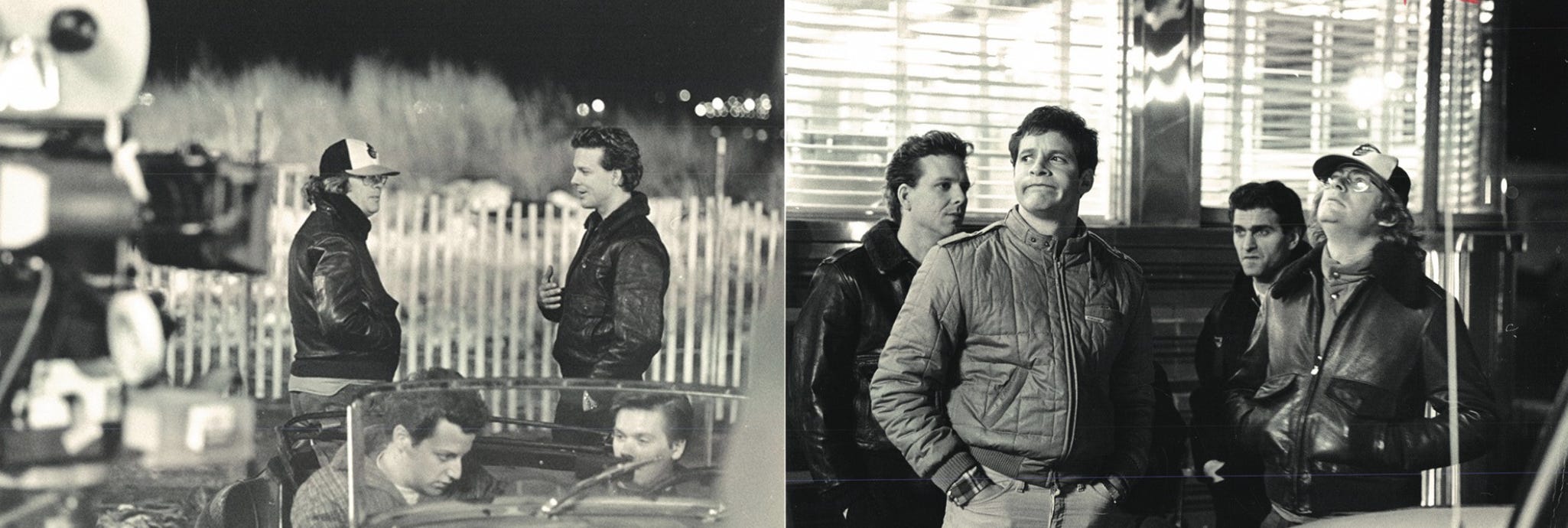
Diner was Levinson’s first film as a writer-director. He based the screenplay on his own experiences growing up in Baltimore during the 1950s, including the relationship he had with his friends and the exploits they did together back then.
According to Levinson, he really did have a friend who as obsessive about his record collection as Shrevie is in the movie. Levinson also said he had a cousin named Eddie who really did make his fiancé pass a difficult football quiz before the cousin would agree to get married.
It’s this personal touch that I think makes Diner ring true for viewers as they watch the film.
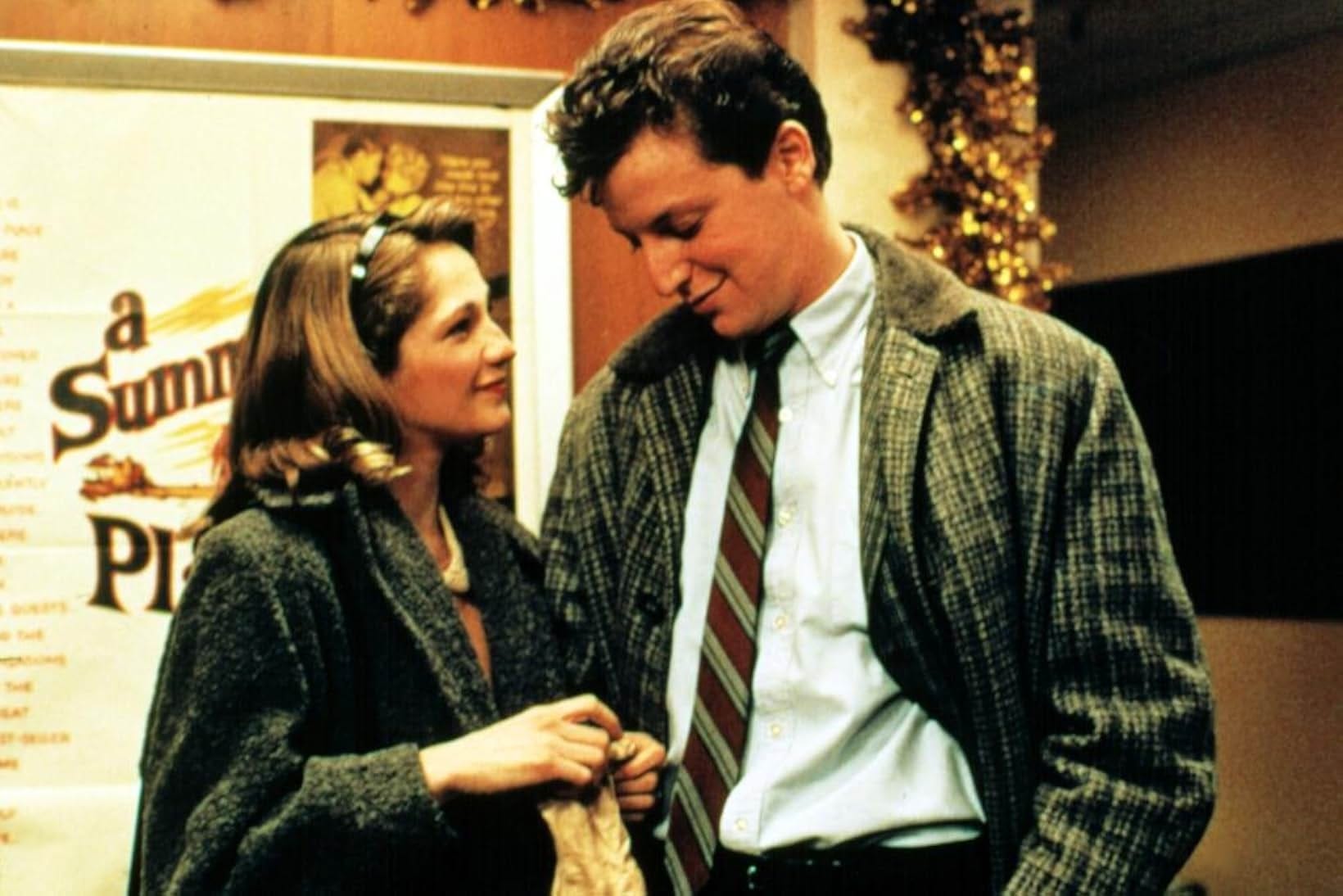
Levinson also avoids turning his characters into stereotypes by giving each one their own quirks and distinct personality. Yet, at the same time Levinson has created characters everyone can relate to because we’ve all known those type of people in our own lives, whether’s it’s Shrevie’s obsessiveness with his record collection and problems with his marriage, Boogie’s charm but troubles with gambling, or Eddie’s immaturity and lack of ambition.
Another strength of Levinson’s Diner screenplay is that all of the dialogue has the feel of real conversation.
As an accomplished screenwriter, Levinson has always had an ear for witty patter, but here he’s able to capture the feeling of a group of friends hanging out together through their naturalistic conversations, which often overlap each other.
Also, by focusing on the characters and their situations instead of a traditional plot, Levinson’s screenplay for Diner is episodic, and in some ways ahead of its time. In fact, both writer-directors Quentin Tarantino and Kevin Smith have publicly stated that the script for Diner has influenced their own writing and help shaped their screenplays for Clerks and Pulp Fiction.
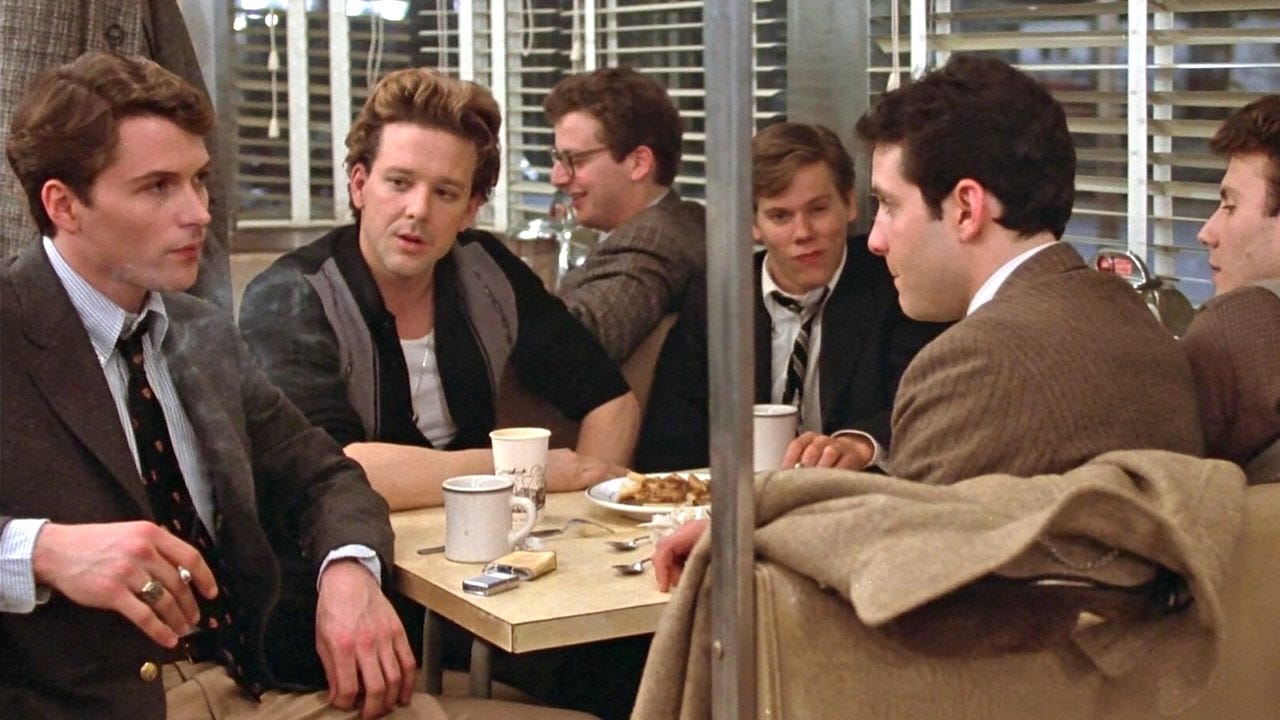
Since Diner was also Levinson’s first film as a director, he kept his focus on the actors.
By letting the cast improvise some of their scenes based on his script, Levinson was able to create an atmosphere of camaraderie amongst the group of friends. This is especially evident in the scenes set at the diner, which were filmed last so the guys had a chance to get to know each other better first.
Levinson is also able to capture the era of the late 1950s through his set design, costumes, and use of vintage pop songs from the era.
The film ends with Eddie and Elyse’s wedding and reception on New Year’s Eve in 1959. During the reception in the banquet room, we see a banner on the wall that says, “Eddie and Elyse - For the 60’s and Forever.” Yet, as viewers, we can’t help but think of all the changes and social upheavals the young newlyweds (and the other characters in the film) will face in the decade to come, such as the Kennedy assassination, The Vietnam War, the Civil Rights movement, and even Woodstock.
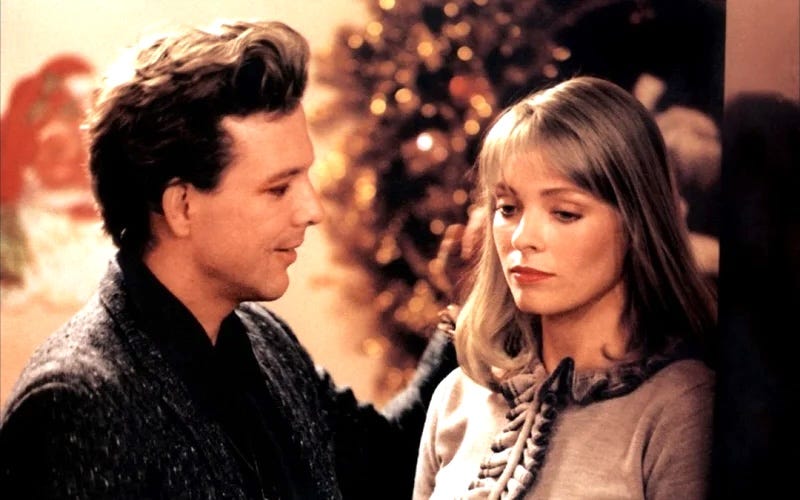
As an autobiographical look back at life in the late 1950s, Diner lovingly depicts the end of an era that seems so innocent in retrospect.
The film is also timeless in the way it depicts friendship and the difficult transition from youth to adulthood.
Watching it again now in 2025, Diner still feels as fresh and vibrant as ever. It’s a film that more people should revisit or discover for the first time.
Yes, after all these years, Diner is still one of the best films of the 1980s.
(Diner is available on various streaming channels and on blu-ray).
I have nothing to add. Your article captures everything that makes this movie special.
One of my favorites! One of the best movies about friends growing up and growing apart.