
Kris Kristofferson Is "Cisco Pike"
Kris Kristofferson gives his best acting performance in this neglected movie

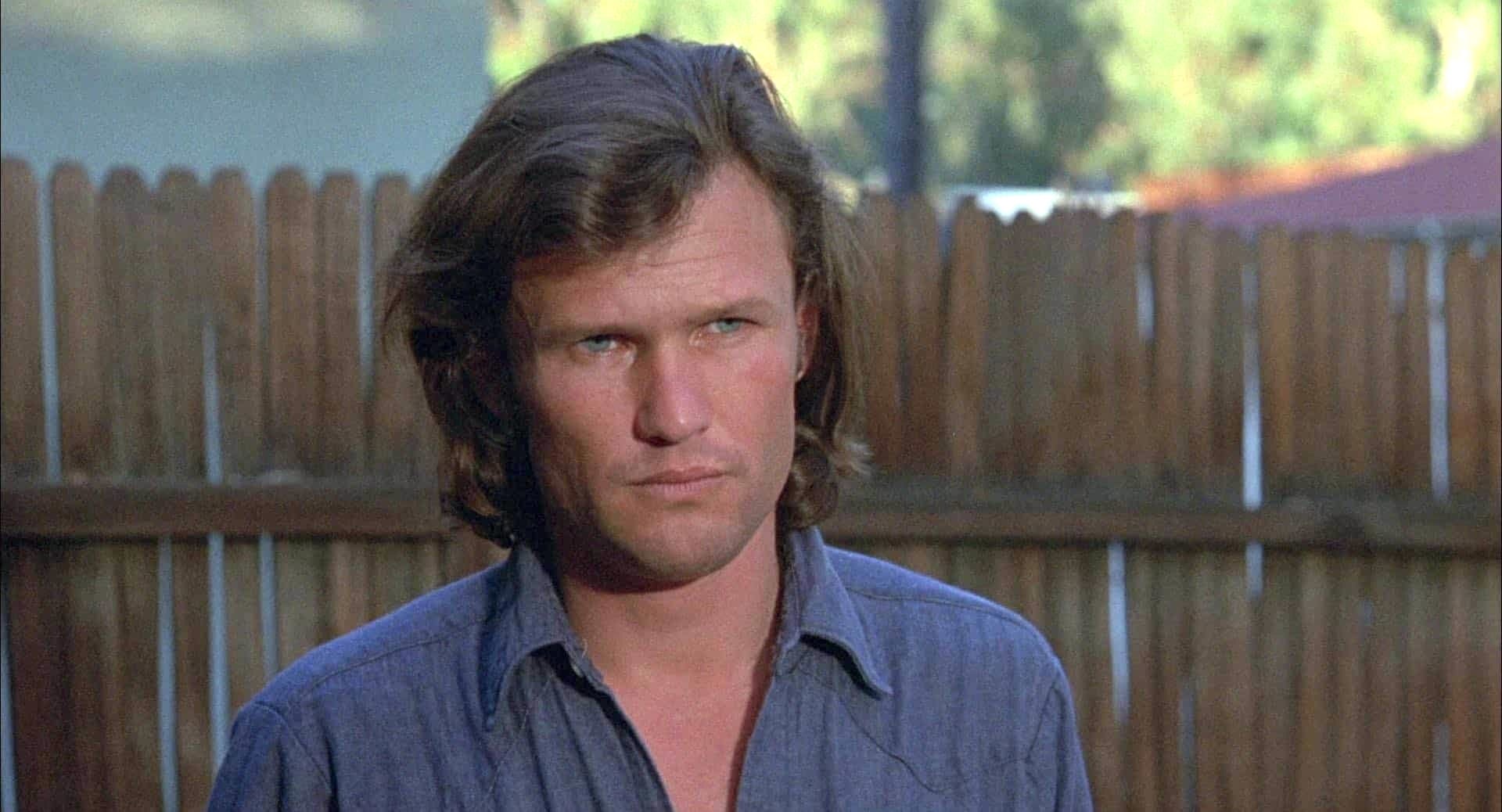
Was there ever a more interesting person than the late Kris Kristofferson? Well, most likely, but one has to admit Kristofferson’s life didn’t progress the way anyone would expect. Born into a military family, Kristofferson graduated from Pomona College summa cum laude with a degree in English and later attended Oxford University as a Rhodes scholar. Afterwards, Kristofferson joined the Army and flew helicopters, rising to the rank of Captain, before leaving the military on the eve of an assignment to teach English at West Point.
Instead, Kristofferson moved to Nashville to pursue music full time. There, he worked as a commercial pilot and as a janitor at Columbia Records’ Music City studio before eventually finding success as a songwriter with such songs as “Me and Bobbie McGee,” which became a posthumous hit for the late Janis Joplin.
In 1970, Kristofferson was performing at the Troubadour club in Los Angeles when actor Harry Dean Stanton gave him the script for Cisco Pike. The actor who was originally hired to play the lead role in the film had dropped out two weeks before filming.
After accepting the role, Kristofferson would go on to become more famous for his acting than for the music he composed and performed.
Yet, most people aren’t familiar with Kristofferson’s first film, Cisco Pike, and until recently the movie could never be found on home video, even if someone did want to see it. Thankfully, Cisco Pike is now available on both streaming and home video.
It’s worth making the effort to find because out of all of Kristofferson’s roles throughout the years (and there have been many), I believe Kristofferson gave the best acting performance of his career as the title character, Cisco Pike, in his first film.
(Warning: Spoilers Ahead)
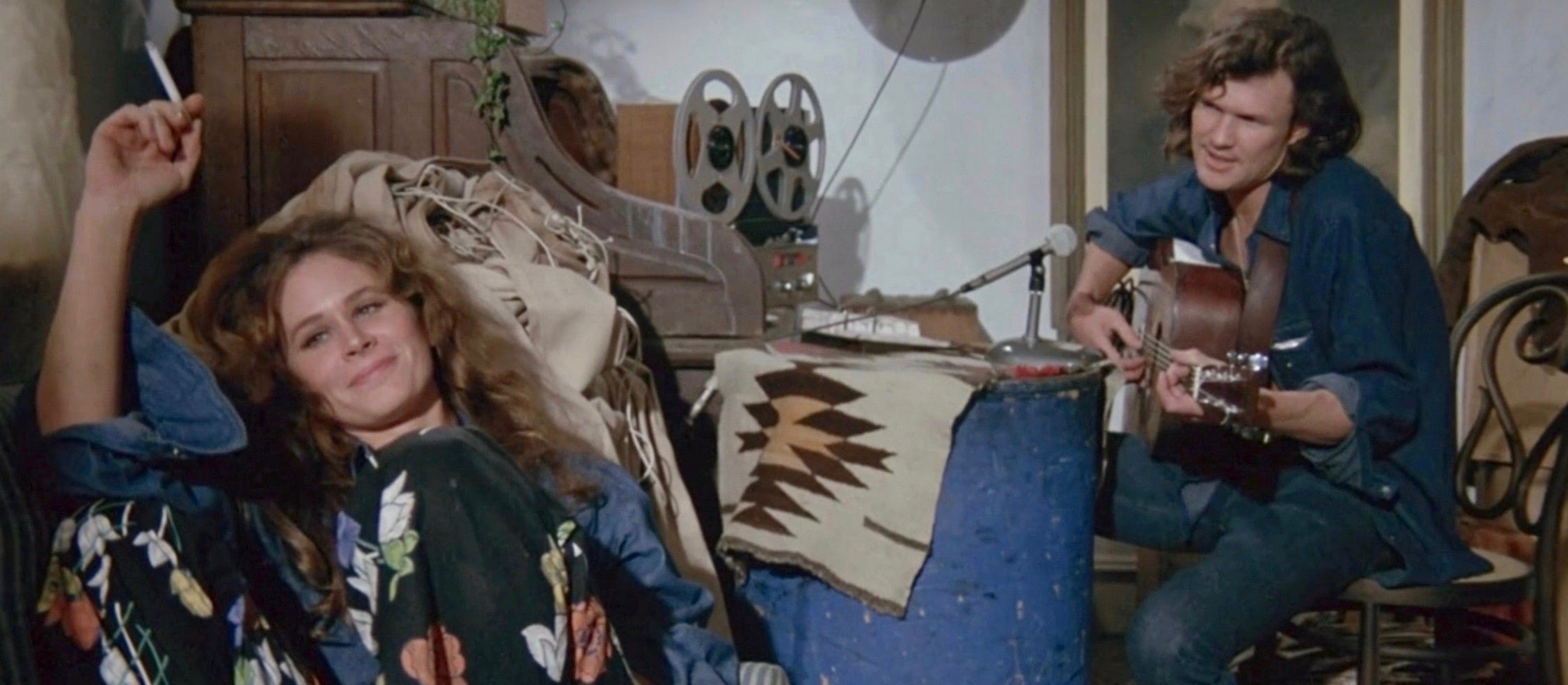
Filmed in 1970 but not released until two years later, the film tells the story of Cisco Pike, a musician turned drug-dealer in the Venice Beach area of Los Angeles in 1970. A few years earlier, Cisco was part of a music duo with his friend Jesse Dupre (Harry Dean Stanton). The two had a hit single back in 1966 that brought them money and fame. Unfortunately, they weren’t able to repeat that success and duo broke up - another one hit wonder in the cruel reality of the music business. After that, Cisco Pike turned to dealing drugs in order to make a living. It turns out he was good at it, even if he was busted twice.
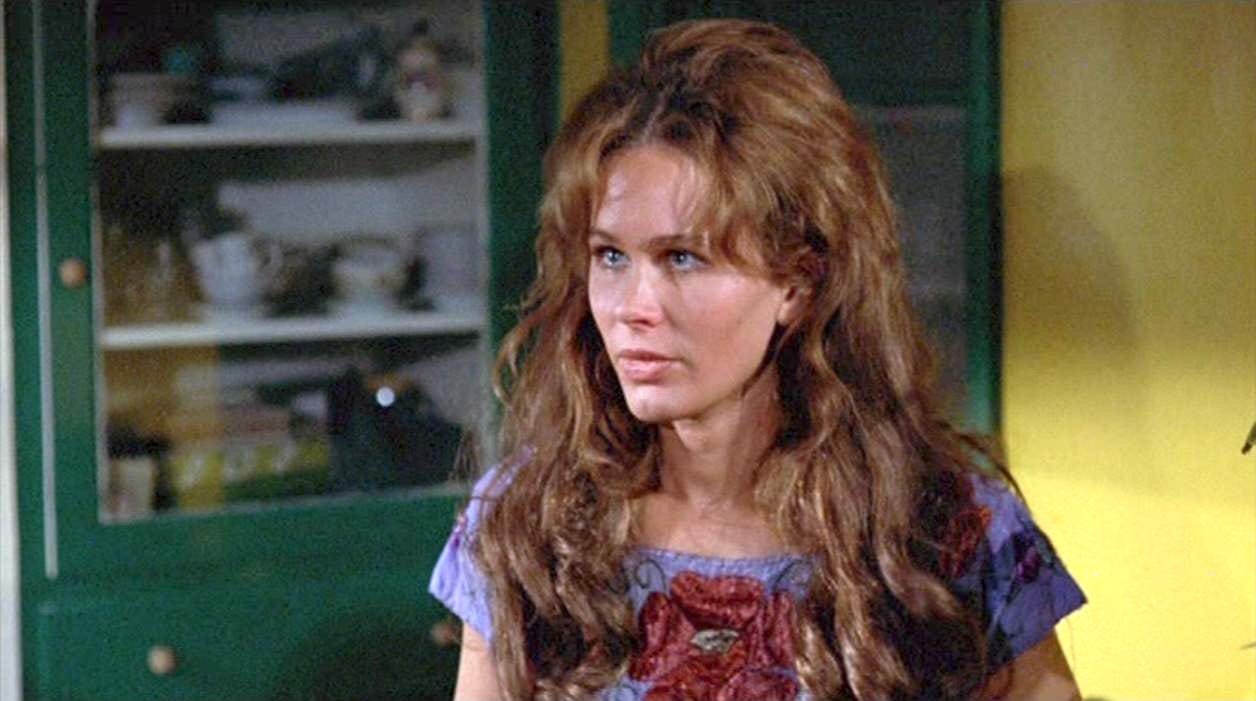
As the film begins, Cisco has given up dealing drugs because of the pleas of his live-in girl friend, Sue, (Karen Black) and the knowledge that another bust would land him in prison for at least five years. Instead, Cisco tries to rekindle his music career by sending out demo tapes to music producers and record labels.
Unfortunately, nobody’s interested in either Cisco or his new songs. Things have become so bad that Cisco even tries to pawn his favorite guitar, but the music store owner refuses to take it.
Not long afterwards, the cop who busted Cisco, Sgt. Leo Holland (Gene Hackman), re-enters Cisco’s life. A by the book policeman suddenly gone corrupt, Holland coerces Cisco to take part in a scheme; if Cisco sells all of Holland’s illegally seized bricks of pot in one weekend and gets Holland $10,000.00 in cash, Cisco can keep any additional money he makes and Holland will get Cisco’s conviction thrown out.
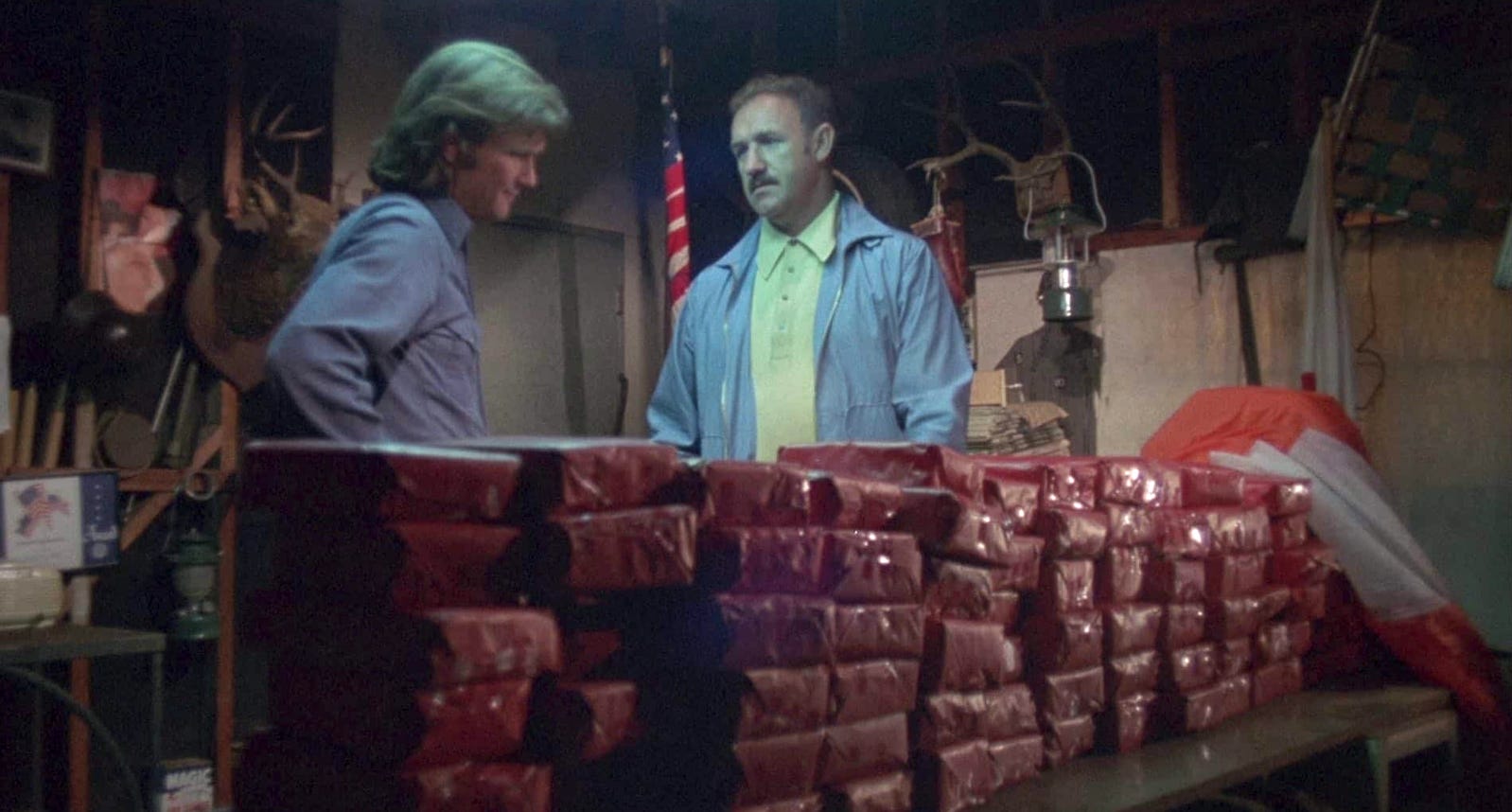
Of course, Cisco wants no part of this scheme, but after Holland threatens him with another arrest (which would send Cisco to prison), he has no choice but to do Holland’s bidding and sell the dope.
Since Cisco is a great drug-dealer, he finds willing clients all over L.A. Everyone from burned out ex-hippies to professional businessmen want to buy Cisco’s bricks of dope (that’s how they were packaged back then).
Then Cisco’s former partner, Jesse, returns. He’s left his wife and kids to return to L.A. There’s a faint glimmer of hope that the two can reform their band. But those dreams are soon dashed when Jesse unexpectedly dies from a heroin overdose. After Cisco places Jesse’s body on a park bench by the beach outside his home, (Cisco can’t afford to be questioned by the authorities over Jesse’s overdose) Sue convinces Cisco to call the police and have an ambulance come get his body.
After placing the call, Sgt. Holland suddenly shows back up wanting his money. Sweating profusely and acting jittery, Holland tries to justify his turn to corruption by alluding to a terminal heart condition that will get him relieved of duty with no pension.
However, when Holland hears the sirens of the ambulance coming to get Jesse’s body and spots a police helicopter in the sky, his paranoia gets the best of him. Holland accuses Cisco of setting him up for arrest and begins firing his gun at both the ambulance and the helicopter. He’s soon shot dead by his fellow policemen on the force.
The film ends with Cisco driving; he’s left L.A. and everything with it behind, including Sue, to begin a new life somewhere else. Where Cisco is headed is never made clear.
What makes Cisco Pike a great film isn’t just this story; it’s everything else first-time director Bill Norton and his cast bring to the movie.
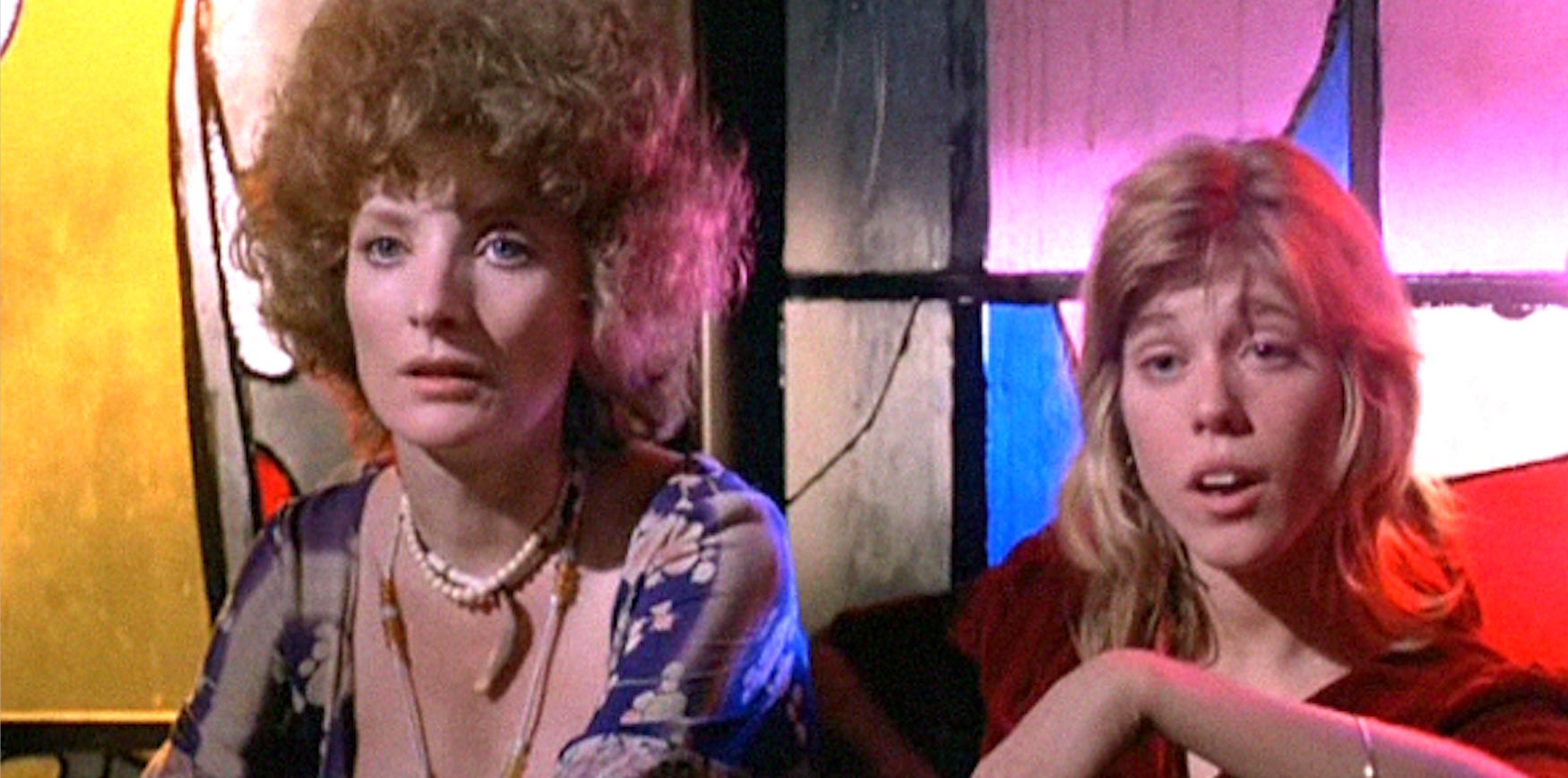
First, this film is perfectly cast, from the lead roles played by Kris Kristofferson and Gene Hackman, to the supporting cast, which includes Karen Black (right after her debut performance in Five Easy Pieces), Harry Dean Stanton, Andy Warhol regular, Viva, Roscoe Lee Brown, Antonio Fargas, Allan Arbus, Joy Bang, and 60’s icons Wavy Gravy and musician Doug Sahm. All of these actors embody their characters and give such nuanced performances that you believe they’re real people.
But it’s really the sub-text and locations that director Bill Norton add to this film that makes it so powerful.
You see, this isn’t just a story about a washed-up musician; this is a statement about the death of the 60’s dream - the optimism that California promised to fulfill for the youth of America back then which died after 1969.
Similar to Joan Didion’s writing in her only novel, Play It as It Lays, and later in her book of essays, The White Album, Cisco Pike portrays the aftermath of the Manson murders, which as Didion correctly pointed out, changed everything about people’s attitudes and the way they lived in L.A. The Los Angeles of Cisco Pike is run-down and decaying; nobody is surfing or sunbathing on the beach.
Director Bill Norton brilliantly captures the real Los Angeles of 1970 and focuses on showing it the way it was then instead of trying to extend the mythology and nostalgia of the early to mid-sixties that has been seen in so many television shows and movies (including Quentin Tarantino’s recent film, Once Upon a Time in Hollywood).
Although it’s not explicitly stated in the movie, viewers can feel the weariness and pessimism of the characters, especially Kristofferson’s Cisco Pike, in the film.
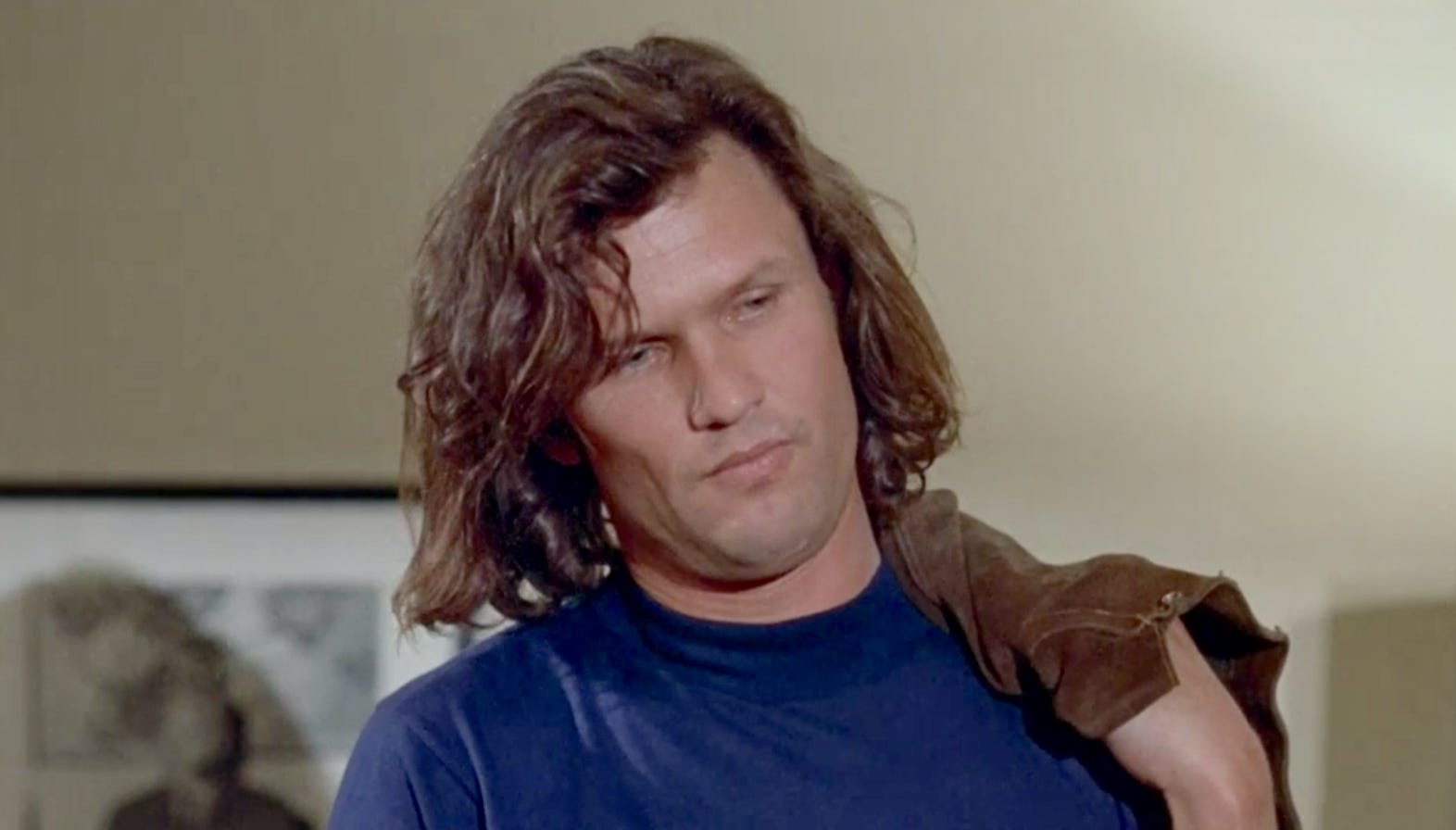
One telling point is that as you watch the movie, you realize that nobody’s having fun. Nobody smiles. Everyone’s just trying to cope. In fact, one has to wonder if Cisco’s many customers for his dope just need it to deaden the pain, not for their enjoyment.
Another thing that’s oddly never talked about in the movie but still hangs over it in the background is the fact that in 1970 when the film was made, the Vietnam war was still raging; Nixon was president; and four students were shot dead at Kent State University that spring. Perhaps that accounts for the depressed weariness of all the characters and their pessimism in the movie.
There’s also the sense that things are changing - and not for the better. This unstated aspect of the characterizations in the movie brings to mind another Gene Hackman movie that was made a few years later - Arthur Penn’s, Night Moves.
The idea that things aren’t getting better but worse is especially made clear in the way the music business is portrayed in the film.
This is established in the very beginning of the film as Kristofferson walks through the decay of Venice Beach to the music store where he hopes to pawn his favorite guitar. At first, the owner of the store, (Roscoe Lee Brown) doesn’t quite understand what’s happening:
“What have you brought for me? A little coke?”
Kristofferson replies, “I’m not dealing no more.”
“You’ve come to sing for me? What a beautiful surprise.”
Kristofferson opens his guitar case and says, “What will you give me for it?”
Inside the case, is Cisco’s acoustic guitar. It’s the one he used to write and perform his hit song a few years earlier. It’s the guitar that’s autographed by famous musicians like Janis Joplin, Bob Dylan, and Odetta Holmes.
The music store owner looks over the guitar and says, “It’s come to this?” Then he refuses to buy it by saying, “This is your guitar.”
As Cisco is about to leave, the store owner adds, “Don’t look back. Something may be gaining on you.”
At just that moment, Cisco turns and sees a framed photo of himself and his musical partner Jesse Dupre accepting a gold record from the head of their music label. Shockingly, that was just four years earlier.
Later, when Cisco meets rival drug dealer, Buffalo (Antonio Fargas), the drug lord says, “I remember a couple of years ago, you been selling them millions of records. now you’re broke. Ain’t that a bitch.”
So when Cisco is forced to sell the large quantities of marijuana bricks for Officer Holland, it’s ironic that Cisco carries the drugs in his guitar case to avoid suspicion.
You see, Cisco is forced to make deals at the same recording studios and clubs where he used to play. In fact, these deals are with the same people that no longer have any interest in his music. Yet, they can’t wait to buy his drugs.
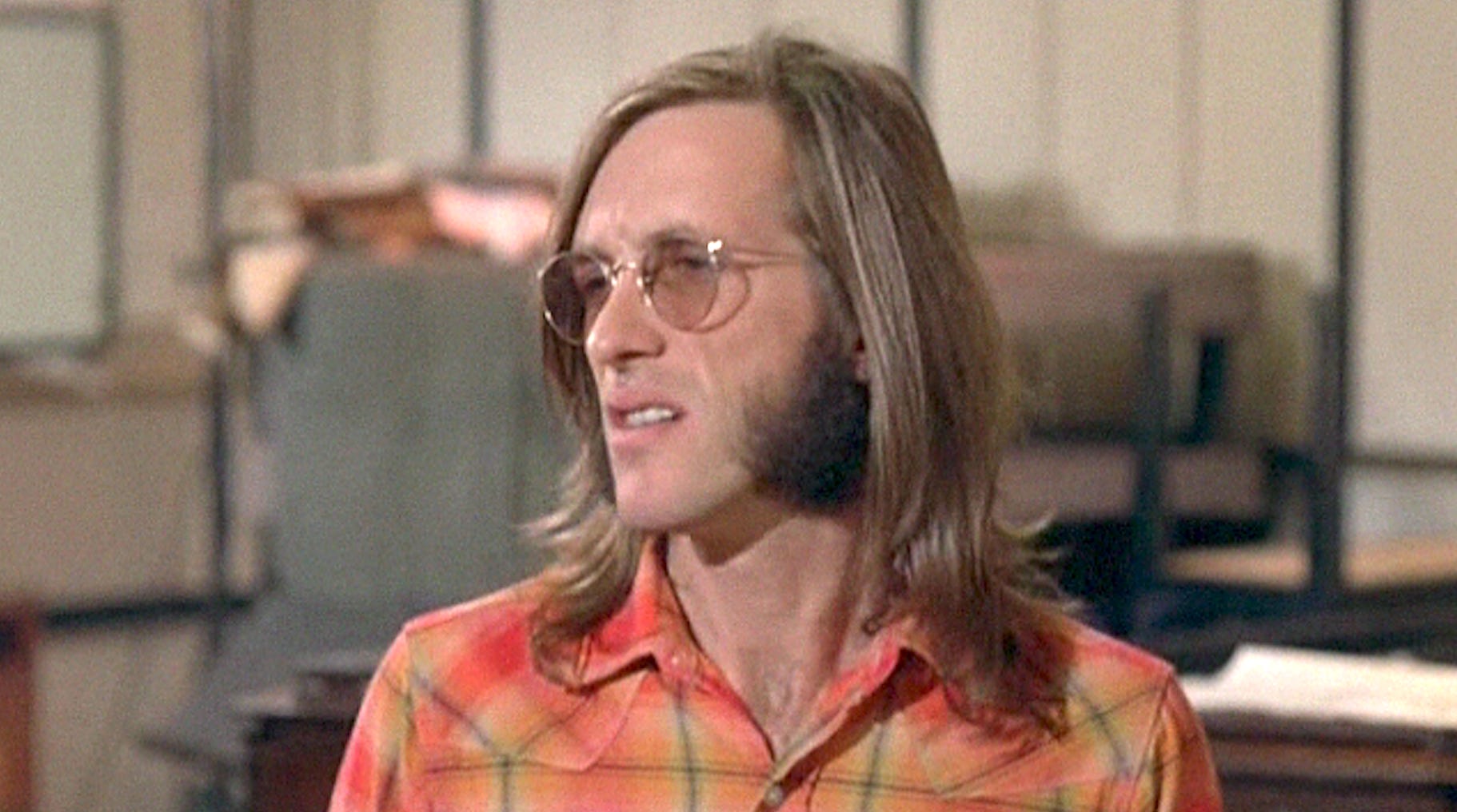
This is especially driven home in the scene with musician Doug Sahm of The Sir Douglas Quintet. When Cisco enters the recording studio, Sahm’s character, Rex, is busy rehearsing with a band he’s producing for their album. Watching the band practice is a groupie named Merna (Viva). She asks Cisco if he’s Rex’s drug dealer. Cisco replies, “No, I’m his friend.” However, a few moments later, Rex seems taken aback when Cisco asks if he’s listened to the demo tape Cisco left for him some time ago. Speaking a word-salad of jive hipster nonsense, Rex makes it clear that he has no interest in Cisco’s music; only his drugs.
In a very prescient moment, Rex pawns Cisco off on record executive Slim Valensi (Allan Arbus), who wants Cisco to fill out a form for the drug purchase so the label can say they hired him and deduct the expenditure from their taxes. Little did anyone know at the time that in just a few years this would be common practice throughout the music business. However, instead of buying pot, record execs would be buying their talent mounds of cocaine.
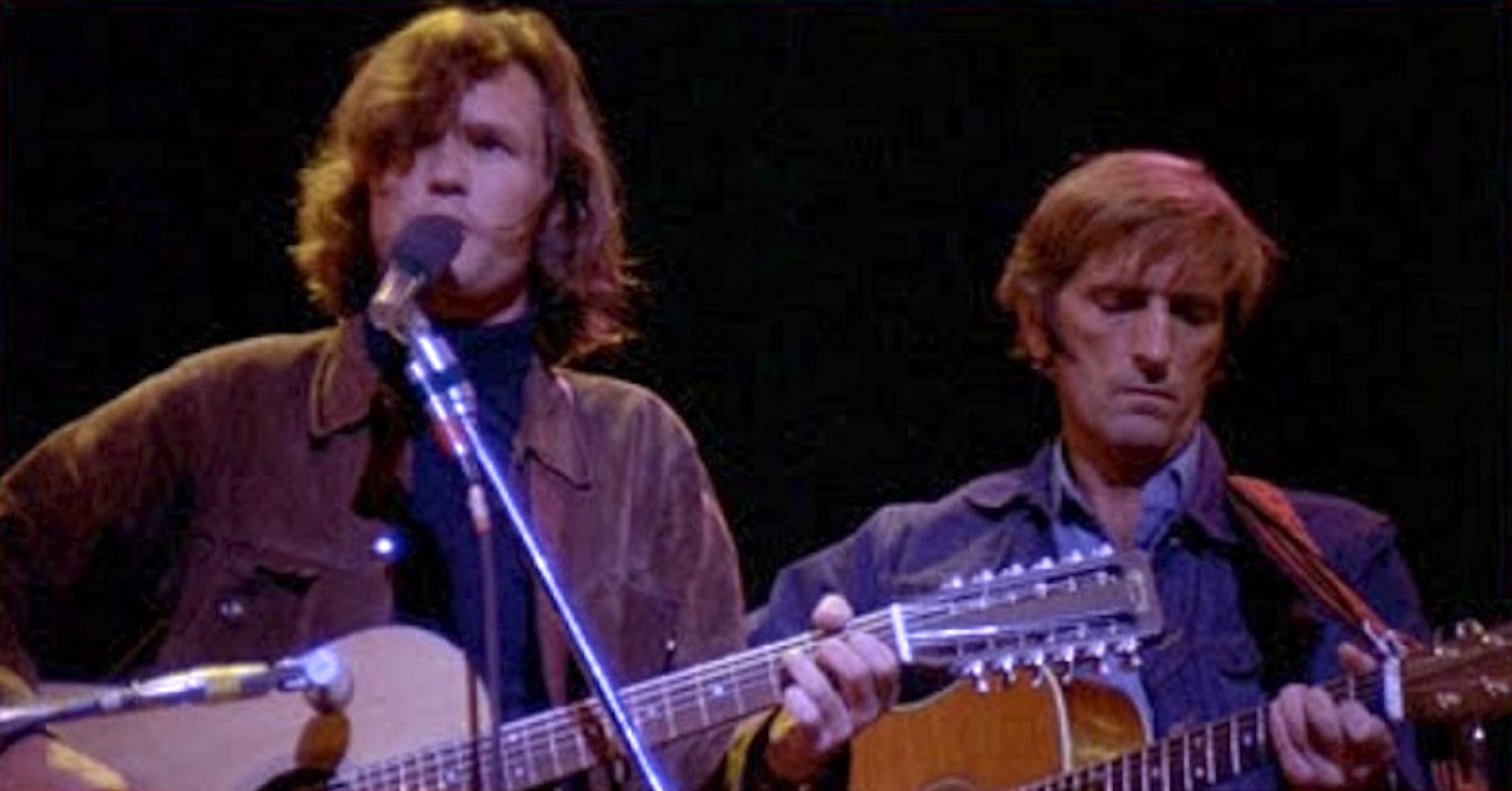
In contrast to all this are the beautiful songs composed and performed by Kris Kristofferson that are sprinkled throughout the film.
Most of the songs come from Kristofferson’s acclaimed 1971 album, The Silver Tongued Devil and I. The first song heard in the film is “Lovin’ Her Was Easy,” which is played over the opening credits as Kristofferson’s Cisco makes his way through Venice Beach to the music store where he tries to pawn his guitar. Another standout song used in the movie is “Breakdown,” which is used during a montage that includes Cisco’s threesome with groupies Merna (Viva) and Lynn (Joy Bang), and a flashback of Cisco and Jesse performing the song live on-stage just a few years earlier to a large audience. Finally, one of Kristofferson’s best songs, “The Pilgrim: Chapter 33,” is used both in a montage when Cisco sells Officer Holland’s bricks of marijuana and later at the end of the film as Cisco drives away from L.A. and California for good.
These songs do more than establish a mood or provide an aural counterpoint to the film; they also reveal Cisco’s talent as a songwriter, which nobody in the film seems to recognize or want to acknowledge.
Another important aspect of Cisco Pike are the locations used throughout the film.
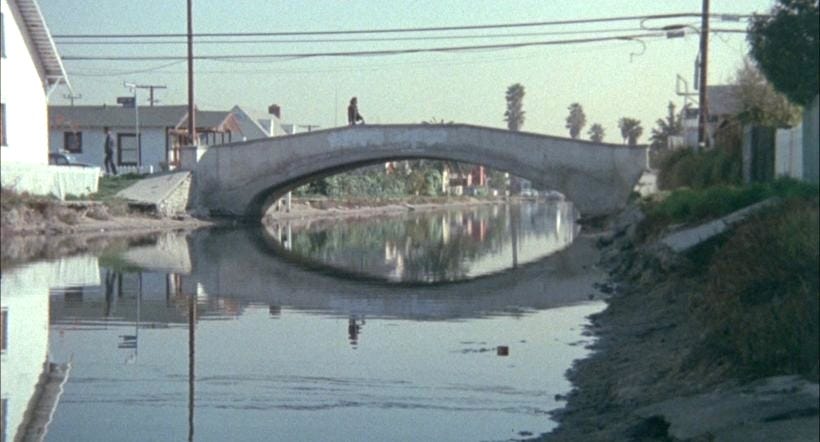
Much of the action in the story centers around Venice Beach, which was beginning to fall apart by 1970 when the movie was filmed, just like the ruins of the Pacific Ocean Park which can be seen in the background throughout the film. Originally built in 1958, Pacific Ocean Park was an amusement park built on a pier in Venice Beach that was designed to compete with Disneyland.
Unfortunately that didn’t happen. The park closed in 1967 and soon fell into disrepair. It was eventually demolished in 1974. As seen throughout the movie, the dilapidated amusement park becomes a visual metaphor for everything the characters have lost by the end of the 1960s.
Another Venice Beach landmark of sorts that also no longer exists can be seen in the beginning of the film; Cisco, guitar case in hand, walks past a surreal mural called Venice in the Snow. The mural was originally painted in the summer of 1970 and depicts winter in the Venice Beach neighborhood, which is shown covered in snow, even though that could never happen there, of course.
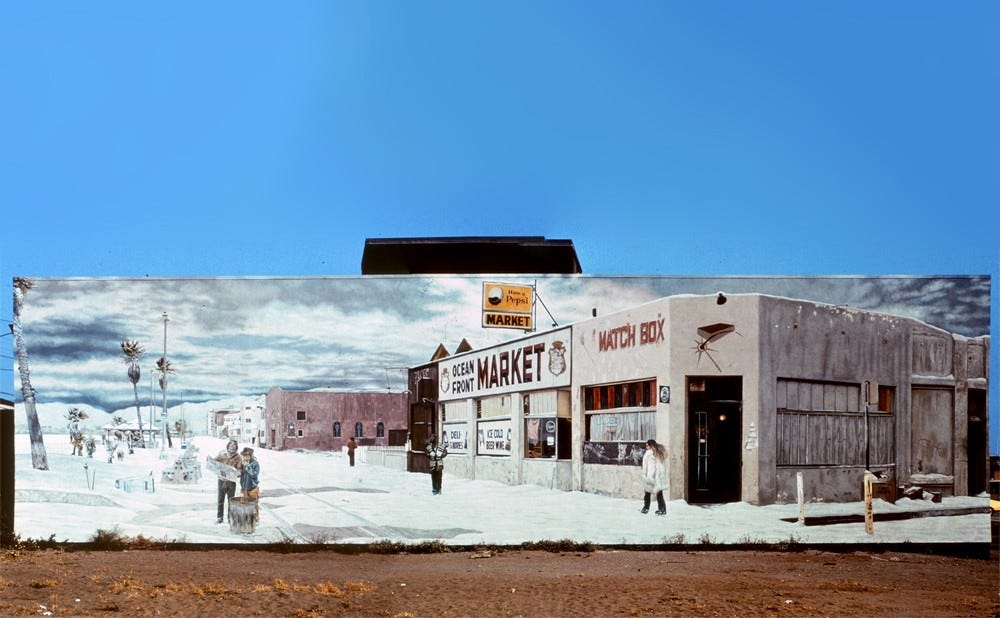
The mural became famous in 1971 when it used as the cover for the rock band Little Feat’s first album. Sadly, a year later, developers built an apartment complex on the adjoining lot that totally obscured any view of the mural. It was later painted over.
Yet another location used in the film that also disappeared soon afterwards is Olivia’s, which was a soul-food restaurant favored by UCLA students, including members of The Doors. The band later immortalized the restaurant in their song, “Soul Kitchen.” In the movie, Cisco meets rival drug dealer, Buffalo, at the restaurant to make a deal. Shortly after this scene was filmed, the restaurant closed and the building was demolished.
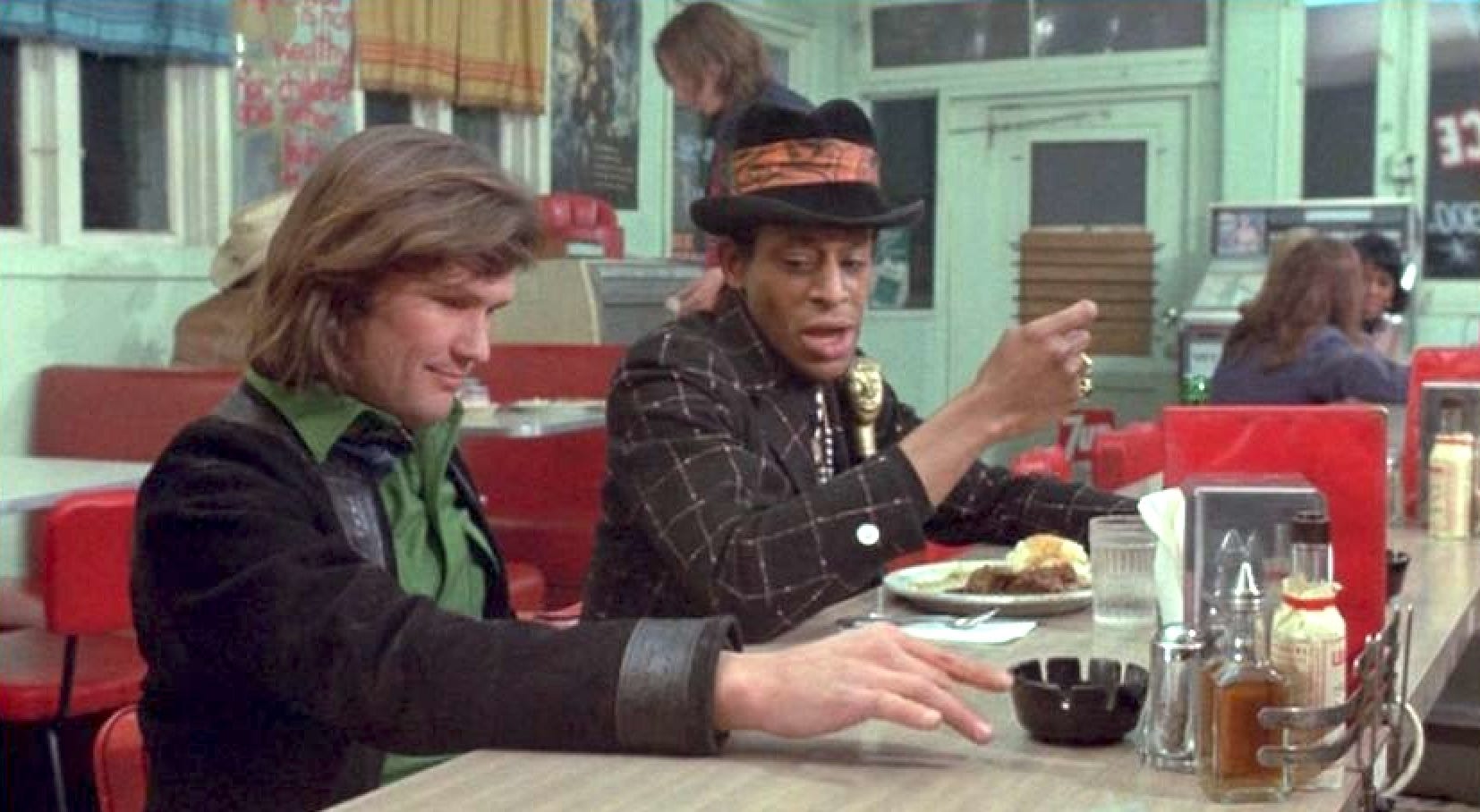
When Cisco meets rock groupie, Merna (Viva) at the recording studio, they drive to the vegetarian restaurant, The Source, to pick up Merna’s friend, Lynn (Joy Bang).
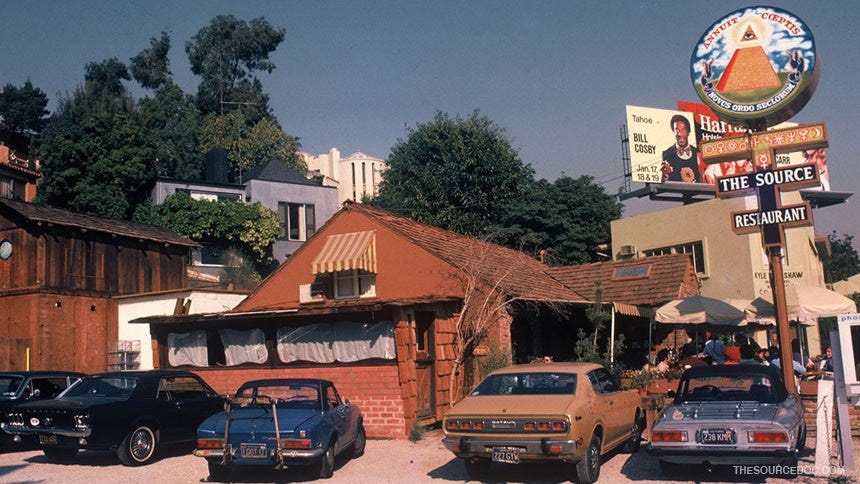
The Source was owned by Father Yod, who later moved to Hawaii and eventually died in a hang-gliding accident. As a movie location, The Source is also famous for its appearance five years later in the movie, Annie Hall. At the end of the Annie Hall, Alvy (Woody Allen) flies to Los Angeles in one last failed attempt to get back together with his ex-girlfriend, Annie (Diane Keaton) Afterwards, filled with rage, Alvy backs his rented car into the back of other parked cars, causing much damage to them in the restaurant’s parking lot.
The famous Troubadour club is also an important location used in the movie.
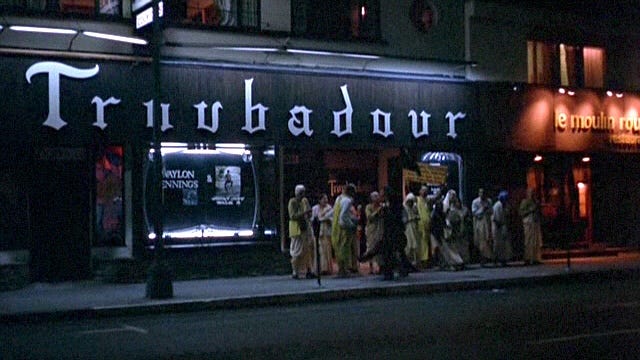
Opened by Doug Weston as a coffee house in 1957, The Troubadour became known as the center of the folk music scene in the 1960s and later for singer-songwriters and rock musicians. In 1962, comedian Lenny Bruce was arrested on obscenity charges while performing on-stage there. Four years later, Buffalo Springfield made their debut as a band at the club. And, in 1970, the same year Cisco Pike was filmed, Elton John, performed his first show in America at the club.
Around that same time, Kris Kristofferson was performing a residency there when his future co-star Harry Dean Stanton gave him the script to Cisco Pike and asked him to consider playing the lead role in the film.
In the film, Cisco and Jesse go to The Troubadour so Cisco can make a drug deal there. Being inside the club becomes a painful reminder that just a few years earlier the two were successful musicians and performed on the Troubadour’s stage. Now, the manager of The Troubadour no longer has any interest in Cisco’s music, but he warmly embraces Cisco when Cisco arrives with the bricks of pot.
The truth is that without all of these locations, the film wouldn’t be as interesting or as good.
It’s also important to note that Cisco Pike wasn’t an easy movie to get made.
Writer-director Bill Norton, who was 27 at the time and a recent film school graduate, originally pitched the story as “Dealer” in 1969 to Columbia executive, Gerald Ayres. Ayres subsequently left the studio to produce the film. After numerous rewrites and last minute casting changes, Cisco Pike was finally short on location in late 1970 for less than $800,000.00.
It was the first film to feature a drug dealer as the hero of a movie.
Even so, the studio sat on the completed movie for so long that by the time it was released Gene Hackman had already become a major star thanks to his acclaimed performance in The French Connection, which was filmed after Cisco Pike but released to theaters before it.
When Cisco Pike finally did get its theatrical release, it bombed with both critics and audiences and virtually disappeared for years.
The studio refused to license it for television or cable broadcast, and it was never available on home video. In fact, a dvd wasn’t released until 2006. Later, a region B blu-ray was released in 2020.
The film also didn’t help writer-director Bill Norton’s career either. Norton wouldn’t be hired to direct another movie until 1979 when George Lucas gave him the job of directing the sequel, More American Graffiti.

In contrast, both Kris Kristofferson and Gene Hackman would go on to become major Hollywood stars. Yet, out of all of Kristofferson’s movies, which include such major films as Sam Peckinpah’s Pat Garret and Billy The Kid; Martin Scorsese’s Alice Doesn’t Live Here Anymore; Barbara Streisand’s remake of A Star is Born; the ill-fated, Heaven’s Gate; and the Marvel comic book movie, Blade; it’s Kristofferson’s performance in Cisco Pike that I think represents his best work as an actor.
In conclusion, Cisco Pike remains a fascinating film that perfectly captures the time period in which it was made. Featuring great performances by both Kris Kristofferson and Gene Hackman, along with its talented supporting cast, Cisco Pike is a film that needs to be critically reassessed and enjoyed by film lovers of all ages.
(Cisco Pike is currently streaming on Amazon Prime. It’s also available on dvd and as a Region 2 blu-ray from Powerhouse/Indicator Films).
Once again, you surprise me with information I didn't know. Kris Kristofferson graduated Summa cum laude, attended Oxford University as a Rhodes scholar and was a pilot. You know I'm a huge fan of that 1970's realism where nothing ends with everyone walking off in the sunset. I love Gene Hackman so this is a must see. Love that you included the photo of Antonio Fargas. Great article!
Love this movie! I'd label it as Dope Noir, a genre shared by another favorite of mine: Who'll Stop the Rain? Just bought Silver Tongued Devil; a listen followed by a re-watch of this movie would make a great evening.