
My Favorite Movies About Ireland
For movie fans, these films are a pot of gold

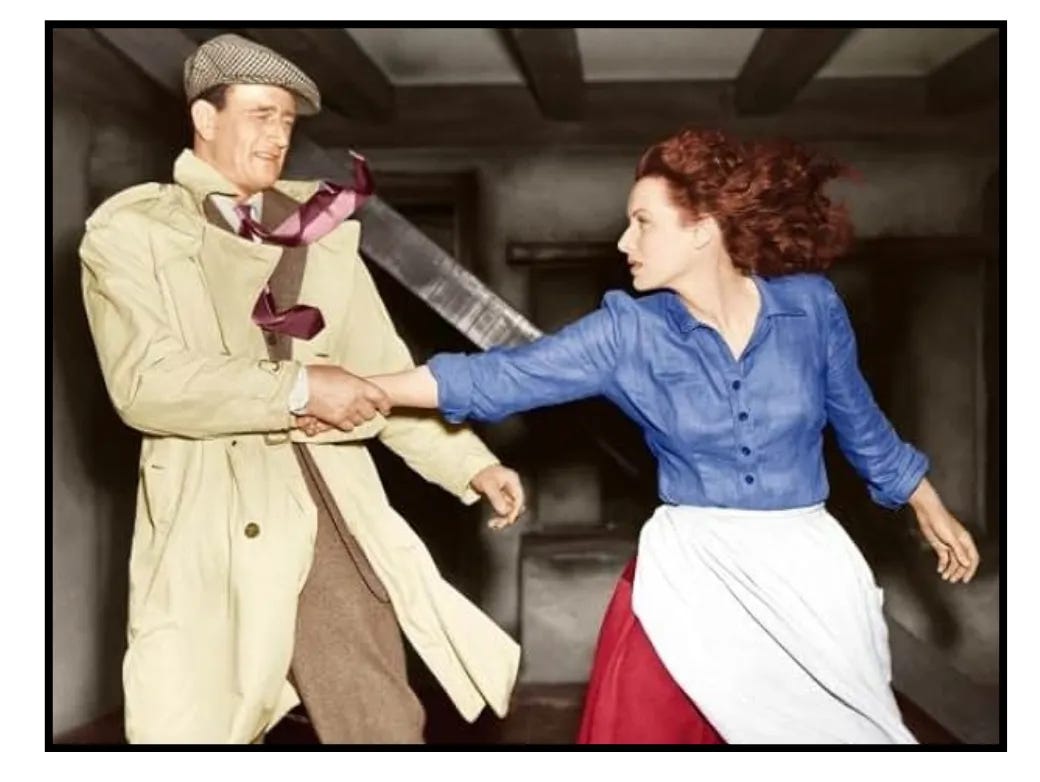
In honor of St. Patrick’s Day, I thought it would be fun to share some of my favorite movies about Ireland. If you’re looking for a great film to watch this St. Patrick’s Day (or any other time of the year), here are my recommendations. I’ve listed my top five choices below in alphabetical order…
1. The Banshees of Inisherin
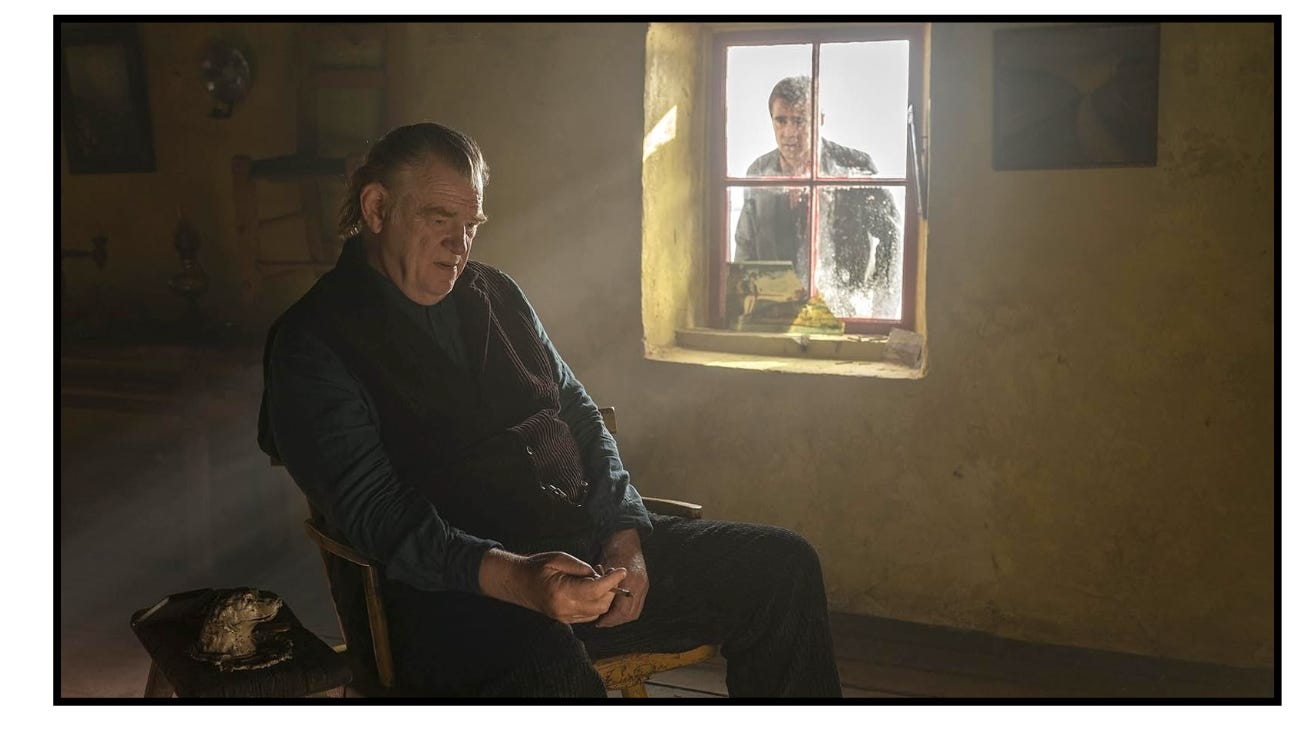
This is one of my favorite recent films. Set on a remote fictional Irish island in 1923, The Banshees of Inisherin is written and directed by Martin McDough, who also wrote and directed the acclaimed film, In Bruges. That film starred Colin Farrell and Brenden Gleeson, and here they’re reunited with McDough in this dark comedy-drama.
The story is about two friends: Pádraic and Colm. Colm (Brendan Gleeson) is a musician and serious person; in contrast, Pádraic (Colin Farrell) is a simple yet kind milkman whose entire life seems to revolve his donkey, Jenny. Every day at precisely 2 p.m. Pádraic goes to visit Colm and the two spend the rest of the afternoon (and evening) drinking at the local pub.
Then, one day Colm suddenly decides he no longer wants to be friends with Pádraic. Colm tells him that life is too short for the dull conversations Colm must endure from Pádraic every day.
Colm says from that point on he intends to use his time more wisely by composing music and “pondering deeper thoughts.”
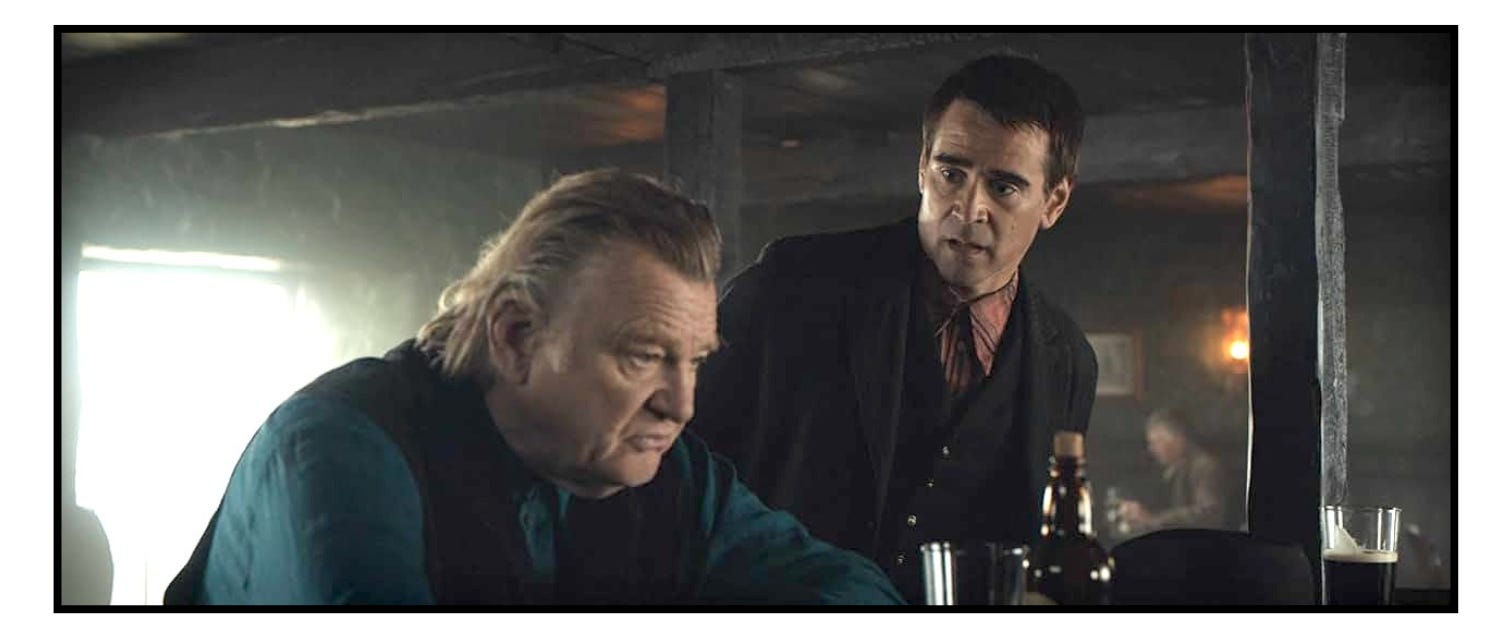
Pádraic struggles to understand why Colm made this decision and keeps pestering Colm to remain friends. Colm refuses and eventually he’s forced to make an ultimatum: if Pádraic keeps pestering him, Colm will begin cutting off his fingers. Of course, Pádraic doesn’t believe Colm, especially since Colm is a musician who plays the fiddle. Consequently, because Pádraic won’t give up, Colm does follow through on his pledge and slices off a finger. And then another one. Soon, things escalate even further and spiral out of control.
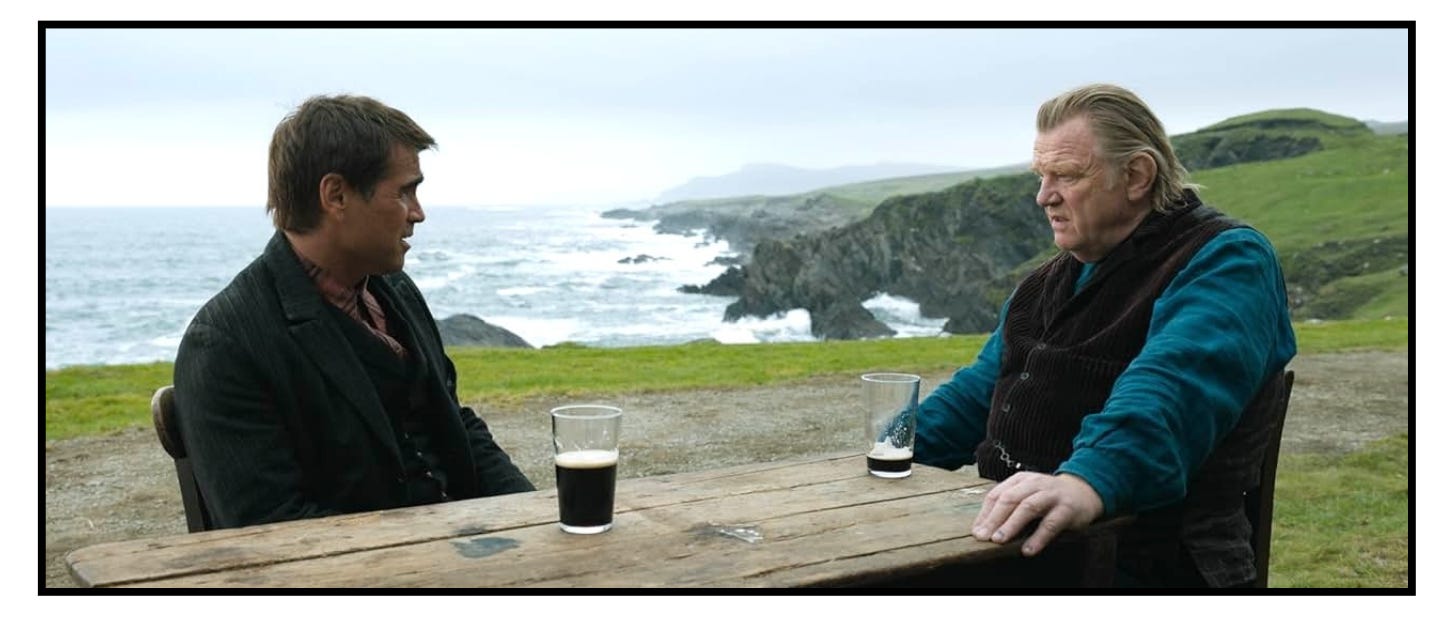
What I like about the film is how it works as both a simple comedy but also as an examination of how we spend our time.
In addition, the story can be also be seen as a metaphor for the Irish Civil War which was happening during that time (in fact, in many scenes the sound of guns can be heard going off in the background).
Finally, the film has a great script and wonderful performances by both Farrell and Gleeson, along with Kerry Condon as Pádraic’s sister, Siobhán, and Barry Keoghan as a troubled kid named Dominic.
2. Brooklyn
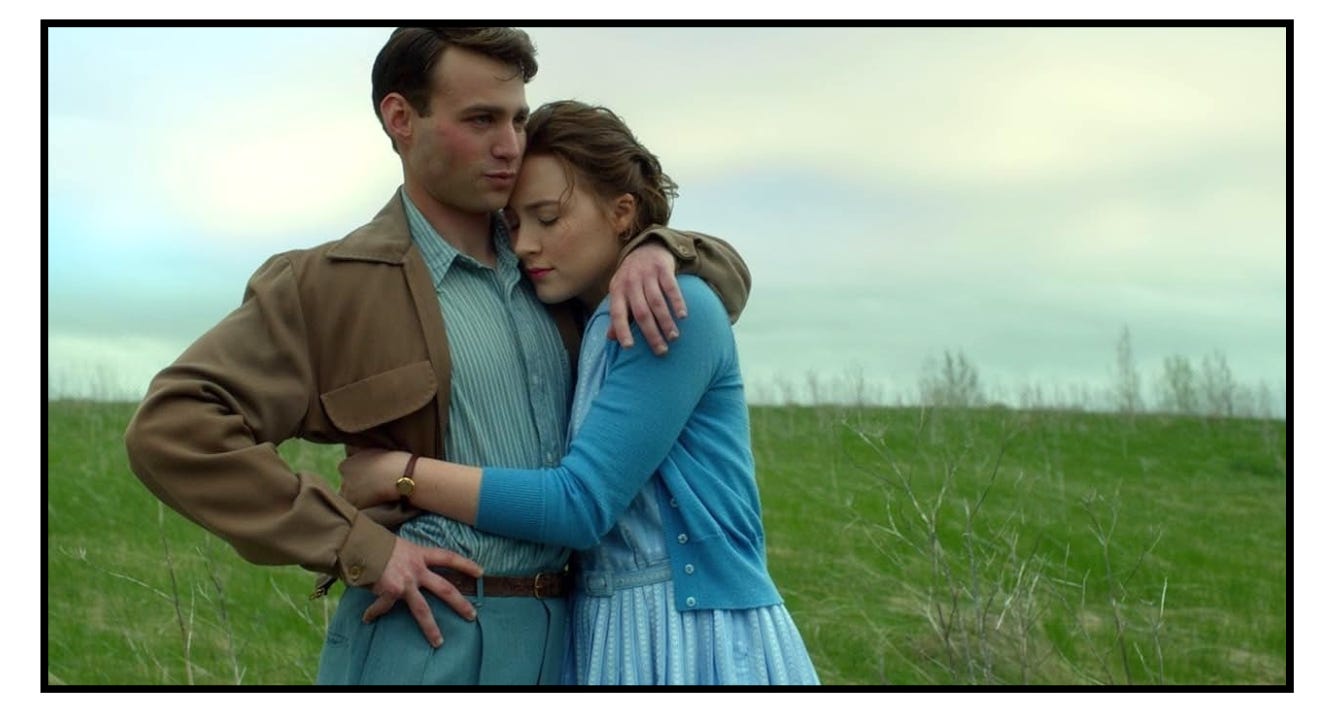
I don’t know what it is about this movie, but every time I watch Brooklyn I find myself getting teary eyed. In fact, often I’ll even start bawling my eyes out during some of the film’s more emotional scenes (which is rather embarrassing for a 66 year old guy to admit).
Based on the 2009 novel by the Irish writer, Colm Toíbín, Brooklyn is about a young woman named Eilis Lacy. At the beginning of the story, Eilis (Saoirse Ronan) lives in a small Irish town with her mother (Jane Brennan), a widow, and her older sister, Rose (Fiona Glascott), sometime around 1950.
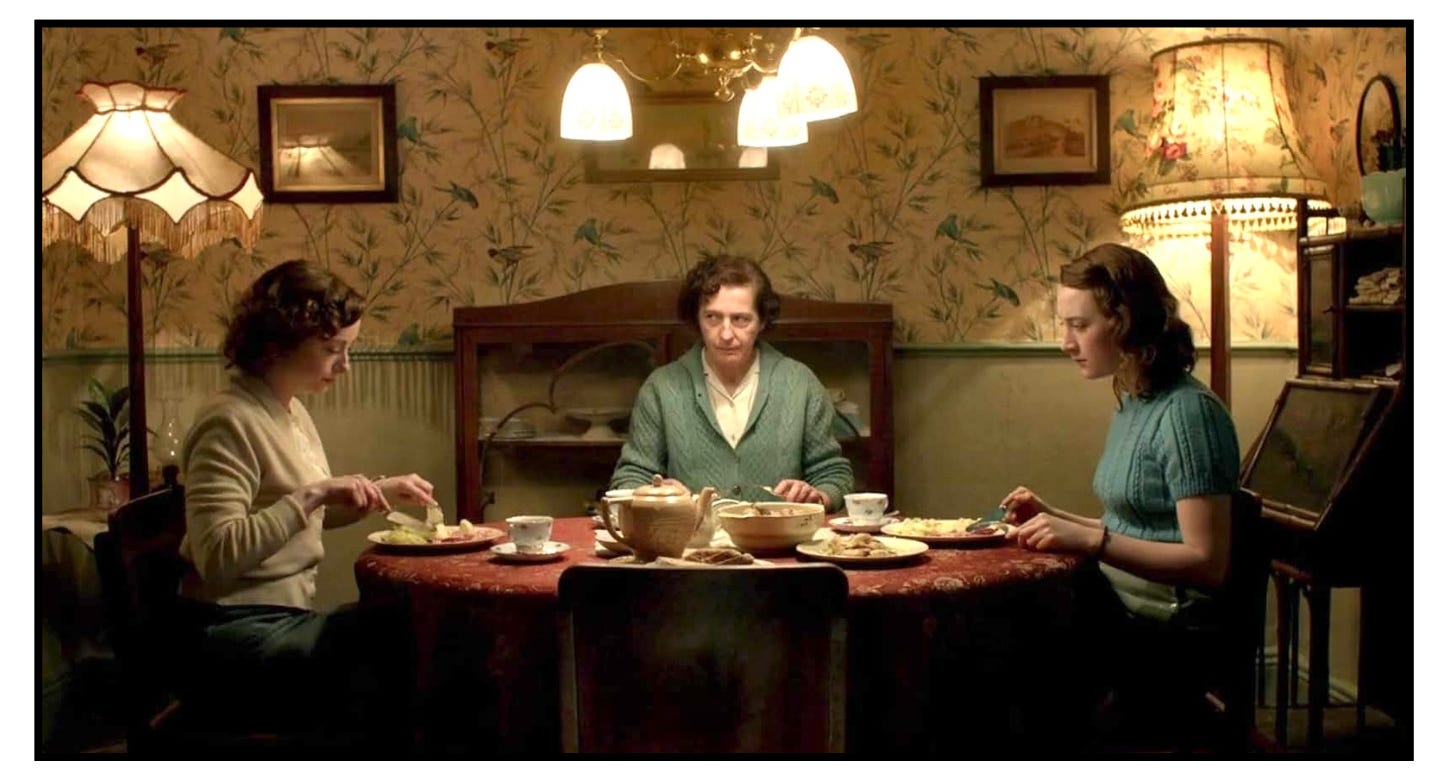
Although Eilis is smart and ambitious, there is little opportunity for her in both her small town and throughout Ireland. Therefore, Rose has decided that Eilis should emigrate to the United States so she can have the opportunity to live a better life. Reluctantly, her Mother has agreed with this plan.
When Father Flood (Jim Broadbent), an Irish priest from the United States, comes to visit the town, the family invites him over for dinner. Before long, everything is arranged: Eilis will leave Ireland and settle in an Irish community in Brooklyn, New York.
If all of this seems too easy, it’s not; the film does an excellent job of showing the loneliness, homesickness, and feelings of inner-conflict that occur once Eilis is suddenly plopped down in New York, which is much more modern and progressive than her hometown back in Ireland.
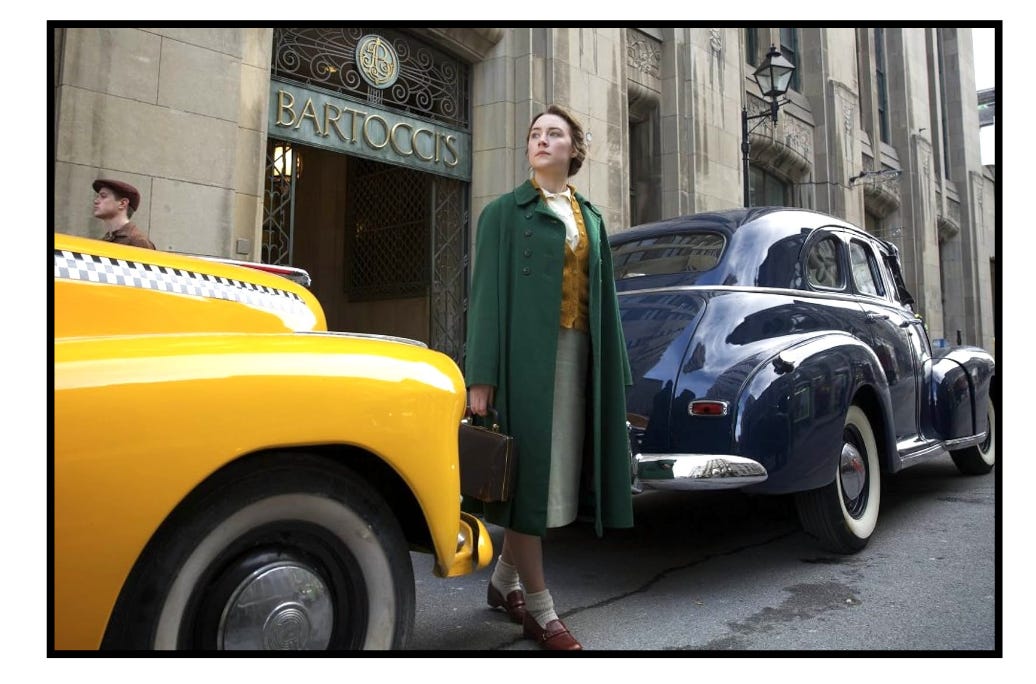
In her new life, Eilis lives in a boarding house with other young, single women and works as a sales clerk in a ritzy department store. Eventually, she begins to assimilate to her new surroundings and American culture.
She also meets a young Italian boy named Tony (Emory Cohen), and the two fall in love.
However, when a family tragedy forces Eilis to briefly return back home to Ireland, she soon finds herself going backwards, becoming less independent in the more traditional country, and pressured by her Mother not to return back to America.
Complicating things even further is the attention Eilis begins to receive from Jim Farrell (Domhnall Gleeson), the son of the richest family in town, who makes it clear he would like to get married and settle down.
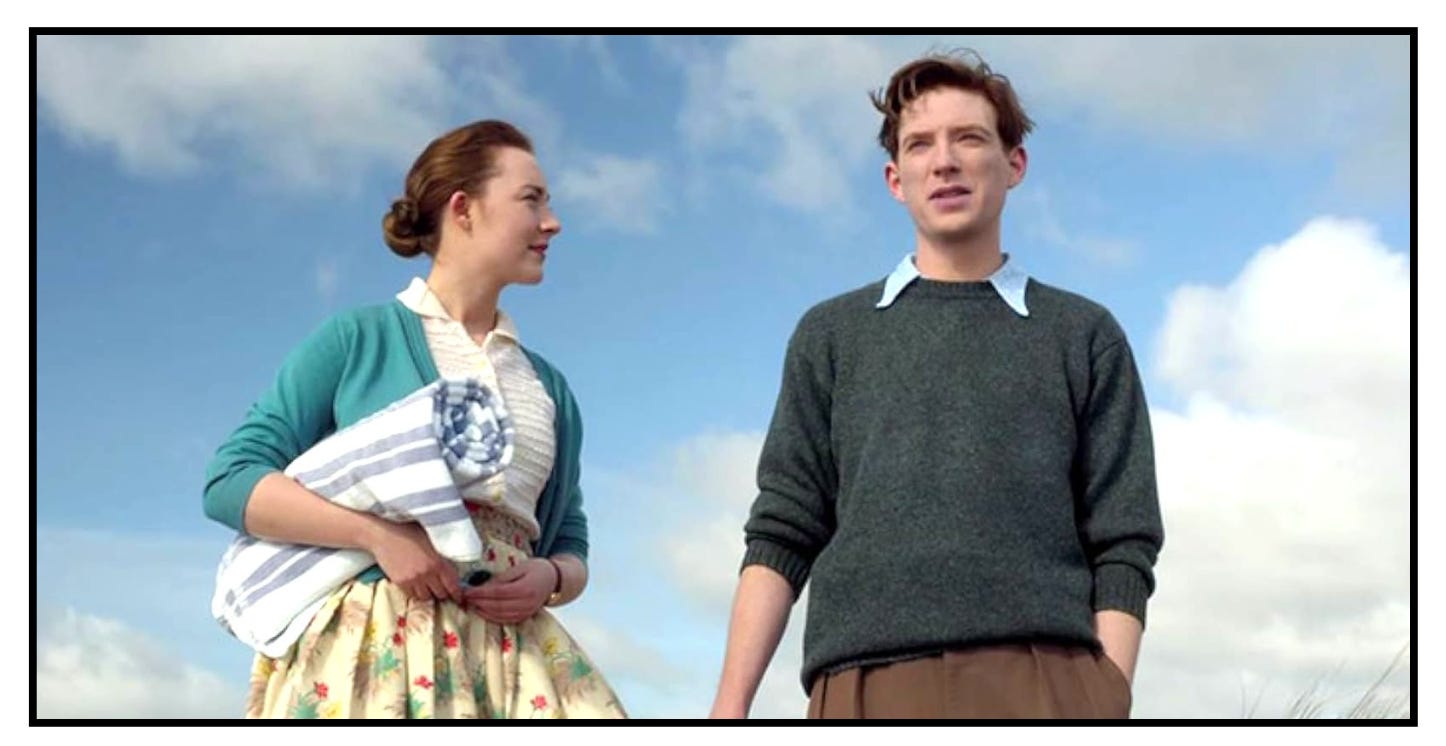
But Eilis has a secret she hasn’t shared with her mother or friends back home. Once she gets the courage to reveal her true feelings, nothing can stop Eilis from making the most difficult (but necessary) decision of her life.
What I really like about this film is how it works on a variety of levels. It’s also romantic and beautifully crafted. The scenes set in Ireland take you back to a time when life was simpler and in both good and bad ways, more traditional. In contrast, once Eilis moves to Brooklyn, the attention to period detail, especially in the modern style clothes of the time, is outstanding; you feel transported back to the glory days of 1950s New York.
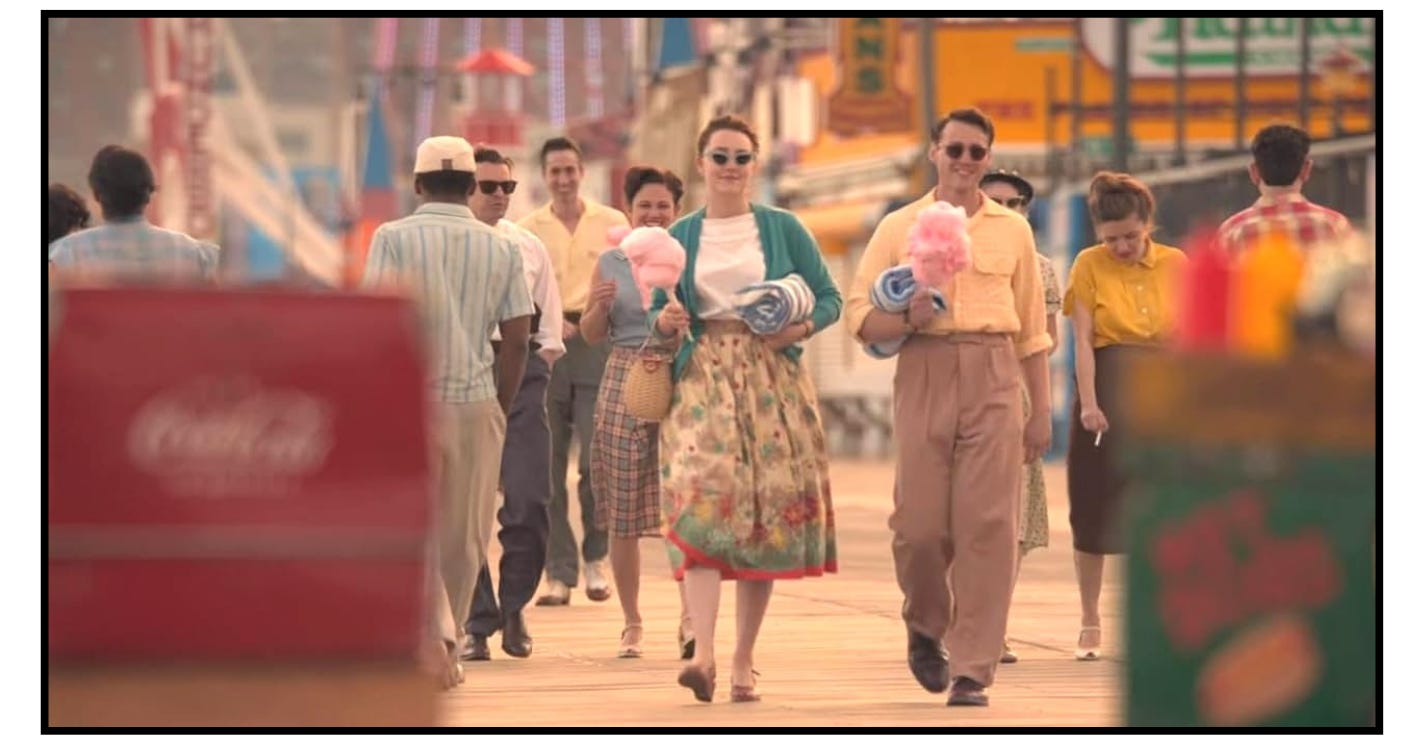
In addition, as a viewer, you sense the optimism all of the characters (and the country) had at that time.
One great example of this is the scene where Tony takes Eilis to Long Island to show her a large piece of empty land he intends to buy. His plan is to build homes for his future wife and family. This powerful, moving scene makes me long for the belief in the future people had back then.
With an excellent script adaptation of by Nick Hornby and Colm Toíbín, and the assured direction by John Crowley, Brooklyn is even better than you’d expect it to be thanks to Saoirse Ronan’s incredible performance as Eilis.
Thanks to Ronan’s performance, you feel Eilis’ vulnerability in every scene. Later on in the film, Ronan perfectly captures Eilis’ inner strength as she finally becomes her own person. The rest of the cast including Fiona Glascott as Eilis’ sister Rose and Jim Broadbent as Father Flood, and Domhnall Gleeson as Jim Farrell are also excellent.
3. The Commitments
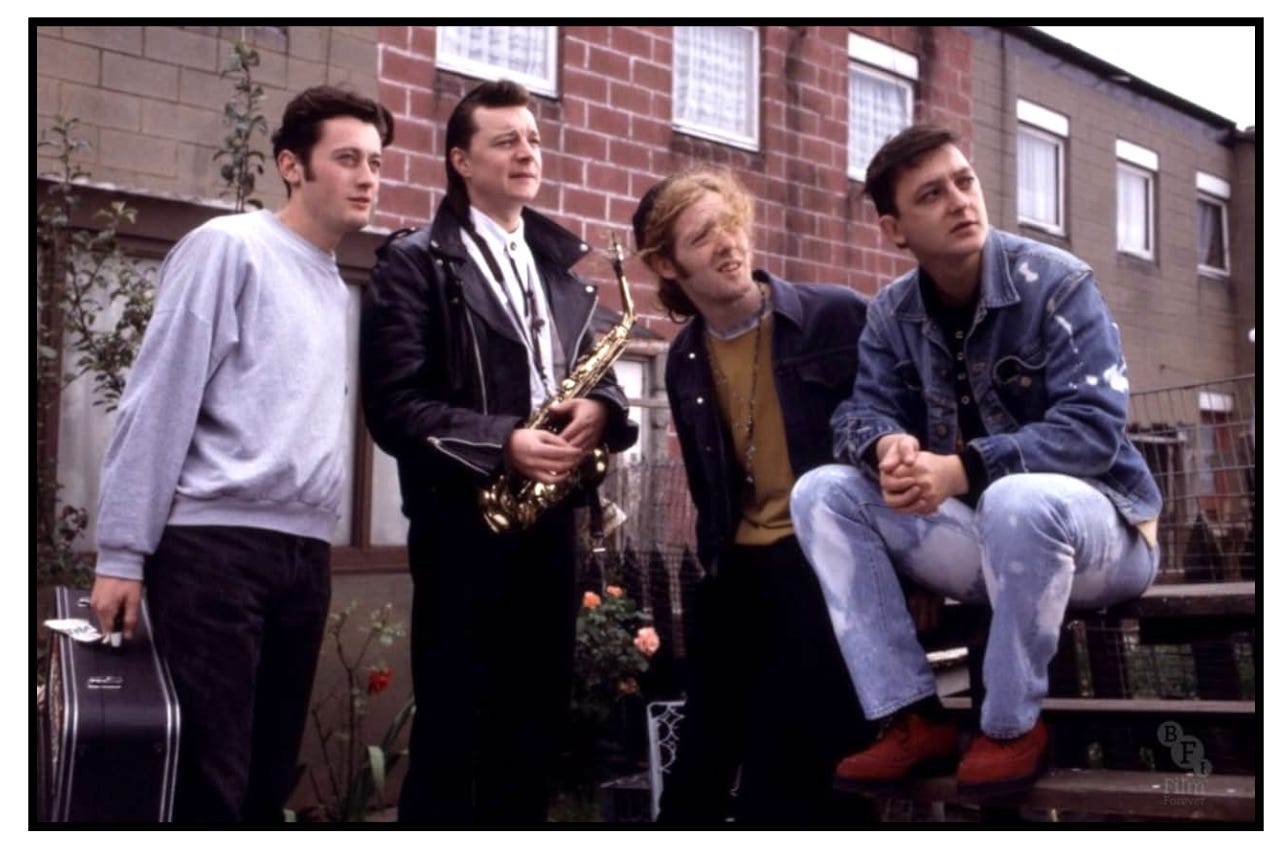
Another movie about Ireland I always enjoy rewatching is The Commitments. Set in Dublin during the late 1980s when unemployment was rampant, Alan Parker’s film tells the unlikely story of a group of working class Irish youth who come together to form a rock band that plays soul music.
If the thought of Irish lads (and lasses) singing vintage soul music has you scratching your head, you’re not alone. Even the group of impoverished young musicians Jimmy Rabbitte (Robert Arkins) corrals into this scheme are dubious about the idea at first too. But, Jimmy says he came up with the idea because to him, “The Irish are the blacks of Europe. Dubliners are the blacks of Ireland. North Dubliners are the blacks of Dublin.”
Based on the novel by Irish writer Roddy Doyle, The Commitments tells the story of how a group of poor youth in Ireland learned to play soul music and created something wonderful, even if it only lasted for a short time.
In the beginning of the film, Parker sets the scene by showing how music - specifically American pop music - is the tonic for everyone in Dublin as they struggle through hard times.
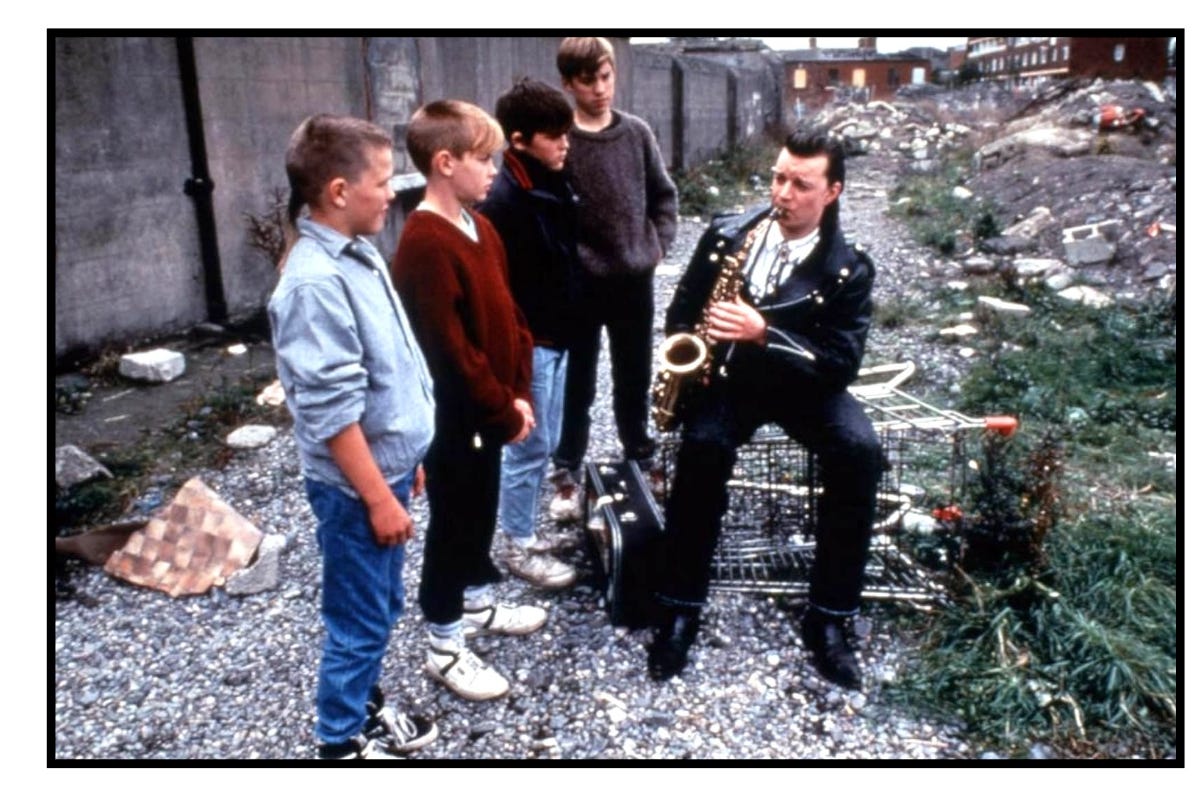
You see, everyone in the film is relatively poor, but they’re also obsessed with music in one way or another. For example, Rabbit’s father (Colm Meaney) has a framed photo of Elvis hanging on the living room wall - right over the framed photo of The Pope. The local priest kindly corrects the young organist who is mistakingly says “When A Man Loves a Woman” was recorded by Marvin Gaye.“No,” the priest says, “that record was by Percy Sledge.”
So after Jimmy announces his plan and gets the word out that he’s looking for the finest musicians in Dublin to form “the world’s hardest working band,” everyone and their grandmother shows up to audition.
Eventually, Jimmy chooses 10 musicians to form The Commitments.
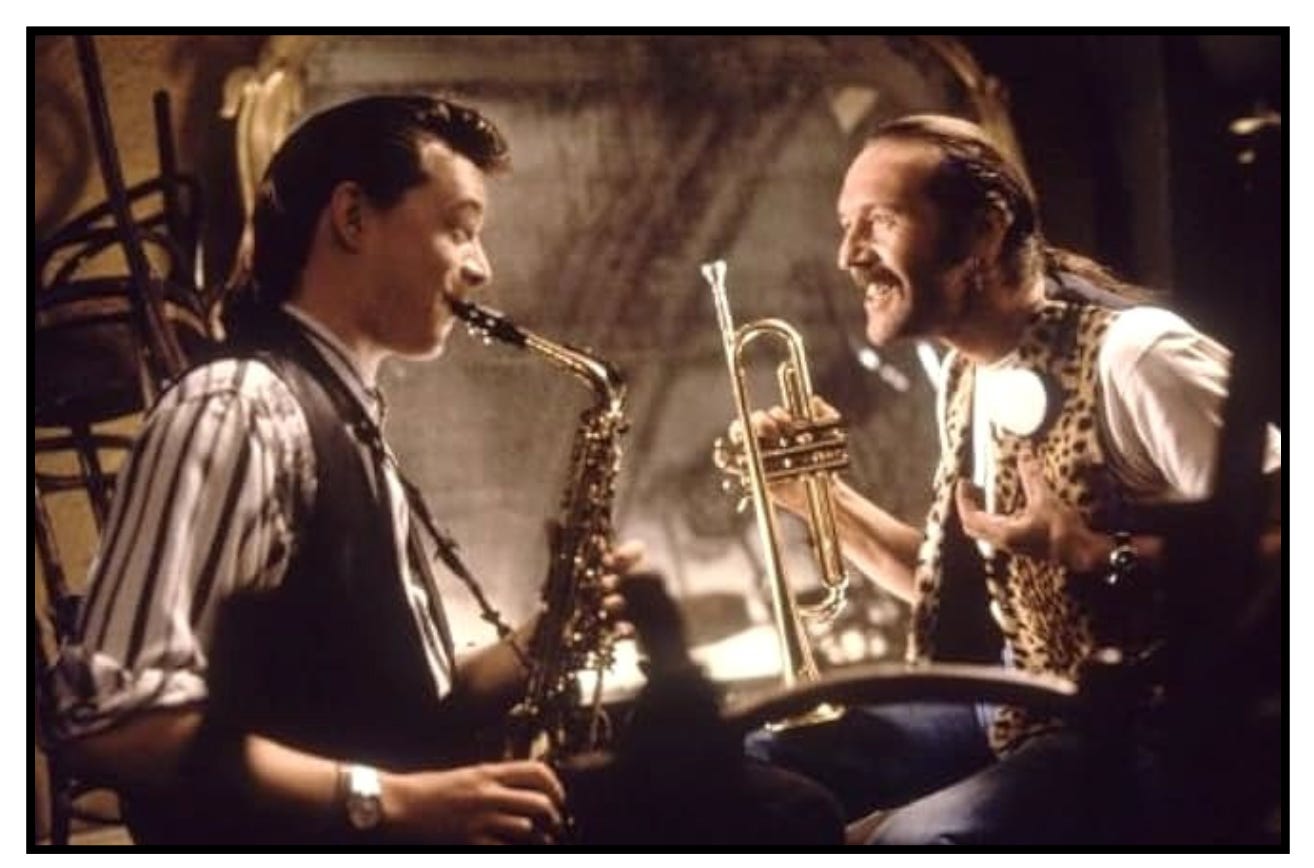
The most experienced (and oldest) player is known as Jimmy The Lips. (Johnny Murphy) He’s a horn player originally from Dublin who was touring with bands in the United States until he returned to Dublin to visit his mother. He’s joined by much younger musicians on sax, bass, guitar, and keyboards (the previously mentioned church organist).
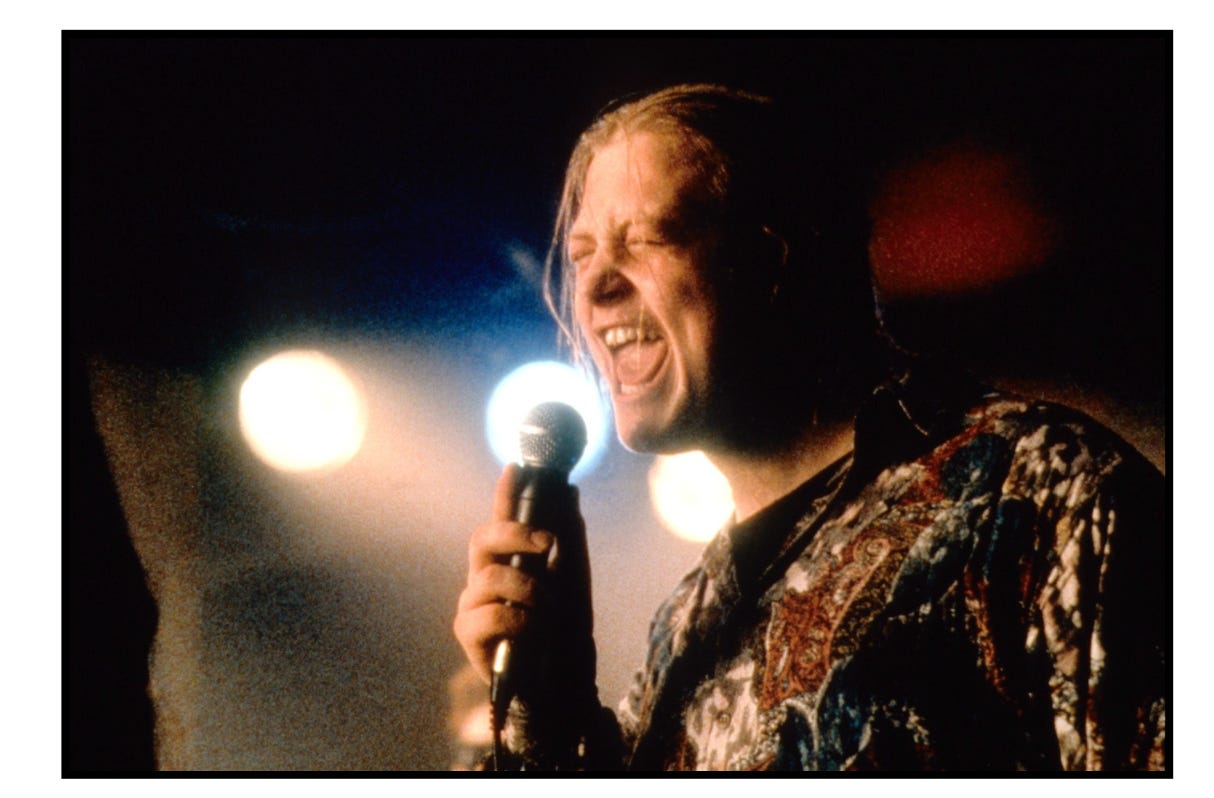
The lead singer is a 16 year old teenager named Deco Cliff, (Andrew Strong) who was discovered singing at a wedding. He seems modeled after a young Van Morrison, both in appearance and in his difficult behavior.
Jimmy has also recruited a trio of young women as back up singers. Unfortunately, they become part of the reason the band eventually breaks up.
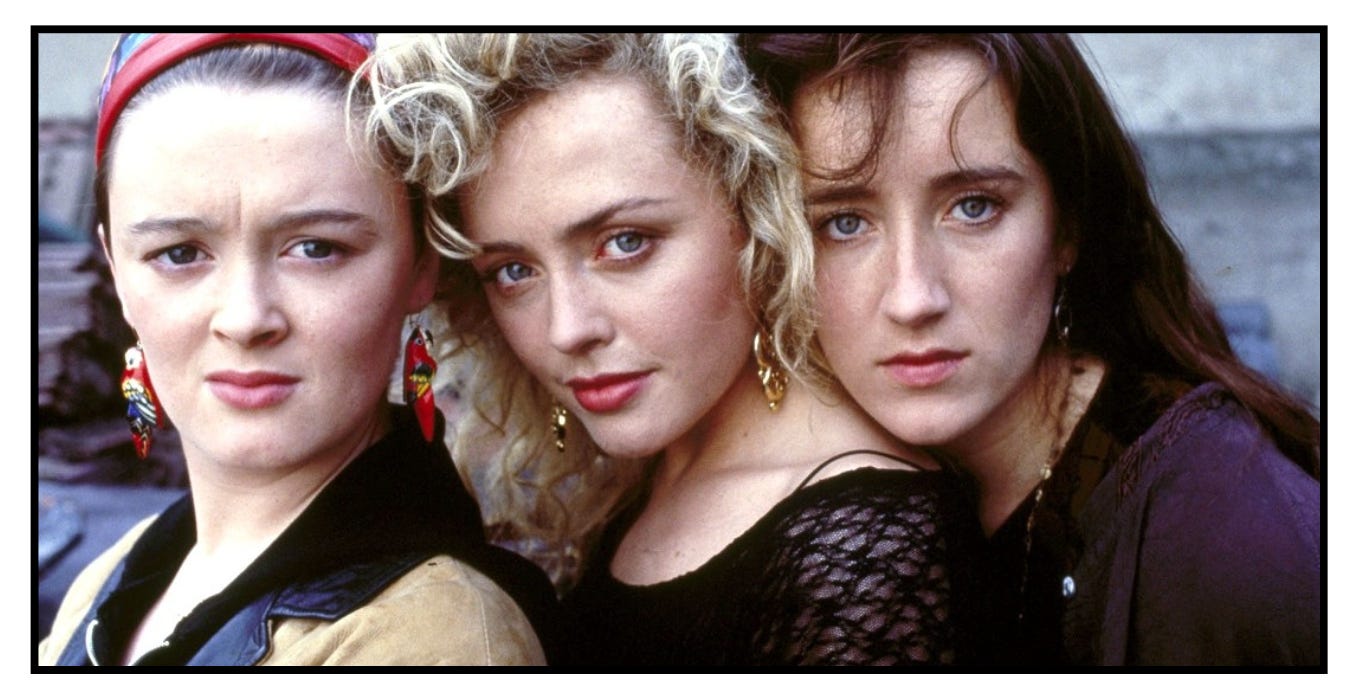
The film follows the band’s rise (and eventual fall) from it’s first awkward rehearsals to its triumphant debut gigs. The result is a frequently funny character driven comedy-drama.
It’s also about the joy of making music in a band (at least until things go wrong).
Juxtaposed between many brilliant musical performances (filmed live on location since almost everyone in the talented young cast are musicians turned first-time actors) are scenes that show the hopes and dreams of each character.
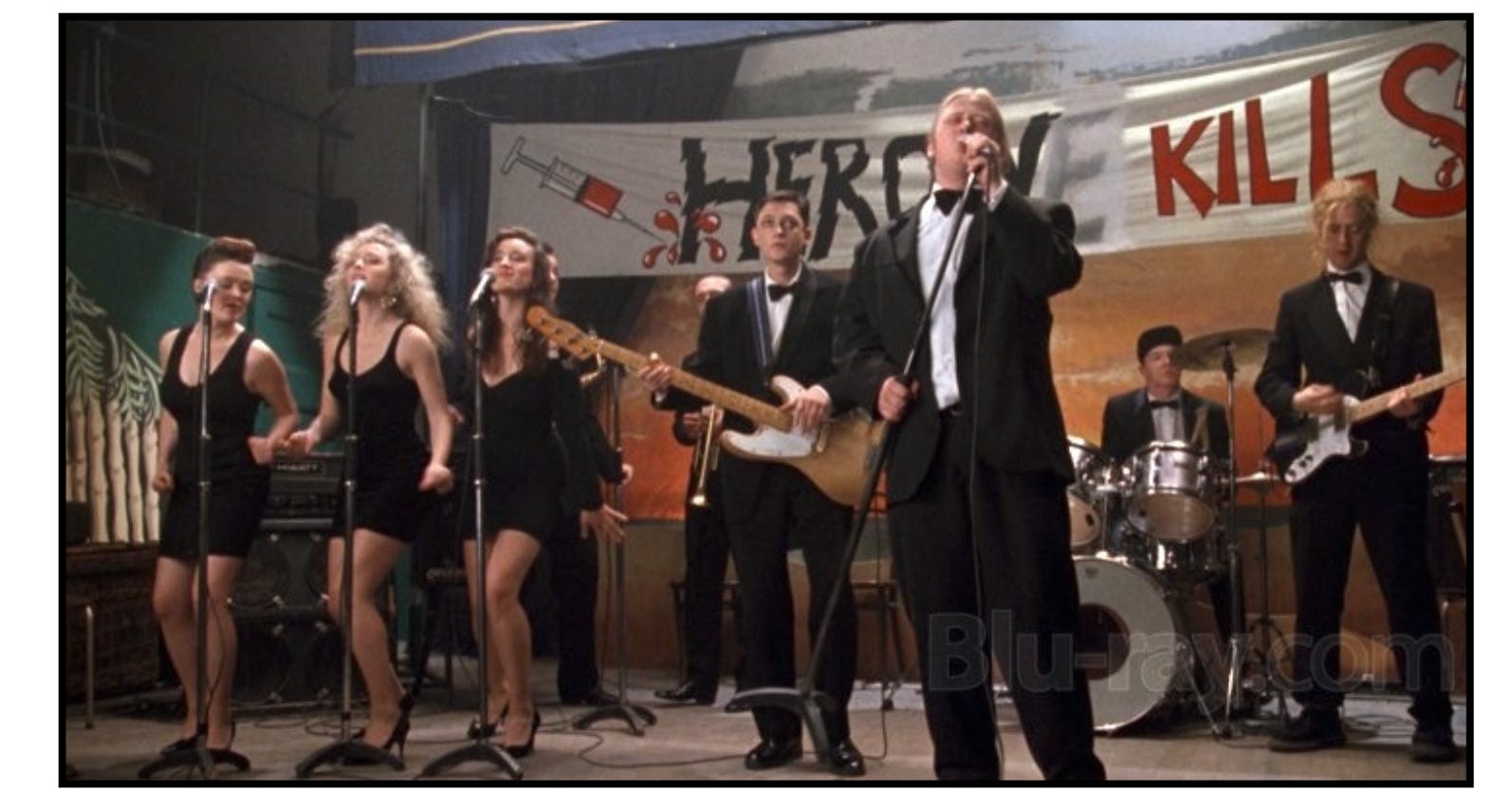
We see the band come together as a unit and eventually make their stage debut, the women dressed in evening dresses and men in black suits. Why black suits? According to Jimmy The lips it’s because “you play better in your suit. All the Motown brothers wore suits.”
But, after stunning audiences with their musicianship and ability to pull off authentic versions of soul classics like “Mustang Sally” and “In The Midnight Hour,” in-fighting and jealousies result in the band’s implosion.
Sadly, the band breaks up before they really have the chance to succeed. Even so, by the end of the film, each of the characters has benefitted from the experience.
In my opinion, The Commitments is one of director Alan Parker’s best films and still holds up today, 34 years after it’s theatrical release. Filled with humor and unforgettable music performances by the talented cast, The Commitments is a movie I enjoy watching again quite often.
4. Kneecap
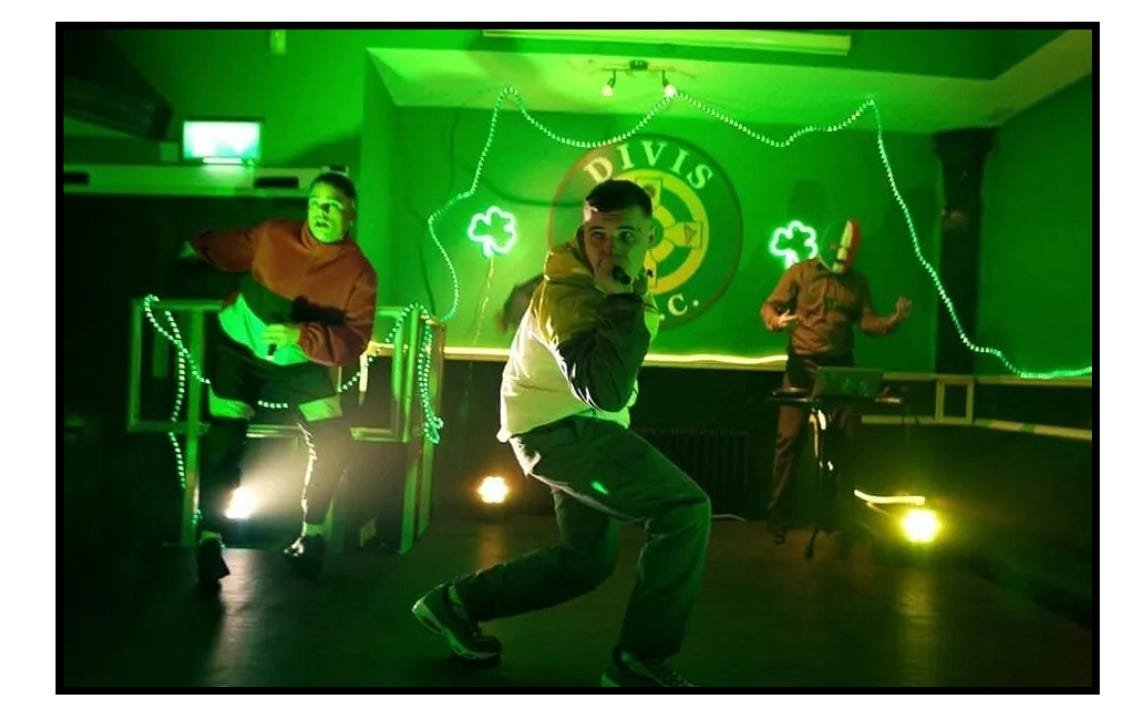
If the young working class men and women in The Commitments were teenagers today in 2025, they wouldn’t be playing classic soul music, they would be playing rap and hip-hop like the band, Kneecap.
You see, Kneecap is a rising rap-hip-hop trio from Ireland who write and perform songs in their native Irish language.
This film is their origin story and follows in the tradition of musicians self-mythologizing their beginnings that we’ve seen in movies like 8 Mile and Purple Rain.
However, Kneecap offers something that isn’t in these other films: a political issue that has affected both the musicians’ personal lives and their music.
The fact that this political controversy between the authorities and the residents of Northern Ireland revolves the right to speak the Irish language makes this film even more intriguing.
During the conflict between The British and the Irish known as The Troubles, the traditional Irish language almost became extinct and speaking it became a political act.
I first heard about this film after it made its American debut at last year’s Sundance film festival and received rave reviews. I’m not a fan of hip-hop or rap (although I don’t mind hearing it), and yet I was intrigued. When I was finally able to see the film, it became one of my favorites of last year.
In 2019, as Kneecap begins (the title of the movie and the band refers to the British policemen’s fondness for striking their opponent’s kneecaps with their batons), Ireland has been at peace with the British for two decades. However, the country is still sharply divided and speaking the Irish language instead of the Queen’s English is considered a rebellious act.
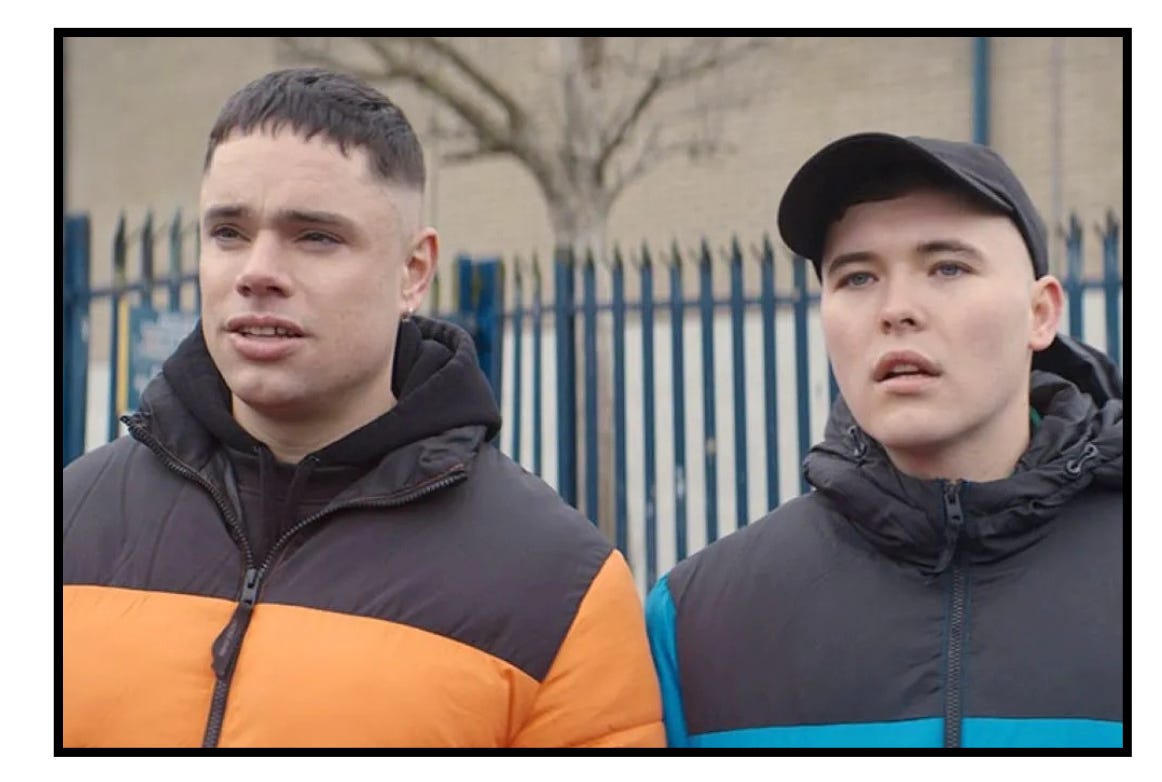
Near the beginning of Kneecap, Liam (Mo Chara) gets arrested by the English authorities in a drug bust. Placed in a holding cell, Liam claims he can only speak traditional Irish, which none of the police detectives know. The British authorities, led by Detective Ellis (Josie Walker), search to find someone who can speak Irish.
Eventually, high school music teacher JJ Ó Dochartaigh (playing himself) is brought in. JJ knows the language because some of the traditional songs his students sing are written in their native tongue.
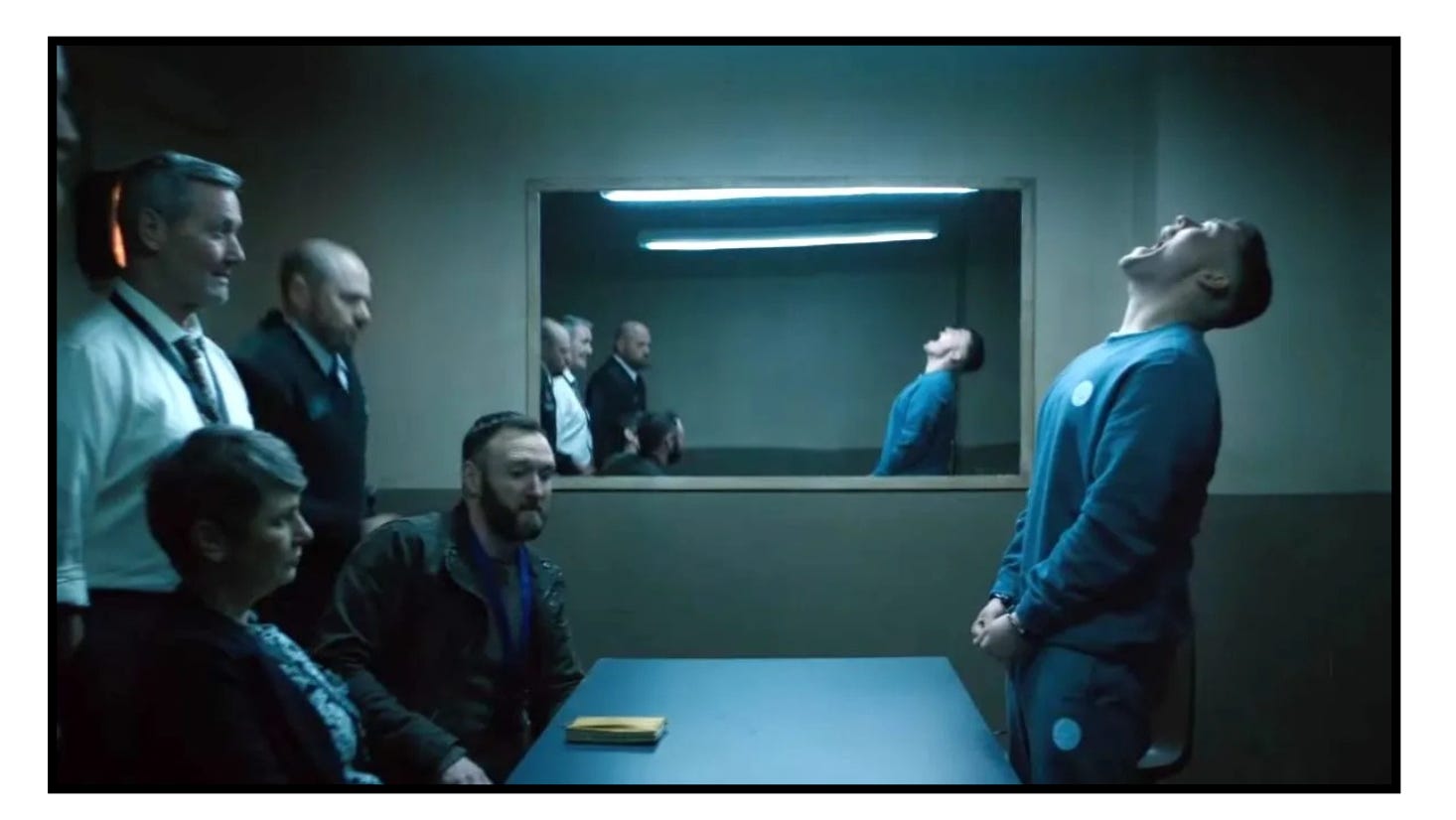
When JJ converses with Liam in Irish and reads the writings in the notebook Liam had on him at the time of his arrest, JJ has an idea.
After securing Liam’s eventual release and learning more about Liam and his best friend, Naoise (Móglaí Bap), JJ invites the boys over to his makeshift music studio in an old garage. Soon, the two boys are rapping their words to the beats JJ creates on his old 80’s drum machine and a rap hip-hop band is born.
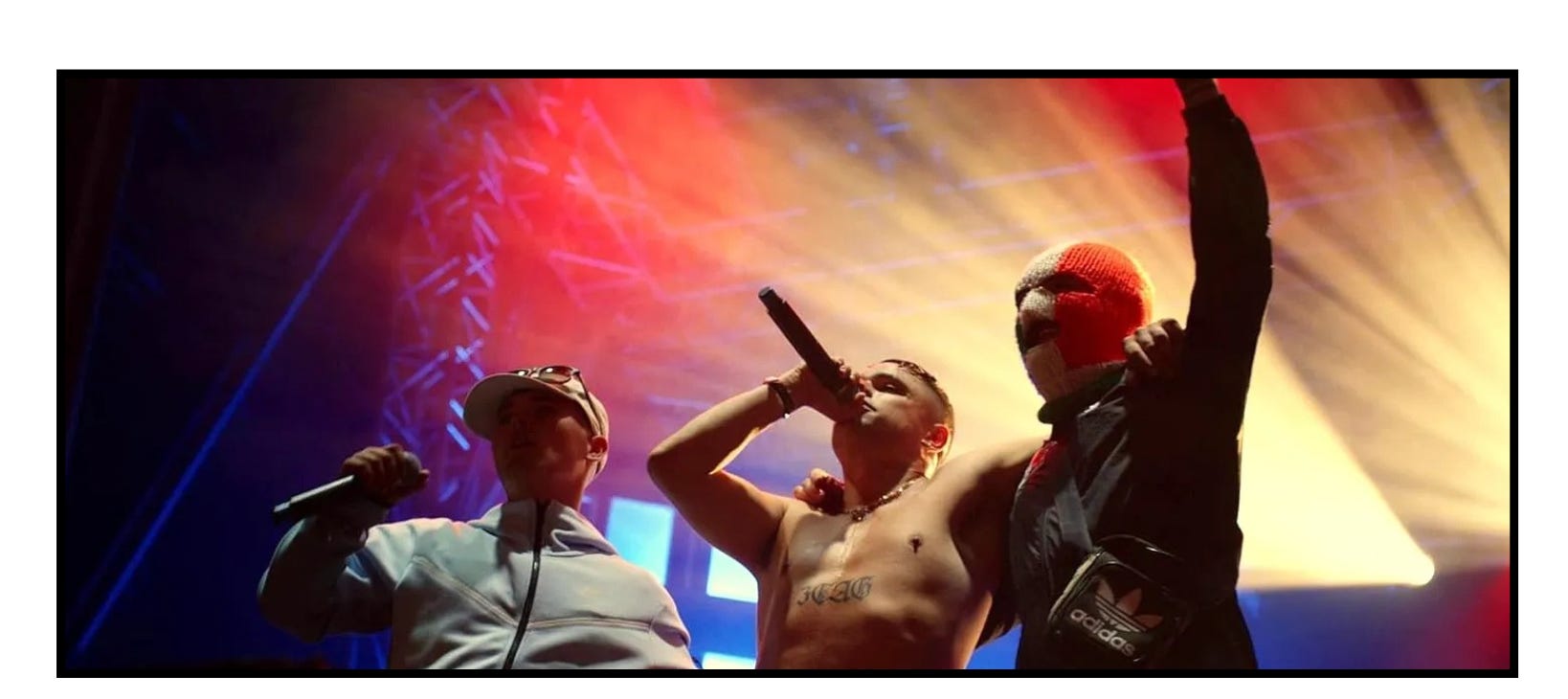
Donning a balaclavas with the colors of the Irish flag on it in order to hide his identity (from both his wife and his superiors at the school where he teaches), JJ begins going by the name DJ Próvai. Liam and Naoise also adopt stage names as well. Naoise becomes Móglaí Bap and Liam is now Mo Chara.

After playing their first gig at a traditional Irish pub to a group of puzzled old men, the newly formed band isn’t sure what to do next, but the sole young girl present in the back of the bar has filmed their performance on her cell phone and shares it on social media. The result is a packed house full of Irish youth at the band’s next gig.
However, trouble continues for all of the members of the band: JJ/DJ Próvai loses his teaching job and Detective Ellis is closing in on arresting both Liam/Mo Chara (who, it turns out has been shagging her daughter) and Naoise/Móglaí Bap. And there’s a para-military group that wants to get them too. But eventually, Kneecap triumphs and by the end of the film the band is on their way to fame and success.
And, best of all, a title card at the end of the movie states that in 2022 Irish was finally recognized as an official language in Northern Ireland.
So what makes Kneecap worth watching, especially for those of us who aren’t fans of rap or hip-hop music?
First, this is an extremely well made film that’s highly entertaining and emotionally satisfying on many levels. And, you don’t even need to like Kneecap’s rap/hip hop music to enjoy this movie. (As I said above, I’m not much of a fan of hip-hop or rap, but I love this film). The story is so engaging that the music becomes secondary to the action on the screen.
Stylistically, Kneecap takes inspiration from Trainspotting, Danny Boyle’s classic film of Scottish drug addicted youth. With inventive camera angles and animation that highlights the lyrics and adds flourishes to scenes, Kneecap is a riveting visual experience. It also features great performances by the band and supporting cast.
If you’re looking for a new, hip Irish film to share with your friends this St. Patrick’s Day, Kneecap is the perfect choice.
5. The Quiet Man
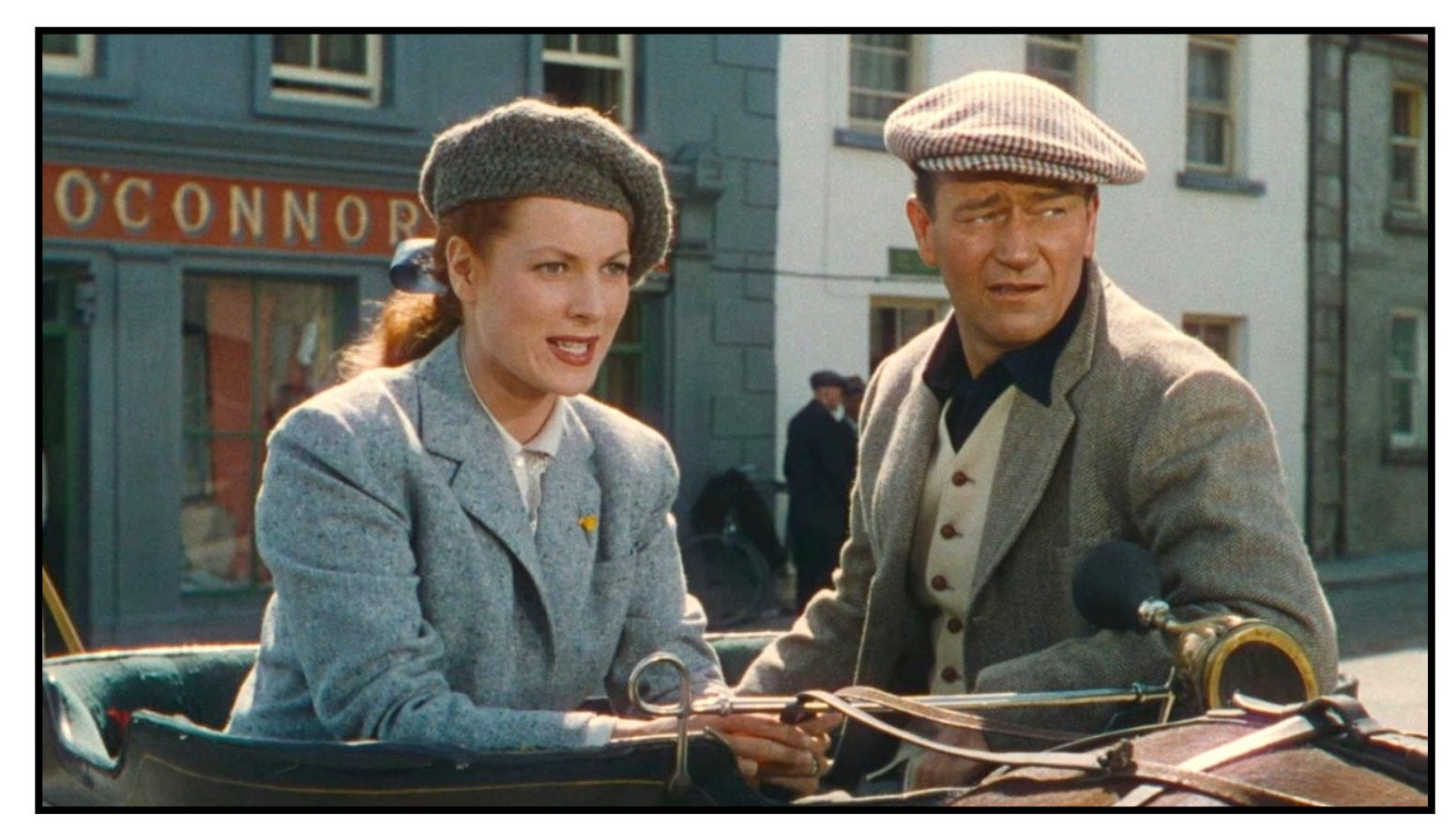
What St. Patrick’s day movie-fest would be complete without a viewing of John Ford’s classic film, The Quiet Man?
Much like the way we watch It’s a Wonderful Life during the Christmas holiday season, for me (and I’m sure many others), it’s a tradition to watch this great John Ford film on or around March 17th every year.
In The Quiet Man, Sean Thornton (John Wayne), an Irish-American ex-boxer, returns to his ancestral homeland of Innisfree, Ireland, to reclaim his family's farm. Having left behind a violent past in America, Sean hopes to find peace in the Irish countryside. Once he arrives, Sean purchases the Thornton family cottage from the Widow Tillane (Mildred Natwick), despite resistance from the boorish and hot-tempered Squire Will Danaher (Victor McLaglen), who had also hoped to buy the cottage and land.
Soon, Sean becomes enamored with Will’s strong-willed sister, Mary Kate Danaher (Maureen O’Hara).
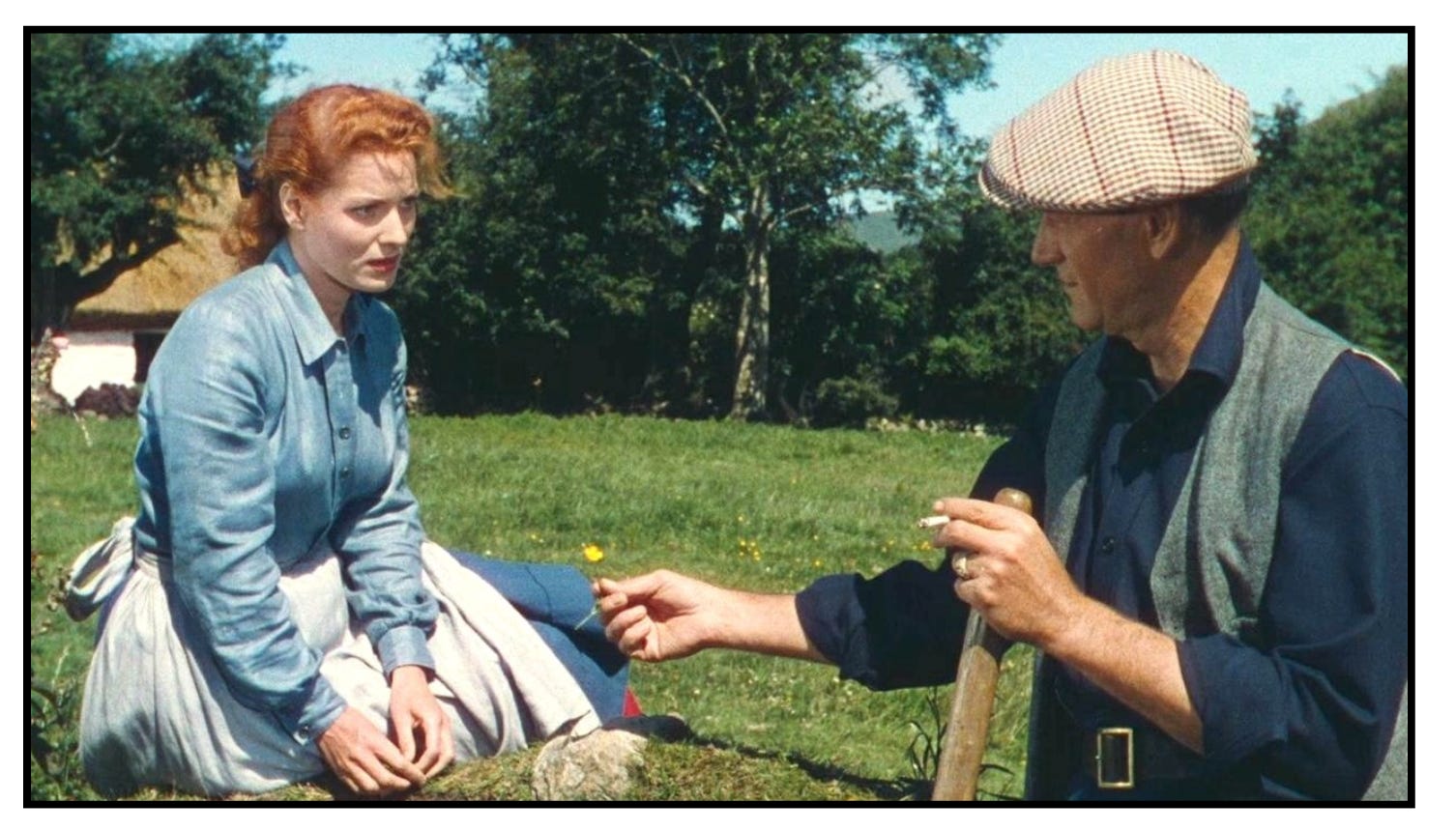
However, Irish customs dictate that Sean must obtain her brother's permission to court her. The townspeople, led by the mischievous matchmaker Michaleen Oge Flynn (Barry Fitzgerald), all take part in a scheme to make Will believe that if he allows Mary Kate to marry Sean, Widow Tillane will agree to marry him in return.
When Will realizes he has been tricked, he refuses to give Mary Kate her dowry. And, even worse, Sean refuses to fight Will for the dowry, having sworn never to raise his fists again after a tragic incident in his boxing past.
This refusal causes a rift in his marriage, as Mary Kate sees it as an affront to her honor. Frustrated and heartbroken, she leaves Sean, prompting him to take action.
In one of the film’s most famous scenes, Sean forcefully retrieves Mary Kate from the train station and drags her across the countryside, publicly demanding the dowry from Will. The spectacle ultimately forces Will to surrender the money, which Sean then throws into a furnace, proving that it was never about the money but about respect and tradition.
With their honor restored, Sean and Mary Kate's marriage finds solid ground.
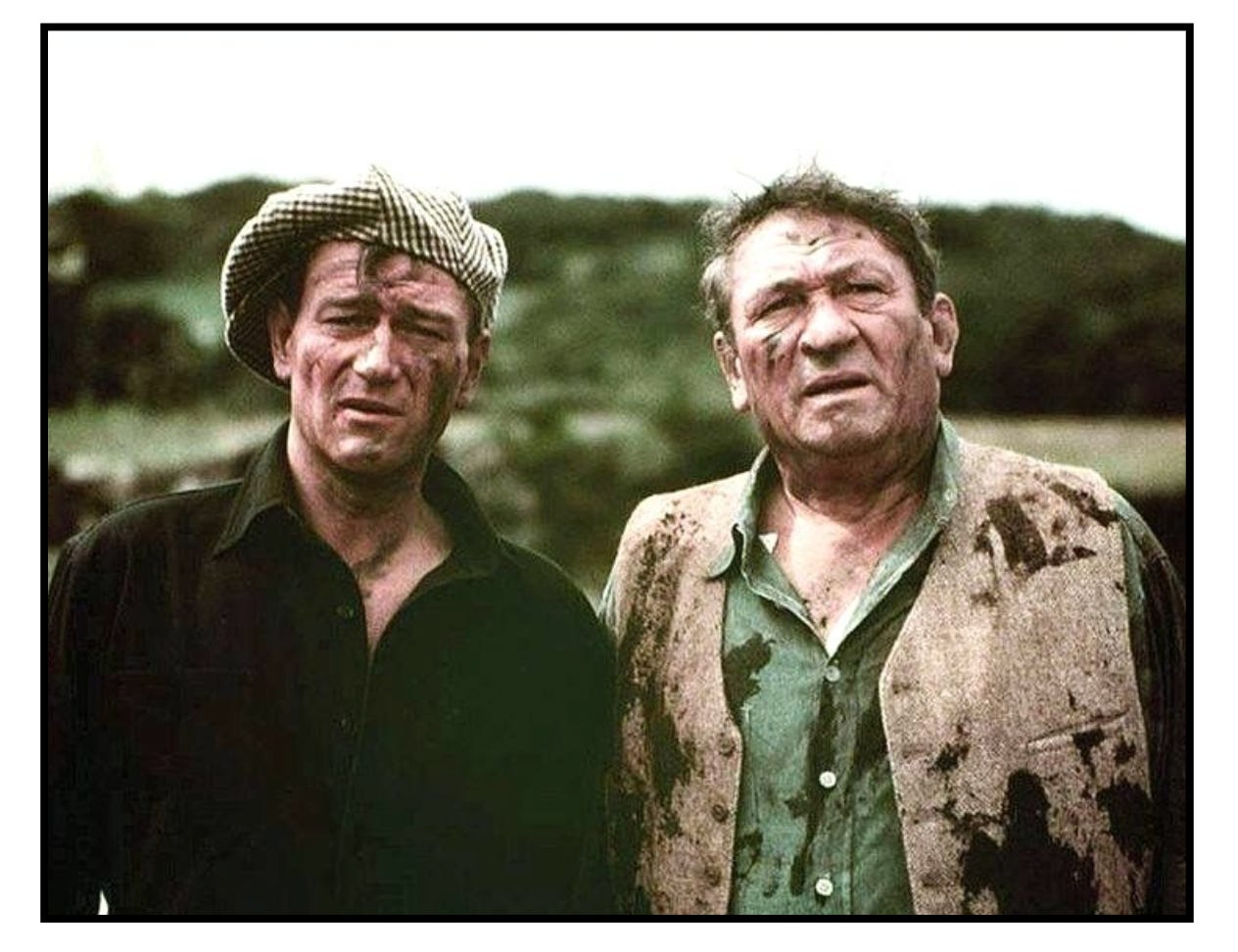
However, the film concludes with an epic fistfight between Sean and Will, an exuberant, lengthy brawl that winds through the village and eventually ends in mutual admiration and brotherhood. Afterwards, Sean and Mary Kate returning home together as the villagers celebrate.
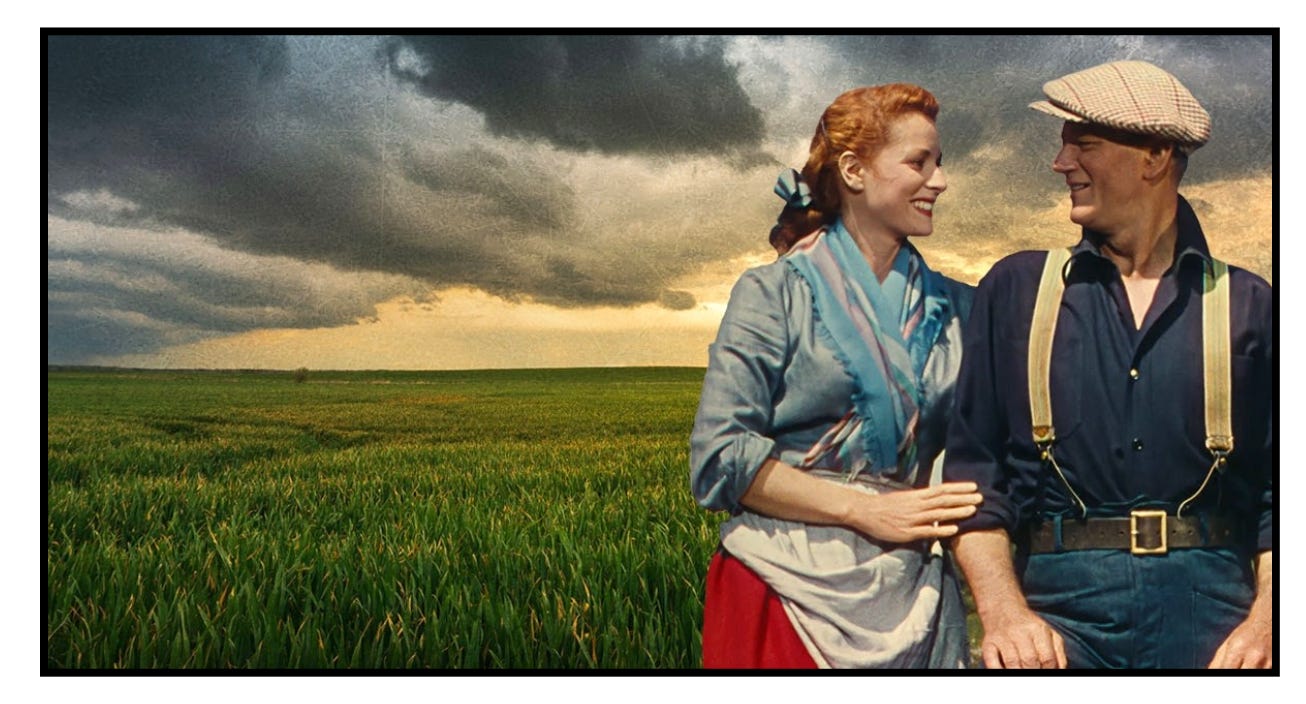
One of the best, if not the best, pairings of Wayne and O’Hara, (They made five movies together), The Quiet Man does a great job of mixing romance, comedy, and drama together that results in a delightful, and often, very funny, film.
It’s also John Ford’s love letter to his Irish roots, which makes this the perfect movie for St. Patrick’s Day.

Great picks! I’m also a big fan of “The Wind That Shakes the Barley” and “Hunger.” Two darker films, but tackling important periods of Irish history.
It’s number 1 and 3 for me, Jim! The Commitments was a coming of age film for me, being a musician and all. That film made a big impression on me at the time. Great music, and the lead singer’s voice was great. Happy St. Patty’s Day!