
Parking Lots in Hollywood: The Cinematic Space of Everyday Life
Hollywood likes to use parking lots to excite, terrify, and amuse audiences

Is there anything more American than a parking lot?
Unlike Europe and Asia, where most people rely on public transportation (or, heaven forbid, walk to their destination), in America, cars are king.
We’re a car culture, proud of it, and with our roads comes the necessity of parking spaces—acres and acres of pavement surrounding shopping malls, stadiums, universities, and concert arenas.
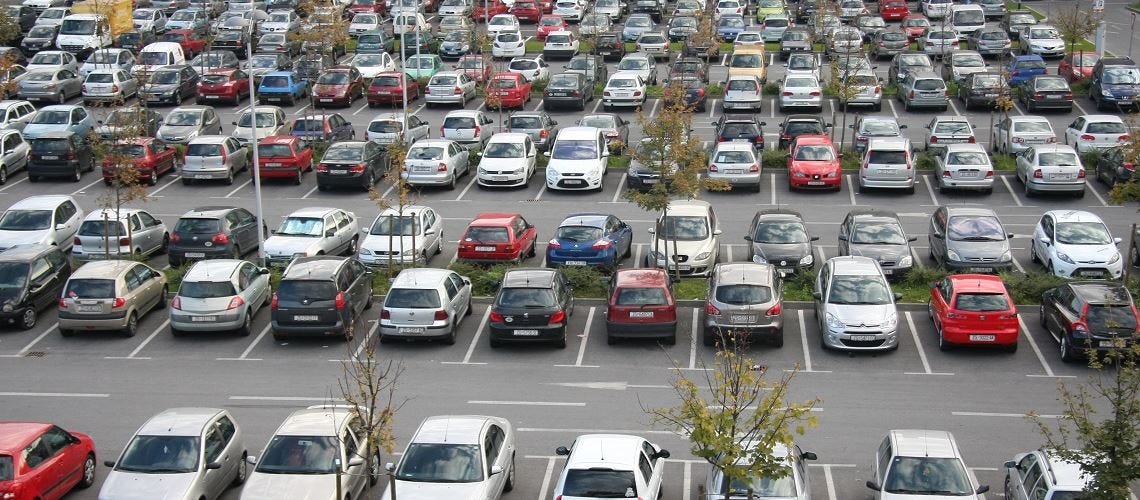
These sprawling lots are a fixture of everyday life, so it’s no surprise they’ve also found their way into Hollywood movies.
Why?
First, parking lots are everywhere, as ingrained in the American landscape as fast food drive-thrus. Whether in bustling cities or sleepy small towns, they’re easy for filmmakers to access and rent, making them a practical choice for productions.
Think of them as Hollywood’s version of free props: no assembly required.
In addition, they’re cost-effective. Filming a car scene on the road requires permits, moving vehicles, and extensive coordination, but in a parking lot, the car doesn’t even have to move. These settings also demand minimal production design and can be dressed up (or down) to reflect the present, the past, or even a dystopian future.
And because parking lots are spacious, they offer plenty of room for cameras, lights, and other equipment—perfect for bringing a scene to life.
Thanks to these advantages, parking lots have become a staple in nearly every genre of film, from crime and action to comedies and dramas.
Parking Lots as Portals
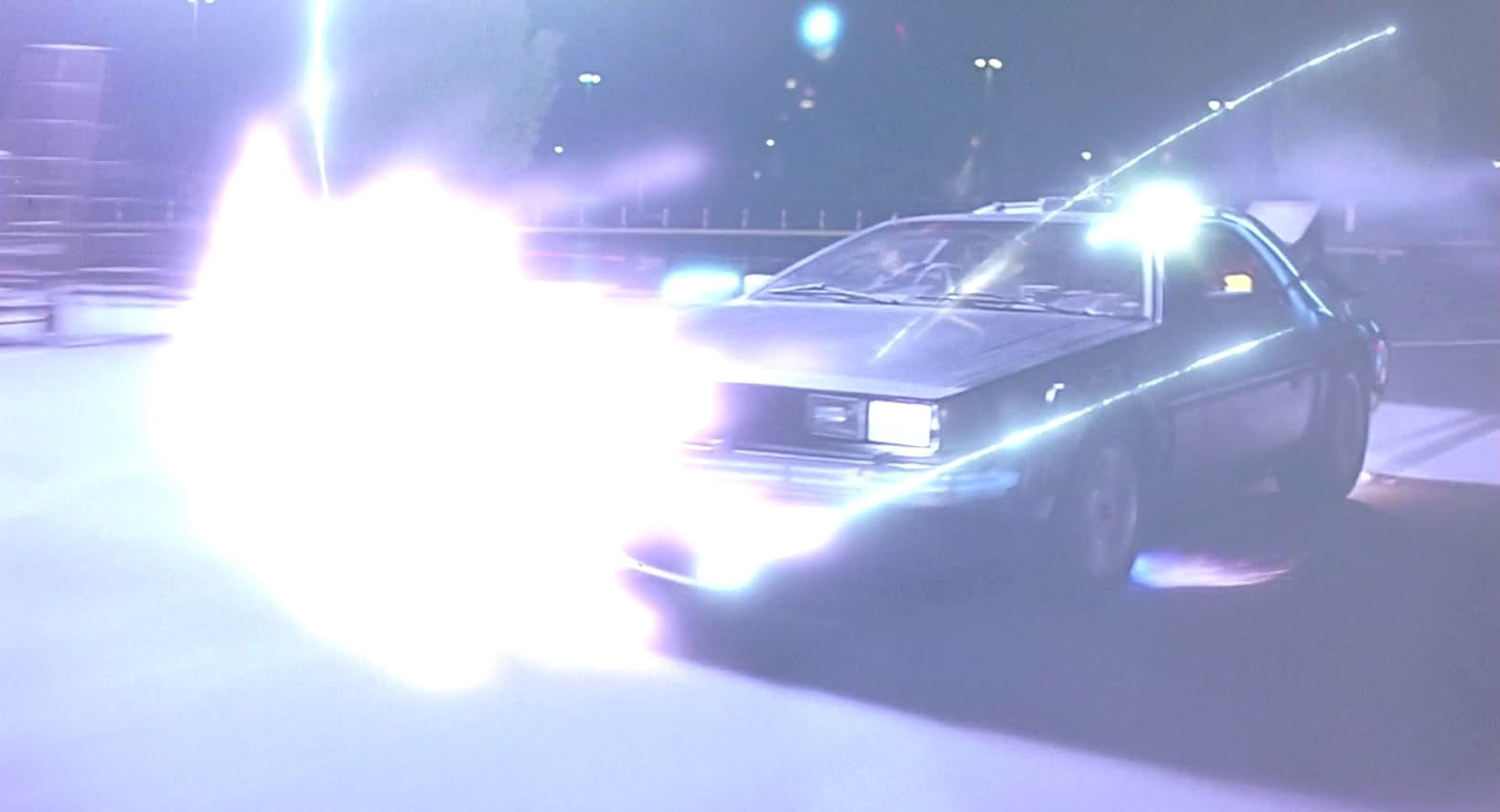
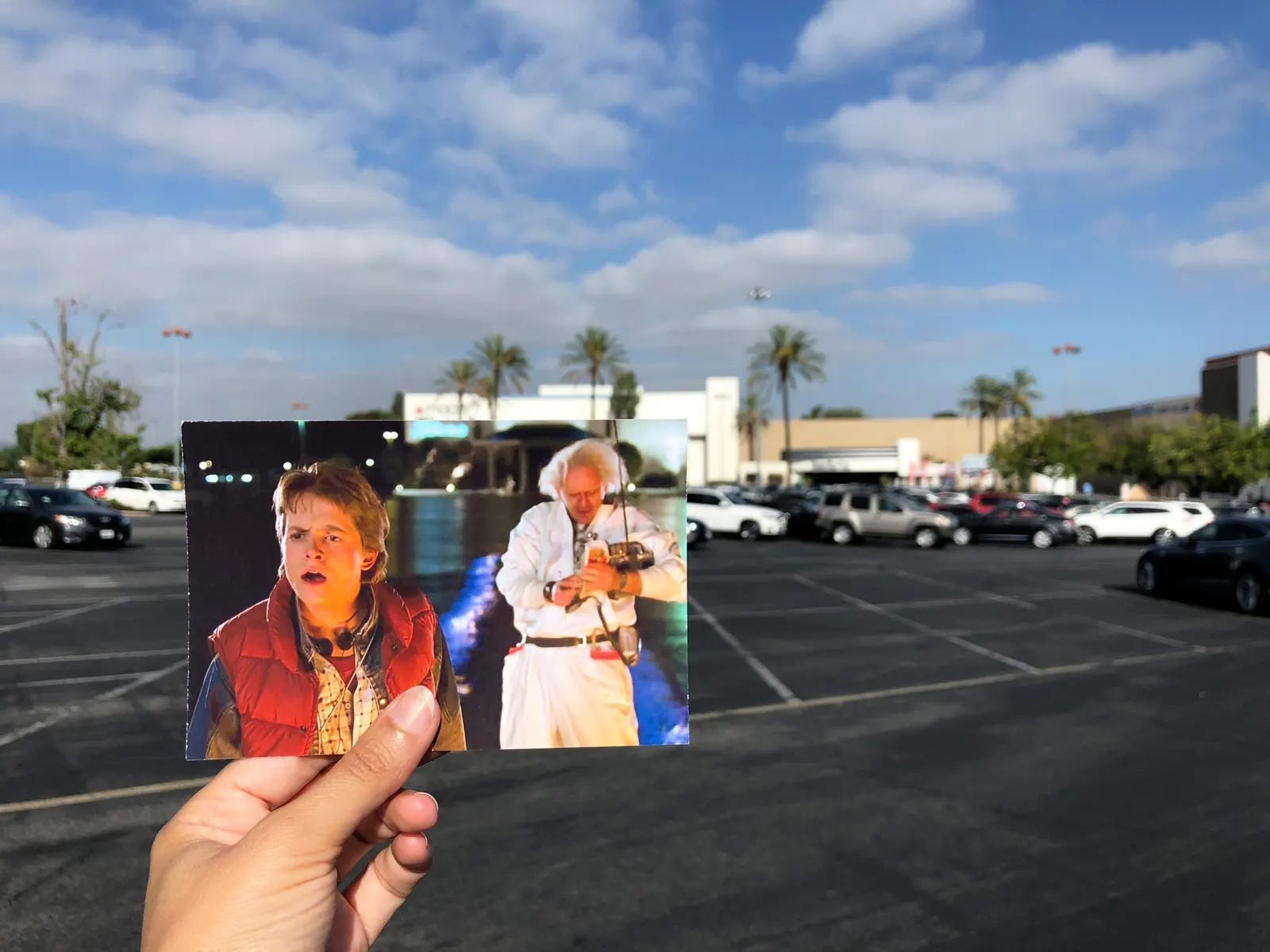
Perhaps the most famous parking lot sequence in film history comes from Back to the Future (1985). In the Twin Pines Mall parking lot, Doc Brown and Marty McFly test the time-traveling DeLorean by sending Doc’s dog, Einstein, into the future.
Later, Libyan terrorists—angry about stolen plutonium—arrive to kill Doc, forcing Marty to escape by accidentally transporting himself to 1955. It’s a pivotal scene where an otherwise mundane parking lot becomes the gateway to time-traveling adventure.
Comedy In Parking Lots
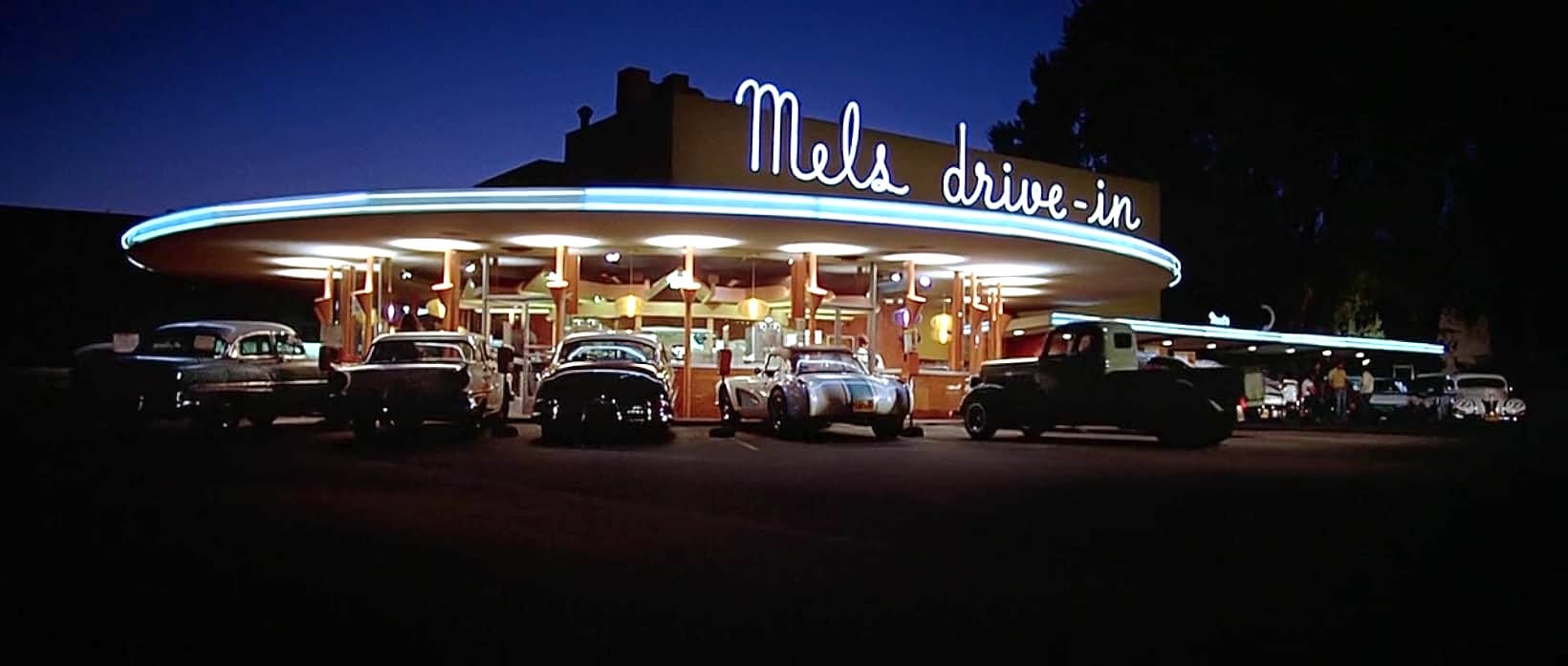
Parking lots are also great for comedy as George Lucas demonstrates in American Graffiti (1973). In this 70s classic, George Lucas turns the parking lot of Mel’s Diner into a character in its own right.
The lot becomes the hub of teenage life, a place where friends gather, relationships are tested, and stories unfold. The cars parked there—each as unique as their drivers—offer insights into the characters themselves.
When Terry “The Toad” loses control of his Vespa and jumps the curb, it’s a moment of slapstick humor that feels perfectly at home in the vibrant energy of Mel’s parking lot.
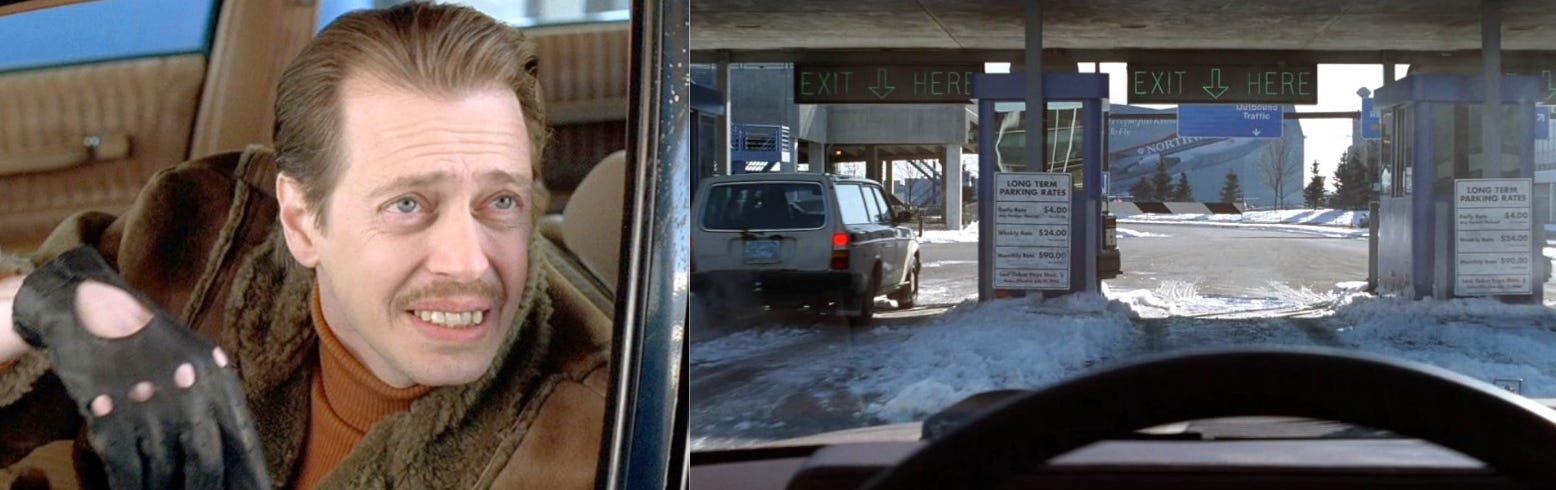
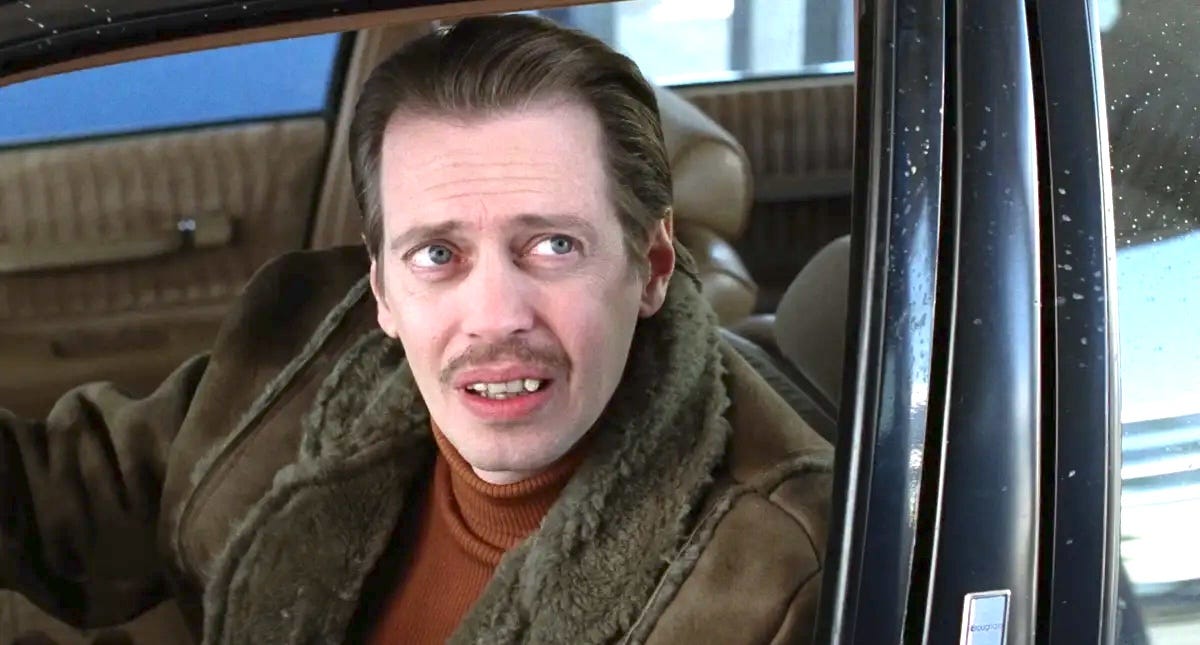
The Coen Brothers also use a parking lot for comedy in their film, Fargo (1996). Steve Buscemi’s Carl Showalter, a hapless criminal, pulls into an airport parking lot only to change his mind and leave immediately. The gate attendant, however, insists Carl pay the $4 minimum fee.
What follows is a classic Coen Brothers exchange: Carl berates the attendant, mocks his clip-on tie, and grudgingly pays up, all with Buscemi’s trademark exasperation. Who knew the real heist was over four bucks?
Auteur Directors and Parking Lots
Auteur directors also love to use parking lots as a setting for key scenes in their films.
For example, in Monte Hellman’s classic 1971 film, Two Lane Blacktop, the pivotal scene that sets up the cross country car race between The Mechanic (Dennis Wilson of The Beach Boys), his Driver (musician James Taylor) and GTO (Warren Oates) takes place in the parking lot of a highway gas station.
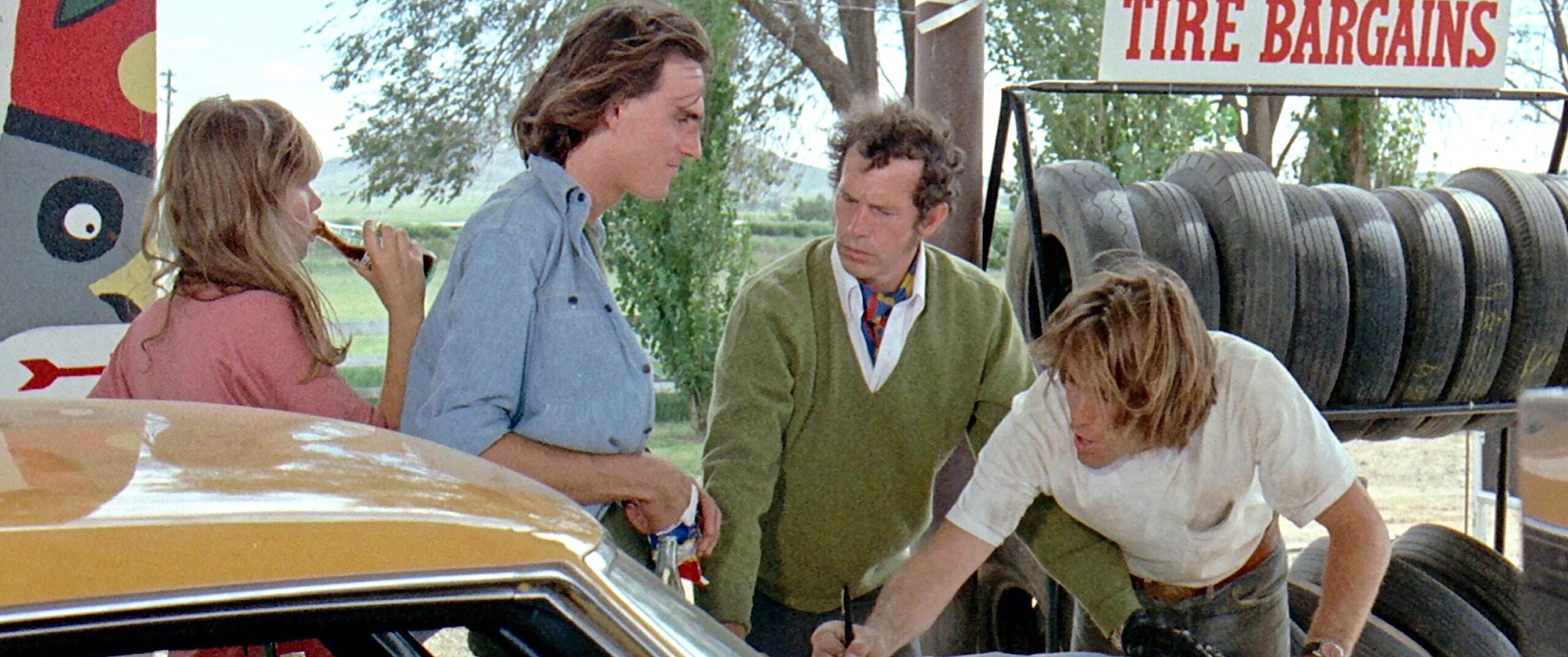
After taunting each other as they fill up their cars with gas, GTO and The Mechanic and Driver decide to race from California to Washington D.C. The winner gets the pink slip (ownership) of the loser’s car. However, there are no winners in this existential cult film.
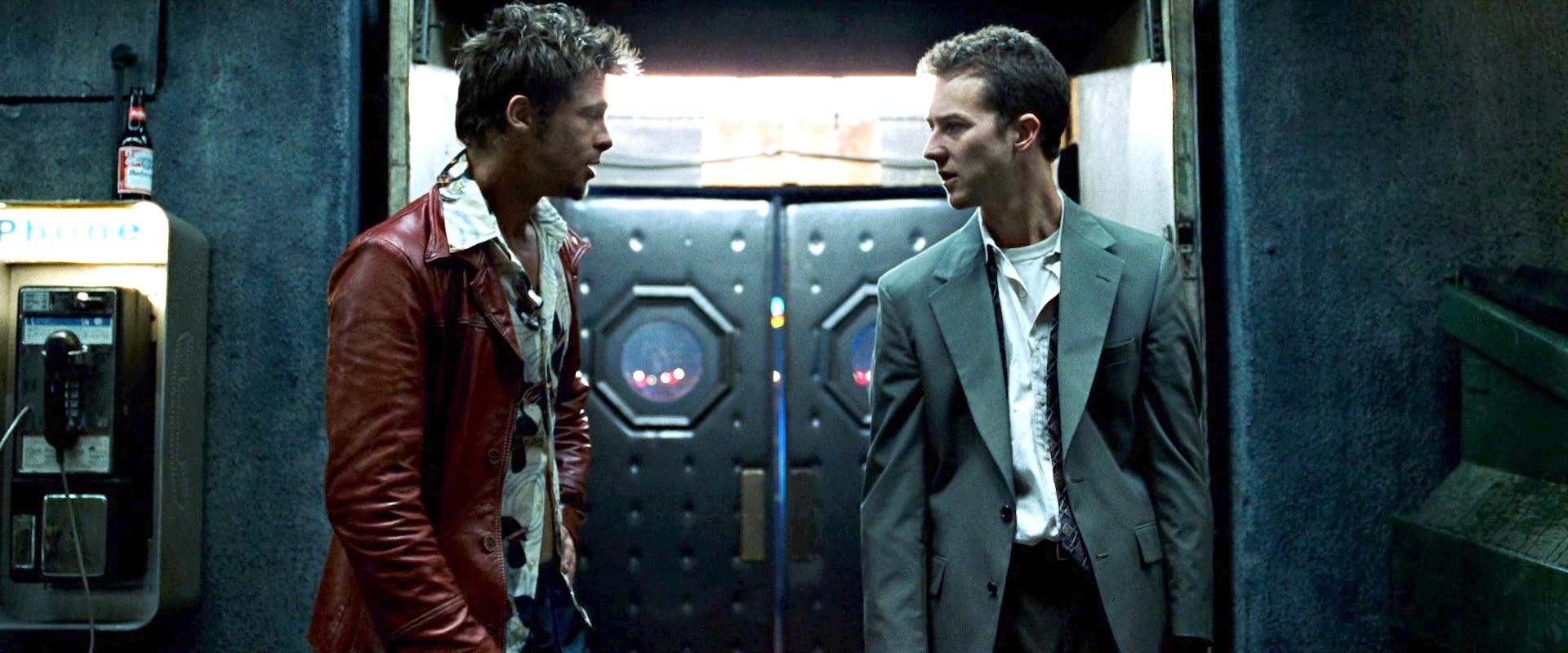
In David Fincher’s film, Fight Club (1999), Edward Norton and Brad Pitt meet for the first time in the parking lot outside a club. Pitt’s character, Tyler Durden, tells Norton, “I want you to hit me as hard as you can.” And then Norton does, sending his character down a rabbit hole of violence and rebellion. It’s one of the most memorable scenes in the film.
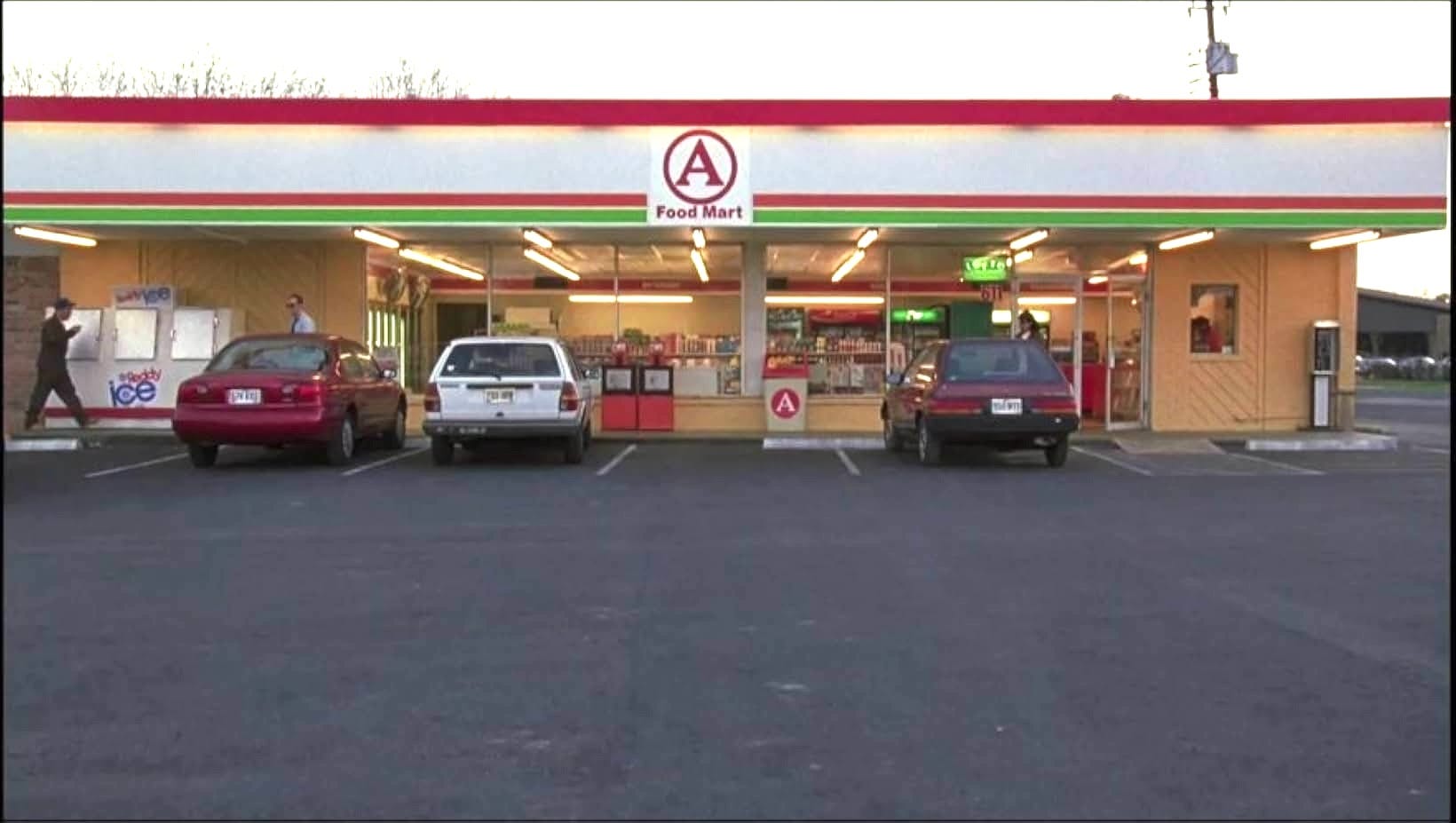
In SubUrbia (1996), Richard Linklater captures the aimlessness of suburban youth in a convenience store parking lot.
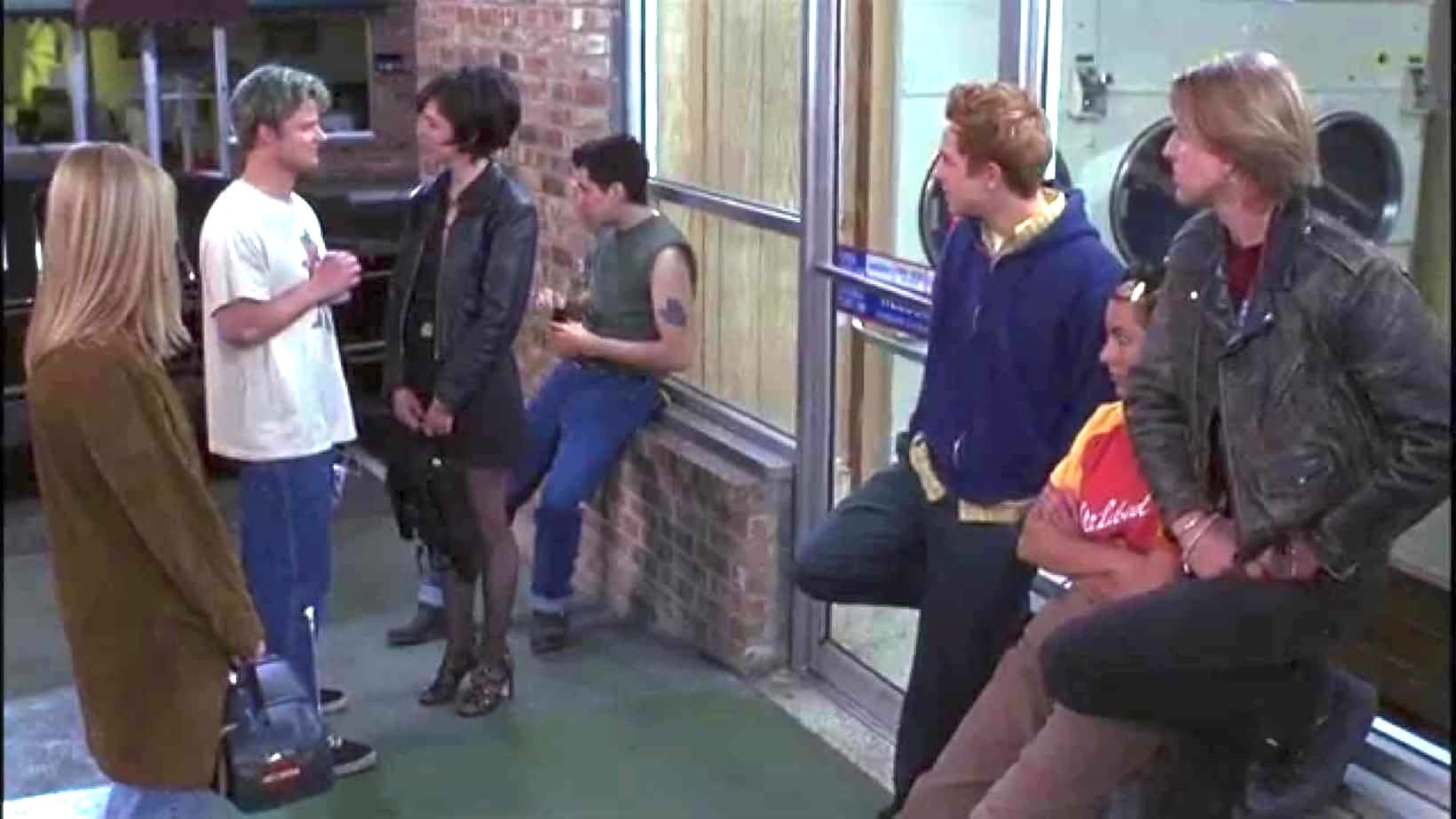
Here, a group of disillusioned teens spends their nights drinking, complaining, and confronting the truth about their stalled lives. The parking lot, with its fluorescent lights and wide-open spaces, mirrors their emotional stagnation.
Action and Tragedy
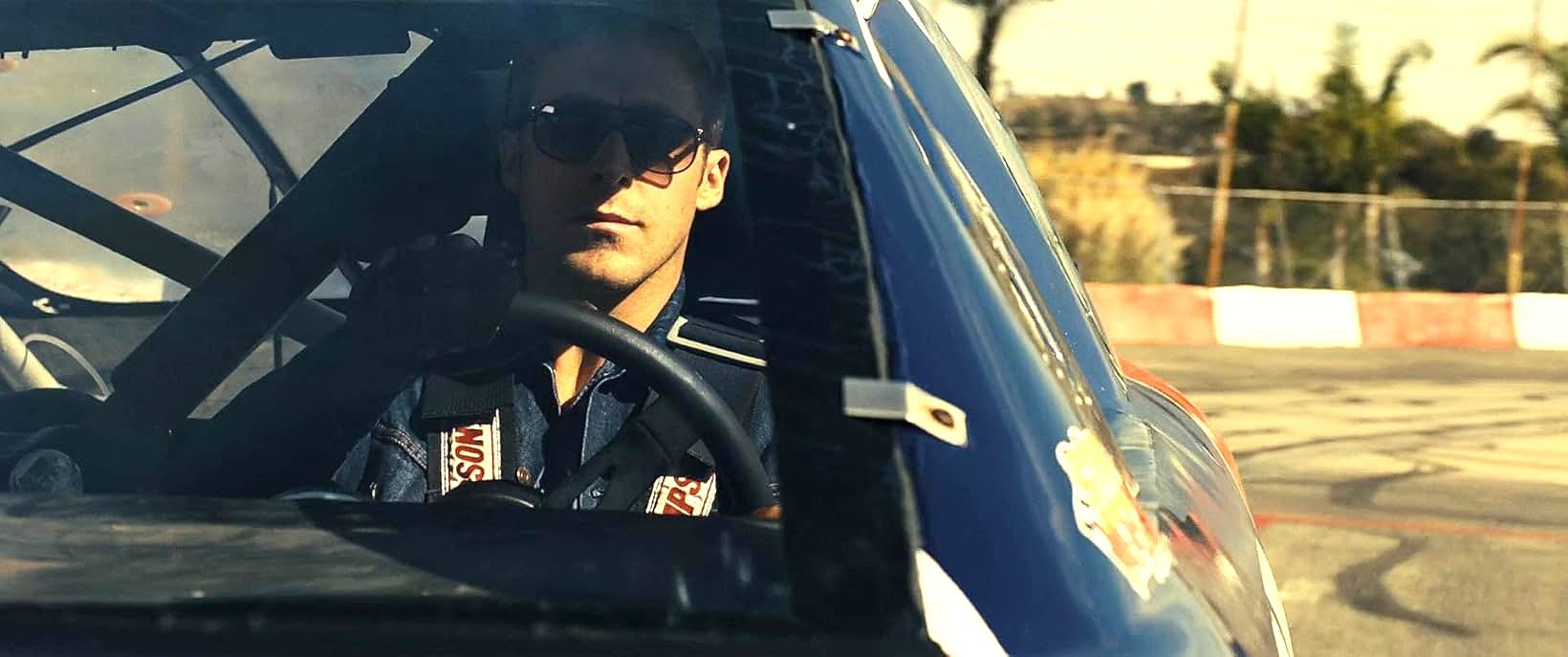
Parking lots also lend themselves to high-stakes drama. In Drive (2011), Ryan Gosling’s stoic Driver experiences two pivotal moments in parking lots.
In one scene, he helplessly watches as a pawn shop robbery goes wrong, and in another, he confronts gangster Bernie (Albert Brooks) at sunset in an eerily empty lot.
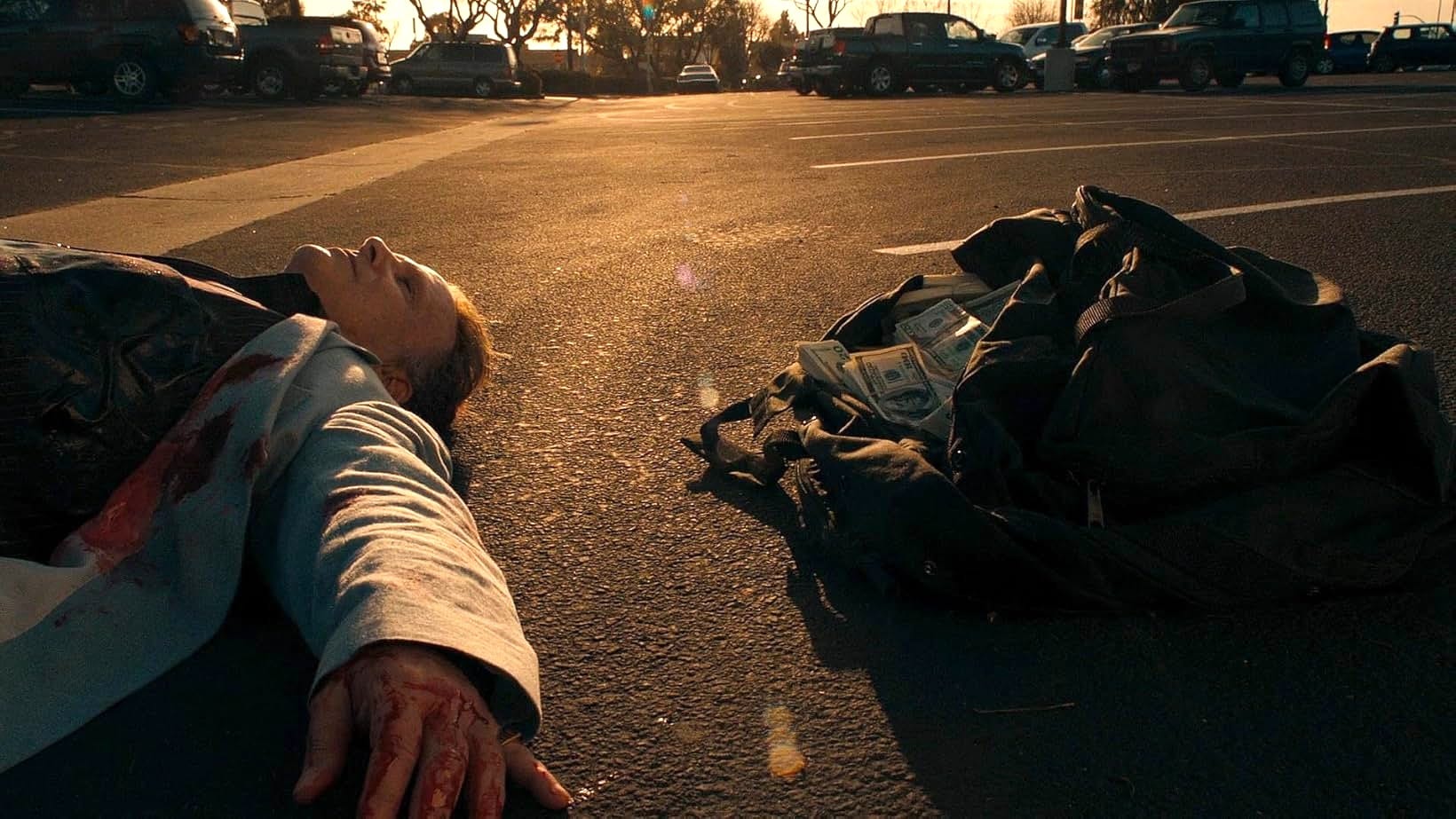
The Driver’s quiet resolve and the stark, isolating environment create unforgettable tension.
Peter Bogdanovich’s Targets (1968) takes a more chilling approach.
A sniper terrorizes a drive-in theater parking lot, using the space’s openness to create a sense of vulnerability.
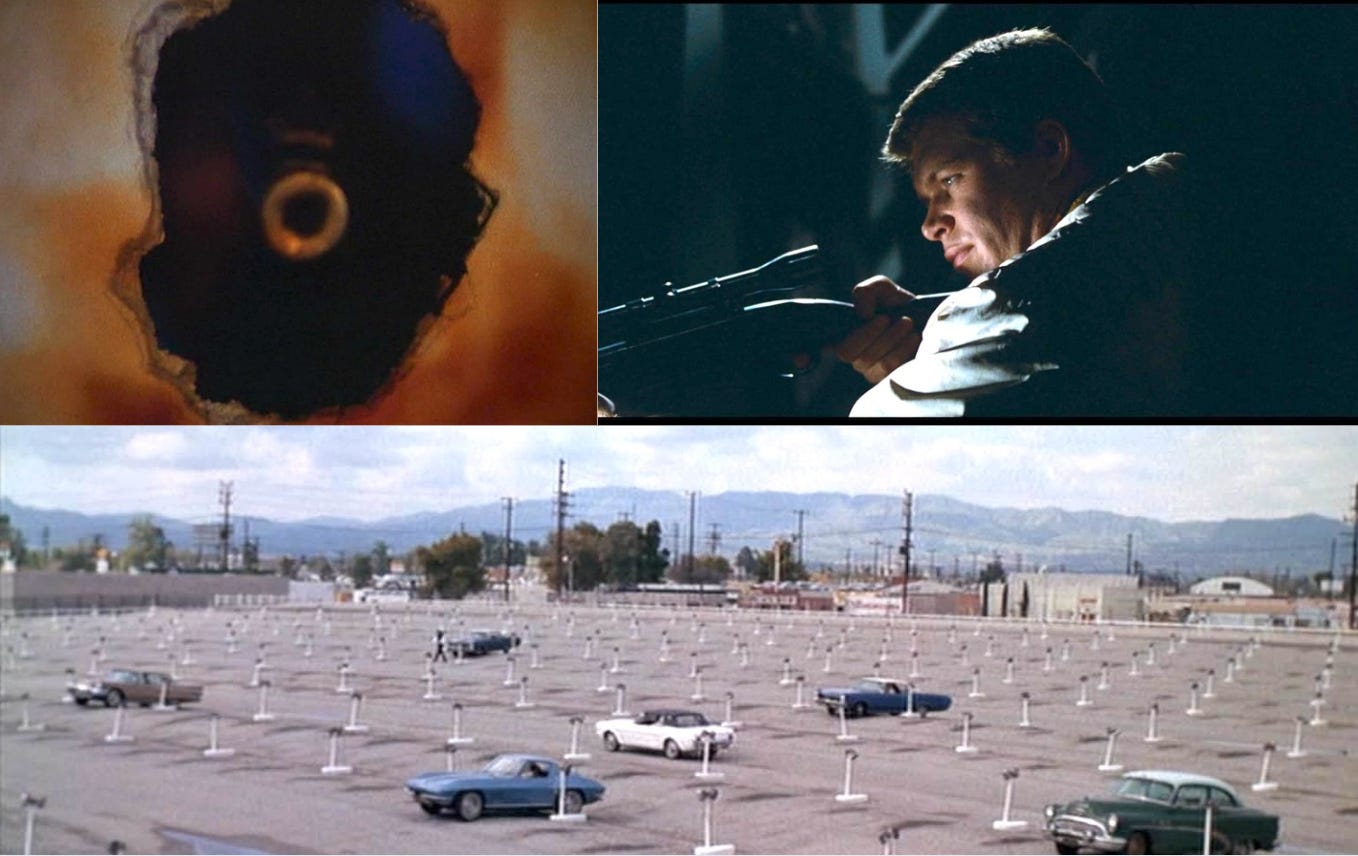
The lot becomes a site of horror, transforming an everyday location into a harrowing battlefield.
Parking Garages: The Darker Side in Modern Cinema
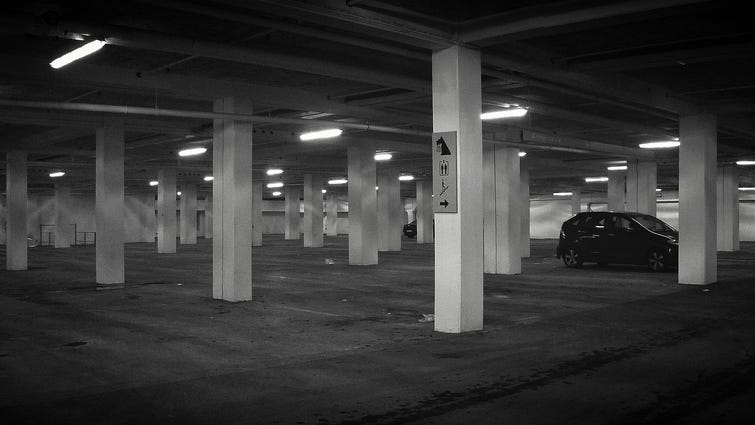
While parking lots are open and mundane, parking garages offer a darker, more menacing vibe. Their shadowy corners and multi-level structures make them perfect for suspense and action.
In All the President’s Men (1976), Alan J. Pakula stages clandestine meetings between journalist Bob Woodward (Robert Redford) and his informant, Deep Throat (Hal Holbrook), in a dimly lit parking garage.
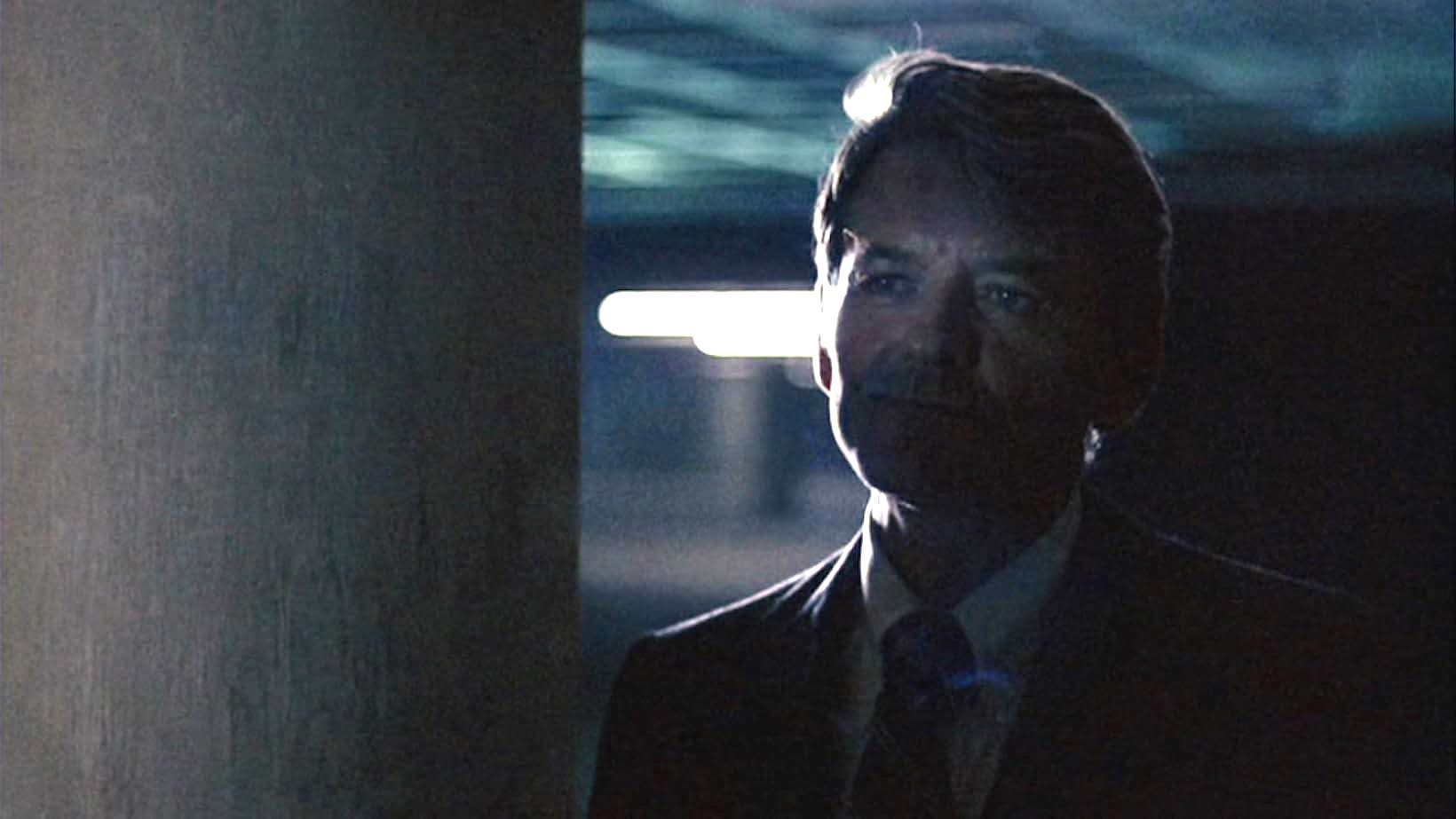
The ominous setting heightens the tension as Woodward uncovers a conspiracy that will shake the nation.
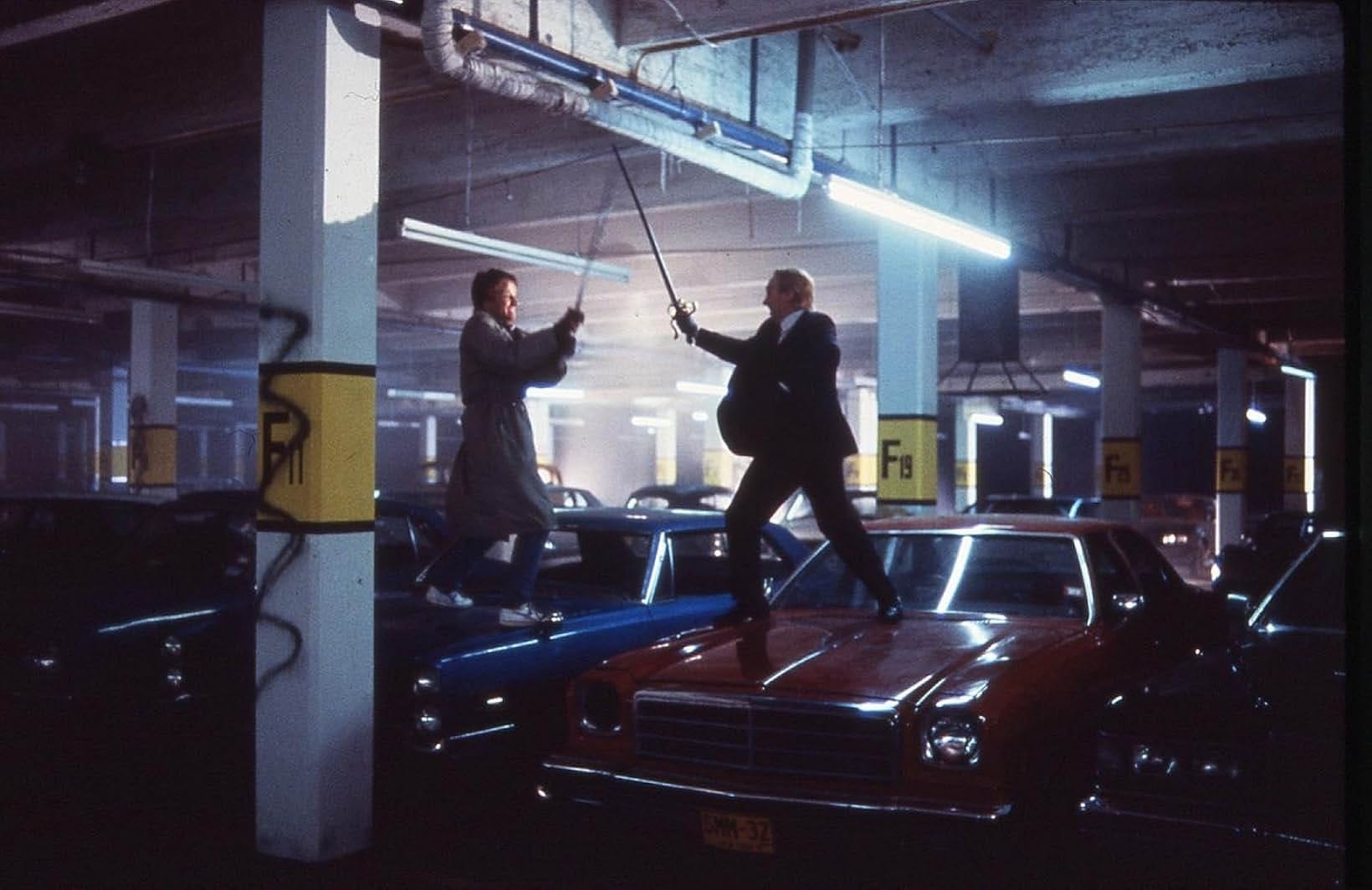
One of my favorite films, Highlander (1986), features a very unique sword fight. In fact, this may be the only modern movie where two men fight each other with swords in a parking garage.
After Connor MacLeod (Christopher Lambert) watches a wrestling match at Madison Square Garden, he returns to the arena’s parking garage. As he approaches his car, MacLeod, a living immortal, is confronted by another immortal wielding a sword and ready to fight.
Luckily, MacLeod also has a sword hidden inside his trench coat.
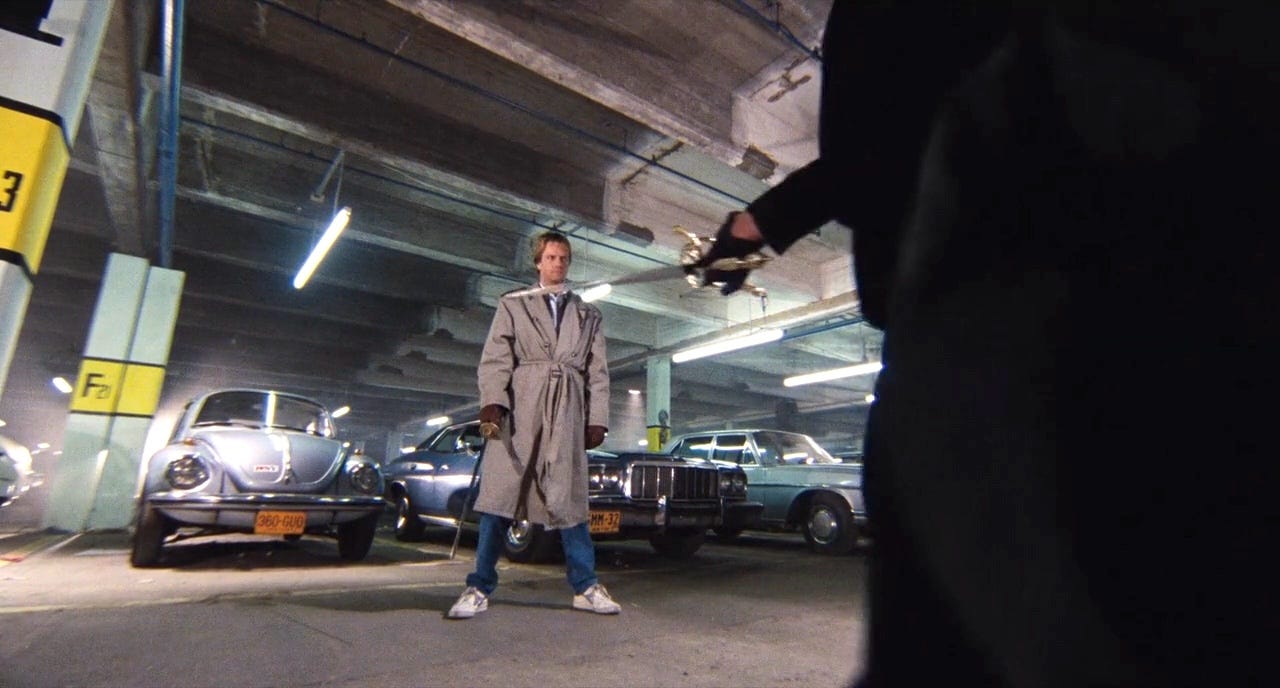
The two men engage in a sword fight that causes a lot of damage to all the cars around them until MacLeod decapitates his opponent and soaks up all of his immortal energy.
Chase scenes are also a parking garage specialty. In The Hunter (1980), Steve McQueen’s bounty hunter pursues a fugitive through a spiraling garage ramp, leading to a dramatic crash.
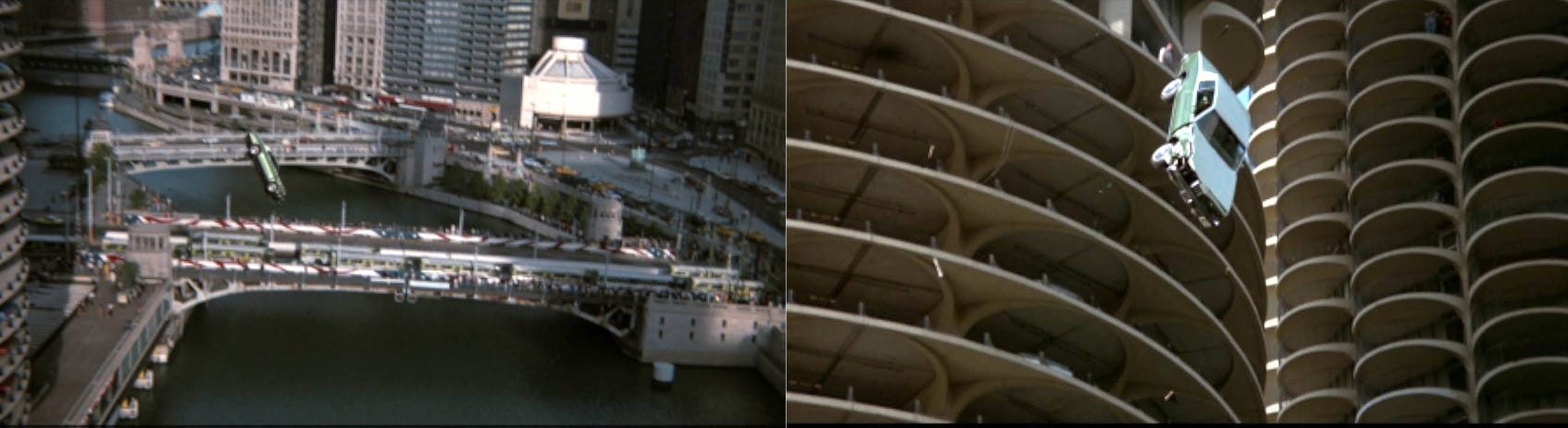
Similarly, in Terminator 2: Judgment Day (1991), the T-1000 chases the young John Connor as he rides his bike through a parking garage in a suspenseful sequence. Also, later in the film, Sarah, John, and The Terminator are forced to drive their car backwards through a hospital’s parking garage in another action packed scene.
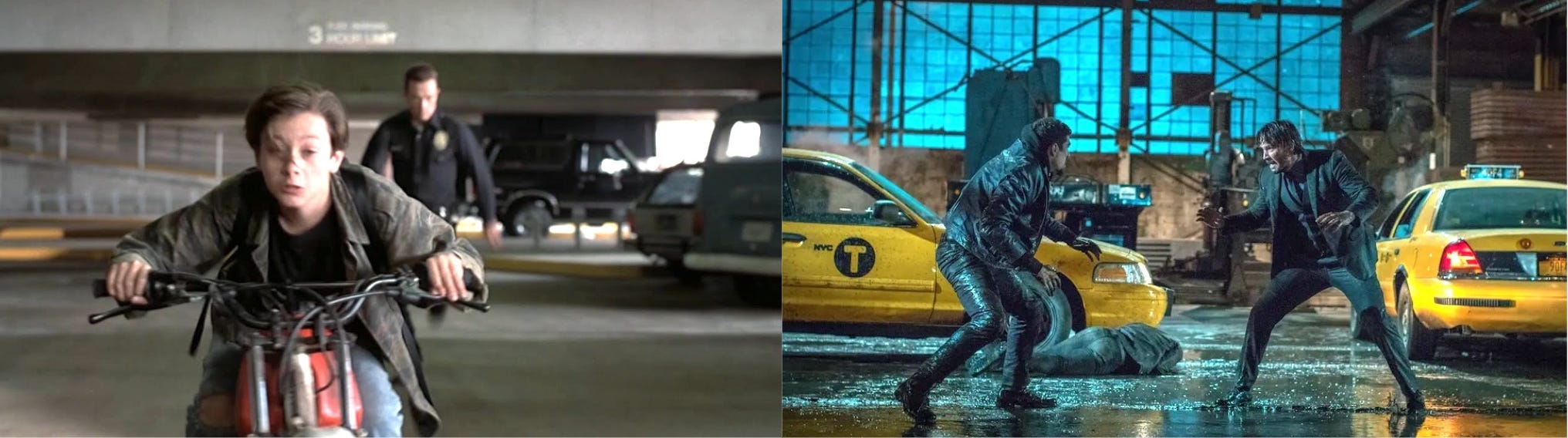
John Wick: Chapter 2 (2017) also uses a parking garage as a labyrinthine battlefield, blending its stark architecture with the film’s high-octane choreography.
Asphalt Arenas: Where Everyday Life Meets Cinematic Magic
Parking lots and garages in American cinema are more than just practical filming locations—they’re symbolic spaces that capture the essence of car culture and its role in shaping the American experience. They reflect a unique cultural tension: the freedom cars promise versus the constraints of the asphalt grids they require.
Ultimately, parking lots and garages remind us that even the most mundane settings can hold extraordinary stories. And who knows? The next time you’re circling a lot searching for a spot, you might just find yourself in the middle of your own Hollywood moment.
It's funny, as I read this entry I kept thinking things like, "Oh, what about Terminator 2?" or "Ah, and then there's Highlander," and then you'd write about it! Another one I thought of: Bill & Ted's Excellent Adventure, where they meet Rufus in front of 7-11.
This is such an interesting topic to make a write-up on and I immensely enjoyed reading through so many different cinematic parking spaces.