
The Mystery of Bell's Palsy
Even the best doctors don't know what causes this condition

For my newsletter post this week, I’m taking a break from talking about movies and music to discuss a health issue I experienced in the past that most people don’t know about…
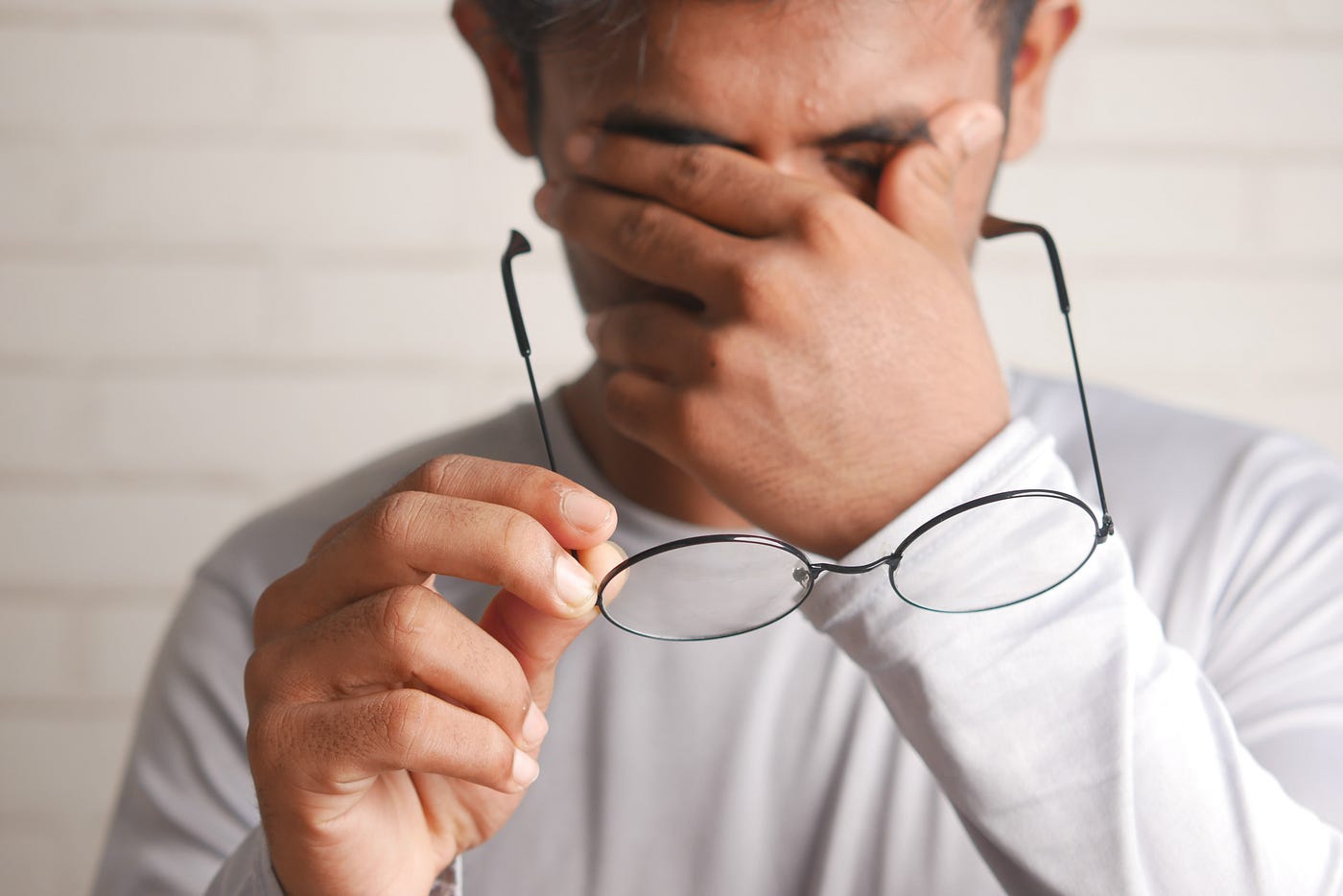
On July 4th, 2017, my left eye started watering…a lot. At first, I didn’t think anything of this because I suffer from all sorts of allergies and have dealt with itchy and watery eyes practically my whole life.
But then I realized that I couldn’t blink my left eye either. It was weird. My right eye would blink fine, but my left eyelid wasn’t moving, so I tried to use my finger to close and open it.
I went into the bathroom to try to figure out why this was happening. I had a sudden shock when I looked in the mirror. The entire left side of my face had drooped down, and I realized it was also numb. Also, one side of my mouth was drooped lower than the other side, and my left eyebrow wouldn’t move up or down, but my right eyebrow could.
I called my best friend to ask him what I should do, but once he answered the phone there was another problem. Because the entire left side of my face was numb, including that side of my mouth, I couldn’t speak clearly. The words I formed in my mind sounded like slurred gibberish when I spoke.
I ended up driving myself to the emergency room of a local hospital. At first, the doctors thought I was having a stroke. Thankfully, that wasn’t the case. But the condition I did have was something I had never heard of before:
Bell’s palsy.
What Is Bell’s Palsy?
According to The National Organization for Rare Disorders, Bell’s palsy is a non-progressive neurological disorder of the 7th cranial nerve that affects one side of the face. The disorder gets its name from the 19th century Scottish anatomist, Sir Charles Bell, who discovered it.
Bell’s palsy is an unexplained episode of facial paralysis that begins suddenly and worsens over 48 hours. It can affect anyone of any age.
Strangely, the exact cause of this disorder isn’t known, although Johns Hopkins Medicine suspects that it may be due to inflammation that is directed by the body’s immune system against the nerve controlling movement of the face.
Sometimes, Bell’s palsy is associated with an infection with the herpes simplex virus, which is related to the cause of common cold sores in the mouth. Other possible causes of Bell’s palsy include diabetes, high blood pressure, lyme disease, or even multiple sclerosis.
For myself, I didn’t have any of those issues, which made my affliction with Bell’s palsy even more mysterious. However, I did have all of the symptoms.
The Symptoms of Bell’s Palsy
The most common symptoms of Bell’s palsy include a loss of feeling on one side of the face, including a lack of movement of the muscles that control facial expressions, such as smiling, blinking, or closing the eyelid, even during sleep. Early symptoms may consist of pain behind the affected ear; a slight fever; and weakness and/or stiffness on one side of the face.
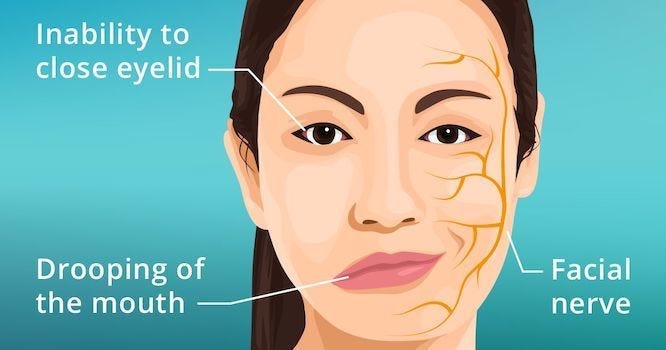
Other symptoms include tearing; drooping on the lower part of the affected side of the face, especially in the corner of the mouth; drooling; slurred speech; a loss of taste; hypersensitivity to sound in the affected ear; eyebrow sagging on the affected side of the face; and significantly, the inability to close the eye on the affected side of the face.

According to The National Organization for Rare Disorders, Bell’s palsy is fairly prevalent today and affects both men and women in equal numbers.
They estimate that between 25–35 in 100,000 people have been affected by this illness. In addition, approximately 40,000 individuals are diagnosed with Bell’s palsy in the U.S. every year, including celebrities like George Clooney, Angelina Jolie, Pierce Bronson, Rosanne Barr, and composer Andrew Lloyd Webber.
Unfortunately, I had a severe case of this illness. It took almost 6 months to fully recover from it.
Treatment
After my diagnosis, I learned that steroids and antiviral medication need to be given within the first 72 hours after symptoms appear or they won’t have any effect. At the hospital, the doctor prescribed Prednisone, a steroid, which I had to take every day during the first week. He also prescribed Alacyclovir, an antiviral medicine, because the entire left side of my face, from the forehead to the chin, was numb.
In addition, the doctor stressed the importance of taking care of my affected left eye, since I had no control over it and couldn’t close it. If the cornea, the clear protective covering of the pupil, became dry, there was a risk of scarring and permanently damaging the eye. I certainly didn’t want that to happen.
To prevent this, I had to use artificial tears eye drops every hour of the day to keep the eye moist. I also had to wear an eye patch both day and night.
Later, I was allowed to tape the eye shut with surgical tape until I regained the ability to open and close the affected eye on my own. Unfortunately, I wasn’t able to do that for months. The doctor also told me some shocking news:
There is no cure for Bell’s palsy.
Just as doctors and scientists don’t know what causes Bell’s palsy, they also don’t know how to cure it.
Bell’s palsy must heal on its own.
Recovery
According to The National Institute of Neurological Disorders and Stroke, the prognosis for victims with Bell’s palsy is very good. Clinical evidence shows gradual improvement occurs within three weeks in 85 percent of the cases.
In addition, according to Facial Palsy.org.uk, 70 percent of individuals eventually fully recover all of their facial functions, including their ability to open and close the eye on the affected side of their face, within 3 months.
However, for the remaining 30 percent of cases, severe complications do occur, which can result in partial paralysis and other lingering effects.
In addition, 7 percent of patients have recurred Bell’s palsy, with the average interval between attacks being 10 years.
One notable celebrity who suffered from the complications of Bell’s palsy was the late actor-comedian Buddy Hackett. Hackett had Bell’s palsy as a child and the effects of it contributed to his distinctive slurred speech and tendency to speak of the right side of his mouth.
For myself, it took approximately 6 months to fully recover from this ailment because my facial paralysis was so severe. The left side of my face was totally numb. Trying to shave when you can’t feel half of your face isn’t much fun.
I also couldn’t open or close the affected eye on the left side of my face for months either. I don’t recommend trying to drive with only one good eye.
When I returned to work after the first few weeks of recovery, I still couldn’t speak clearly and drooling was a major problem. In addition, I had a lot of problems reading with my one good eye since the affected eye was covered by an eye patch. I was also very tired and fatigued most of the time too, which caused me to gain a lot of weight.
After months applying eye drops every hour, wearing an eye patch during the day, and taping my eye shut at night, the first time I realized I could close and open the affected eye on my own felt like a miracle.
Final Thoughts
Bell’s palsy is an illness you can’t prevent. No one knows what causes it. Also, there’s no cure for this condition except the time it takes for Bell’s palsy to fade away on its own. If you suddenly find yourself experiencing any of the symptoms I’ve described above, it’s important to get medical treatment right away.
Although it will take a few (or more) months for victims to recover from this mysterious illness, most people will not suffer any permanent damage from it.
It’s now been eight years since I was first diagnosed with Bell’s palsy. I’m very thankful that I was able to fully recover from it.
Wow! That's a rough story. I'm so happy it has passed for you. Take care.
A worked with a guy who had this happen to him recently. Can't imagine having it for 6 months!