
Who's Your Ideal Cinematic Dad?
The different types of Hollywood movie fathers

Father’s Day is always a bittersweet holiday for guys like me who didn’t grow up with a good dad.
While we’re happy that fathers have a special day to be recognized for their contributions raising their children, we mourn the fact that our own fathers were pretty bad in a lot of ways.
My own Dad was a borderline sociopath. He was warm, outgoing, and friendly in public but verbally abusive and narcissistic at home. He eventually ran off to Texas with a woman he was seeing on the side but cleaned out our family’s bank accounts before he left. Because he was such an awful dad, I’ve often found myself imagining which movie father I would like to have had as a kid and now as an adult.
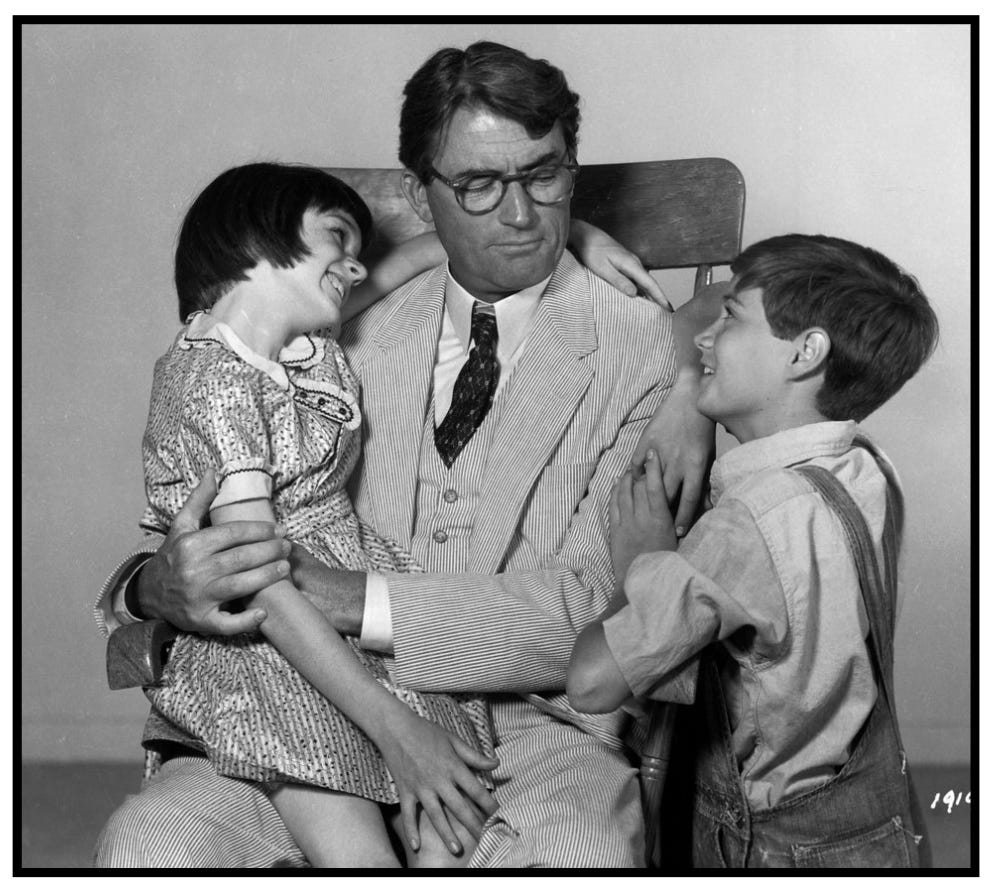
After giving this some thought, my first choice is Atticus Finch from To Kill a Mockingbird.
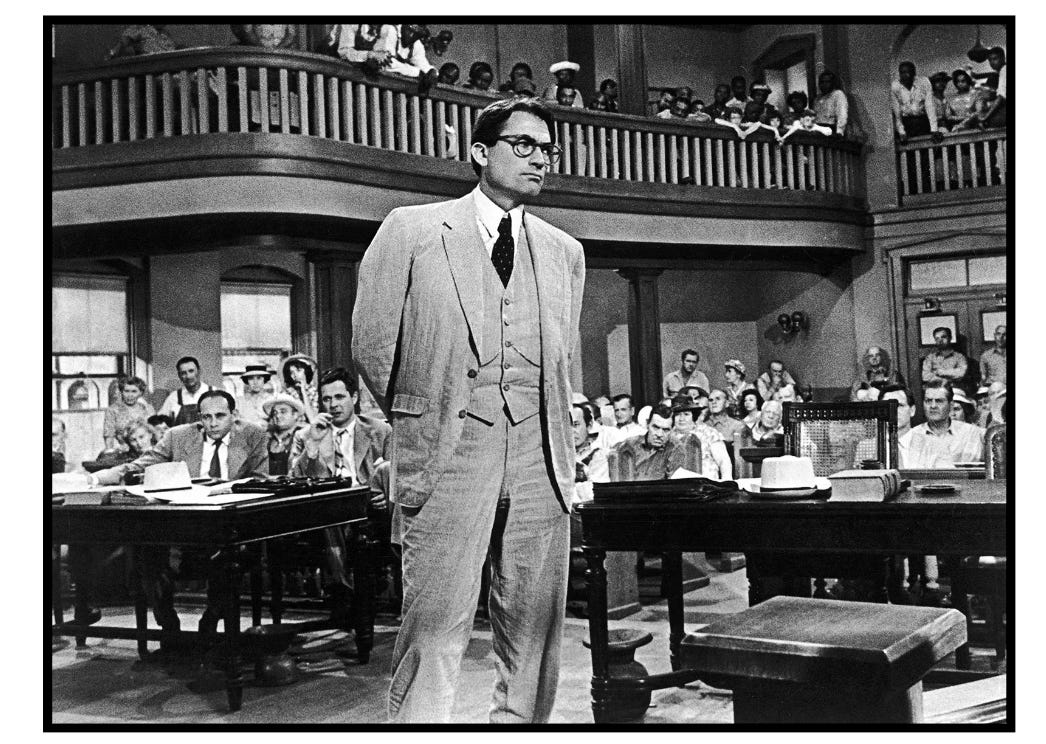
Based on the classic novel by Harper Lee, Gregory Peck does an outstanding job in this film of portraying Atticus’ integrity and strong moral principles. In addition, as a father, Atticus is loving, caring, but also stern. By taking on the case of Tom Robinson, a local Black man falsely accused of rape, Atticus shows his children, Jem and Scout, the importance of doing what’s morally right and following your conscience, even when the decision is unpopular and difficult.
My second choice for my ideal movie dad is from a more recent film: Mr. Perlman in Call Me By Your Name.
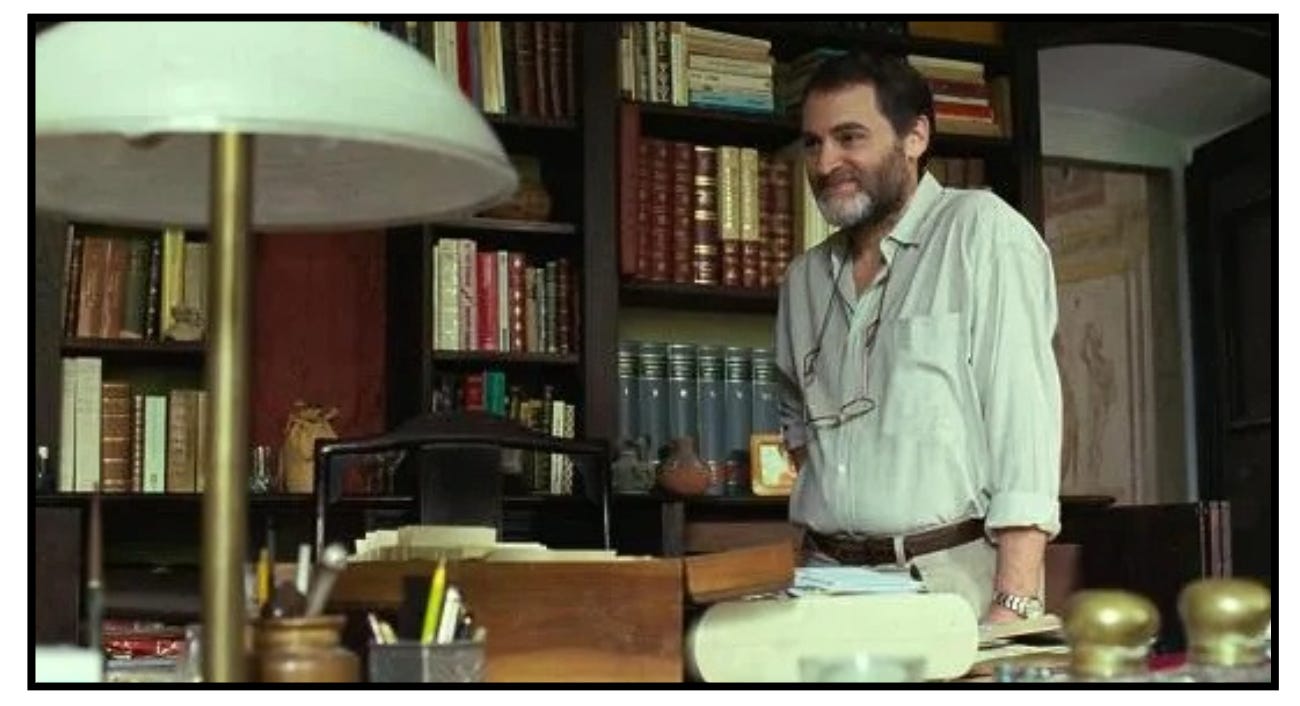
Michael Stuhlbarg gives an excellent performance as Elio’s father in the film. He portrays Mr. Perlman as an open-minded, accepting academic professor, full of warmth, tenderness and free of judgment.
These attitudes create a loving atmosphere that allows his son, Elio, to explore and discover his own feelings. In Mr. Perlman’s scene with Elio near the end of the film, Stuhlbarg elevates his monologue to something almost Shakespearean by saying to Elio:
When you least expect it, Nature has cunning ways of finding our weakest spot. Just remember: I am here. Right now you may not want to feel anything. Perhaps you never wished to feel anything. And perhaps it’s not to me that you’ll want to speak about these things. But feel something you obviously did.
You had a beautiful friendship. Maybe more than a friendship. And I envy you. In my place, most parents would hope the whole thing goes away, to pray that their sons land on their feet. But I am not such a parent. In your place, if there is pain, nurse it. And if there is a flame, don’t snuff it out. Don’t be brutal with it. We rip out so much of ourselves to be cured of things faster, that we go bankrupt by the age of thirty and have less to offer each time we start with someone new. But to make yourself feel nothing so as not to feel anything ― what a waste!
Who wouldn’t want a father like Mr. Perlman?
Another worthy example of a loving father is Will Smith’s character, Chris Gardner, in The Pursuit of Happyness.
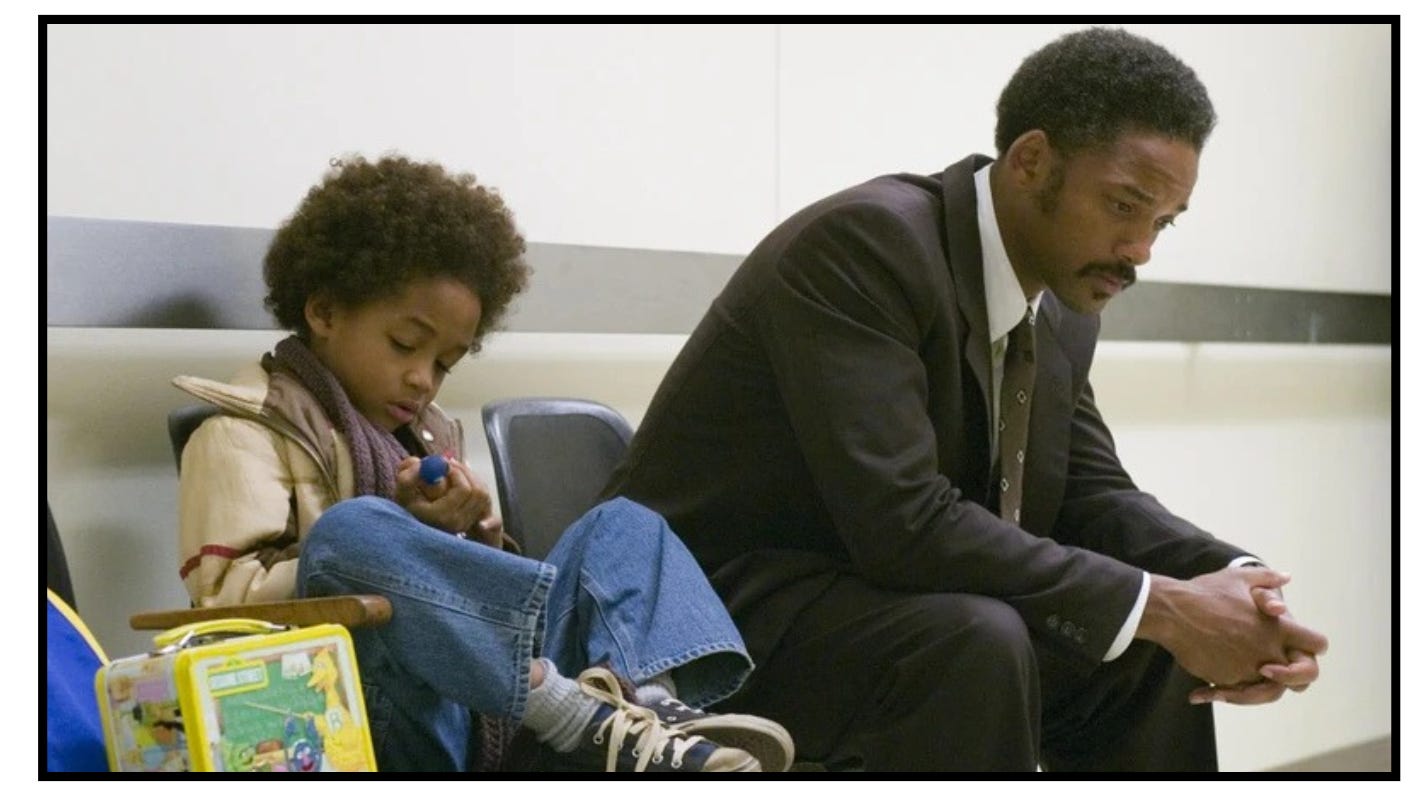
In this film, Chris Gardner is a struggling salesman and single father who faces homelessness while trying to attain a better life for himself and his young son.
Despite overwhelming obstacles, Gardner eventually lands an unpaid internship at a prestigious brokerage firm, determined to earn a permanent position and achieve success as a stockbroker.
Based on a true story, Chris Gardner is a great father because of the way he always makes his son’s needs a priority, even as they both find themselves broke and homeless. In addition, Gardner also tries to protect his son from realizing the harsh reality of their situation as much as he can.
Will Smith portrays Chris Gardner as an optimist who never gives up hope, even when things are about as bad as they can get. In addition, Smith’s Chris Gardner models important life lessons for his son by showing him the importance of perseverance and hard work.
Although the movie fathers mentioned above are all great, by taking a broader look at the way Hollywood has portrayed fathers through the years, it’s possible to put other fictional movie fathers into different categories.
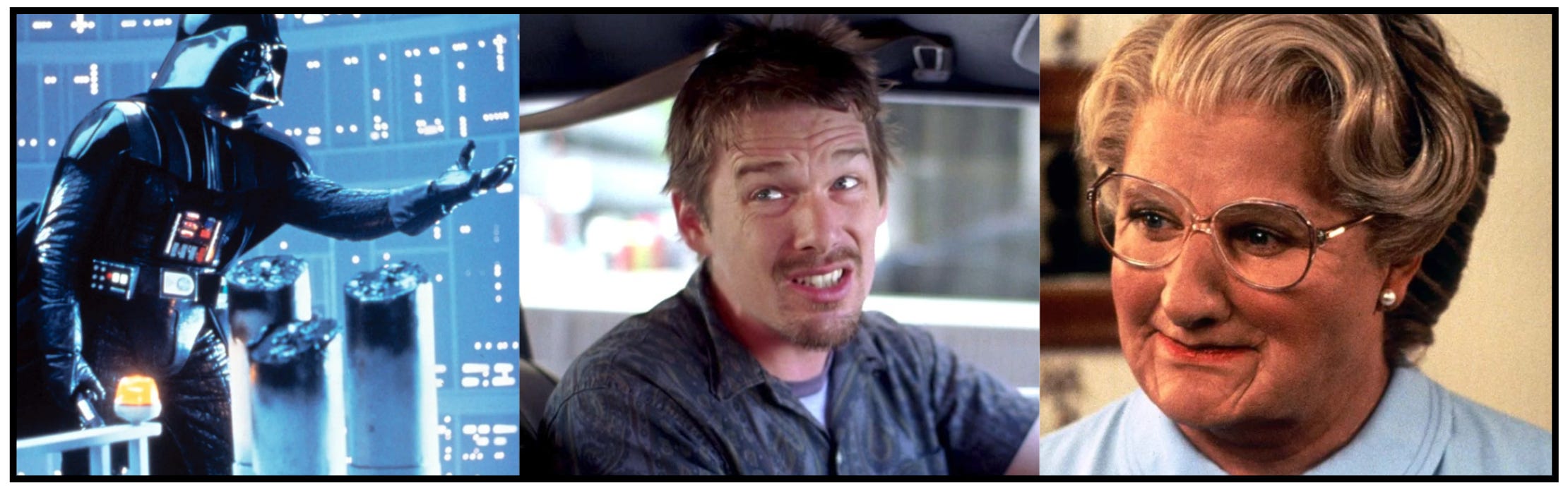
First, there are movies that portray flawed but redeemable fathers such as Robin Williams’ Daniel Hillard in Mrs. Doubtfire, Ethan Hawke’s Mason Sr. in Richard Linklater’s Boyhood, or even Darth Vader in the first three Star Wars movies.
But my favorite flawed movie father is the late Gene Hackman’s portrayal of the estranged family patriarch, Royal, in Wes Anderson’s The Royal Tenenbaums.
At the beginning of the film, Gene Hackman’s character, Royal, is a disbarred attorney, and a selfish, manipulative “born bastard” who has been estranged from both his ex-wife and children for over 20 years.
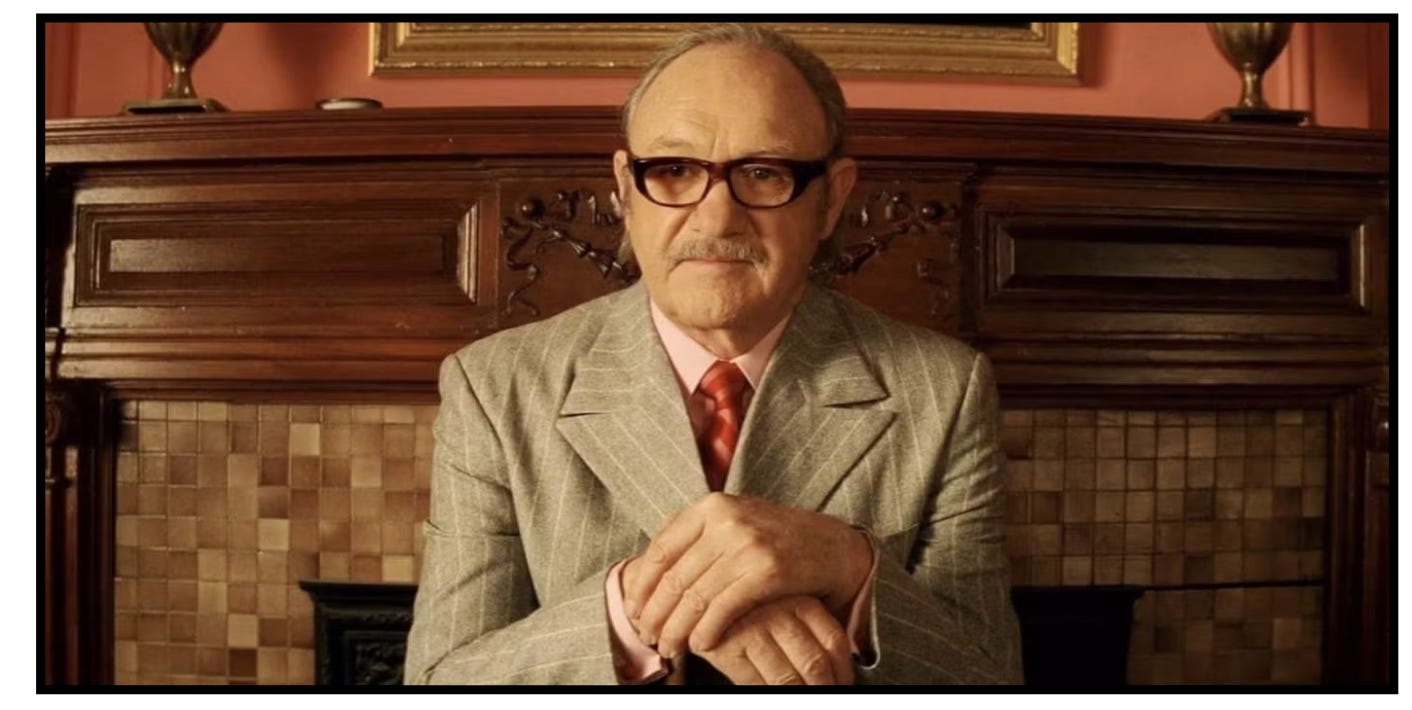
After suddenly re-entering their lives, Royal falsely claims to have a terminal case of stomach cancer so he’s allowed to move back into the family’s home. Soon, it’s obvious that Royal is crude and dishonest, yet he can also be funny and charming too.
However, as Royal begins to spend more time with his family, he begins to genuinely make an effort to reconnect with them. And although his methods aren’t always the best, Royal starts to show real affection towards his adult children and his grandkids. By the end of the film, Royal has become an integral part of the family once again.
Next, there are films that portray fathers as being tyrannical yet human.
Perhaps the most famous example of this type of father is Christopher Plummer’s Navy Captain Georg Von Trapp in The Sound of Music.
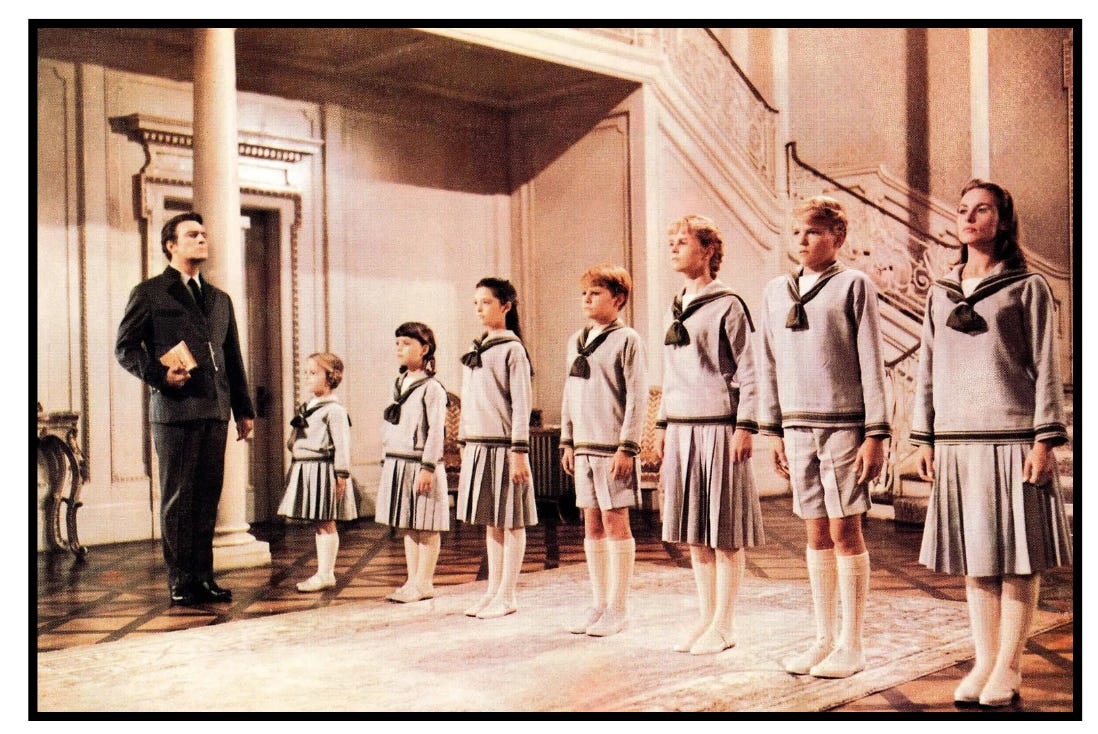
In this Hollywood classic, Plummer runs his family like a German military unit, dressing his seven children in uniforms and expecting them to respond to the various whistles he uses to summon them. Of course, that changes once Julie Andrews’ Maria becomes their governess. Eventually, Plummer’s Captain Von Trapp breaks through his emotional barriers and becomes a loving father to both his children and Maria.
But, my favorite movie father in this category is Robert Duvall’s portrayal of Lt. Colonel “Bull” Meechum in the film, The Great Santini.
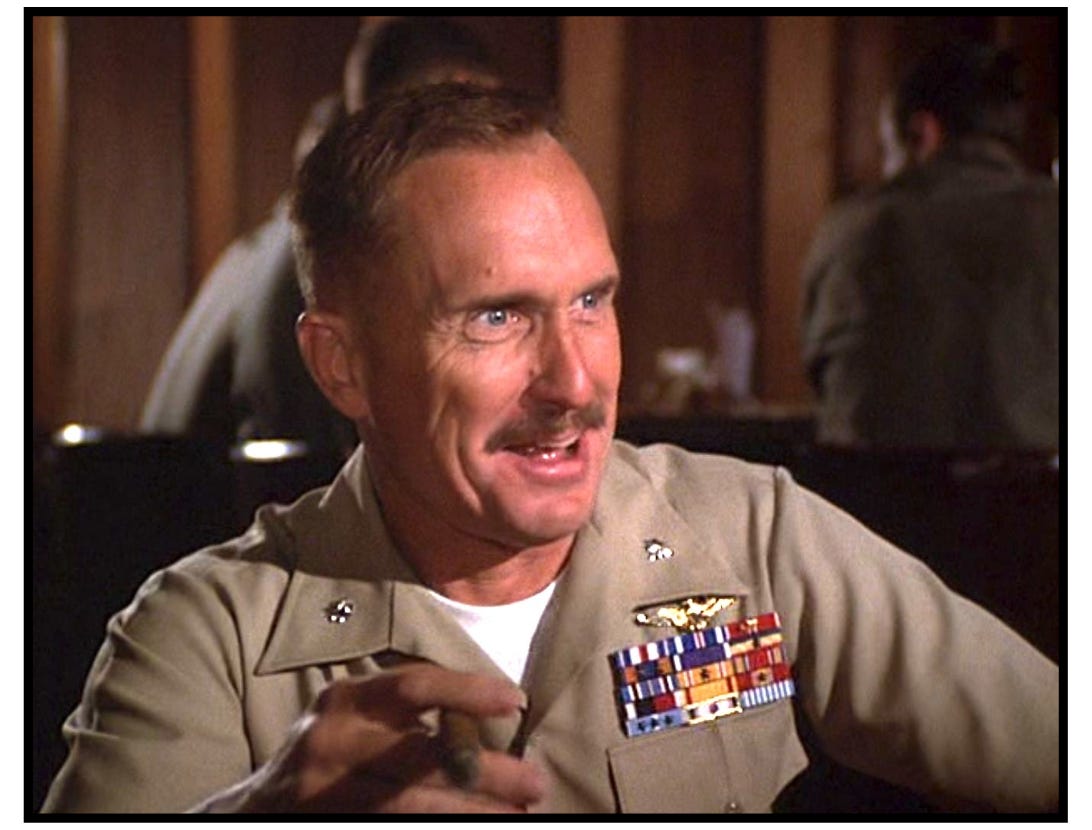
Set in the early 1960s, the film is about the challenges facing military families, but focuses specifically on his strained relationship between Marine fighter pilot “Bull” Meechum, (who often refers to himself in the third person as “The Great Santini”) and his teenage son, Ben.
Through a series of powerful scenes, the film explores the tension between the military discipline Bull imposes on his family, especially Ben, and the family’s emotional vulnerability that results from Bull’s actions. As Ben becomes a teenager, he struggles to assert his independence which only makes his father, Bull, become even more rigid in the way he treats his son.
This is effectively illustrated in one of the film’s best scenes: Bull challenges Ben to a one-on-one game of basketball in their driveway. What begins as a casual father-son game quickly escalates as Bull becomes aggressive, mocking and bullying Ben throughout the first half of the game.
However, in the second half of the game Ben starts to play well, yet Bull refuses to let up. Bull continues to taunt his son, blocks his shots, and ultimately refuses to let his son win the game.
Watching this scene, we realize the game isn’t just about basketball but about power, control, and the way a father like Bull expresses or withholds affection. For those of us who grew up in the 1960s and 70s, we probably recognize aspects of Duvall’s domineering character in our own fathers.
Yet another category of films about fathers are the ones where the dad is just an asshole.
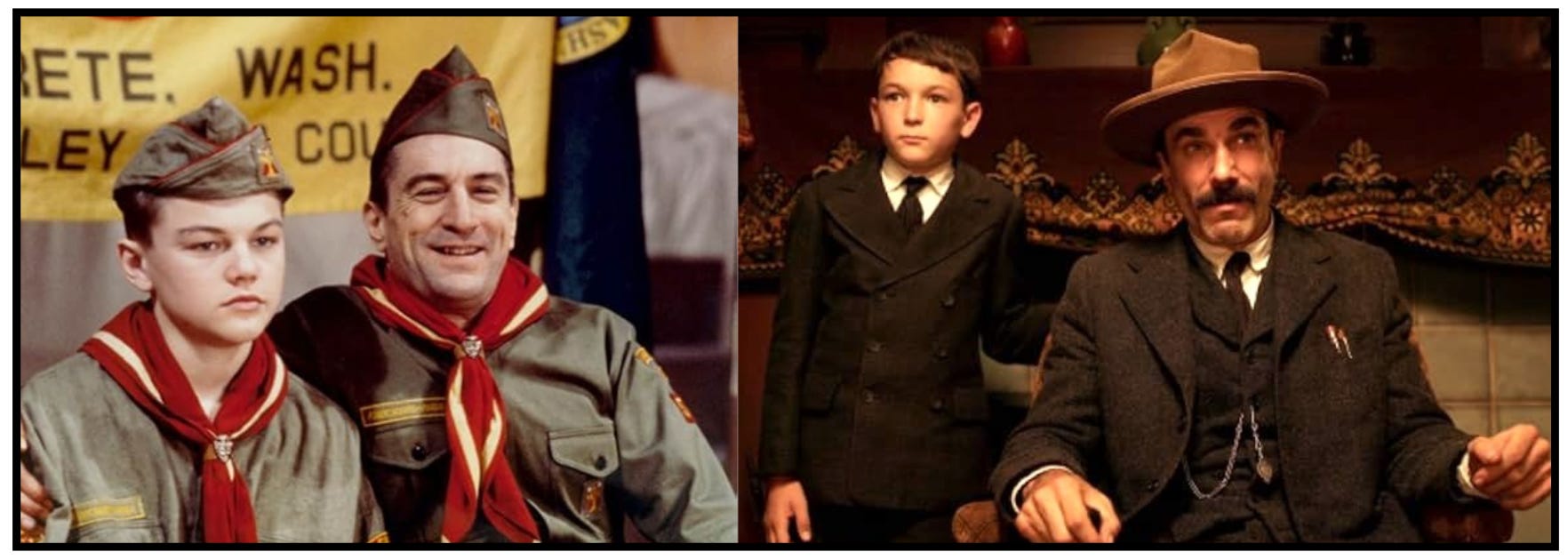
Characters who fit into this category include Robert DeNiro’s stepdad, Dwight Hansen, in This Boy’s Life and Daniel Day Lewis’ Daniel Plainview, also a stepdad, in P.T. Anderson’s There Will Be Blood. Both of these men are self-centered bullies who have little if any redeeming qualities.
But my favorite “asshole father” is Jeff Daniels’ performance as Bernard Berkman in The Squid and The Whale.
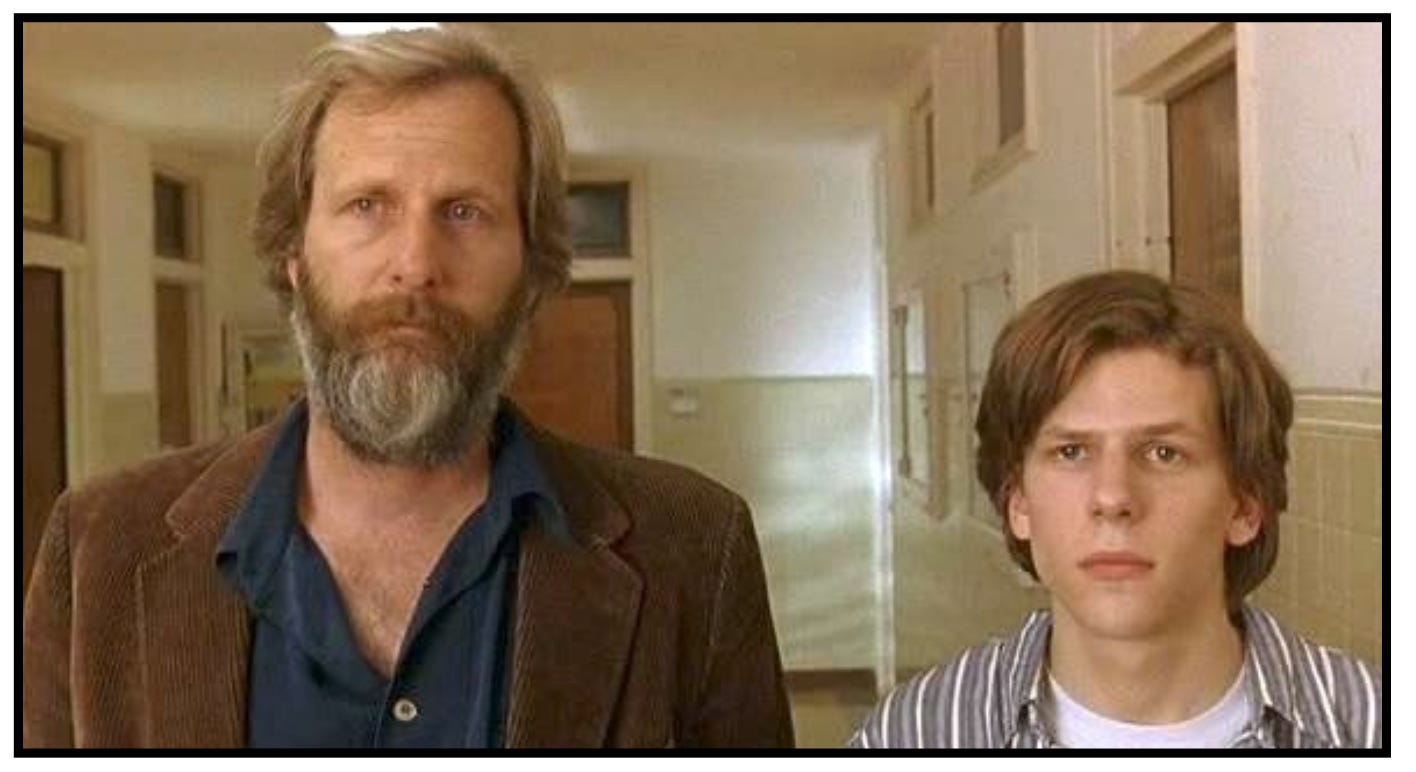
Written and directed by Noah Baumbach, The Squid and The Whale is a semi-autobiographical drama about a Brooklyn family's struggles in the 1980s. It follows the emotional fallout from a bitter divorce between Bernard, a once-prominent writer whose books no longer sell, and his wife, Joan, a budding novelist who is about to achieve success with the publication of her first book.
Their two sons, teenager Walt and his sensitive younger brother, Frank, are caught in the middle of a feud between their parents, which is only made worse by Daniels’ Bernard insisting they share joint custody. Soon, each boy is forced to choose allegiance to one parent or the other. Walt sides with his father, Bernard, who he idolizes, and Frank sides with his mother, Joan, much to Bernard’s disdain.
Arrogant and narcissistic, Bernard is a pretentious snob who lacks empathy and effectively manipulates his oldest son, Walt in order to shape the boy’s opinions about his mother, literature, and life so it aligns with Bernard’s skewed perspective.
Bernard is also controlling, petty, and cheap.
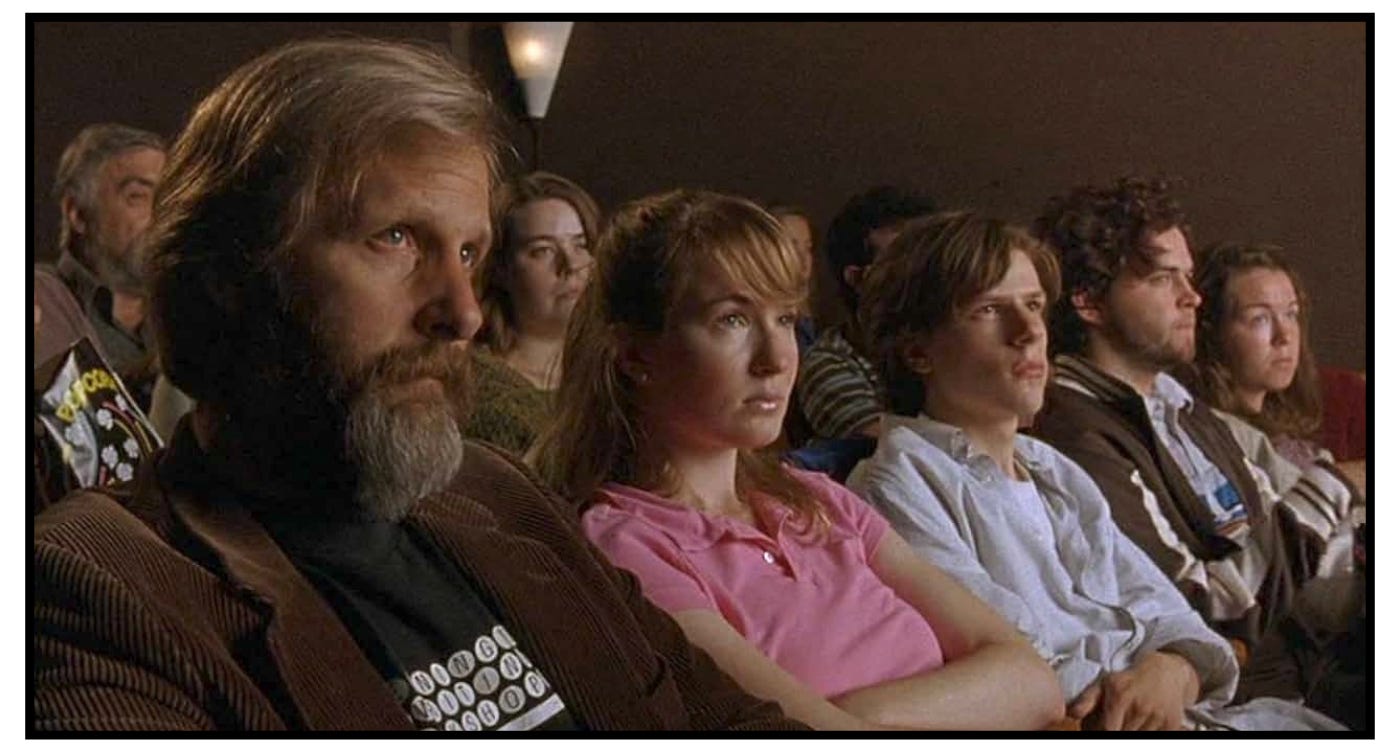
When Walt gets his first girlfriend, Sophie, Bernard insists on coming along on their movie date and makes them go see Blue Velvet instead of their first choice, Short Circuit. Then, at a restaurant afterwards, Bernard dominates the conversation, casually flirts with Sophie in front of his son, and incredibly, makes each of them pay for their share of the meal, including the tip.
In another sequence, Bernard exhibits even more inappropriate behavior by letting Lili, one of his female college creative writing students, move into their house. Naturally, Walt becomes smitten with Lili only to later realize his father is having sex with her in the bedroom down the hall.
Later, in one of the film’s pivotal scenes, Walt visits the American Museum of Natural History and stands in front of the exhibit of the squid and the whale. It’s something he remembers from his childhood as terrifying. However, Walt now looks at it in a new way. This moment of reflection marks a psychological breakthrough as Walt confronts his own fear and confusion about his parents’ divorce.
By the end of the film, Walt has begun to realize that his father is not a brilliant, misunderstood genius, but a bitter man who has failed his family in many ways.
The final category of film fathers are movies about dads who are truly evil.
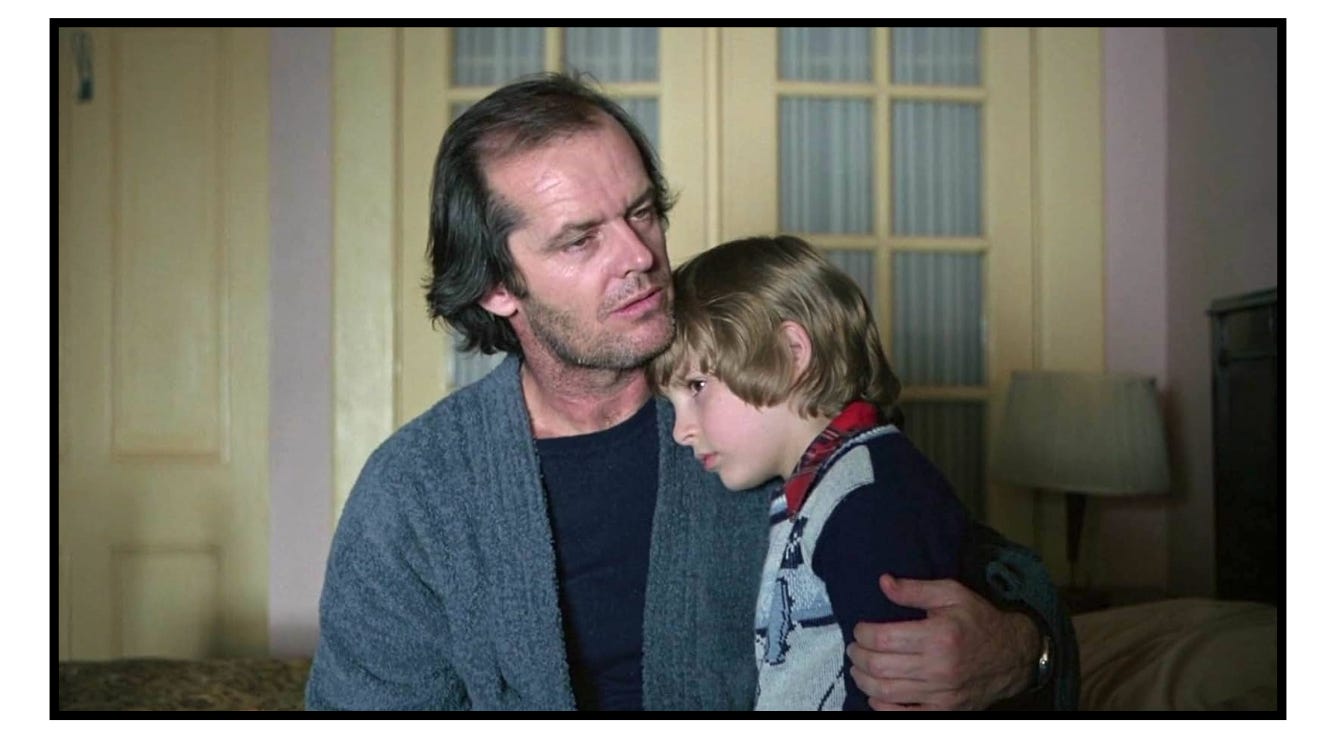
Perhaps the most famous example of this type of character is Jack Nicholson’s portrayal of Jack Torrence in Stanley Kubrick’s film version of The Shining.
Early on, after the Torrence family has arrived at the Overlook Hotel to work as caretakers over the winter, there are hints that Nicholson’s Torrence has been an abusive father to he and Wendy’s son, Danny.
In a chilling scene early in the film, Wendy (Shelly Duvall) casually mentions to Danny’s doctor that five months earlier her husband, Jack, dislocated Danny’s shoulder in a drunken rage. She also tells the doctor that it was simply an accident and that Jack promised he would never drink again.
No wonder Danny starts chanting “Redrum.”
And if you’ve seen the film, you know what happens next.
In conclusion, for some of us, Father’s Day isn’t just about honoring the dad we had, it’s about imagining the dad we wish we could have had, both as a kid and now as an adult.
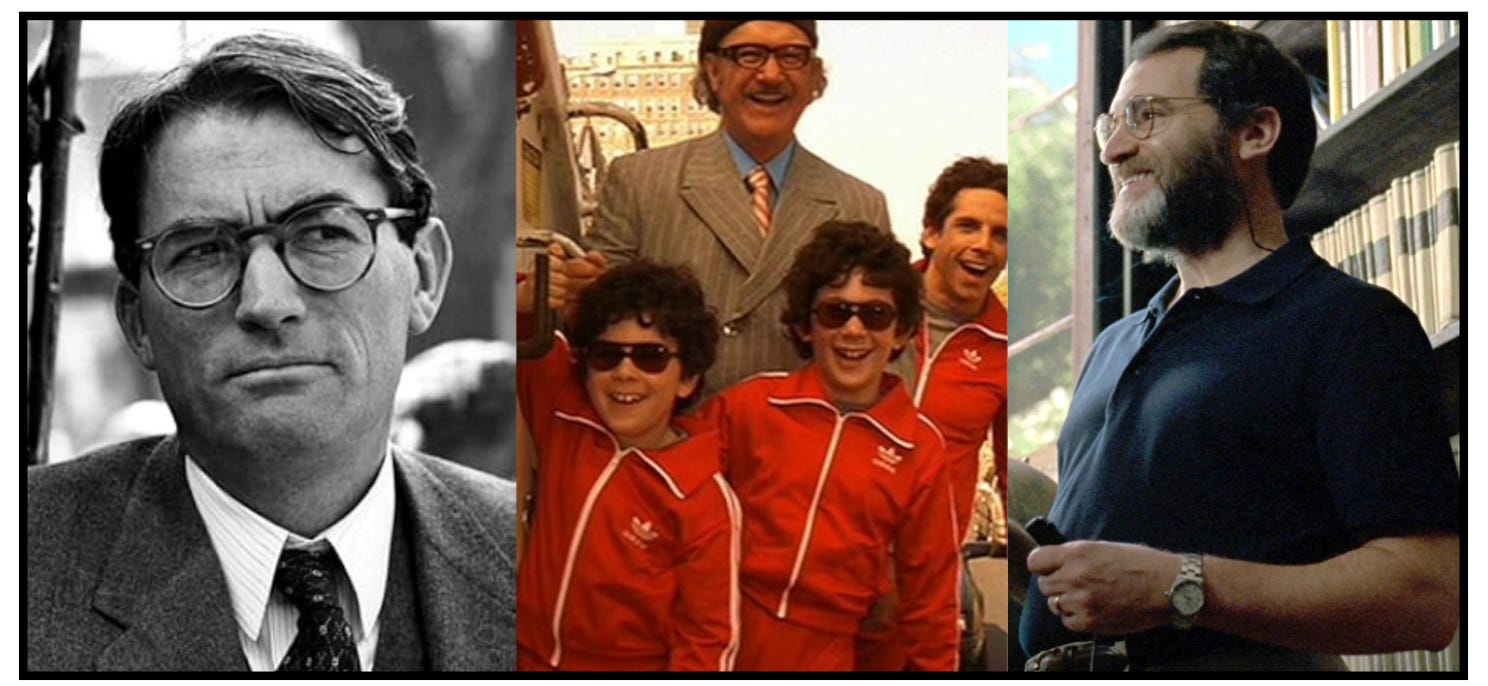
Whether it’s Atticus Finch teaching moral courage, Mr. Perlman offering quiet empathy, or Royal Tenenbaum stumbling toward redemption, these fictional movie dads remind us that fatherly love, when it shows up, can come in many forms.
And sometimes, films get it right by using these great movie dads to show us the kind of father we might become in the future, even if we never had a loving dad ourselves.
Much love on this one, Jim! Perlman's monologue, and the character more broadly, is a one-of-a-kind treasure indeed.
Thanks Jim. A really great piece and certainly something to think about. I hope all is well my friend.