

It’s no secret that A24 has become one of the hippest independent film studios working outside the traditional Hollywood system. Founded in 2012 (the name A24 refers to an Italian motorway), the company began distributing films the following year and quickly established itself as a major Hollywood player, financing and distributing a wide range of independent movies, including Oscar winners like Moonlight, Everything, Everywhere, All At Once, and The Zone of Interest.
But here’s the thing about success: it has a way of burying the films that don’t fit neatly into a studio’s emerging brand. And the bigger A24 has gotten, the more certain films have slipped through the cracks. I’m referring to the movies that are stranger, rougher, and in some ways more interesting than the titles that made the studio famous.
These are the films I want to talk about. Not the horror hits or the awards darlings, but the ones that didn’t find their audience the first time around and got buried by a bad marketing campaign, a limited release, or simply the bad luck of being too weird for mainstream tastes.
If you’re willing to dig a little deeper into the A24 catalog, here are my 10 favorite hidden gems…
1. A Prayer Before Dawn

The Story: Based on the memoir by British boxer, Billy Moore, actor Joe Cole gives an incredible performance as Moore that brings to mind Robert De Niro in Martin Scorsese’s Raging Bull. As an expatriate alone in Thailand during the mid-2000s, Billy Moore lives for two things: boxing and meth. However, when the local police raid his apartment full of illegal drugs, Moore is sentenced to 3 years in two of Thailand’s worst prisons. Surrounded by non-stop brutality and gang violence inside the prison, Billy eventually realizes the only way he can survive the agony of his conditions (both physically and mentally) is to join the prison’s Muay Thai boxing team.
Eventually, the discipline of the team’s training provides Moore with a path towards a spiritual and physical redemption of sorts that enables him to overcome both the extreme conditions of the prison and his on-going drug addiction. When the prison authorities allow Moore to compete in a Muay Thai boxing tournament, the film builds to a final gut-wrenching (literally) boxing match that’s only surpassed by the dramatic reunion afterwards between Moore and his father, played in the film by the real Billy Moore.
Why It’s a Hidden Gem: This film immerses the viewer into the extreme conditions of the prison that most viewers couldn’t tolerate. In addition, there are long stretches of Thai dialogue without subtitles, intentionally leaving the audience as lost and confused as Joe Cole’s Billy Moore is in the film. And, although it builds to a final fight, this movie is no Rocky with a happy ending. Yet, this is a great film, and for those willing to go along with it, the movie offers up an emotionally powerful experience that makes it worth enduring the film’s more harrowing sequences.
What Makes It Great: Although it may sound somewhat similar to Alan Parker’s 1978 film, Midnight Express, director Jean-Stéphane Sauvaire’s eye for detail, social comment, and strong visuals elevates this film beyond the conventions of the prison-drama genre. Filmed on location at an actual Thai prison using real inmates for most of the supporting cast, many parts of this film feel more like a documentary than a movie. In addition, Joe Cole gives an intense, raw performance as Billy Moore. Cole even trained for months ahead of filming in order to box on-screen himself, resulting in fight sequences that seem thoroughly authentic.
2. American Honey

The Story: Newcomer Sasha Lane plays Star, a teenage girl trapped in a cycle of poverty and abuse from her step-father in Oklahoma, who impulsively joins a magazine crew on the road to escape her down-trodden life. The crew, which is really just a van full of young misfits, travels across the Midwest in a white van selling magazine subscriptions to unsuspecting customers using questionable sales techniques. By posing as college students trying to earn scholarship funds or completing school assignments, the crew, all poor and nearly destitute in real life, often prey on their potential customers’ weaknesses until they agree to buy subscriptions out of pity, lust, guilt, or all of the above.
Each day, after their work is done, the crew turns over their earnings to their supervisor, Krystal (Riley Keough), who runs the crew with the help of her best salesman Jake (Shia LaBeouf). They spend their nights partying in cheap motels and wake up early the next morning to begin their sales routine once again. Eventually, we learn that Krystal isn’t really the boss, but a middle man for the real people in charge, who are never revealed.
For Krystal, Jake, and the crew, their lives are a road trip with no final destination. Yet, during the first part of the film, the group is too busy having a good time to face this reality. Jake was the lure that got Star to run away from home and join the crew, and she begins having a romance with him (breaking the rules of the crew).
As to be expected, none of this can last forever. At the end of the film, Jake gives Star a turtle, which she sets free in water. Then she submerges into the water herself in a symbolic baptism and emerges as a self-reliant woman, even if her future is still unclear.
Why It’s a Hidden Gem: Unfortunately, American Honey was a box-office failure. Audiences were turned off by the nearly 3 hour long running time, the unlikable characters, and the non-traditional aimless “slice of life” storyline. Also, except for Shia LaBeouf, the cast consisted of young unknown actors, which also limited its box-office appeal for mainstream audiences as well.
What Makes It Great: In her first film made in the United States (part of it was even filmed here in Nebraska where I live), Andrea Arnold captures the lost generation of modern America’s poor underclass as the film’s cast and crew roam across the midwest, just like the characters in the film. Arnold’s direction is raw, energetic, and deeply empathetic without judging her characters. The use of non-professional actors (including lead Sasha Lane, who was discovered on a beach) also adds a layer of authenticity to the film.
3. Climax

The Story: After an unusual prologue that includes brief interviews with each character and the end credits placed at the beginning of the film, the story begins as we see a troupe of young French dancers rehearsing in an abandoned school building in the middle of winter. The extended dance sequence is brilliant.
Afterwards, they celebrate with a party featuring a large bowl of Sangria.
Eventually, someone realizes the Sangria bowl has been spiked with a large amount of LSD.
As the drug takes effect, the celebration dissolves into a collective psychotic break as each character responds to the effects of the LSD in different ways. Relationships fracture, many of the dancers become paranoid, and the group begins to violently turn on itself.
What begins as a joyous, exciting musical dance evolves into a nightmare that only gets worse as the film goes on. No one is spared. It’s never made clear who put the LSD in the Sangria, but there are hints throughout the movie that astute viewers will pick up on.
Why It’s a Hidden Gem: As usual for a Gaspar Noé film, Climax is polarizing and intentionally provocative, which caused many audiences to be turned off by the disturbing content, lack of a traditional plot, and Noe’s experimental style of filmmaking. Consequently, audiences either stayed away or walked out of the movie before it was over.
What Makes It Great: Climax is a sensory experience that allows Gaspar Noé to showcase all of his brilliant filmmaking technique throughout the film. Even if the content disturbs you, (trust me, it will), the film is still worth seeing because it’s unlike anything else out there today.
Also, the unique structure of the film and the dazzling camera work (as the characters become disoriented from the effects of the LSD, the camera begins to drift, spin, and mirror their skewed perception of events) make this film a visual feast. Most of the cast are real dancers, not actors, and yet give great performances.
The film also features an almost non-stop propulsive soundtrack of electronic music that begins euphorically and grows more sinister as the film goes on.
4. End of the Tour
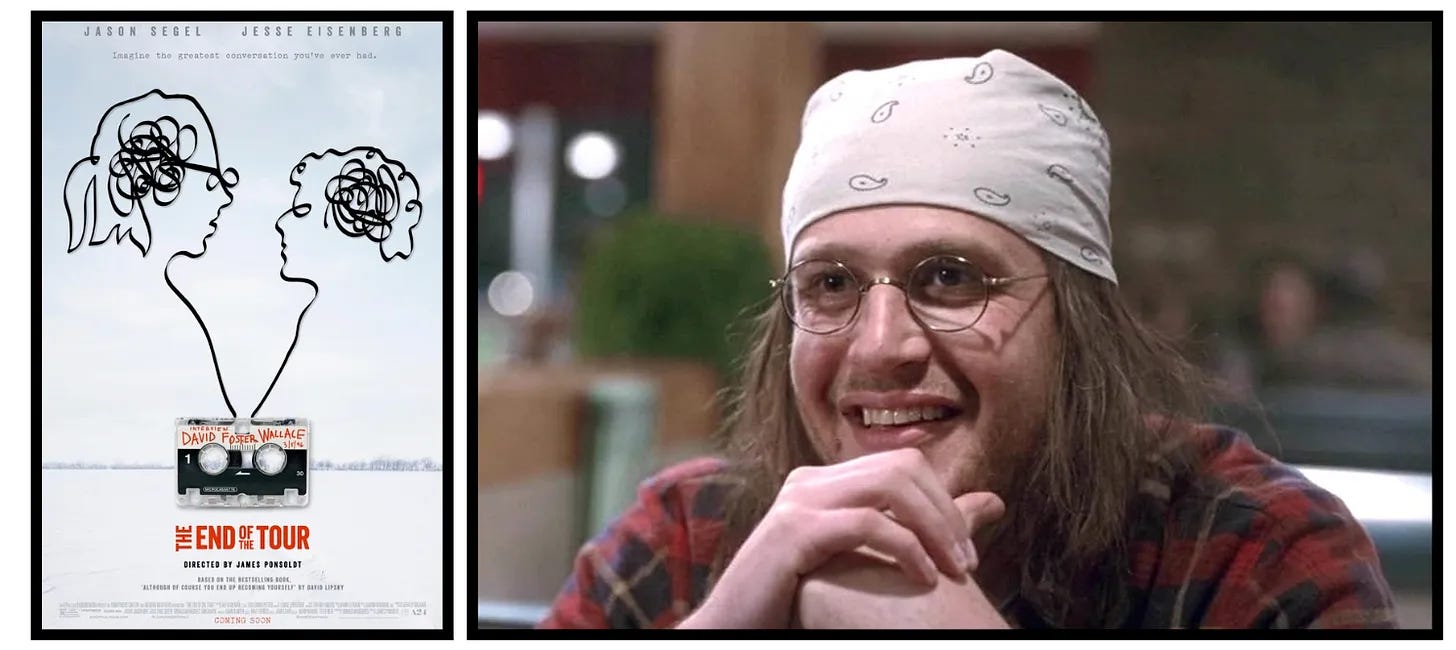
The Story: Set in 1996 and based on true events, the film dramatizes the five days when Rolling Stone reporter David Lipsky (Jesse Eisenberg) traveled with novelist David Foster Wallace (Jason Segel) on the final leg of his Infinite Jest book tour.
The film is based on Lipsky’s memoir which was drawn from the recorded interviews he made at the time.
As the two men travel throughout the midwest during the final leg of Wallace’s book tour, they engage in an almost non-stop conversation that might make viewers recall My Dinner With Andre (only here we see Lipsky and Wallace talk at a variety of mundane locations like gas stations, Denny’s, and bookstores).
After the book tour ends, Lipsky returns back to his home in New York. A title card before the end credits states that Wallace died by suicide in 2008.
Why It’s a Hidden Gem: Unfortunately, the film failed at the box-office because mainstream audiences weren’t interested in seeing a dialogue-heavy, intimate character study that moved at a slow pace. In addition, the film wasn’t authorized by the estate of David Foster Wallace so many fans felt the filmmakers were trying to exploit the late author, even though that wasn’t the case.
What Makes It Great: This is a small movie that focuses on two different characters based on real people. Because of that, the film wouldn’t work if the acting was subpar. Thankfully, Jason Segel’s performance as David Foster Wallace is amazing in the way Segel is able to capture Wallace’s quirky personality, along with his brilliance and anxiety. Jesse Eisenberg is the perfect foil for Segel, balancing admiration and envy of Wallace’s genius throughout the film. Finally, the combination of these two actors and their great performances make you feel like you’re in the car traveling with them.
Also, because the script is based on the memoir, which itself was based on audio tapes from the interviews the real Lipsky conducted on his trip, the movie feels authentic, and it gives us a look into the late David Foster Wallace’s personality and worldview.
5. Enemy
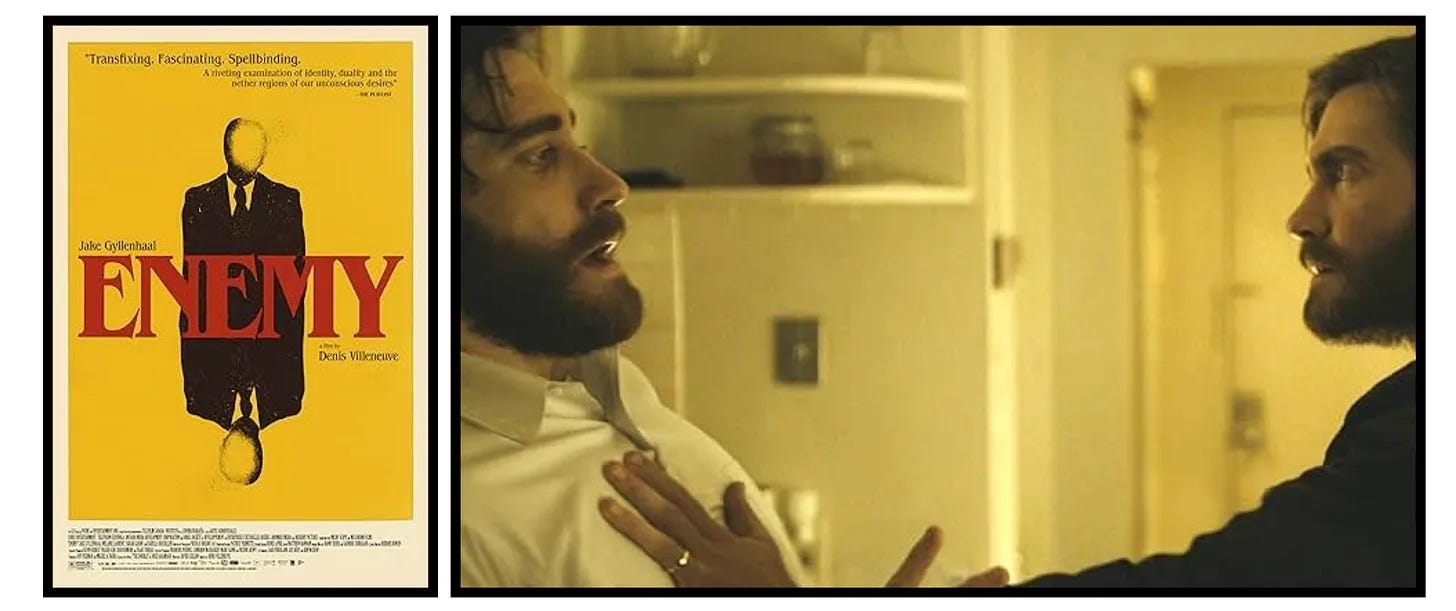
The Story: Jake Gyllenhaal portrays a glum history professor named Adam Bell, who lives a rather boring life in Toronto, Canada. Except for the sexual relationship with his girlfriend Mary (Melanie Laurent), Adam’s life is about as dull as it can be.
One evening, Adam rents a movie recommended by a friend called, Where There’s a Will, There’s a Way. While watching the film, Adam spots an actor who is his exact physical double in one of the minor supporting roles. The actor is named Anthony Claire (also played by Gyllenhaal). Soon, Adam becomes obsessed with this doppelgänger and begins stalking him. Adam even goes so far as to contact the actor’s pregnant wife, Helen (Sarah Gadon). When Helen tracks Adam down at his university, she’s shocked to see he’s an exact copy of her husband, including a specific scar on his torso. Eventually the two men meet in person.
Although they look exactly alike physically, Adam is dull and withdrawn, while Anthony is brash, confident, and aggressive. During their meeting, (in a seedy motel room), Anthony becomes obsessed with Adam’s girlfriend and demands that they swap lives for a night so he can sleep with Mary.
Anthony takes Adam’s clothes and car, picking up Mary for a quick getaway while Adam goes to Anthony’s apartment where Anthony’s wife seems to accept him. After that, things get weird as the film builds to an ending that’s reminiscent of David Lynch’s Lost Highway and Mulholland Drive.
Why It’s a Hidden Gem: Enemy failed at the box-office because initial audiences felt misled by the studio’s marketing campaign which made the film out to be a Jake Gyllenhaal conventional thriller instead of what it actually was: a cerebral surrealist art-house indie with a deliberately confusing storyline. Once negative word of mouth began to spread about the film, there was no way for the film to recover its losses.
What Makes It Great: Before he directed bigger budget films like Blade Runner 2049 and the Dune series, Denis Villeneuve created this small, puzzling atmospheric suspenseful drama. It’s a cinematic Rubik’s cube filled with spiders, both literally and metaphorically, that refuses to explain itself. The ending is so surreal that it alienated many viewers. However, I love the film, even if I don’t fully understand what it all means.
6. First Reformed
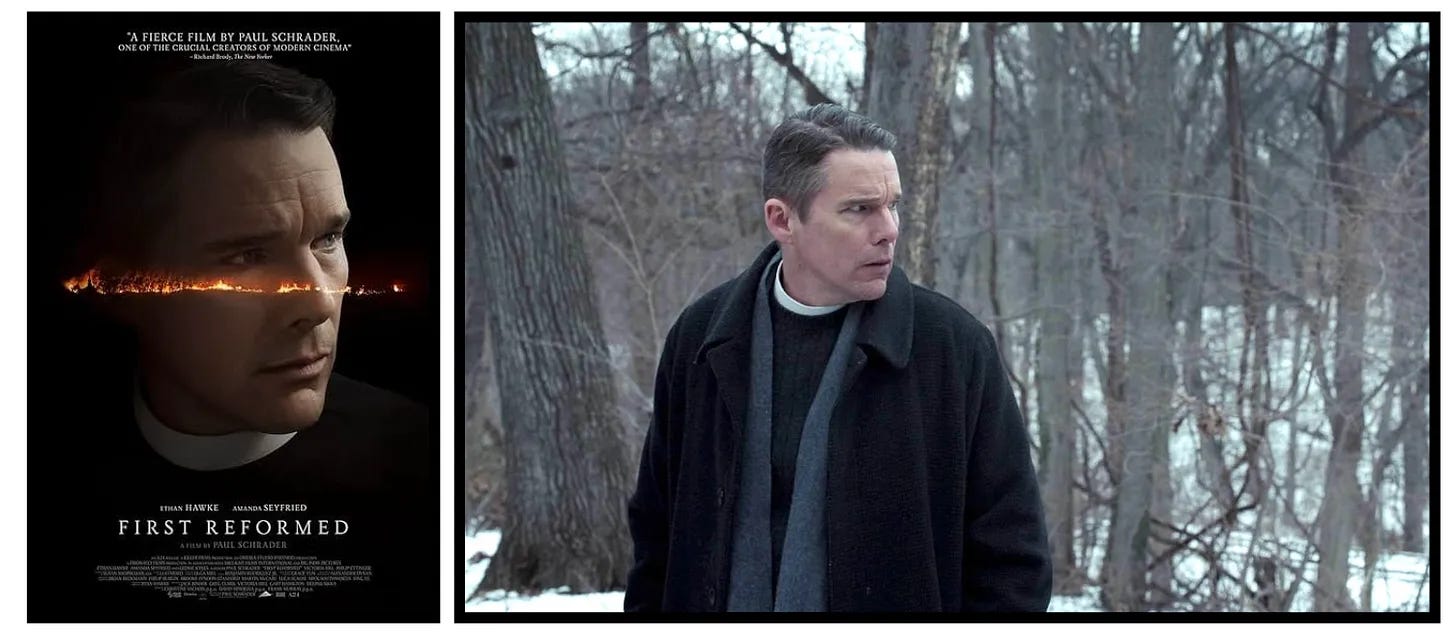
The Story: Reverend Ernst Toller (Ethan Hawke) presides over a historical, dwindling Dutch Reformed church in upstate New York. He’s in bad health, most likely caused by stomach cancer. Toller is also haunted by the death of his son in the Iraq War, especially since Toller was the one who encouraged his son to enlist. One day, Toller is approached by a young pregnant parishioner named Mary (Amanda Seyfried) who asks him to counsel her husband, Michael (Philip Ettinger). You see, Michael is a radical environmentalist. He’s also despondent over climate change and believes it is immoral to bring a child into a dying world. Naturally, this causes friction with Mary who is due to give birth soon.
After Michael commits suicide, Toller begins to be consumed by the same ecological despair. He begins to question whether God can forgive humanity for destroying the earth and begins to see the stewardship of the earth as a holy war. Soon, Toller clashes with his superior Pastor Jeffers, whose megachurch is funded by Edward Balq. It turns out that Balq’s company is one of the worst industrial polluters in the country.
As Toller’s physical and mental health deteriorate, he steals the deceased Michael’s vest with explosives in it from the couple’s garage. Toller then makes plans to blow himself up in a suicide bombing as he officiates the church’s 250th anniversary service, which will be attended by Balq himself.
However, after seeing Mary enter the church the day of the celebration, Toller can’t go through with it. He returns to his office, removes the explosive vest, and wraps himself in barbed wire under his robe. Next, Toller pours drain cleaner into a cup and is about to drink it when Mary enters the room. Toller and Mary embrace and experience a surreal moment as they transcend time together.
Why It’s a Hidden Gem: Although First Reformed received strong reviews and actually turned a small profit at the box-office, its slow, deliberate pace and heavy themes didn’t appeal to many mainstream American moviegoers. In addition, many audiences were turned off by the film’s abrupt ambiguous ending. Because of this, there was never a chance the film would break out and reach a broader audience. Even now, I’m constantly surprised at how few people have heard about this film.
What Makes It Great: First Reformed is the rare film that takes both religious faith and environmental collapse seriously by dealing with the topics of faith, climate change, and radicalization. To me, its near perfect script and direction make First Reformed one of the best films of writer/director Paul Schrader’s career. In this film, Schrader channels two of his favorite filmmakers’ masterpieces: Ingmar Bergman’s Winter Light and Robert Bresson’s Diary of a Country Priest while also adding his own point of view to the story. In addition, Ethan Hawke gives one of the best performances of his career as the quiet, agonized minister of the First Reformed church. Finally, the film’s cinematography, filmed in the 1:33 Academy ratio with muted colors, adds to the intensity of the film. The result is a thought-provoking film that raises a lot of interesting questions about religion, climate change, and grief.
7. It Comes At Night
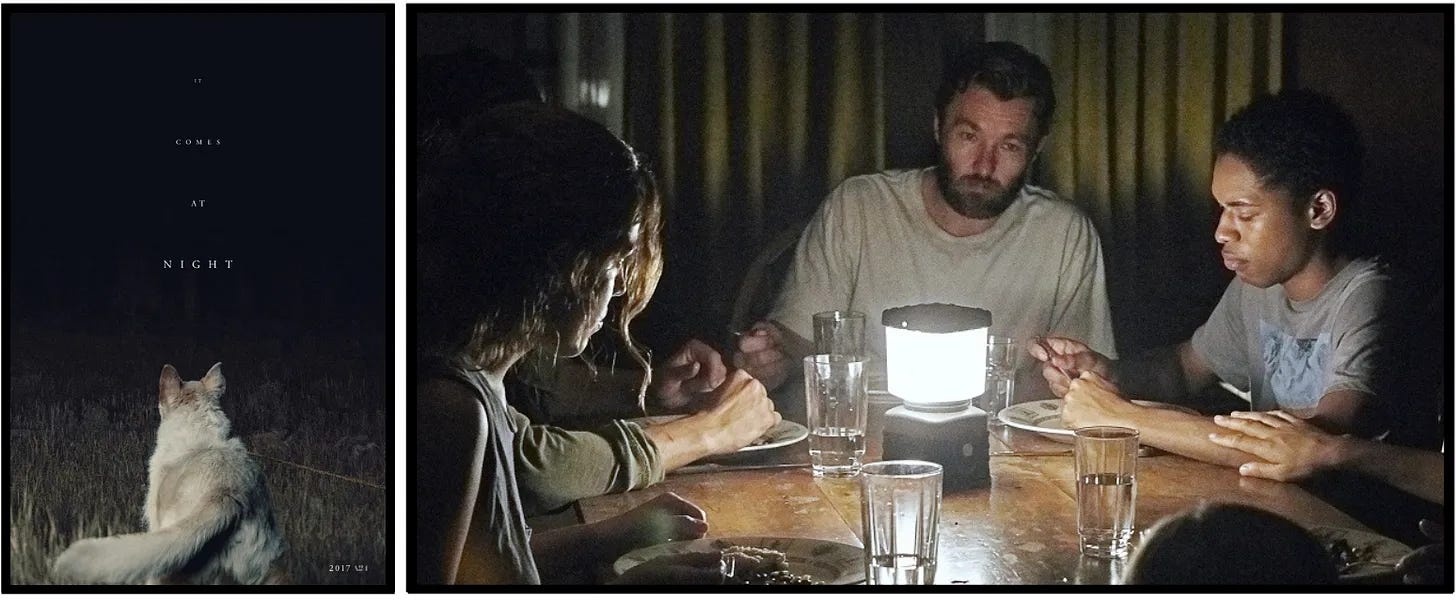
The Story: After a highly contagious plague has broken out, Paul (Joel Edgerton), his wife, Sarah (Carmen Ejogo), and their teenage son, Travis (Kelvin Harrison Jr.), live in a fortified cabin in the woods.
They remain safe from the plague by following a strict set of rules, which includes keeping the front door locked at all times. The fact that it has been painted red shows how important this door is in keeping the family healthy and alive. In the beginning of the film, Sarah’s father, Bud (David Pendleton), becomes infected by the disease, the family kills him and burns the body.
That night, the family catches an intruder trying to break into the cabin. The would-be thief, Will (Christopher Abbott), explains that he was searching for fresh water for his wife and young toddler son. Paul takes Will out to the forest, ties him to a tree, and puts a hood over his head. He leaves Will there overnight to confirm that Will doesn’t have the disease. After Sarah suggests that they take Will and his family in, Paul drives Will back to his family so they can be brought to the cabin.
However, along the way, they are ambushed by two men. Paul kills them but accuses Will of setting him up. Will denies this and regains Paul’s confidence.
After Will’s family moves into the cabin, one day, Travis’s dog begins barking non-stop at an unseen presence and chases it into the woods. Then, that evening, Travis discovers Will’s toddler son, Andrew (Griffin Robert Faulkner), sleeping on the floor of Bud’s old room. The young boy is having a bad dream. But much to Travis’s shock, the red front door of the house has been left open. The two families also find Travis’s dog lying on the floor bleeding and terminally sick. Soon, distrust and paranoia begin to affect both families, leading to a bleak but fitting conclusion of the film.
Why It’s a Hidden Gem: The movie suffered from a marketing campaign that mis-represented the film and gave audiences the impression that the movie was a conventional horror film. When viewers saw the film and discovered it dealt in psychological horror instead of monsters, they felt ripped off. A large backlash quickly emerged on social media as viewers gave the film an “F” rating on websites like Rotten Tomatoes and Letterboxd.
What Makes It Great: In my opinion, It Comes at Night does an excellent job of creating a sense of dread from the very start. Almost all of the action takes place in the family’s cabin and the woods nearby. The cabin, with its dark, dimly lit rooms, is both claustrophobic and menacing. Outside, the woods seem menacing as well, even in the daytime. Interestingly, there is no monster in this film, just the psychological horror the characters experience. I think the film is very well directed with great performances from the small cast, especially Kelvin Harrison Jr. as Sarah’s son, Travis.
8. Lamb
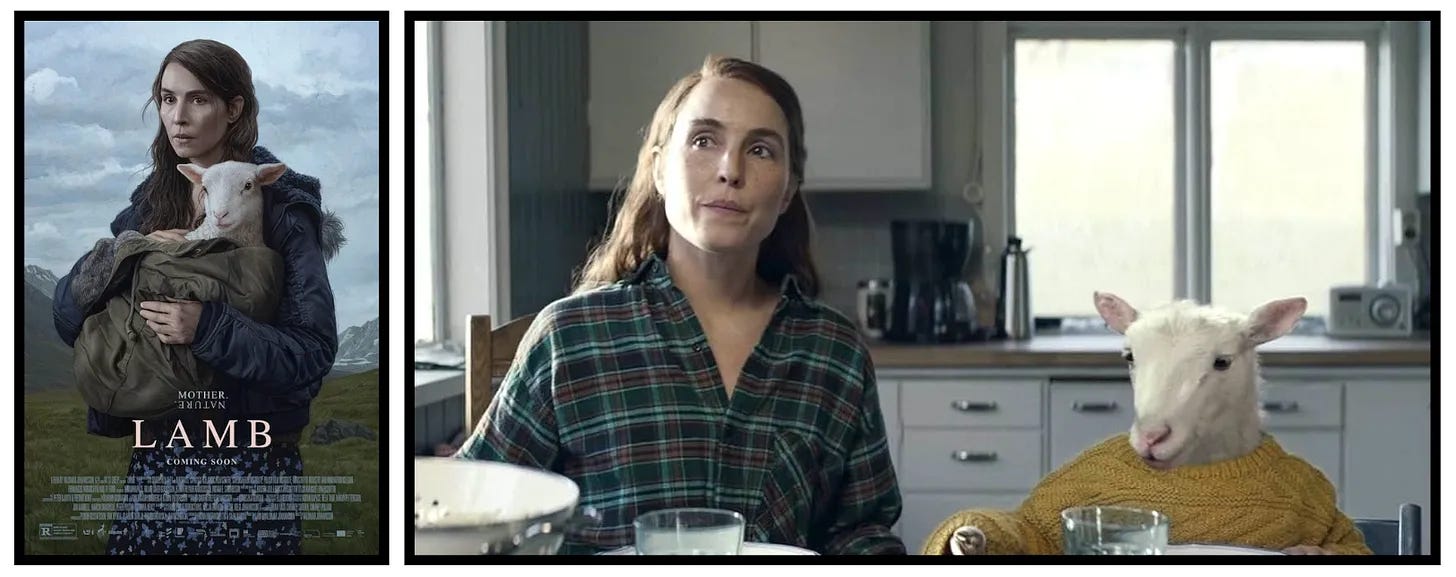
The Story: On a remote farm in Iceland, Maria (Noomi Rapace) and Ingvar (Hilmir Snaer Guðnason), a childless couple, are shocked when one of their pregnant sheep gives birth to a half human-half sheep. The infant is mostly human but has a lamb’s head and right arm. The couple take the infant up to their house. They name her Ada after their deceased daughter and begin raising the infant as their own child, dressing her in sweaters and keeping her away from the barn.
However, one day Ada goes missing and is later found lying next to the ewe who gave her birth. Shortly afterwards, Maria kills the ewe and buries her body. But, what Maria doesn’t know is that Ingvar’s brother, Pétur (Björn Hlynur Haraldsson), who has arrived to visit the family, has witnessed the murder of the ewe.
Pétur is disgusted by Ada and the couple’s attachment to her. That night while everyone is asleep, Pétur takes Ada on an early morning walk with the intention of killing her. However, at the last moment he has a change of heart and soon becomes an uncle to her.
One evening, while Maria, Ingvar, and Pétur are having a party and getting drunk together, Ada sees an unknown entity near the barn. The entity kills the family’s dog and takes the family’s gun before disappearing.
Later that night, a drunk Ingvar goes to bed leaving Pétur and Maria alone. Pétur makes sexual advances towards Maria. When she rejects his advances Pétur reveals that he saw Maria kill Ada’s sheep mother and tries to blackmail Maria into having sex with him by threatening to tell Ada what really happened. Maria pretends to want to have sex with Pétur before luring him into a storage room in order to lock him up inside it.
The next morning Maria drives Pétur to a bus stop and sends him away. While she’s gone, Ingvar takes Ada with him out to a field to repair a broken tractor. On the way back home, they run into the entity, which is revealed to be half man and half ram. He has come to reclaim what was taken. The entity shoots Ingvar in the neck and takes Ada, who is crying, away with him.
Maria returns home to find Ingvar and Ada are missing. She searches for the two and finds Ingvar before he dies. Afterwards, Maria searches for Ada in vain.
Why It’s a Hidden Gem: Unfortunately, like It Comes at Night, Lamb was also mis-marketed as a traditional horror fantasy film. When audiences discovered it was actually a slow moving, bleak Icelandic folk tale with minimal dialogue that focused on grief, bad word of mouth quickly spread online. This doomed any chance the film had at the box-office.
What Makes It Great: To me, Lamb is a beautiful, haunting, meditation on grief and parenthood centered around an unusual story. In addition, the CGI and special effects used to make Ada seem human are incredibly well done. All of the performances by the cast in the film are strong, especially Noomi Rapace, who gives an emotionally satisfying performance as Maria. Finally, the barren, cold, Icelandic landscape with its dark clouds and rain adds an important visual element to the film.
9. Queer
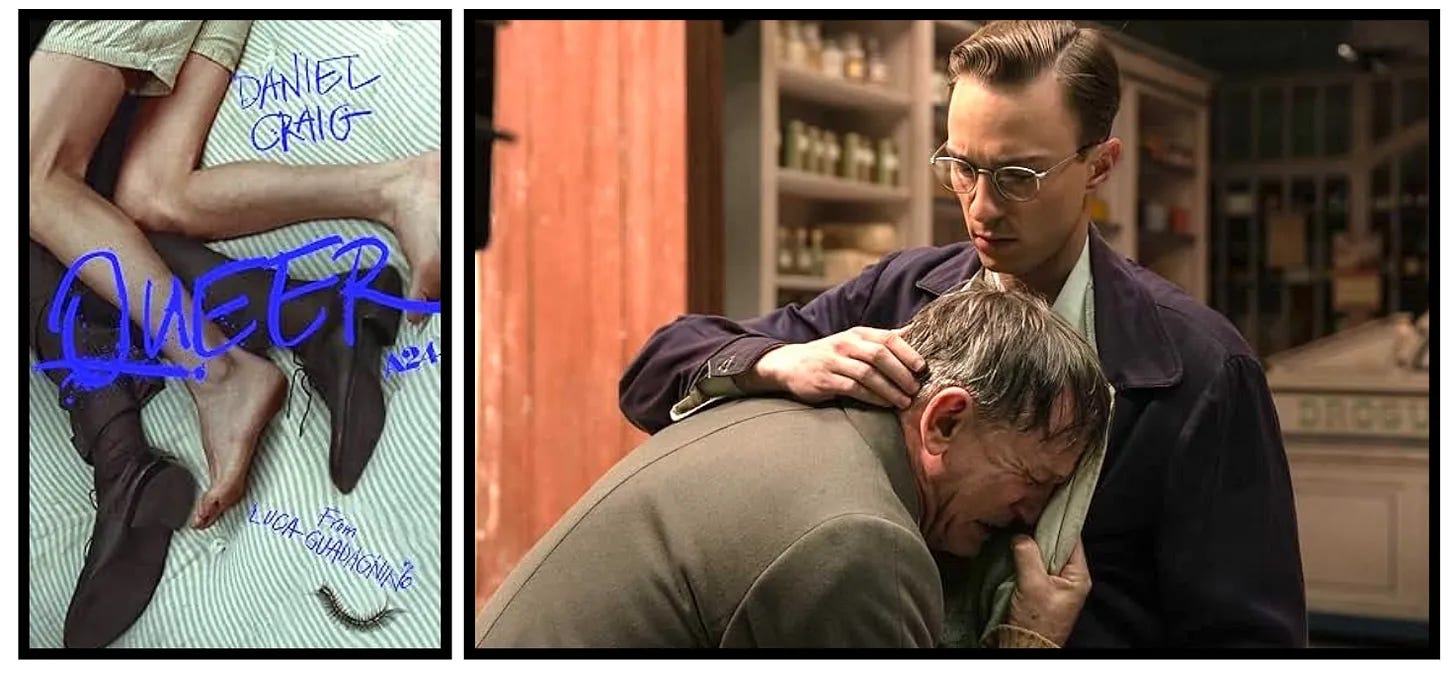
The Story: Set in 1950s Mexico City, William Lee (Daniel Craig), is an aging American ex-pat who drifts through life by spending his days getting drunk, shooting up heroin, and pursuing unfulfilling sexual encounters with local men. Lee is witty, cynical, and very lonely.
One day, Lee sees a young man walking by on the street and becomes obsessed with him. The young man is an ex-GI named Eugene Allerton (Drew Starkey). Eugene is cool, aloof, and indifferent to Lee’s sexual advances. This indifference only makes Lee become even more obsessed with the younger man. The two begin an on-again-off-again relationship, both in and out of bed.
Eventually, Lee talks Eugene into accompanying him to South America, where he hopes to find a plant called Yage, which Lee believes can enable its users to have telepathy.
The two men end up in the jungles of South America where they eventually find the leading expert on Yage, an eccentric gun-toting older female scientist named Dr. Cotter (Lesley Manville) who lives in a cabin deep in an isolated part of the jungle. Lee convinces Dr. Cotter to let him and Eugene take some of her Yage. However, the telepathy Lee was seeking doesn’t result in a superpower. Instead, it gives Lee a devastating look into his own psyche.
Eventually, Lee returns to Mexico City alone. He resumes his old ways but never sees Eugene again.
Why It’s a Hidden Gem: Despite Daniel Craig’s critically praised performance in the lead role, Queer bombed at the box-office. This was probably due to the film’s unusual story and surreal elements, along with its casual portrayal of drug use and gay sex, which didn’t appeal to a large segment of the movie-going public. In fact, the film has been divisive with both audiences and critics. Some critics feel it’s a masterpiece, while others believe the film is hollow at its core.
What Makes It Great: Queer is a highly stylized and hallucinatory adaptation of William Burroughs’ novella of the same name. Director Luca Guadagnino (Call Me By Your Name), and his team create a lush, fever-dream atmosphere that was entirely filmed on the Cinecittà studios’ back lot. Daniel Craig gives a fearless, career-best performance as William Lee. Also notable is the musical score by Trent Reznor and Atticus Ross.
10. Under The Skin
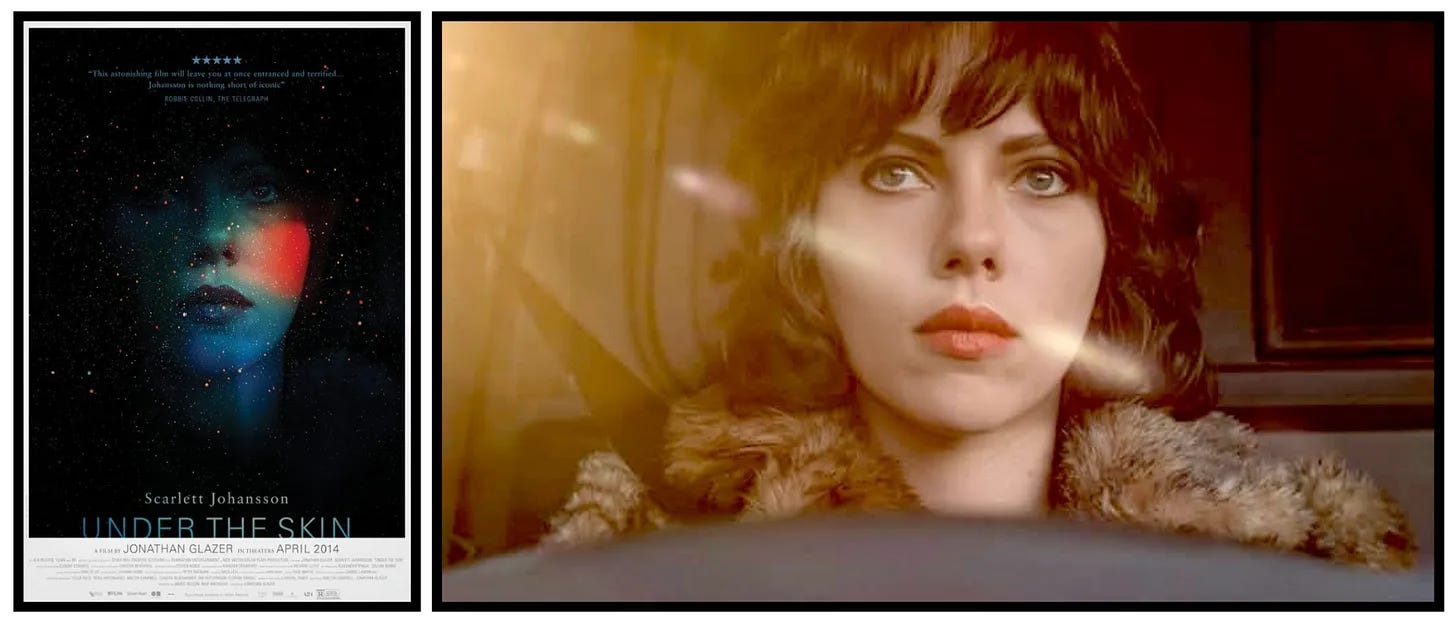
The Story: In Glasgow, Scotland, an alien (Scarlett Johansson) takes the form of a beautiful woman. A motorcyclist retrieves her from the roadside and places her in the back of a van where she puts on clothes. Later, the woman buys more clothes and makeup. Soon, she begins driving the van throughout different towns, picking up lonely men with the promise of sex, only to lure them to a dilapidated house. As they undress and walk toward her, they sink into a black thick liquid floor. Once they’re submerged, their insides are sucked out, leaving behind only empty floating skins. (Although it’s not made clear, the men’s insides are actually food for the alien species back home).
Over time, the woman becomes curious about earth and humanity. When the woman picks up a man whose face is severely disfigured, she unexpectedly lets him go. However, the motorcyclist, who is the alien woman’s “handler,” recaptures the man a short time later. He then sets out to find the woman who has disappeared.
The woman drives the van to the Scottish Highlands and abandons it in the fog. She walks to a restaurant and attempts to eat cake, but she can’t digest it and spits it out. Afterwards, while riding a bus, the woman meets a man who offers to help her. At his house, they watch t.v. together and later visit a ruined castle.
Later, the woman leaves the man’s house and wanders around a forest. There, she meets a commercial logger and finds shelter in a nearby cabin. When she wakes up, the logger is molesting her. The woman escapes and runs into the wilderness but the logger catches her. As he begins to rape her, the logger tears her skin, revealing a featureless black alien form. As the woman sheds her human skin, the logger douses her in gasoline and burns her alive. From a distance, the motorcyclist watches the black smoke rise from the alien’s body and fill the Scottish sky.
Why It’s a Hidden Gem: Even though the film stars Scarlett Johansson, Under The Skin was too weird and abstract for most moviegoers. In fact, the movie was a box-office failure upon its release in 2013. Now, thankfully, the film’s reputation has grown as more people appreciate its visual style and theme of what it means to be human.
What Makes It Great: Under The Skin is unlike other movies. Most of it is told in images, with director Jonathan Glazer leaving it up to the viewer to figure out what’s going on. This is especially true in the beginning of the film, which is filled with abstract images as the alien is fitted with human skin. In addition, much of the film was shot using hidden cameras, with Scarlett Johansson interacting with real people who didn’t know they were in a movie. The score by Mica Levi is also quite effective.
Final Thoughts
I’ll be honest: none of the films on this list are easy watches. Some are slow. Many of them are disturbing in some way. Some end without giving you the satisfaction of knowing what it all means. But, to me, that’s also kind of the point. The best hidden gems in A24’s catalog aren’t hidden because they’re lesser films. They’re hidden because they demand something from viewers that most mainstream movies don’t bother to ask for.
That’s why I started this newsletter. Not just to recap what everyone’s already seen, but to point readers toward the films that are still out there waiting to be discovered.
So if any of these titles caught your eye, I’d love to know what you think after you’ve had a chance to watch them. And, if there’s an A24 hidden gem I missed (and I’m sure there are a few), please drop a note in the comments. I’m always looking for the next one.


First Cow (2019) should be on this list..
An incredible lineup of hidden gems. These are exactly the types of films that remind you why independent cinema is so vital they're uncompromising, atmospheric, and beautifully challenging. Climax and A Prayer Before Dawn are absolute masterclasses in pure sensory tension. Exceptional curation here.