
Kneecap: 8 Miles of Irish Purple Rain
The Irish movie "Kneecap" gloriously continues the tradition of musicians self-mythologizing their lives on film.

One of the problems of living in a city in the midwest is that we only have a few arthouse movie theaters. Unfortunately, our local arthouses often don’t show many of the major indie and foreign films.
When this happens, I have to wait and rent these movies once they’re available to stream online. This was the case with a movie I recently saw and enjoyed: Kneecap.
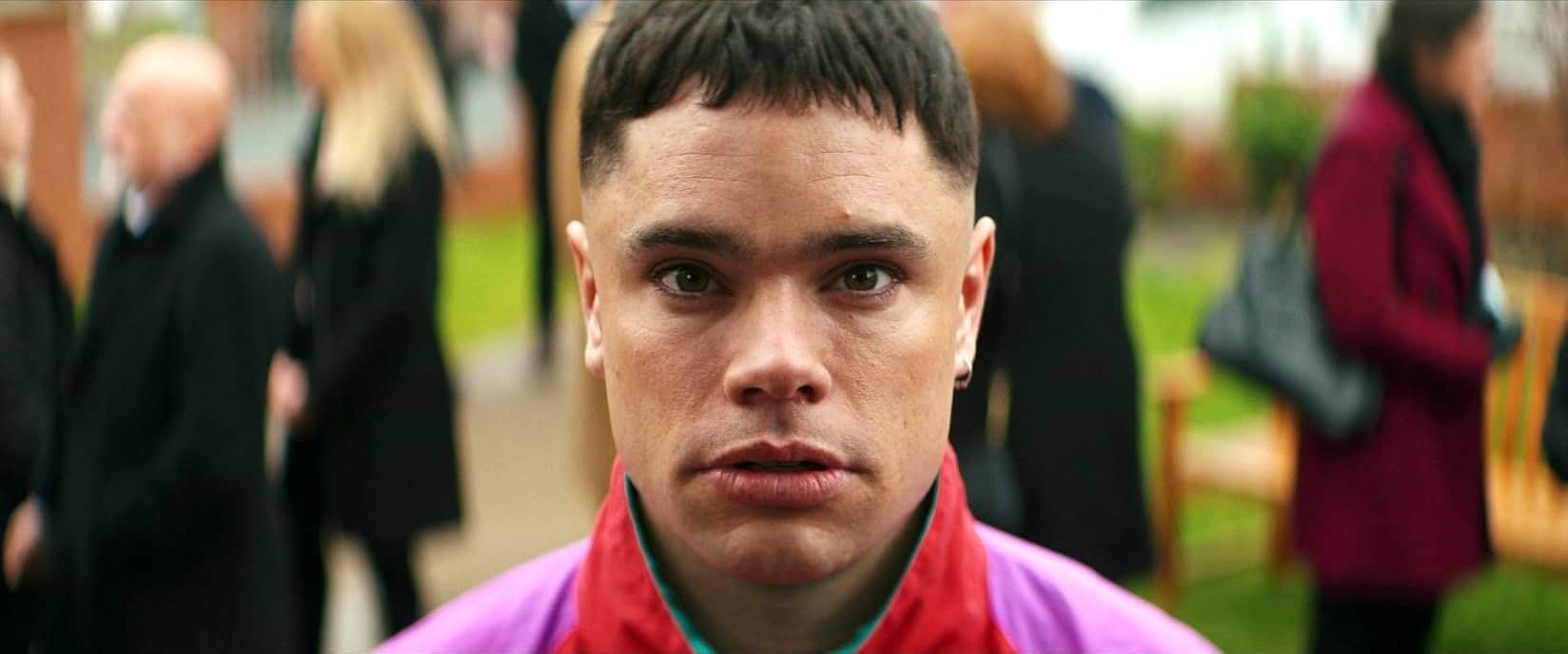
Kneecap is not just the name of the movie, it’s also the name of a rising rap-hip-hop trio from Ireland who write and perform songs in their native Irish language.
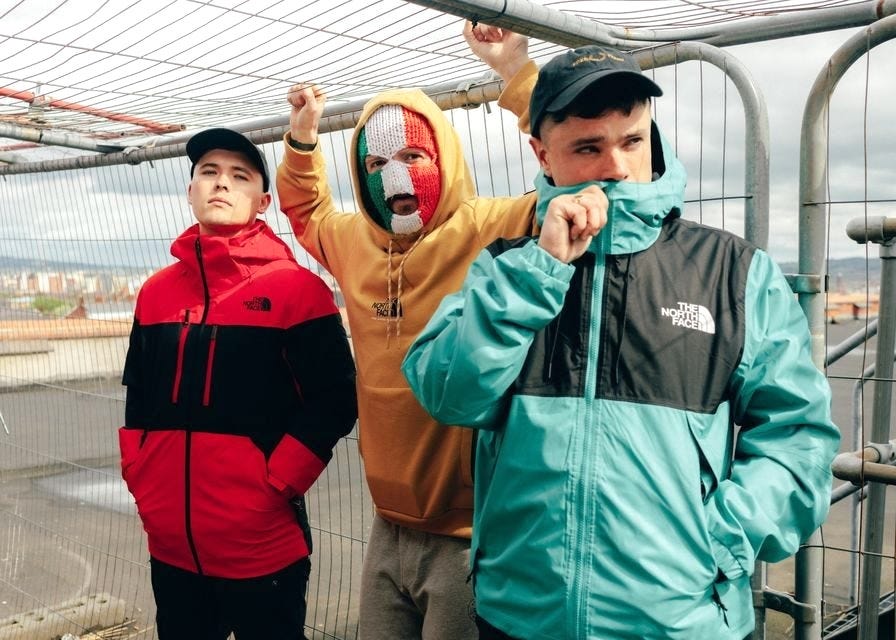
The film is their origin story and follows in the tradition of musicians self-mythologizing their beginnings that we’ve seen in movies like 8 Mile and Purple Rain.
However, Kneecap offers something that isn’t in these other films: a political issue that has affected both the musicians’ personal lives and their music.
The fact that this political controversy between the authorities and the residents of Northern Ireland revolves the right to speak the Irish language makes this film even more intriguing.
During the conflict between The British and the Irish known as The Troubles, the traditional Irish language almost became extinct and speaking it became a political act.
In 2019, as Kneecap begins (the title of the movie and the band refers to the British policemen’s fondness for striking their opponent’s kneecaps with their batons), Ireland has been at peace with the British for two decades. However, the country is still sharply divided and speaking the Irish language instead of the Queen’s English is considered a rebellious act.
(Warning: Spoilers Ahead)
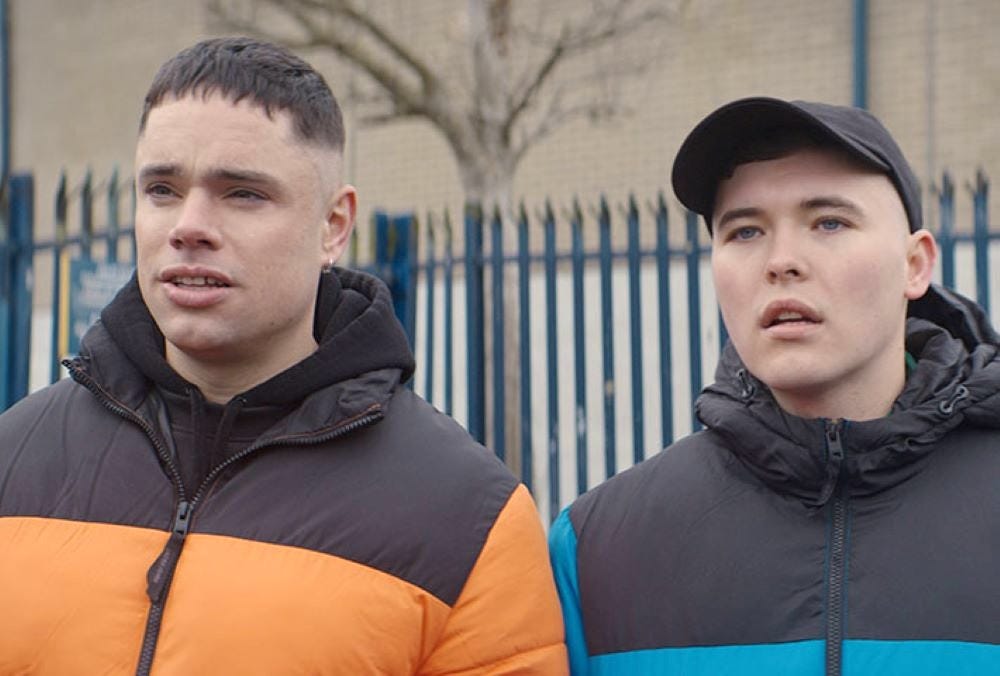
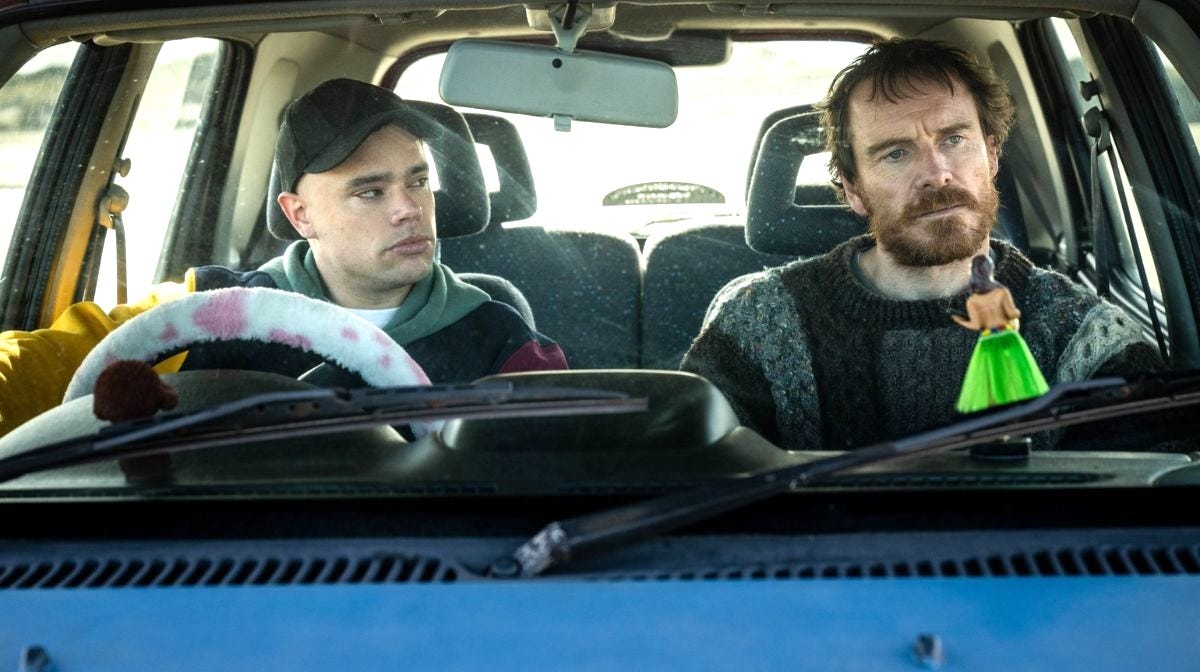
Near the beginning of Kneecap, we see 10 year old Naoise and his best friend Liam about to watch a western on television when Naoise’s father, Arlo (Michael Fassbender) tells them to watch the show from the viewpoint of the Indians. You see, Arlo is the leader of a para-military group and he’s trying to teach the boys how to rebel.
Arlo also encourages the boys to speak in the traditional Irish language because he believes that “every word of Irish spoken is a bullet fired for Irish freedom.” Not long afterwards, Arlo has to fake his own death and go into hiding to avoid arrest by the British authorities.
His absence from both his wife and his son’s lives results in Naoise becoming a juvenile delinquent and his mother becoming a shut in. Naoise’s best friend, Liam, is also a delinquent as well. The two make their living by selling drugs.
When Liam gets arrested by the English authorities in a drug bust, he claims he can only speak traditional Irish, which none of the police detectives know. The British authorities, led by Detective Ellis (Josie Walker), search to find someone who can speak Irish. Eventually, high school music teacher JJ O’Dochartaigh (playing himself) is brought in. JJ knows the language because some of the traditional songs his students sing are written in their native tongue.
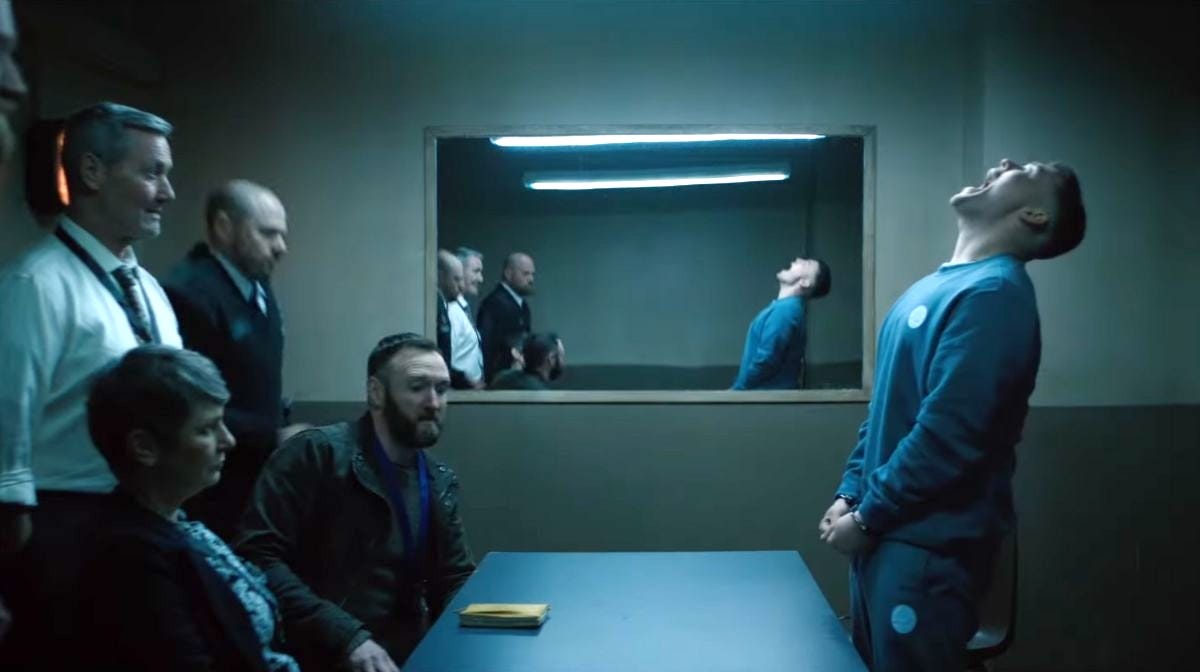
When JJ converses with Liam in Irish and reads the writings in the notebook Liam had on him at the time of his arrest, JJ has an idea.
After securing Liam’s eventual release and learning more about Liam and Naoise, JJ invites the boys over to his makeshift music studio in an old garage. Soon, the two boys are rapping their words to the beats JJ creates on his old 80’s drum machine and a rap hip-hop band is born.
After helping the boys make their demo tape, JJ tells the boys they’re on their own. After all, he’s almost old enough to be the boys’ father. Plus, JJ has a wife and a respectable job to think about, but it turns out that nobody has the skill (or equipment and musical know-how) to replace him.
Plus, JJ discovers his life is empty without making music with the two boys. Soon JJ rejoins the band.
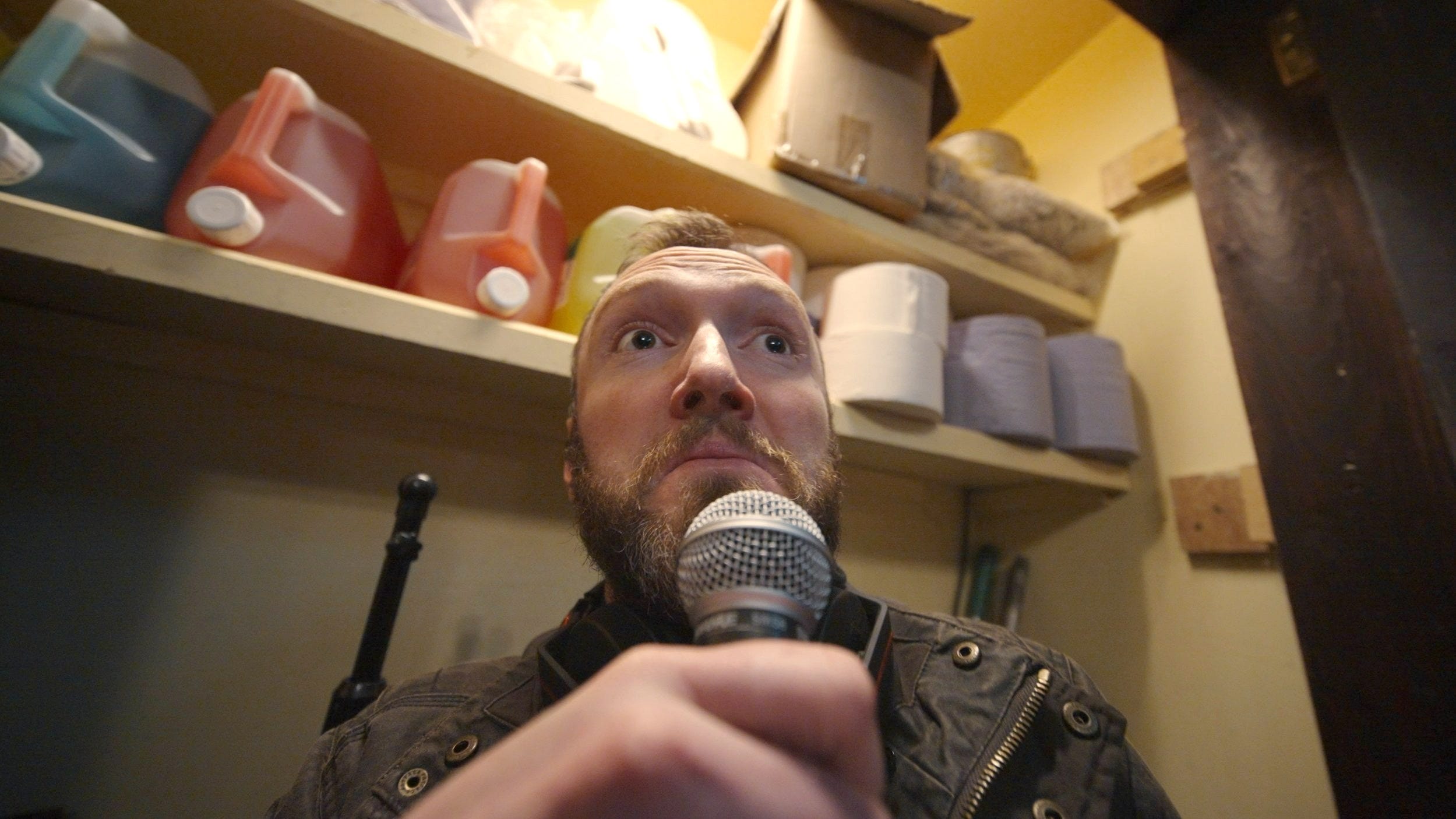
Donning a balaclavas with the colors of the Irish flag on it in order to hide his identity (from both his wife and his superiors at the school where he teaches), JJ begins going by the name DJ Provai. Liam and Naoise also adopt stage names as well. Naoise becomes Mogla Bap and Liam is now Mo Chara.
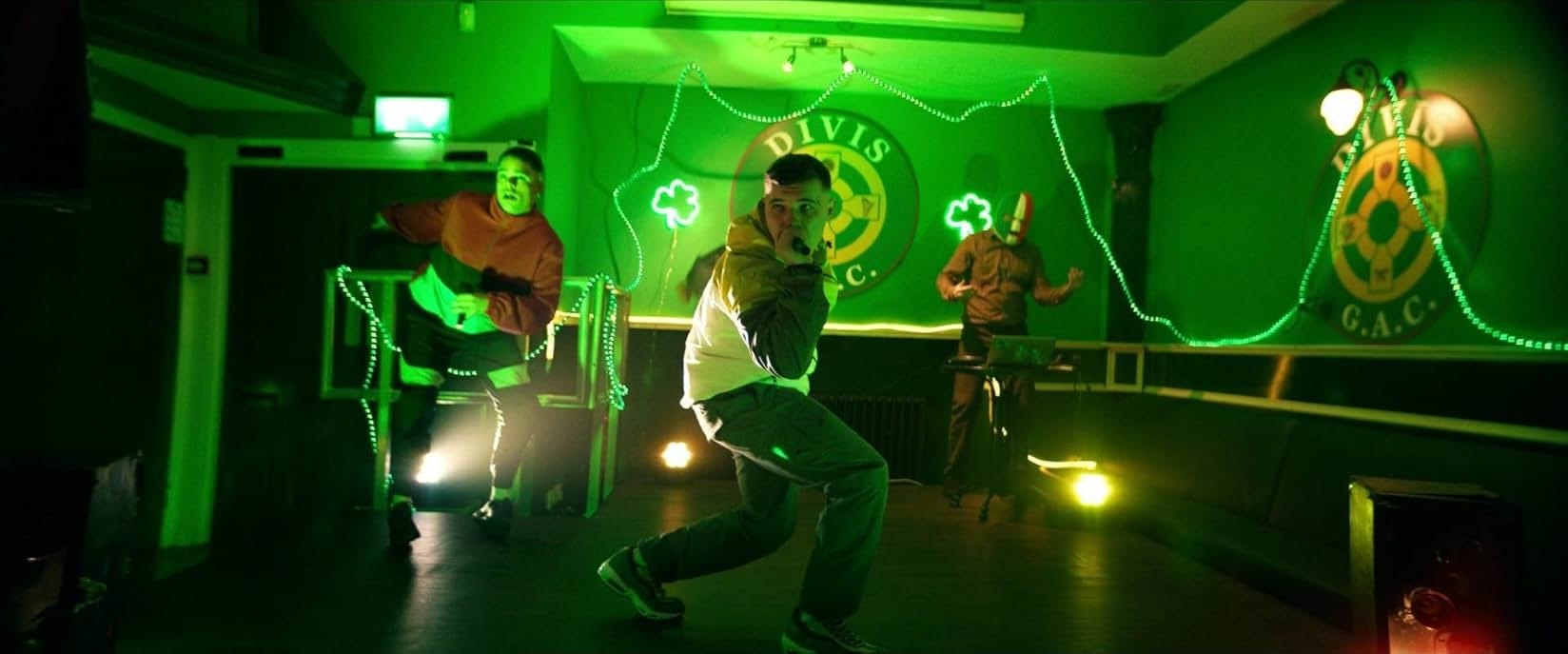
After playing their first gig at a traditional Irish pub to a group of puzzled old men, the newly formed band isn’t sure what to do next, but the sole young girl present in the back of the bar has filmed their performance on her cell phone and shares it on social media. The result is a packed house full of Irish youth at the band’s next gig.
But Kneecap’s rising fame has brought them to the attention of an Irish paramilitary group known as RRAD (Radical Republicans Against Drugs). This group is not only against Kneecap’s music, (their lyrics often glorify drug use) they’re also out to get Liam and Naoise for selling drugs too.
After seeing the two boys throw handfuls of pills out to their adoring fans at one of Kneecap’s gigs, the RRAD takes action, but thankfully, Naoise’s father, Arlo, comes out of hiding long enough to stop RRAD from killing his son.
Trouble continues for all of the members of the band: JJ/DJ Pravai loses his teaching job after he’s been identified as the person baring his butt cheeks on-stage, (with “Brits” written on the left cheek and “out” written on the right one) and Detective Ellis is closing in on arresting both Liam (who, it turns out has been shagging her daughter) and Naoise. But eventually, Kneecap triumphs and by the end of the film the band is on their way to fame and success.
And, best of all, a title card at the end of the movie states that in 2022 Irish was finally recognized as an official language in Northern Ireland.
So what makes Kneecap worth watching, especially for those of us who aren’t fans of rap or hip-hop music?
First, this is an extremely well made film that’s highly entertaining and emotionally satisfying on many levels.
In fact, you don’t even need to like Kneecap’s rap/hip hop music to enjoy this movie. The story is so engaging that the music becomes secondary to the action on the screen.
Stylistically, Kneecap takes inspiration from Trainspotting, Danny Boyle’s classic film of Scottish drug addicted youth. The film is also like Trainspotting in the way it accepts (and some might argue promotes) casual drug use.
With inventive camera angles and animation that highlights the lyrics and adds flourishes to scenes, Kneecap is a riveting visual experience.
The film is also brilliantly directed by Rich Peppiatt. Amazingly, it’s his first feature film. Until Kneecap, Peppiatt had only directed short films and documentaries. Now, Peppiatt has directed one of the best films of the year.
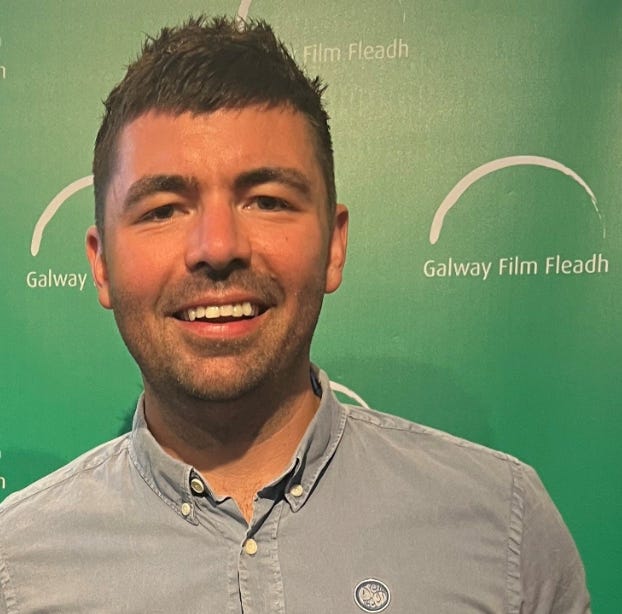
Peppiatt is a former British tabloid journalist who moved to Belfast in 2019. A couple of weeks later, he went to his first Kneecap live show. Although Peppiatt didn’t understand the traditional Irish lyrics, he became intrigued by the band.
After becoming friends with Naoise/Mogla Bap, Liam/Mo Chara, and JJ/DJ Provai, Peppiatt and the band spent a year writing the mostly true script together (the fictional elements in the film are the scenes with Michael Fassbinder’s Arlo).
After the script was finished, Peppiatt and the band were able to secure funding from the Irish film boards, the British Film Institute, and the European distributor, Curzon. Filming took place in 2023 on location in Northern Ireland where Liam and Naoise grew up and continue to live today.
Kneecap premiered at the 2024 Sundance Film Festival to great acclaim and won the Audience Award at the festival. Later, it was purchased for distribution by Sony Pictures Classics here in the United States.
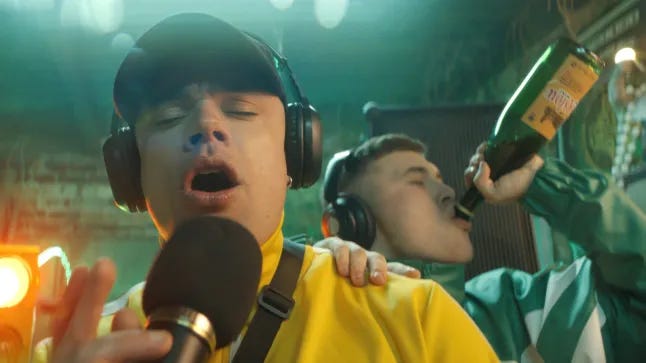
Another reason why Kneecap is worth watching is for the great performances by the band and supporting cast.
Naoise/Mogla Bap, Liam/Mo Chara and JJ/DJ Provai all give authentic, nuanced performances in this film. It’s rather amazing how good they are since none of the band members have had any formal training. In fact, Kneecap not only has charisma in this film, they’re able to show a wide range of emotions in every scene.
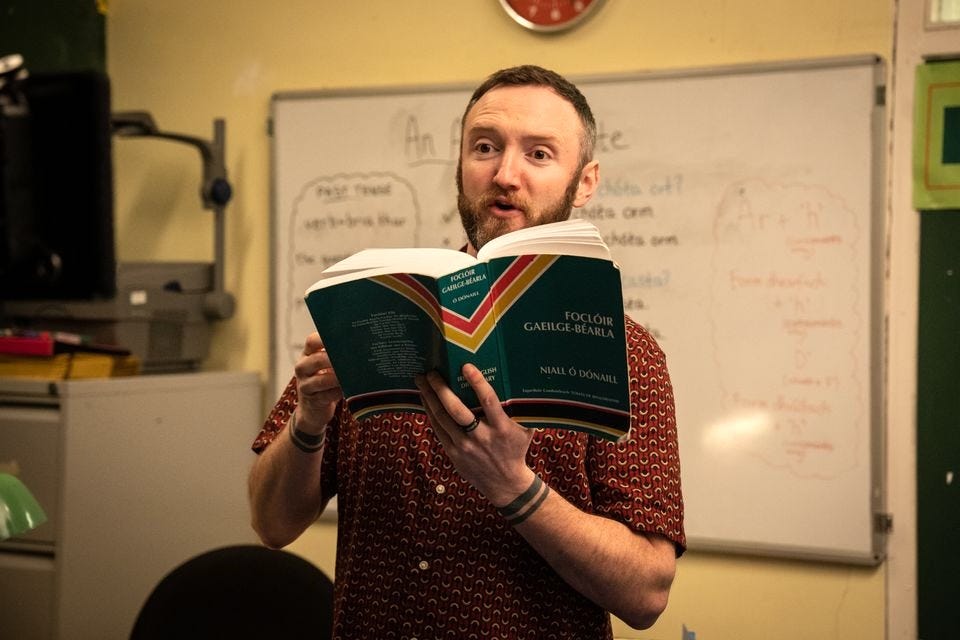
But, of the three, it’s JJ/DJ Provai who gives an Oscar caliber performance as the high school teacher turned music producer-beatmaster in the film. In fact, while I was watching the film (and didn’t know anything about the band until later), I was positive Provai was a professional actor and not really a musician; his performance is that good.
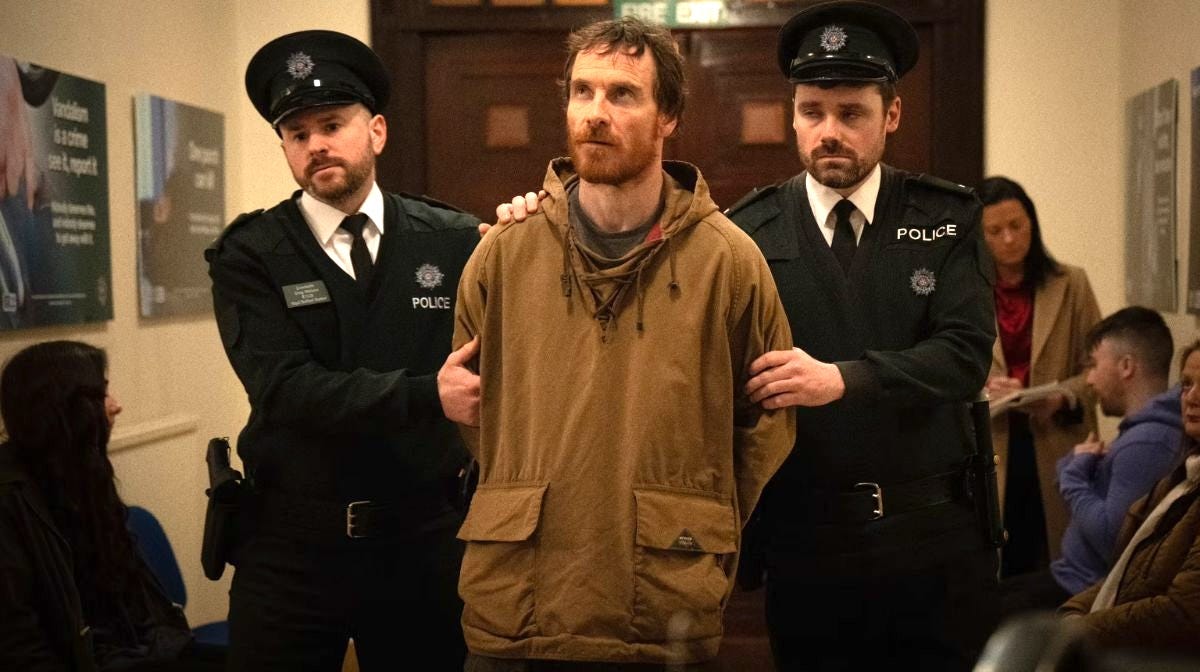
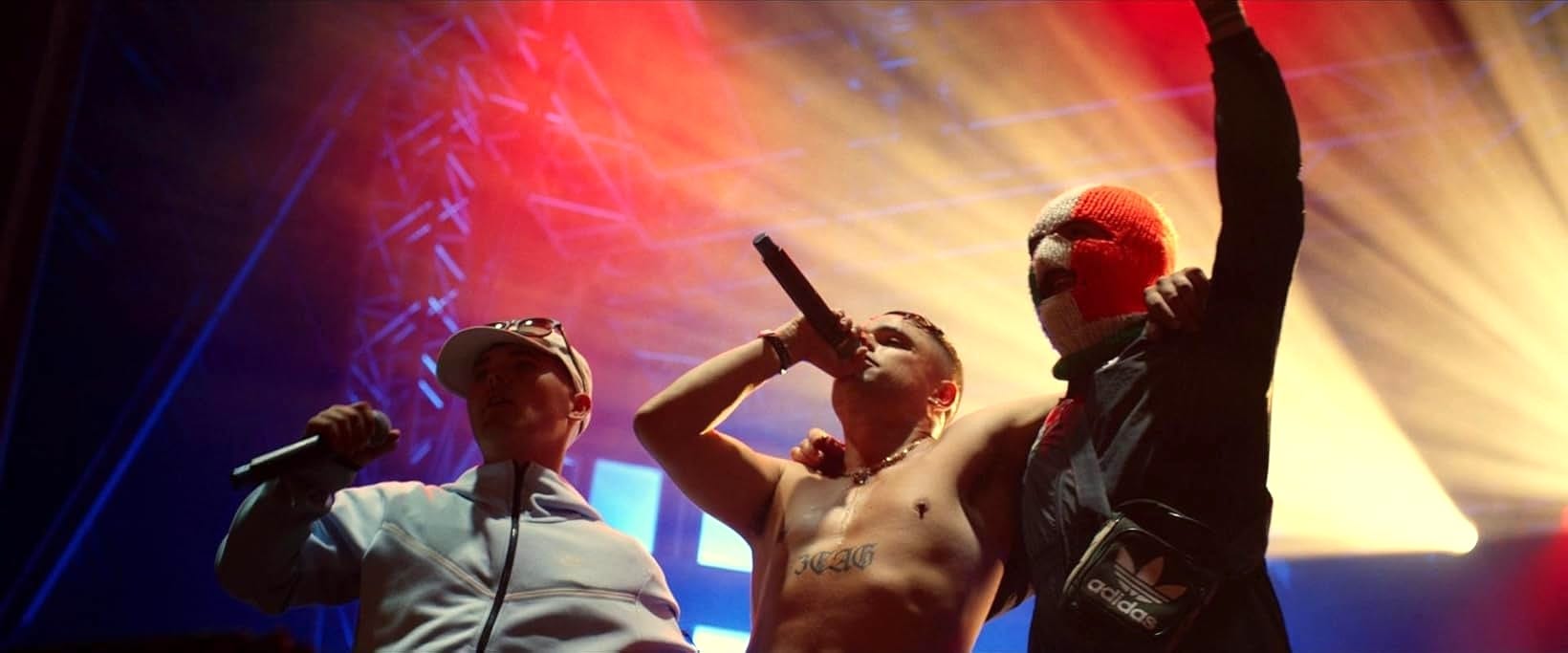
Equally good is Michael Fassbender as Arlo. Fassbender excels at showing Arlo’s pain and quiet dignity as a para-military leader in hiding. I especially like the look of shock on Fassbender’s face when he sees Kneecap perform live on-stage for the first time rapping in Irish in front of hundreds of fans.
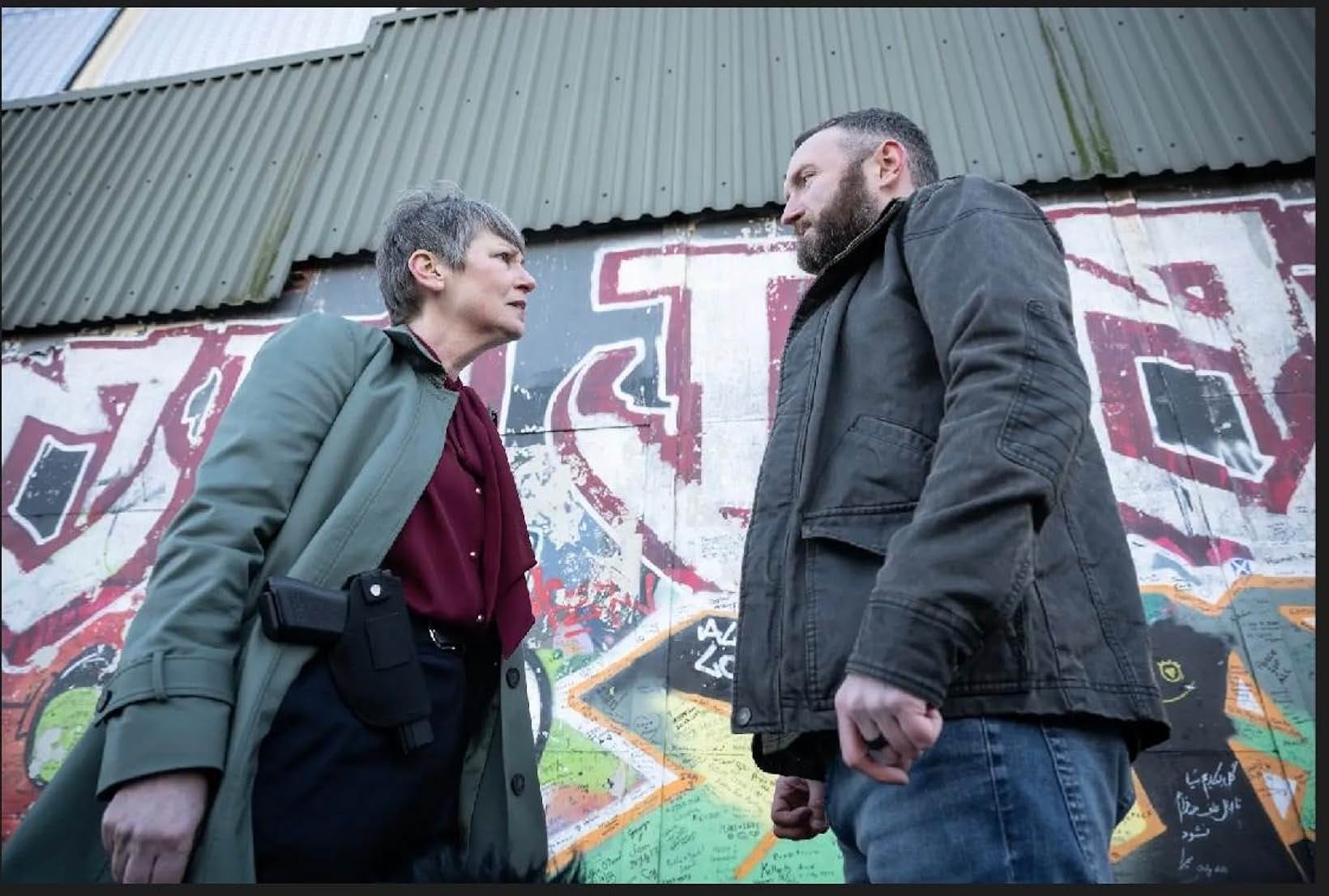
Also effective in the antagonistic role of Detective Ellis is veteran actress Josie Walker. Walker brings a piercing Thatcher-like intensity in her performance which is sometimes chilling, especially when she snaps her fingers at DJ Provai and says, “You have a life, career, a future. Remember, I can take it all away from you like that.” Another effective scene is when Walker confronts Arlo’s wife and Naoise’s long-suffering mother and threatens to have her son arrested. Once again, Walker channels Margret Thatcher when she says, “Consider this the knock on the door before the knock on the door.”
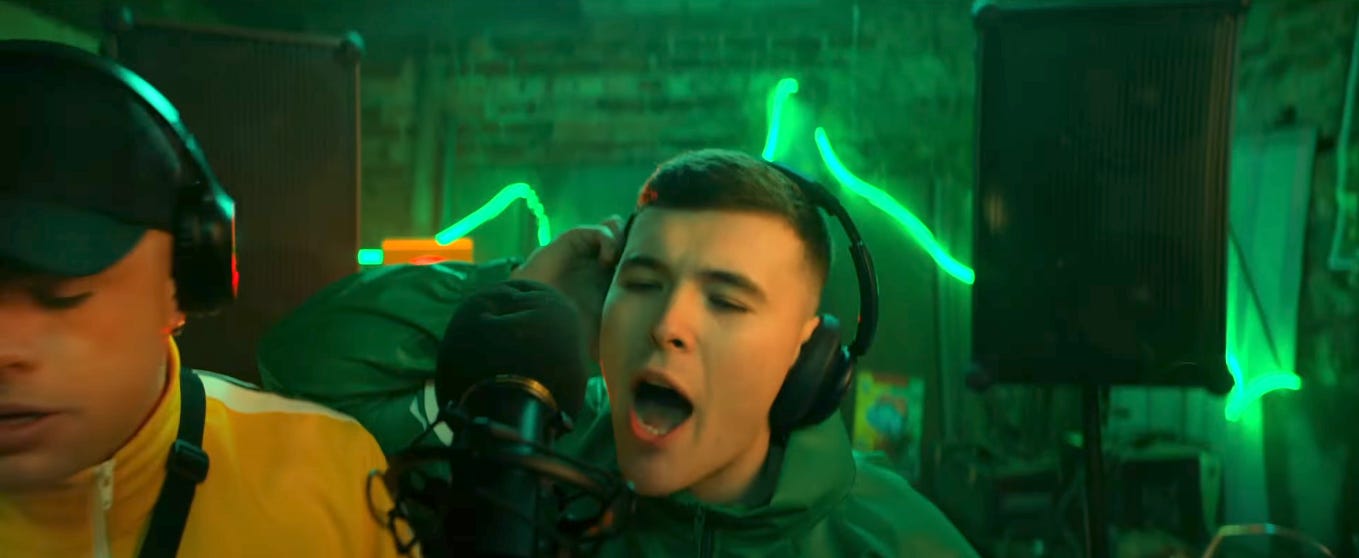
With its mix of fine acting, comedy, drama, and stylized camerawork (plus the pulsating rap/hip-hop music), Kneecap is a film that most people probably haven’t seen this year but should.
It’s definitely one of the best films of the year.
(Kneecap is currently streaming on Netflix and is available to rent online. Unfortunately, it’s not yet available on blu-ray here in the U.S.)
Love this film! Excellent write-up. I just bought myself a copy of Kneecap a week ago. Looking forward to a re-watch.
Thanks for a great review, Jim, you make me want to watch this film! It makes me think about the film The Commitments, a great film from a few decades ago about some kids starting a soul band.
I was actually in Belfast for a few days at the end of the Troubles. I have stories…