
Ryan vs. Jake: Who's the Better Actor?
Both born in 1980. Both acclaimed film actors. But only one is the champ. Here is why Jake Gyllenhaal beats Ryan Gosling in a four-round acting showdown.

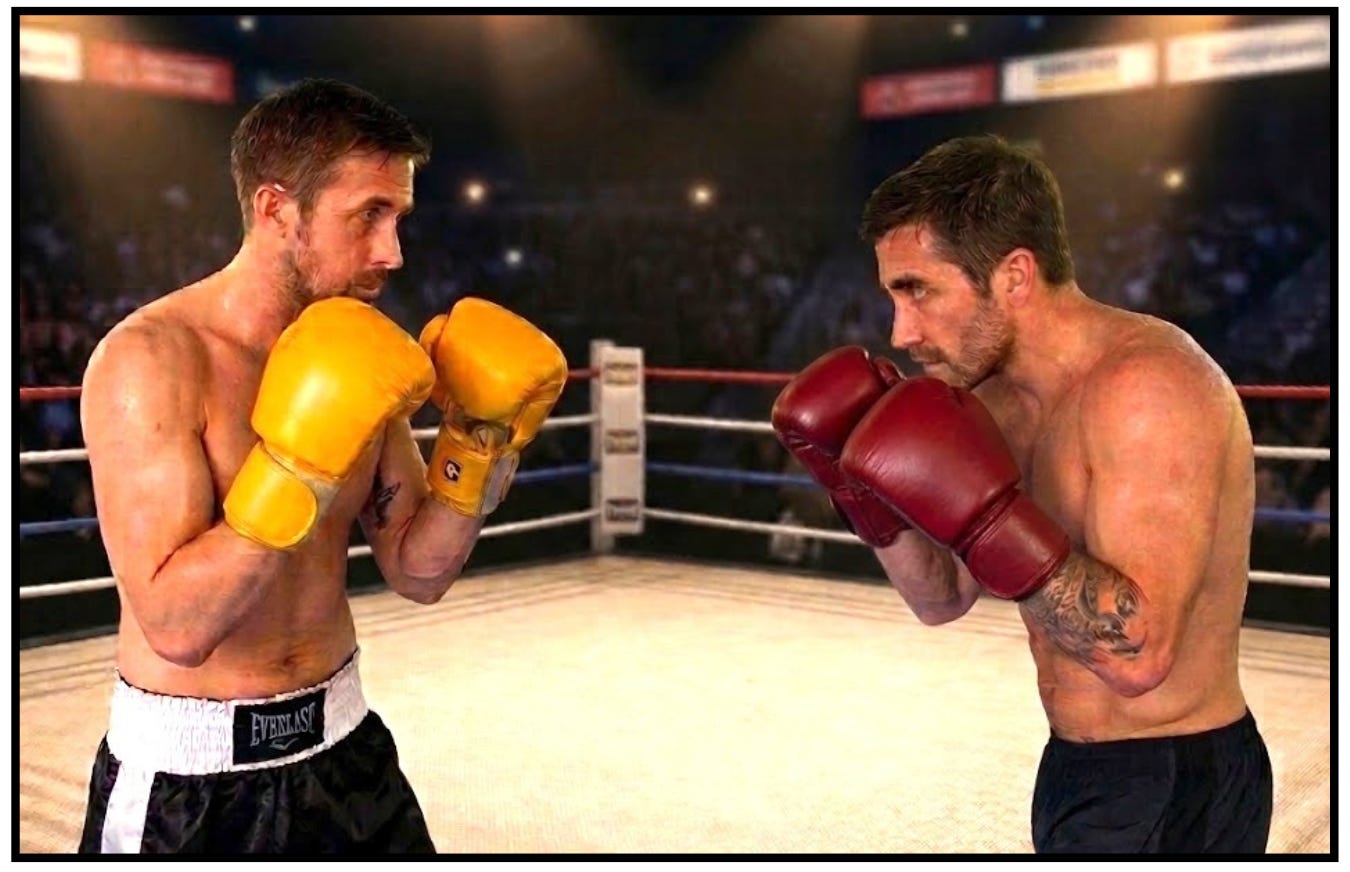
Right now, actor Ryan Gosling is having one of the biggest successes of his acting career with his latest film, Project Hail Mary, which is also the first blockbuster of 2026. Gosling is also receiving some of the best reviews of his career for his performance as brainy middle-school science teacher, Ryland Grace, who wakes up alone on a spaceship light years away from Earth with no memory of how he got there.
It’s the latest achievement for the Canadian-born actor who has given great performances in films like Blue Valentine, Drive, Half Nelson, and even the comedy, Barbie. Born in 1980 to working-class parents in London, Ontario, Canada, Gosling’s first break came when he was chosen to appear on the rebooted television series, The All New Mickey Mouse Club in 1993. That eventually led to roles in the movies The Slaughter Rule, Murder By Numbers, and his breakout role as a Jewish Neo-Nazi in 2001’s The Believer.
Now, 49 films later, it’s time to ask: is Ryan Gosling the best actor of his generation working in Hollywood today?
Maybe.
But before I even consider it, I have to weigh him against another contender: Jake Gyllenhaal.
Like Gosling, Jake Gyllenhaal was also born in 1980. In fact, the two actors were born only 37 days apart. But Gyllenhaal had the advantage of being born into a show-business family. His father is a television and film director, and his mother is a producer and screenwriter.
Jake and his older sister Maggie began acting as children. For Jake, his first important early role was playing Billy Crystal’s son in the comedy, City Slickers at the age of eleven. Later, Gyllenhaal starred in the inspiring tale of rocket scientist, Homer Hickam, in October Sky and two years later attracted even more attention as the lead character in the cult movie, Donnie Darko. Since then, Gyllenhaal has appeared in over 50 films and currently has numerous projects in development.
So…which one do I think is the champ? The best film actor of his generation? Gosling or Gyllenhaal?
I’ve gone back and forth on this more than I’d like to admit. Ryan Gosling is one of my favorite actors working today, especially for his performances in the movies Drive and Blue Valentine. But, when I take an in-depth look at both his and Jake Gyllenhaal’s filmographies, there’s no question that the winner is Jake Gyllenhaal, and in the following four rounds, I’ll explain why.
Round 1: The Breakout Performances
A breakout performance is where an actor does more with a role than his early career suggested was possible.
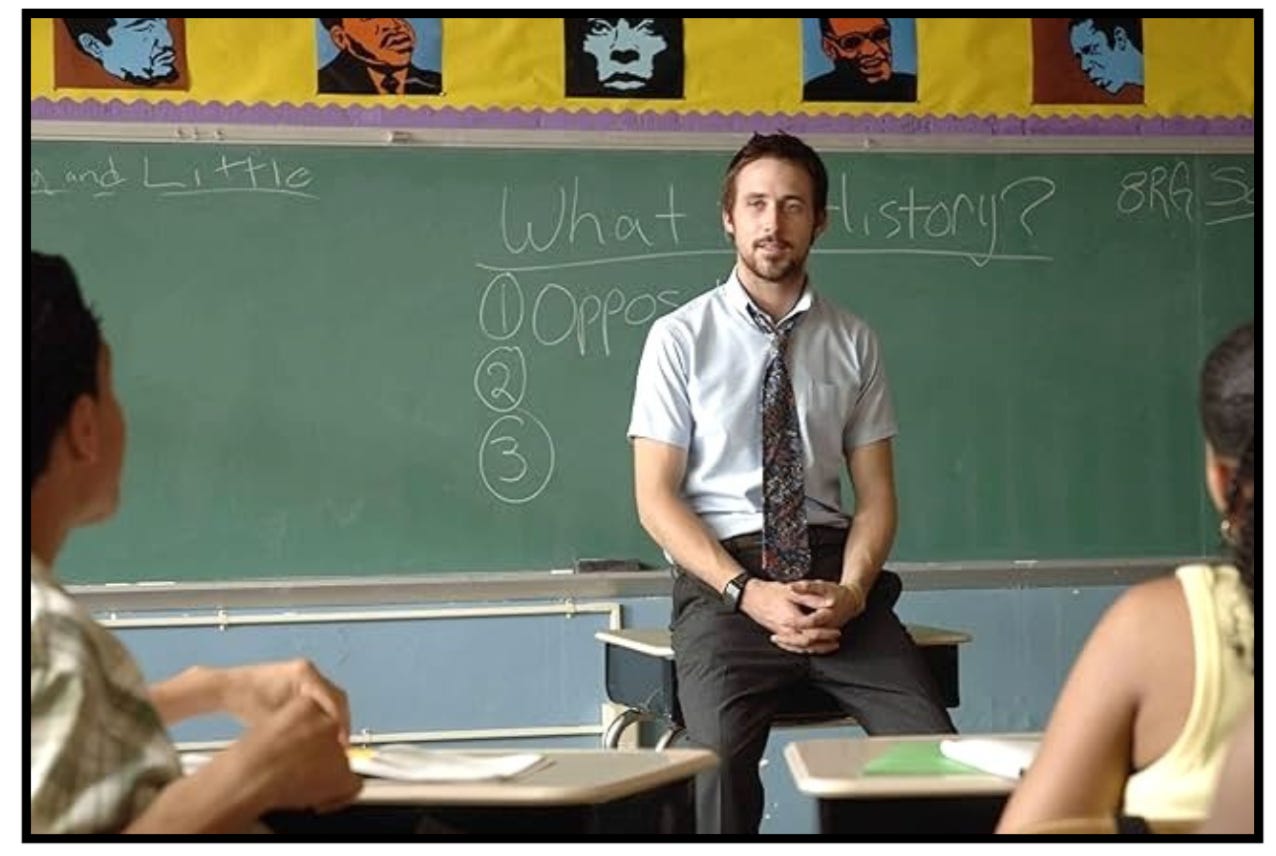
For Ryan Gosling, it was his portrayal of Dan Dunne, the dedicated but also crack addicted junior high school teacher, in the Sundance hit, Half Nelson. Nothing Gosling had done up to that point prepared audiences for his performance as the flawed, miserable, and yet dedicated teacher who cares about his inner-city students but who also smokes crack in the school’s bathroom. It was an unglamorous role that allowed Gosling to build on his previous success portraying the complex Jewish neo-Nazi in The Believer.
Gosling’s commitment to the character of Dan Dunne was total, and it shows in his performance. He lost considerable weight, made himself look scruffy by being unshaven and disheveled throughout the film, and used his body language to convey to the audience that he was falling apart both mentally and physically due to his drug addiction. For the viewer, Gosling never lets you look away, no matter how painful it is to watch his character make so many mistakes and bad decisions throughout the film.
In addition, Gosling did a great job of carrying this small indie film almost all on his own. Even though there are other characters in the film, our eyes are always on him. To me, it’s the first performance by Gosling that showed he was a serious actor.
However, there’s just one problem: Gyllenhaal did the same thing one year earlier.
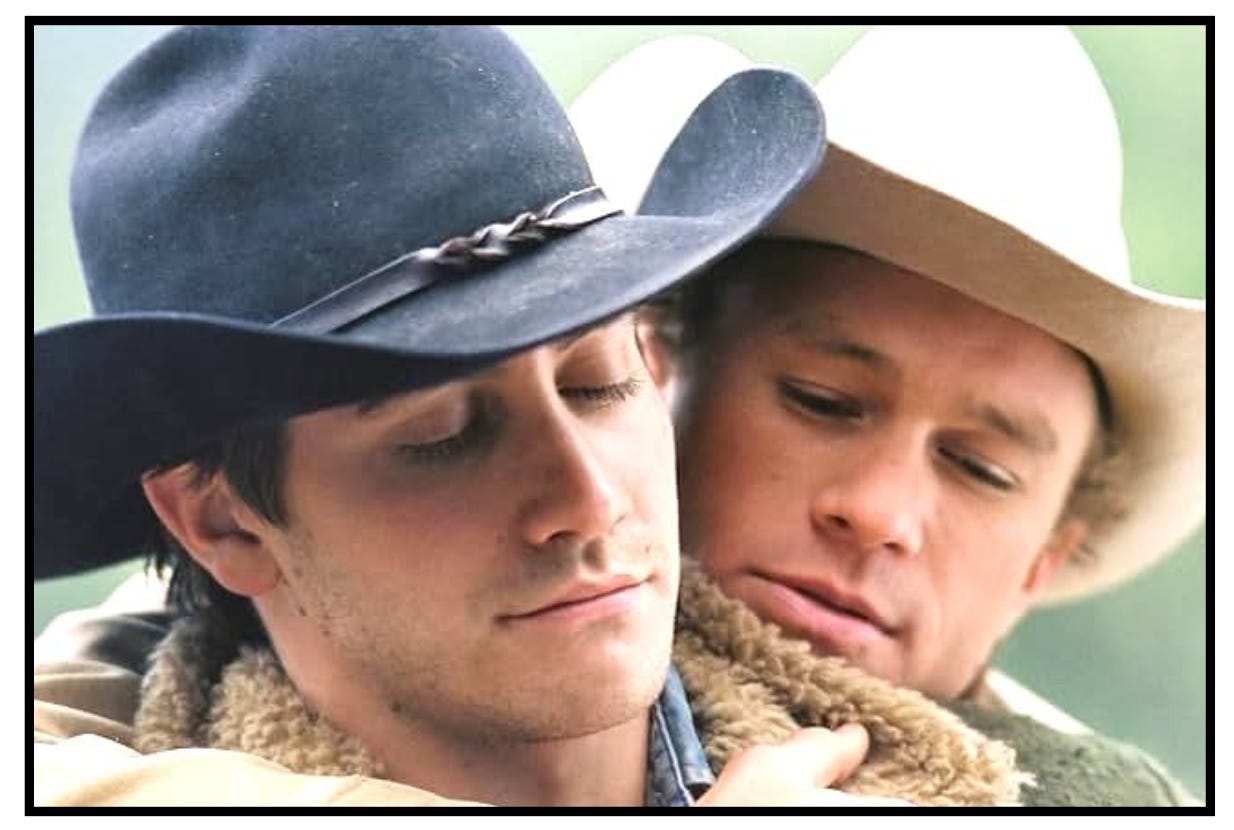
In 2005, Jake Gyllenhaal surprised both critics and audiences with his breakout performance in Brokeback Mountain. The heartbreaking story of two closeted gay cowboys in Wyoming, Brokeback Mountain gave Jake Gyllenhaal the chance to expand his range and play a complicated character who goes from having a hesitant passion for his co-worker, Ennis (the late Heath Ledger), to cautious optimism that he and Ennis could find a way to make their relationship work, to mounting frustration over Ennis’ inability to commit to a life together, and then finally despair and hopelessness, which is perfectly characterized in the scene where Gyllenhaal delivers the iconic line of the movie: “I wish I knew how to quit you.”
While Heath Ledger shines in the role of Ennis in this modern classic, it’s really Gyllenhaal who carries the emotional weight of the film. The fact that Gyllenhaal was able to transcend the words in the screenplay to take his character of Jack Twist to a higher level is quite an accomplishment.
So even though Ryan Gosling gives a fine performance as Dan Dunne, the crack-addicted middle school teacher in Half Nelson, it can’t compare to Jake Gyllenhaal’s emotionally complicated Jack Twist in Brokeback Mountain.
Round 2: The Iconic Roles
For an actor, an iconic movie role is one that is so memorable and instantly recognizable that even people who haven’t seen the movie recognize the character. It’s also a performance where the audience can’t imagine anyone else playing the part and a role that defines the actor’s career.
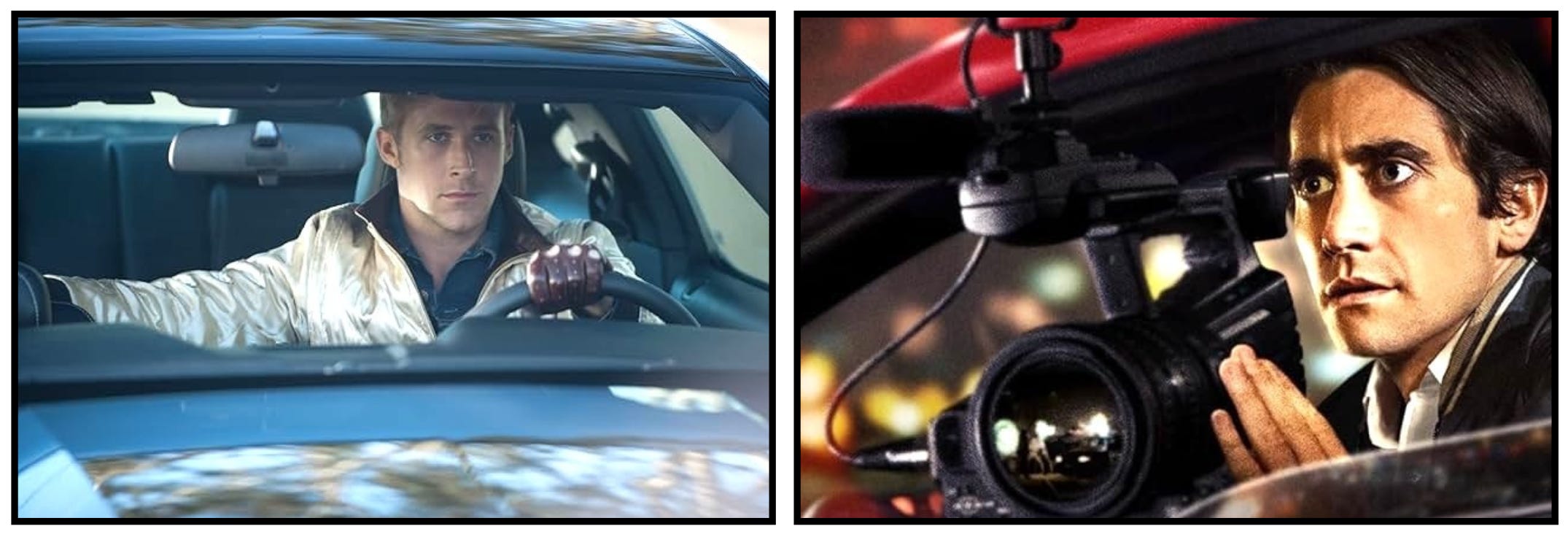
While it may be tempting to list Ryan Gosling’s performance in Half Nelson and Jake Gyllenhaal’s Jack Twist in Brokeback Mountain as definitive, I think it’s their performances in Drive and Nightcrawler that are the two actors’ most iconic roles.
First, there has never been a character quite like Lou Bloom in the psychological thriller, Nightcrawler. As portrayed by Jake Gyllenhaal, Bloom is a sociopath who lives on the fringe of society in modern-day Los Angeles. After witnessing a freelance news crew film a gruesome car accident in order to sell the footage to a local TV news station, Bloom discovers his mission in life. Soon, he acquires a video camera and police scanner and forms his own news crew. By throwing aside any ethical or legal boundaries that might stop him from succeeding in his new profession, Bloom quickly rises to the top, even if it means those around him must suffer and die.
Nightcrawler is a great movie because it’s about the dark side of the American dream. It’s a story of success taken to a twisted extreme.
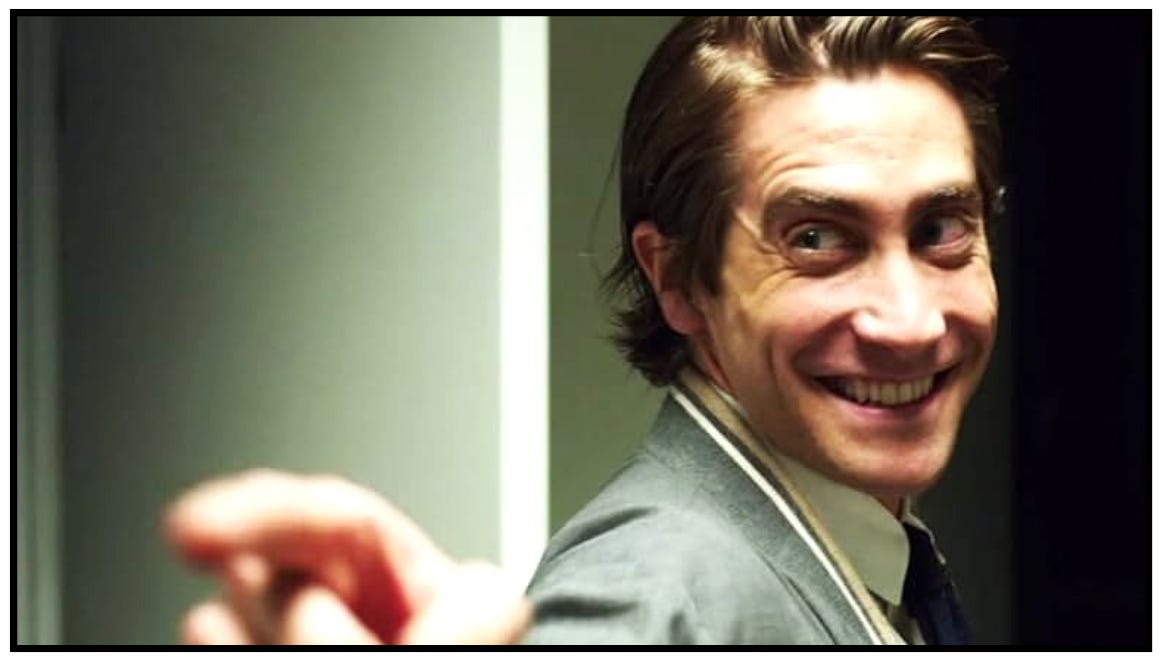
To embody this crazy sociopath, Gyllenhaal lost 30 pounds for the role. He wanted to make his character scrawny, wiry, and thin his face so his eyes would bulge out. And, if you’ve watched the movie more than once like I have, you’ll eventually notice that Gyllenhaal never blinks in the film. I’m still not sure how he pulled that off.
In addition, Gyllenhaal has Lou constantly twitch and talk fast. And, by taking popular success jargon and making it sound like he’s memorized trendy buzzword phrases lifted straight from the latest self-help bestseller, Gyllenhaal twists them into something more detached and ominous:
My motto is, if you want to win the lottery, you have to make the money to buy the ticket.
In contrast, Ryan Gosling’s character in Drive, a Hollywood stuntman who moonlights as a get-away driver for criminals, rarely speaks at all throughout the film.
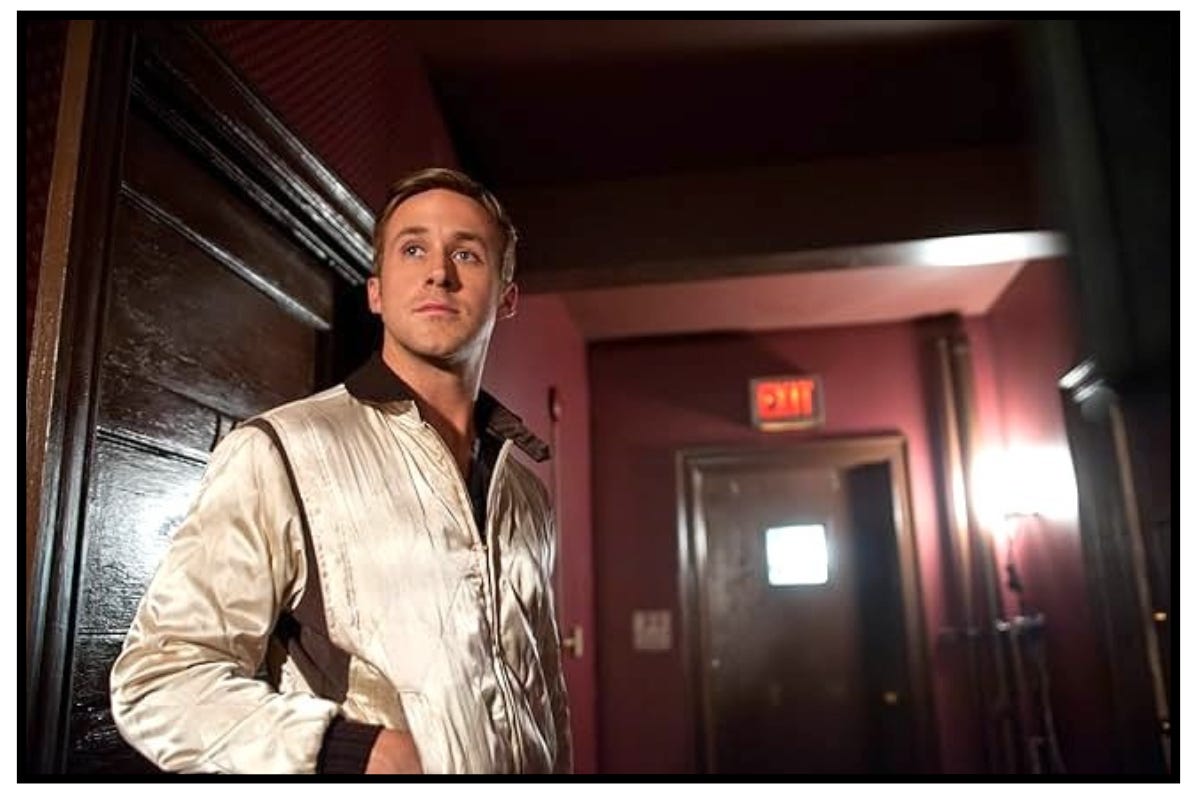
Modeling his character after such stoic movie icons such as Clint Eastwood’s Man With No Name in Sergio Leone’s famous spaghetti westerns, Gosling effectively uses small gestures like tilting his head or changing his expression from a blank stare to a half-smile in order to express his thoughts and feelings to the audience instead of using words.
In fact, by remaining silent for most of the movie, Gosling makes his limited dialogue have more impact on the viewer when he does actually talk to the other characters in the film.
Gosling also does an excellent job of flipping his emotions, from acting tranquil in his scenes with Irene and her son, whom he has vowed to protect, to becoming violent a short time later after he’s left their apartment. This keeps the audience on edge.
While both actors are excellent in their respective films, Gyllenhaal wins this round by creating one of the most unforgettable anti-heroes of our time, Lou Bloom, in Nightcrawler.
Round 3: Range and Risks
Here's what separates Gosling and Gyllenhaal when it comes to range: Gosling takes tonal risks, while Gyllenhaal takes character risks. And that difference matters more than you might think.
For Gosling, his strength comes from playing masculine men who have a hard time expressing what they feel in films like The Believer, Half Nelson, Drive, and Blue Valentine.
By using his facial expressions and body language, Gosling is able to make viewers feel what his character can’t say. So when Gosling began breaking out of his comfort zone and expanding his range, it marked a major shift in his career.
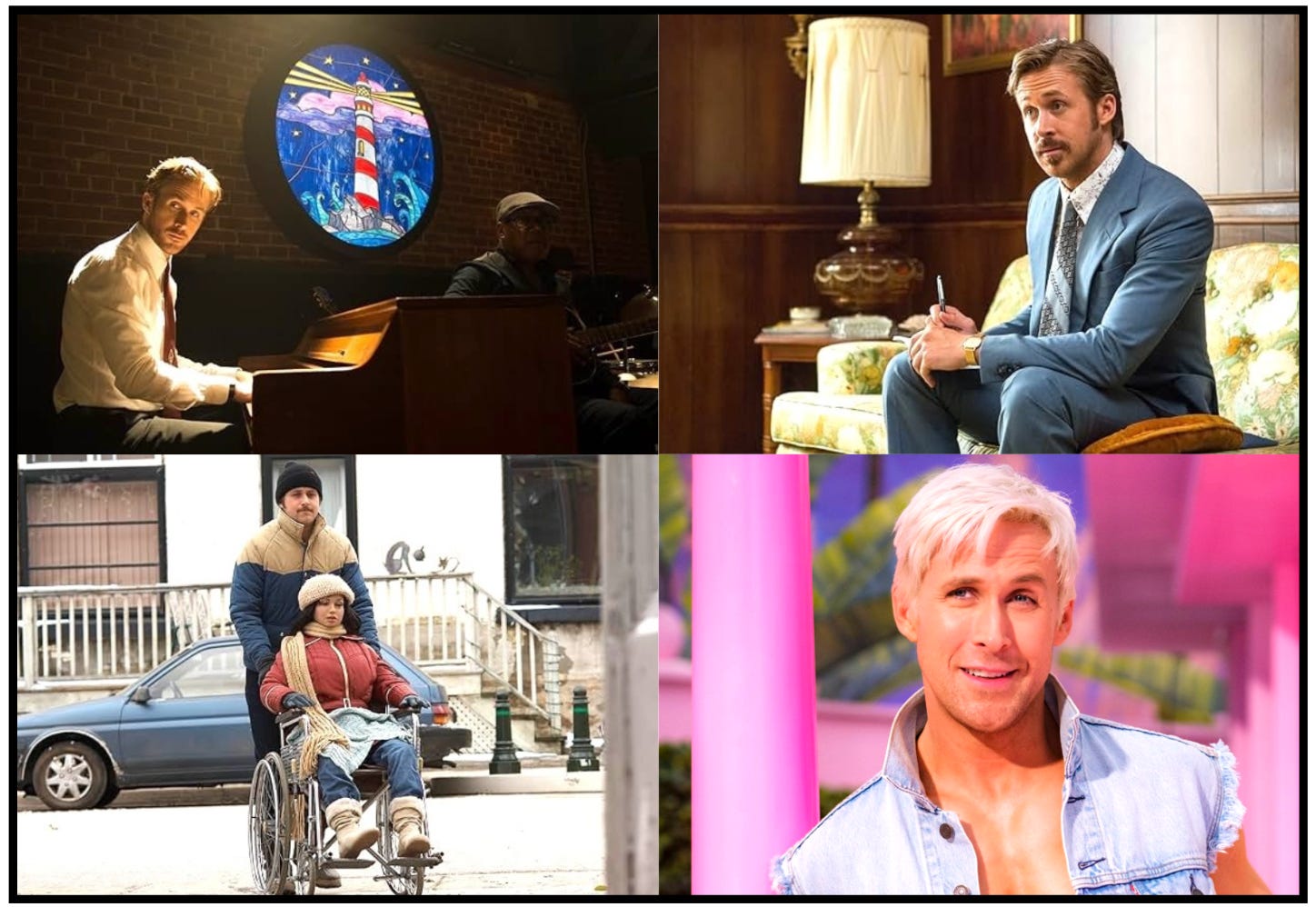
Take La La Land, for example. Nobody knew that Gosling could sing and play the piano, so this role was totally unexpected and a wonderful surprise. This also applies to Gosling’s bumbling private eye, Holland March, in The Nice Guys. Once again, Gosling won over viewers with his knack for physical comedy, pratfalls, and slapstick.
Also, in one of his least known films, Lars and The Real Girl, Gosling plays Lars Lindstrom, a very shy, socially isolated man. In order to combat his loneliness, Lars orders a life-size doll from the internet and introduces her to everyone in town as his girlfriend. Gosling avoids irony or easy laughs by playing Lars with the utmost sincerity, resulting in a memorable performance.
And in Barbie, Gosling wasn’t afraid to look ridiculous as Ken.
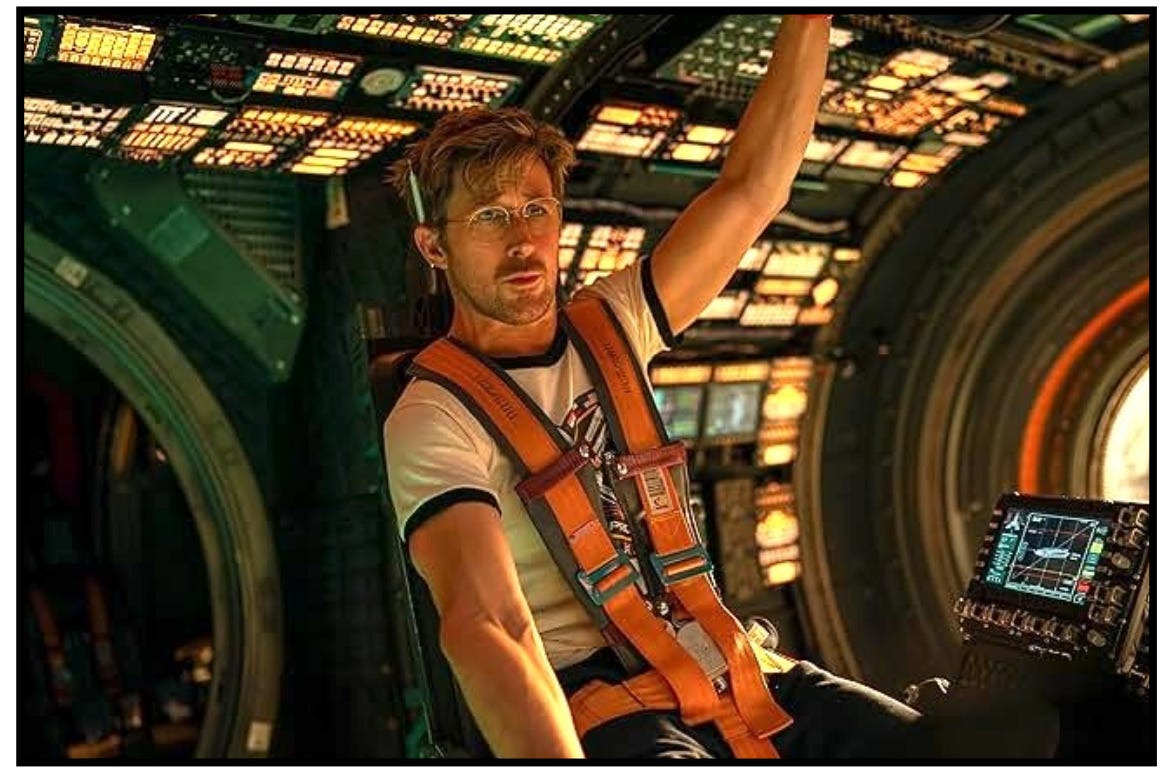
Now, in his latest film, Project Hail Mary, Gosling plays a middle school science teacher named Ryland Grace, who is not only a nerd, but is about as goofy and cheerfully uncool as possible. What makes Gosling’s performance stand out in this new film is how emotionally open and accessible Gosling has made his character while also being very warm and funny. It’s nice to see Gosling continue to expand his range.
What’s interesting about all of these departures is that Gosling is changing the mood, style, and often the vocal approach of his performances to suit different genres, especially comedy, rather than his overall approach to acting. He’s still recognizably Gosling in all of them. Gyllenhaal, on the other hand, doesn't just change the tone. He changes himself.
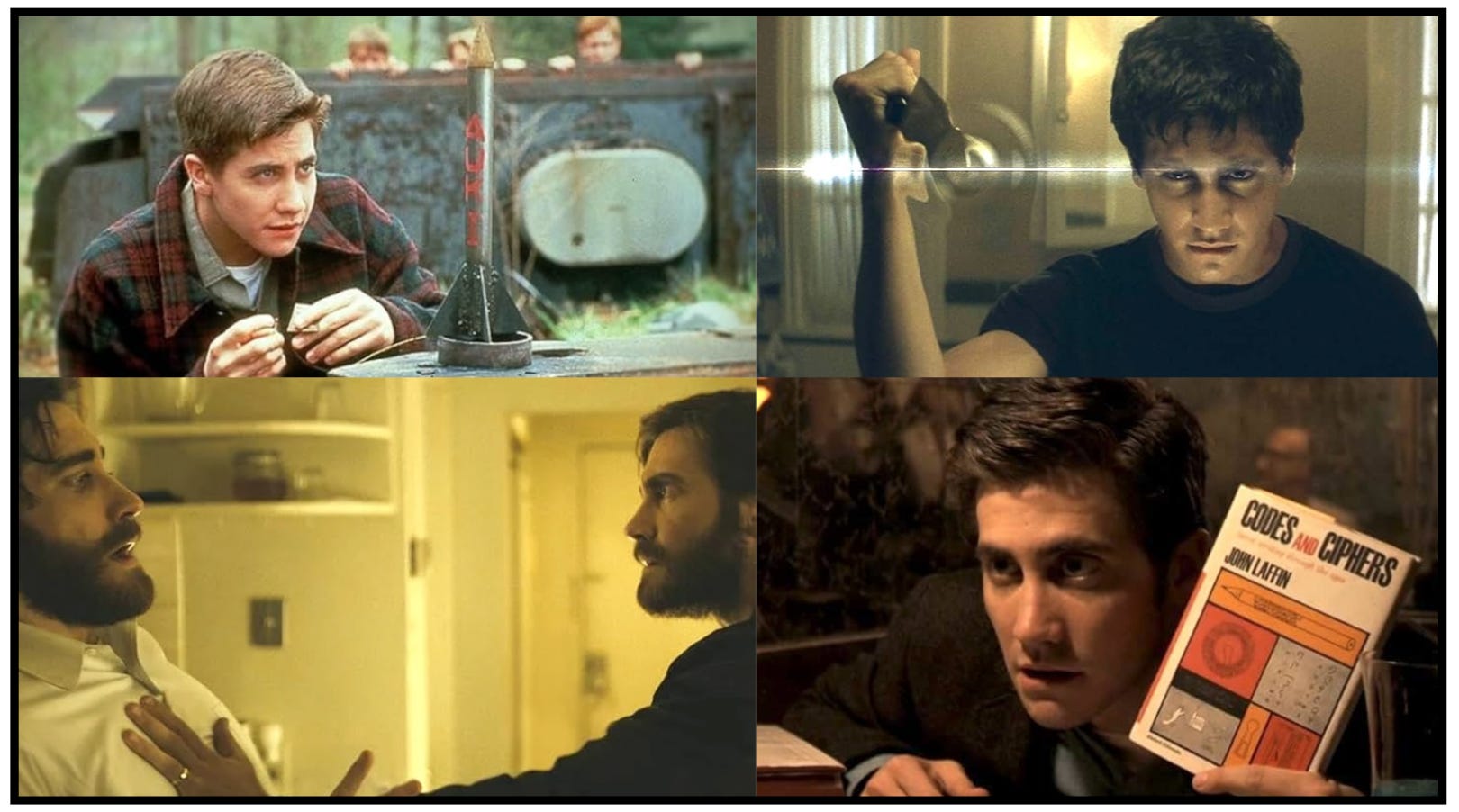
Let’s take a look at the wide variety of characters Gyllenhaal has portrayed through the years. First, there’s Homer Hickam, the small-town kid who dreams of rockets in October Sky. Then, two years later in Donnie Darko, Gyllenhaal morphed into a disturbed suburban teen living in a possible alternate reality. After that came gay cowboy Jack Twist in Brokeback Mountain; then, in one of Gyllenhaal’s most restrained performances, he played the nerdy obsessive Robert Graysmith seeking to unmask the serial killer’s identity in Zodiac. In addition, in Enemy, Gyllenhaal played both the main character, Adam, and his doppelganger, Anthony, in Denis Villeneuve’s complex thriller; and of course, no one can forget Lou Bloom in Nightcrawler.
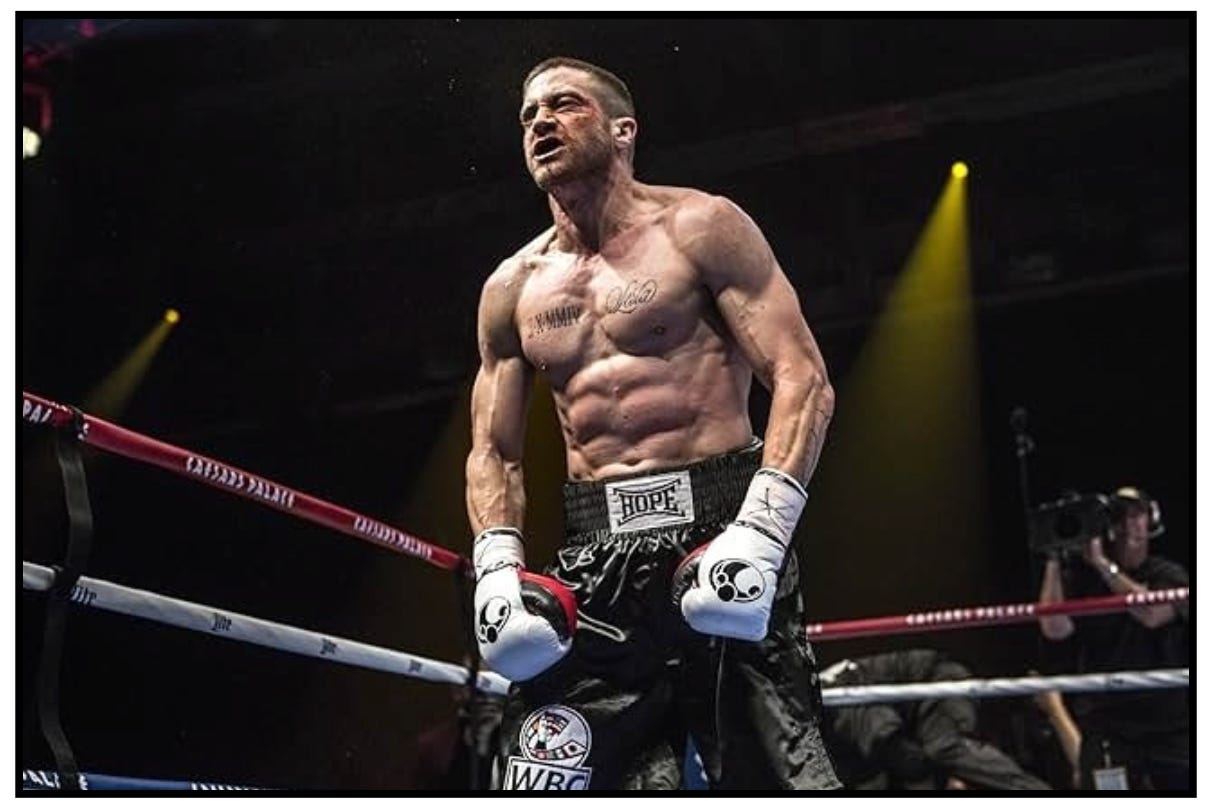
Then there’s Billy Hope, the physical opposite of Lou Bloom. In order to play the light-heavyweight champion in Southpaw, Gyllenhaal gained twenty pounds of muscle and reportedly trained twice a day for five months as he prepared for the role. When filming began, Gyllenhaal even did his own fight scenes using proper boxing technique and didn’t rely on stunt doubles. The result is a performance that feels authentic and real, even though the script is riddled with sports movie clichés.
Taken all together, Gyllenhaal’s amazing range and willingness to take risks as an actor far exceed those undertaken by Ryan Gosling.
Round 4: Missed Hits
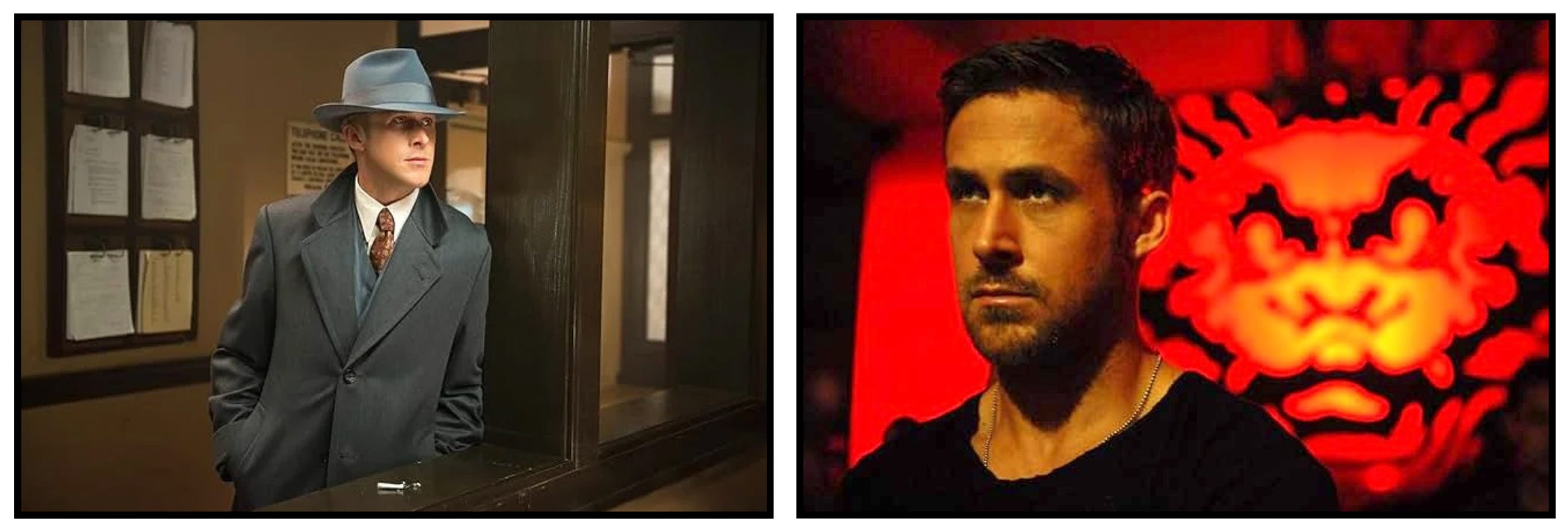
Every actor in Hollywood has made some turkeys they regret (and that they would like their fans to forget too). Jake Gyllenhaal and Ryan Gosling are no exceptions.
For Gosling, his single worst film is probably Gangster Squad. Not only is the movie’s wanna-be Untouchables like story hollow and full of stereotypes, Gosling’s performance doesn’t match his usual intensity. Here, he seems detached from the other characters around him. Of course, the fact that Gosling mumbles the almost laughable dialogue in a high-pitched voice doesn’t help his performance much either.
Another notable failure is Only God Forgives, Gosling’s second collaboration with Drive’s writer-director, Nicolas Winding Refn. In this film, Gosling’s character, Julian, is mostly silent throughout the film. Although that worked well in Drive, here it results in a performance that seems catatonic as Gosling just stares at the other characters with a blank expressionless face. This makes both his performance and the character lifeless and boring.
For Gosling, his weakest performances tend to happen when he leans in too heavily on his established stoic persona without a solid script to support it.
However, Jake Gyllenhaal’s misfires are actually worse because they tend to call more attention to themselves, especially since viewers know what Gyllenhaal is capable of doing on-screen.
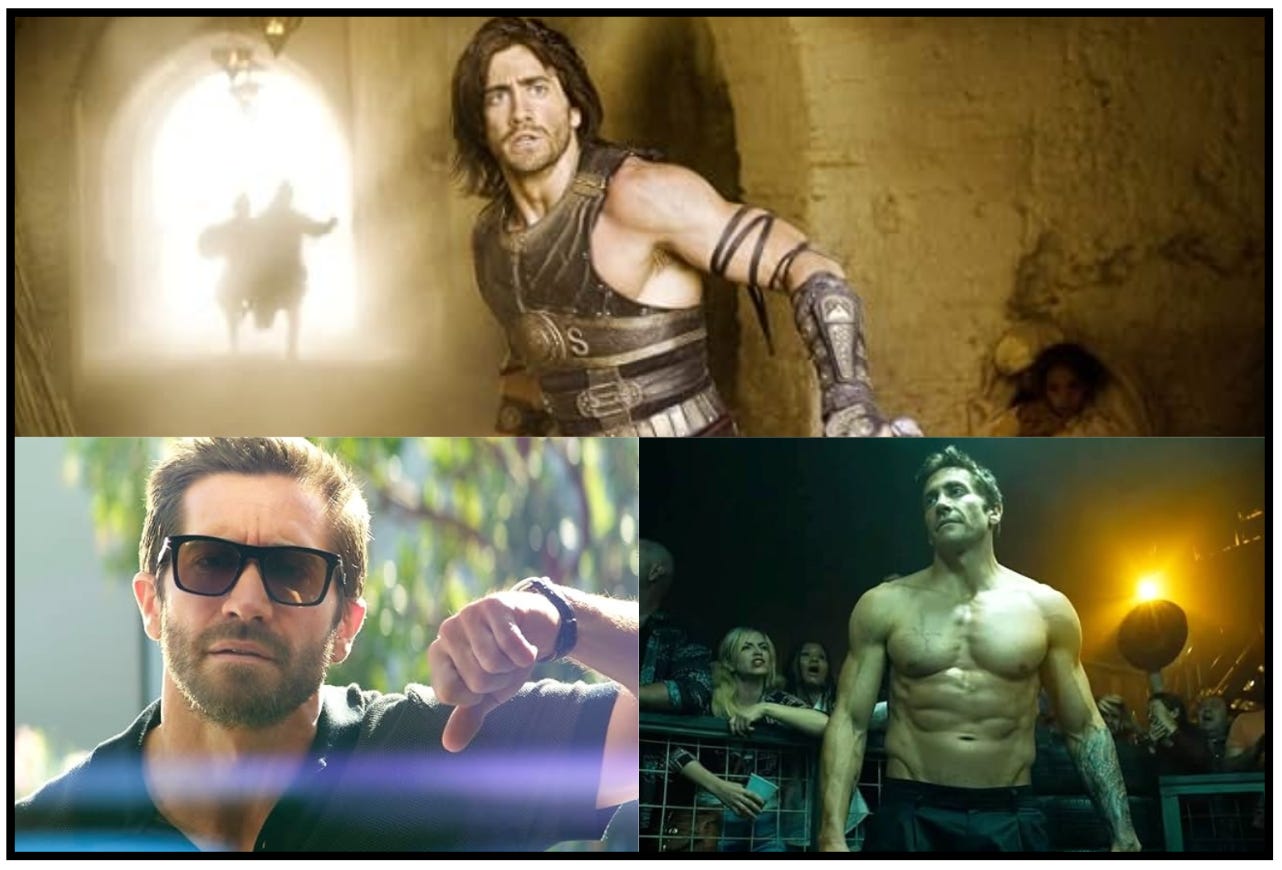
A good example of this is the god-awful, Prince of Persia: The Sands Of Time. Why did Gyllenhaal, a white actor, choose to play an ancient Arabian Prince? This was his first mistake. But besides being miscast in this big-budget fiasco, there’s the fact that Gyllenhaal doesn’t play the part of the hero very well.
In fact, he often looks dazed and comes across as foolishly incompetent or even silly at times. This is especially true because of his English accent, which comes and goes throughout the film. This is the same issue that has plagued other actors, such as Robert Redford in Out of Africa and Kevin Costner in Robin Hood: Prince of Thieves. But here, it’s so noticeable, that viewers can’t ignore it. What I don’t understand is that with all of his experience on stage and screen, why couldn’t Gyllenhaal even get the accent right?
Even more bothersome is the fact that there’s virtually no chemistry between Gyllenhaal and his costar, Gemma Arterton, who plays the princess Tamina. Gyllenhaal beefed up for this role, adding an impressive amount of muscle to his physique. If he had spent as much effort on his performance, this turkey might have become almost watchable.
More recently, Gyllenhaal starred in Michael Bay’s Ambulance, which is another crappy movie. In this film, Gyllenhaal almost seems to be playing a parody of himself. Not only is he always “on,” his performance from the start is at such a high level of frantic energy there’s nowhere else for him to go as an actor. The result is an irritating one-note performance.
And finally, there's the remake of Patrick Swayze's classic, Road House. Released in 2024, neither Gyllenhaal nor the movie is very good. The filmmakers have ditched everything that made the original memorable, and Gyllenhaal's Dalton, who has been changed from a Tai Chi practicing former philosophy student into a cocky, angry former MMA fighter, has none of the quiet charm that made Swayze's version so iconic. Another misfire.
There's no winner in this round because both men have made their share of clunkers. Let's call it a draw.
Final Scorecard:
Round One: The Breakout Performance - Gyllenhaal
Round Two: The Iconic Role - Gyllenhaal
Round Three: Range and Risk - Gyllenhaal
Round Four: Missed Hits: Draw
The Decision: Gyllenhaal Wins
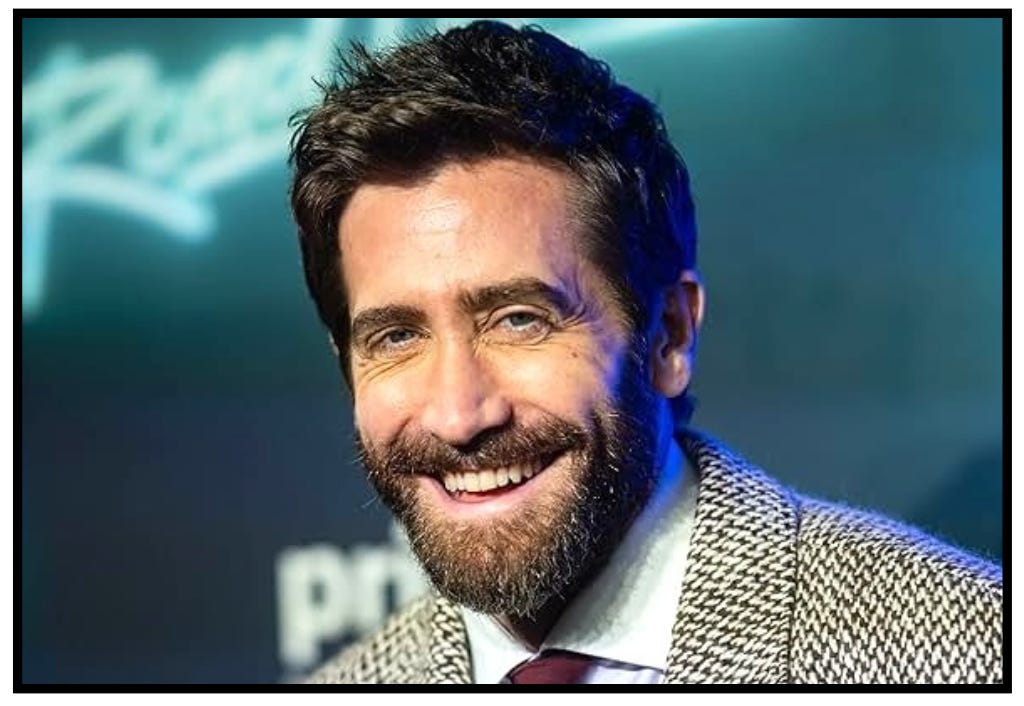
As I noted at the beginning of this post, Ryan Gosling and Jake Gyllenhaal are the two best actors of their generation. Born only 37 days apart in 1980, they’ve each had remarkable careers.
But after 4 rounds, 3 decisions, and a draw, it's clear that Jake Gyllenhaal is the better actor. He's more daring, more willing to disappear completely into a role and come back as someone you've never seen before. Ryan Gosling is no consolation prize; he's still one of the best actors of his generation. But Gyllenhaal is the champ, and four rounds of evidence say so.
Disagree? Tell me why in the comments.
If you enjoyed this post, check out these other articles:


Respectfully, disagree on all four comparisons. Jake is a very good actor, but Ryan delivers more consistently and in my opinion a larger variety of roles.
Jake is the better actor, Ryan is more talented in general with the singing and dancing. If you combine the two you would get… an Indian movie star.