

Was there ever a summer for movies as great as 1982? Between May and August of that year, Hollywood released 12 major films, including An Officer and a Gentleman; The Best Little Whorehouse in Texas; Blade Runner; Fast Times At Ridgemont High; Grease II; Poltergeist; The Road Warrior; Rocky III; Star Trek II: The Wrath of Khan; John Carpenter’s The Thing; and Tron.
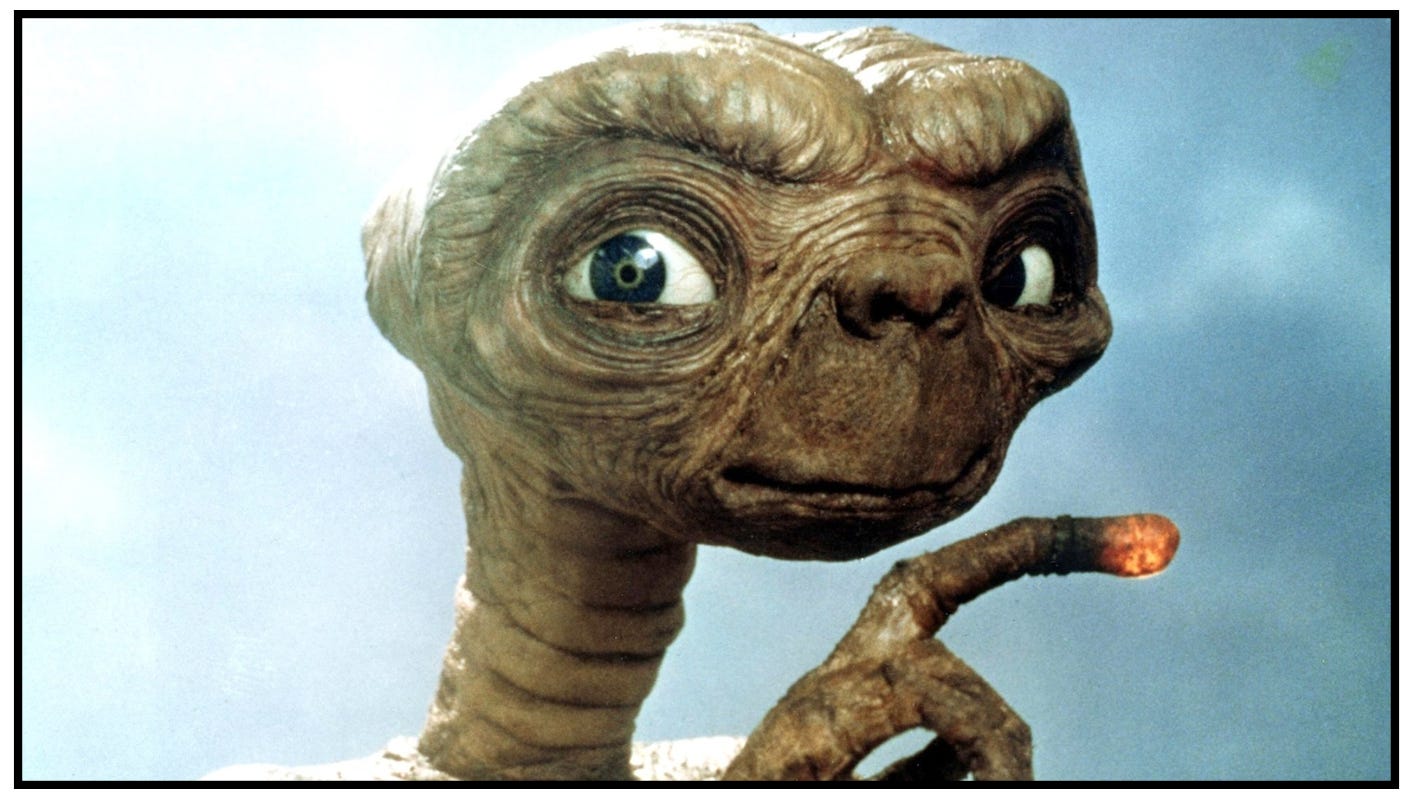
Yet, that summer, only one movie surpassed all of these other classics to quickly become the highest-grossing film of all time: Steven Spielberg’s E.T. The Extra-Terrestrial.
So why did it take six years for director Steven Spielberg to release E.T. on home video?
It’s an interesting story.
The VHS Videocassette Boom
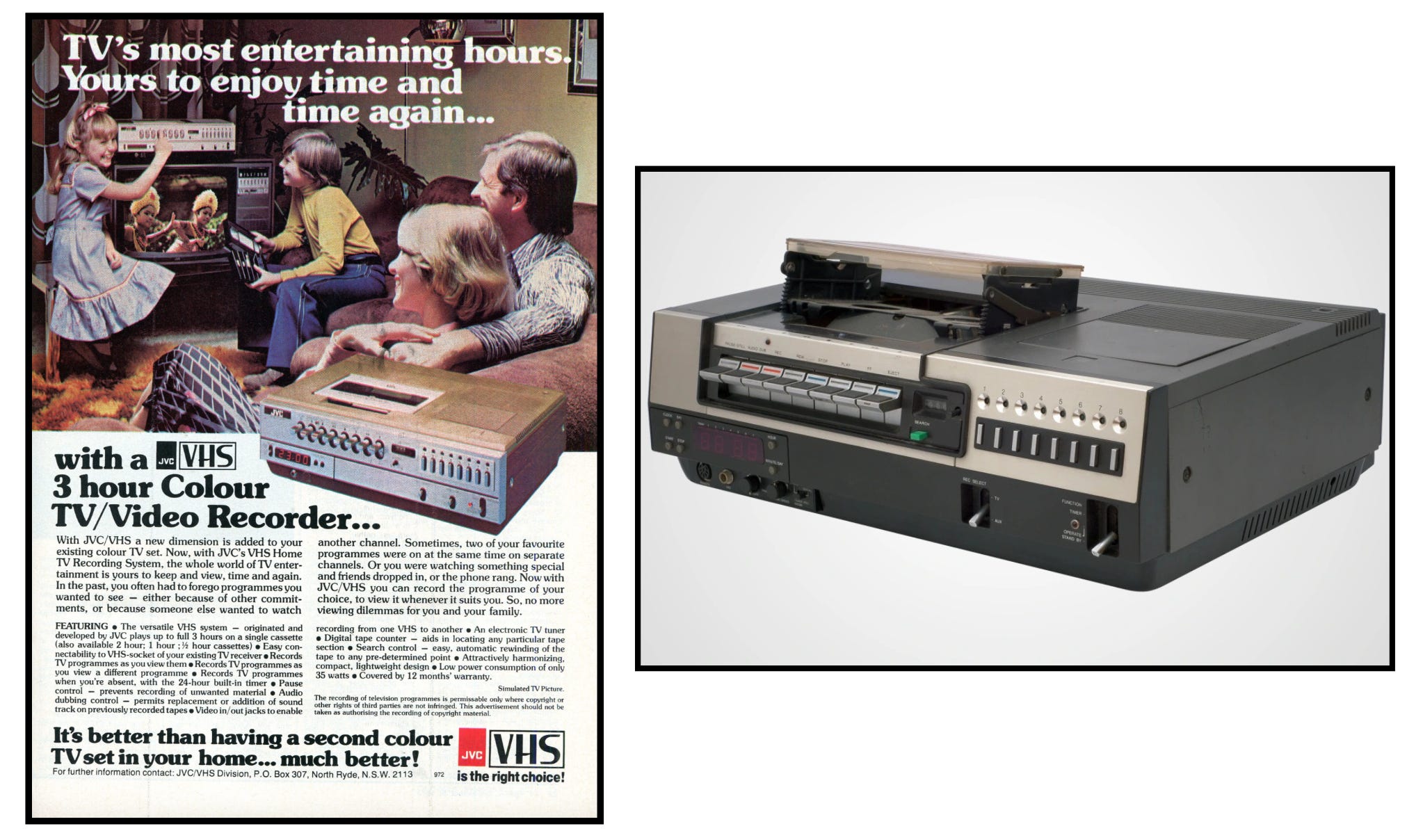
First, it’s important to remember what the home video industry was like back in the early 1980s. Although it’s now hard for us to believe, in 1982 the only home video formats that existed were VHS videotape, Betamax, Laserdisc, and RCA’s CED discs.
Although Betamax tapes, Laserdiscs, and to a degree RCA’s CED discs offered superior picture and sound quality, the most popular form of home video then was VHS videocassettes, even though the picture and sound weren’t as good.
First sold in the U.S. in August of 1977, VHS recorders gradually caught on despite an average selling price of around $1,000.00. This is mainly because people realized the benefits of being able to record their favorite television shows on videocassette to watch later or over and over. At the same time, pre-recorded videocassettes made it possible for people to watch Hollywood movies at home on a television set without any commercial interruption.
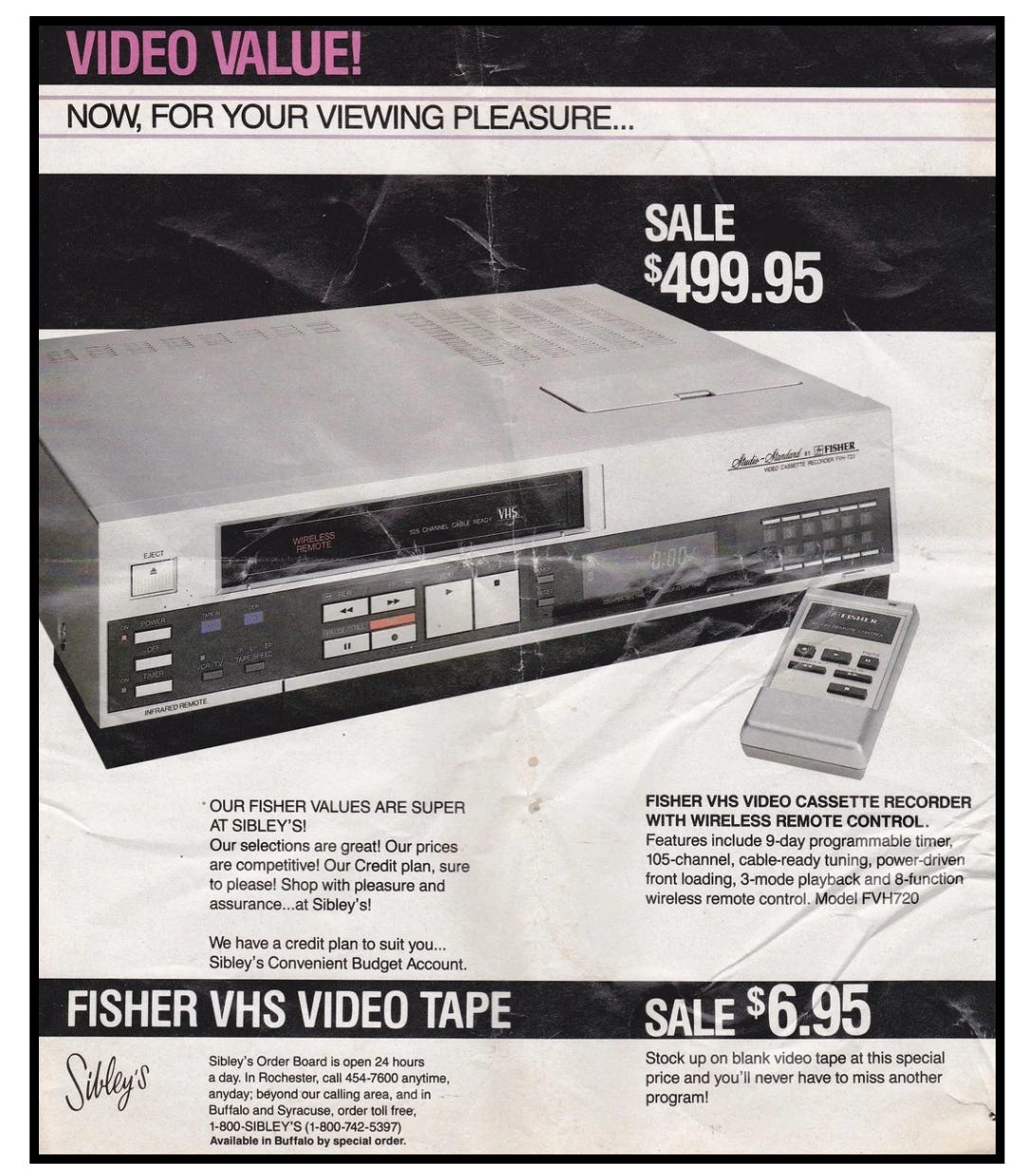
Yet, by 1982 only 3 to 5% of the American population owned a VHS video recorder, but sales were rapidly growing that year because the cost of new VCRs was beginning to drop in price. In addition, there were around 1,200 different movies available for rent on VHS video, including the original Star Wars, which was released for the first time in June of that year.
This was before Blockbuster Video existed (the company wasn’t formed until 1985), so if people wanted to rent a pre-recorded movie, they had to visit their locally owned video shop. These “Mom and Pop” video stores were run by a single proprietor or as a family business. Almost all of them were quite successful and many of them evolved into stores with multiple locations.
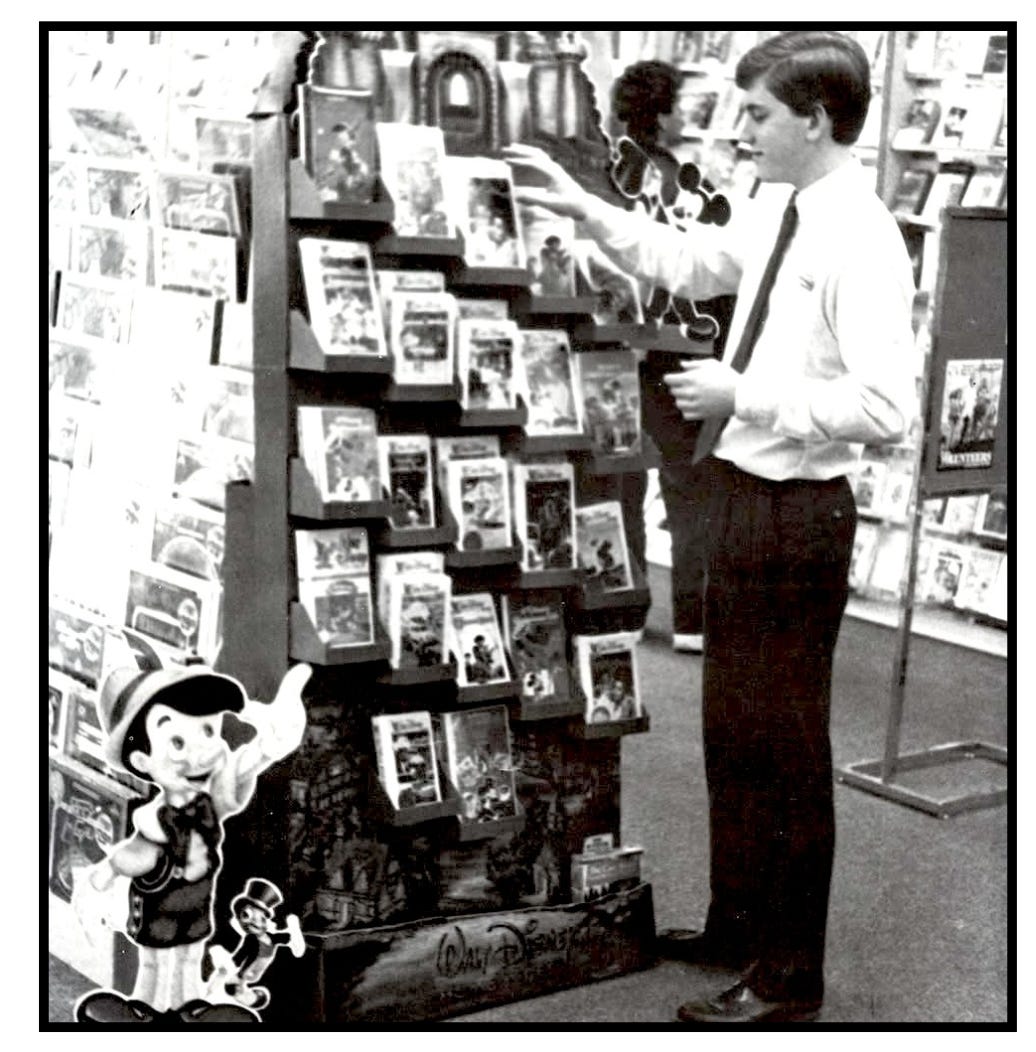
Because of the high price to buy a pre-recorded videocassette back then (around $100.00), customers patronized these stores to rent the movies they wanted to watch at home. Very few people actually paid full price to buy a movie on videotape.
Video store owners also incurred a lot of expense in order to stock their stores. Back then, store owners had to pay a wholesale price of around $70.00 or more per pre-recorded videotape that they would rent out to customers. And for big titles, stores had to order large quantities (sometimes over 100 copies or more depending on the size of the city) of the same title to satisfy the customer demand.
Why Spielberg Didn’t Want E.T. Inside Your Home
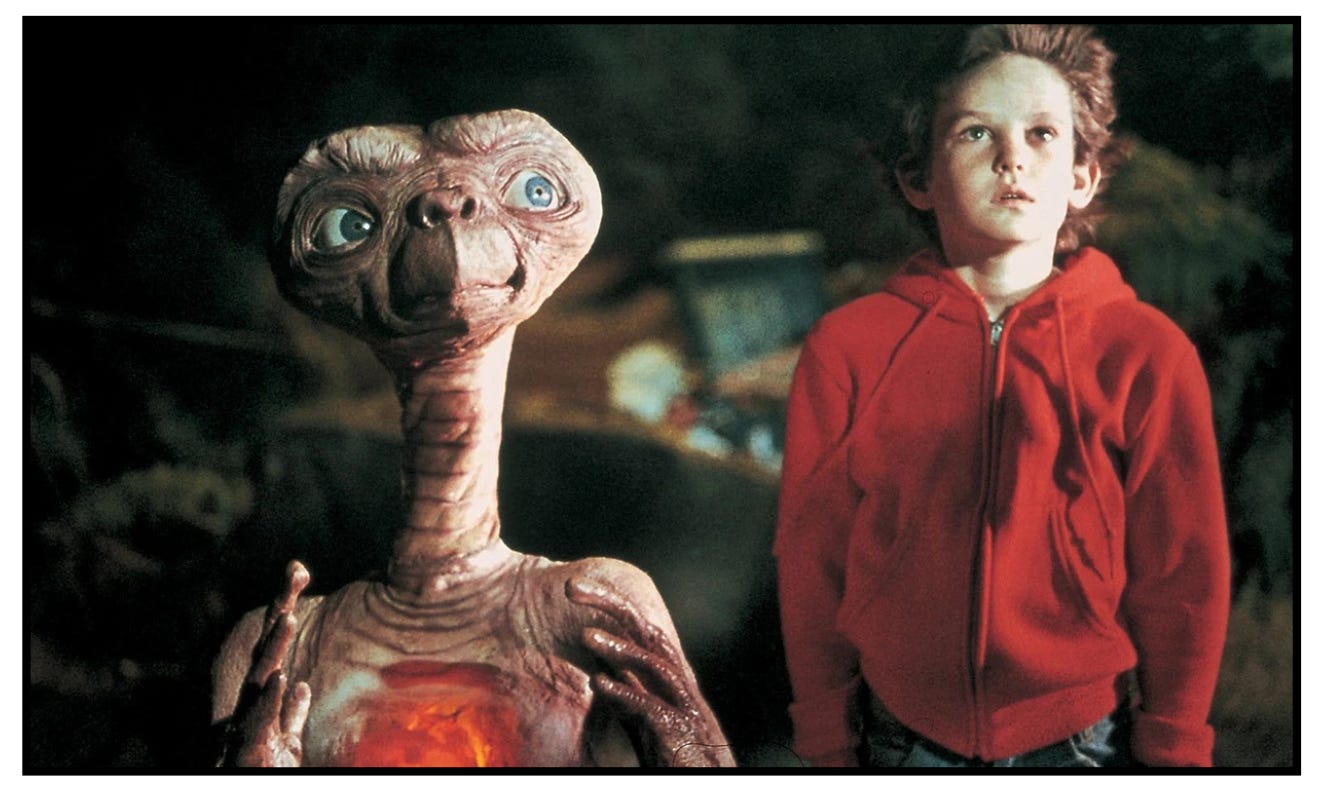
By the end of 1982, E.T. had grossed $359,309,137 worldwide and had become the highest-grossing film of all time. Even so, director Steven Spielberg was resolved that the film would not be released on home video.
To understand why, it’s important to remember that Spielberg grew up in a time when movies could only be seen on the big screens of the beautiful theaters that existed back then. At that time, the only competition for movies was television, which of course, didn’t provide the same experience. For Spielberg, seeing a movie on a large screen in a darkened theater with a full audience was the only way he wanted audiences to experience a film, especially his own.
Spielberg was afraid that watching E.T. on a 19” television set with mono sound would give viewers a sub-par experience and ruin the cinematic qualities of the movie.
In addition, Spielberg worried that watching E.T. on a small screen would lessen the film’s emotional impact. He was also concerned that viewers would be constantly distracted, since most people would be watching it in their living room at home. He didn’t want E.T. to end up as a commodity.
Interestingly, Spielberg didn’t seem to worry about his other two earlier hits, Jaws and Close Encounters of the Third Kind, being released on home video. Jaws was the first film released on Laserdisc back in 1978 and both Jaws and Close Encounters of the Third Kind were first released on VHS videotape in 1980.
Spielberg also worried about E.T.’s legacy. Back then, once a movie was released on home video, the common knowledge was that it no longer had any potential at the box office, so those films were never reissued to theaters at a later date.
By refusing to release E.T. on VHS videocassette, Spielberg actually drove up demand for the film and successfully re-released the film in theaters again in 1985. During this reissue, E.T. made an additional $40,607,502 domestically but only $125,190 internationally.
So what happened to make Spielberg eventually change his mind about releasing E.T. on home video?
The Rise of Sell-Through Videotapes and Film Piracy
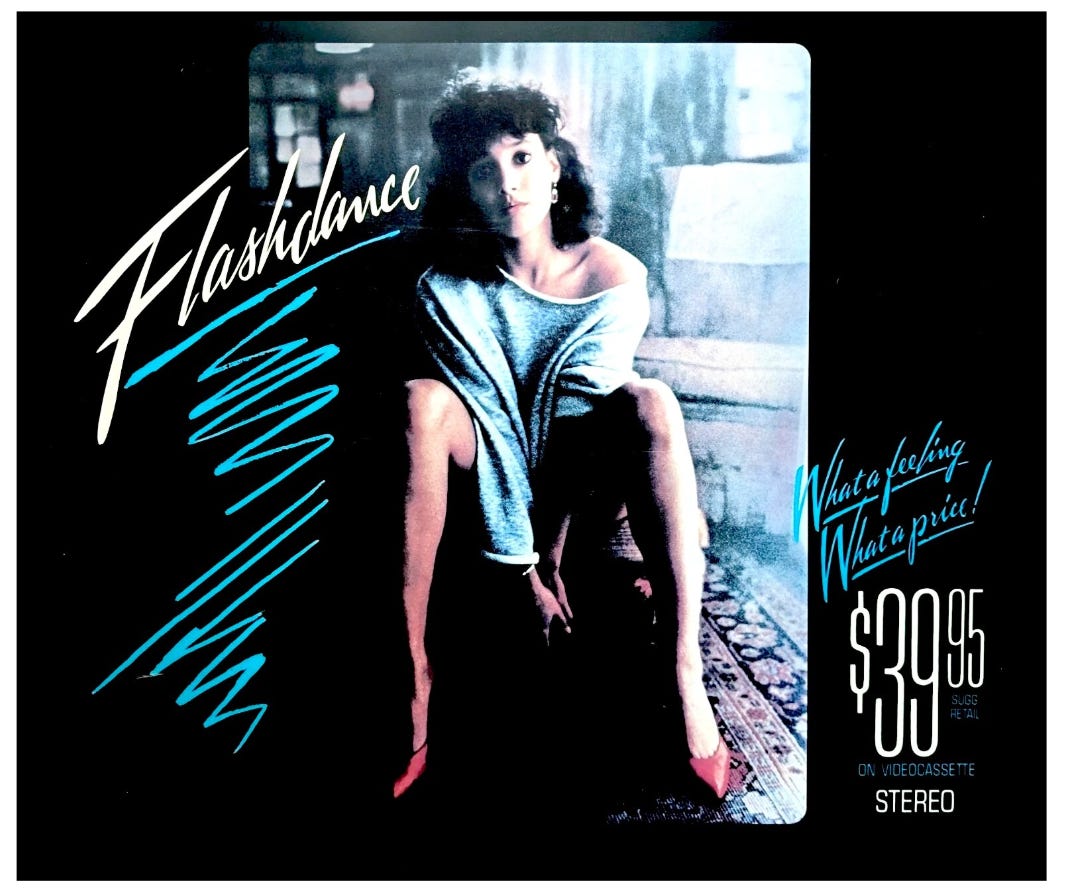
In 1983, Paramount’s home video division changed the video industry by releasing VHS videocassettes of their hit movie Flashdance just a few months after its theatrical run had ended. Instead of charging video store owners the standard $79.99 price for the rental market, Paramount made Flashdance available for customers to buy for a list price of only $39.99. The title instantly became a best-seller and the home video sell-through market was born.
However, earlier that year, film piracy began to rise. Soon, it became a serious problem, especially for the latest Star Wars sequel and summer blockbuster, Return of the Jedi.
In July of 1983, thieves stole film prints of Return of the Jedi from theaters currently playing the film in three different states and in Britain. In each case, the thieves wanted to copy the print and turn the film into illegal VHS videocassettes that could be sold on the street corners and on the black market worldwide.
Usually, thieves would break into theaters after they closed and steal the print off the projector platter system. But in Santa Maria, California, two thieves wore clown masks and stole a print of Jedi from a theater at gunpoint.
And in a similar instance, a projectionist at the Glenwood Theater in Overland Park, Kansas, was confronted in the theater’s parking lot at midnight by an armed robber who forced him to return to the movie theater and take apart the valuable 70mm print of the film and pack it back up in its metal canisters.
It turns out the would-be bootlegger was an 18 year old kid who kept the film print in his parents’ basement before he tried to sell it to an owner of a local video store. The owner alerted the police and the FBI set up a sting operation in nearby Kansas City. When the 18 year old boy met the undercover agents posing as bootleggers interested in buying the print, he demanded $12,000.00 in cash but said he was willing to sell the print for $10,000.00. After showing the agents one reel of the film as proof he had the print of Jedi, the kid was arrested.
As the home video market continued to grow throughout the 1980s, film piracy continued to be an issue. At the same time, sell-through video was slowly changing the home video business too.
In 1987, Paramount, who had previously released Flashdance directly to consumers in 1983, released their 1986 box office hit, Top Gun on home video for the first time.
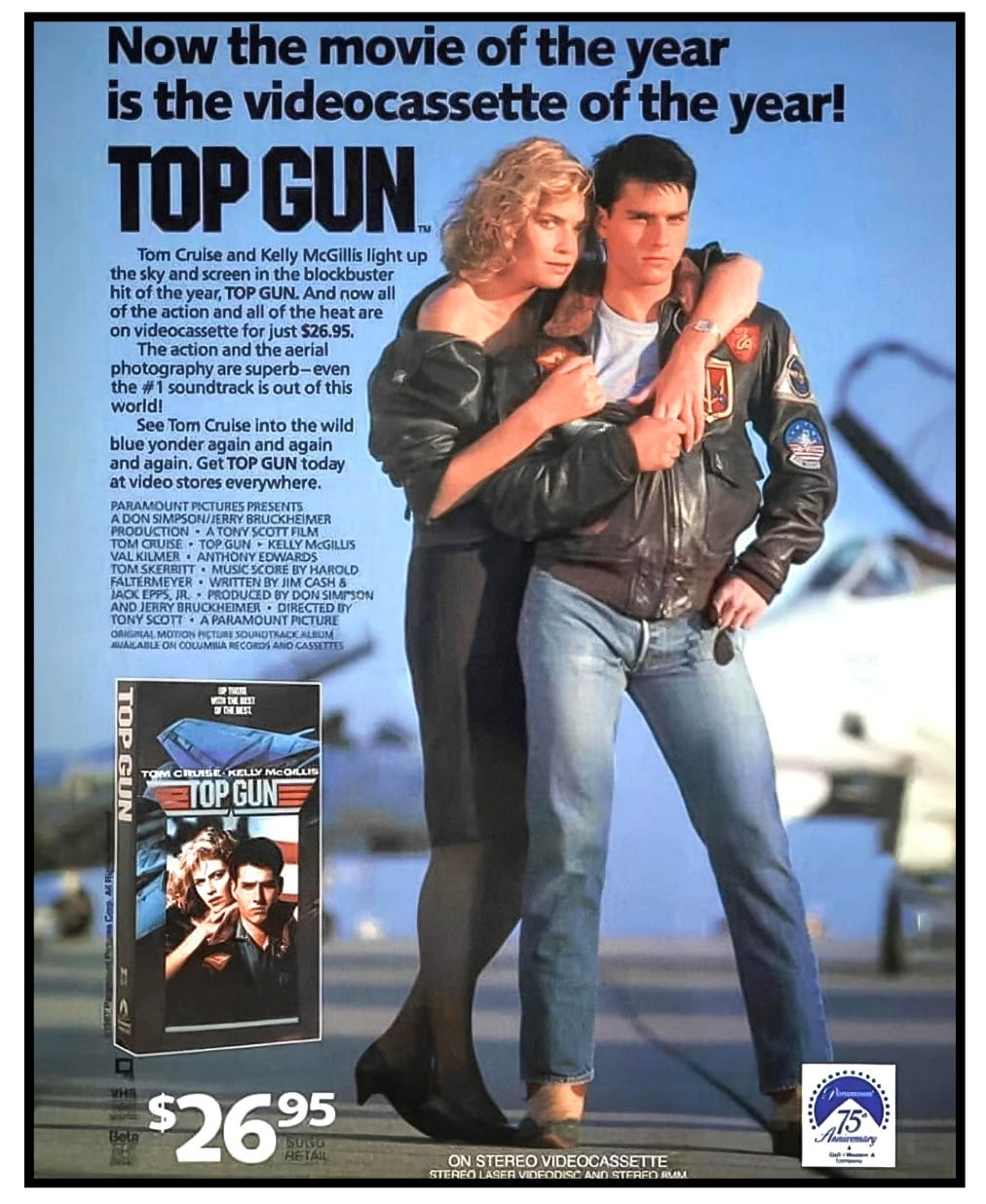
Similar to the way they released the VHS videocassette of Flashdance, the cost of Top Gun was reduced to a new industry-low sell-through price of $26.95 and sold directly to buyers. This release was another major shift in the home video market as the home video industry gradually moved away from selling their pre-recorded videocassettes to video stores for rentals and began selling their movies on videocassette directly to consumers at more affordable prices.
To help market the Top Gun videocassette release, Paramount spent eight million dollars on their advertising campaign. They also made a deal with Pepsi which helped off-set the cost of both the videocassette and the low price point.
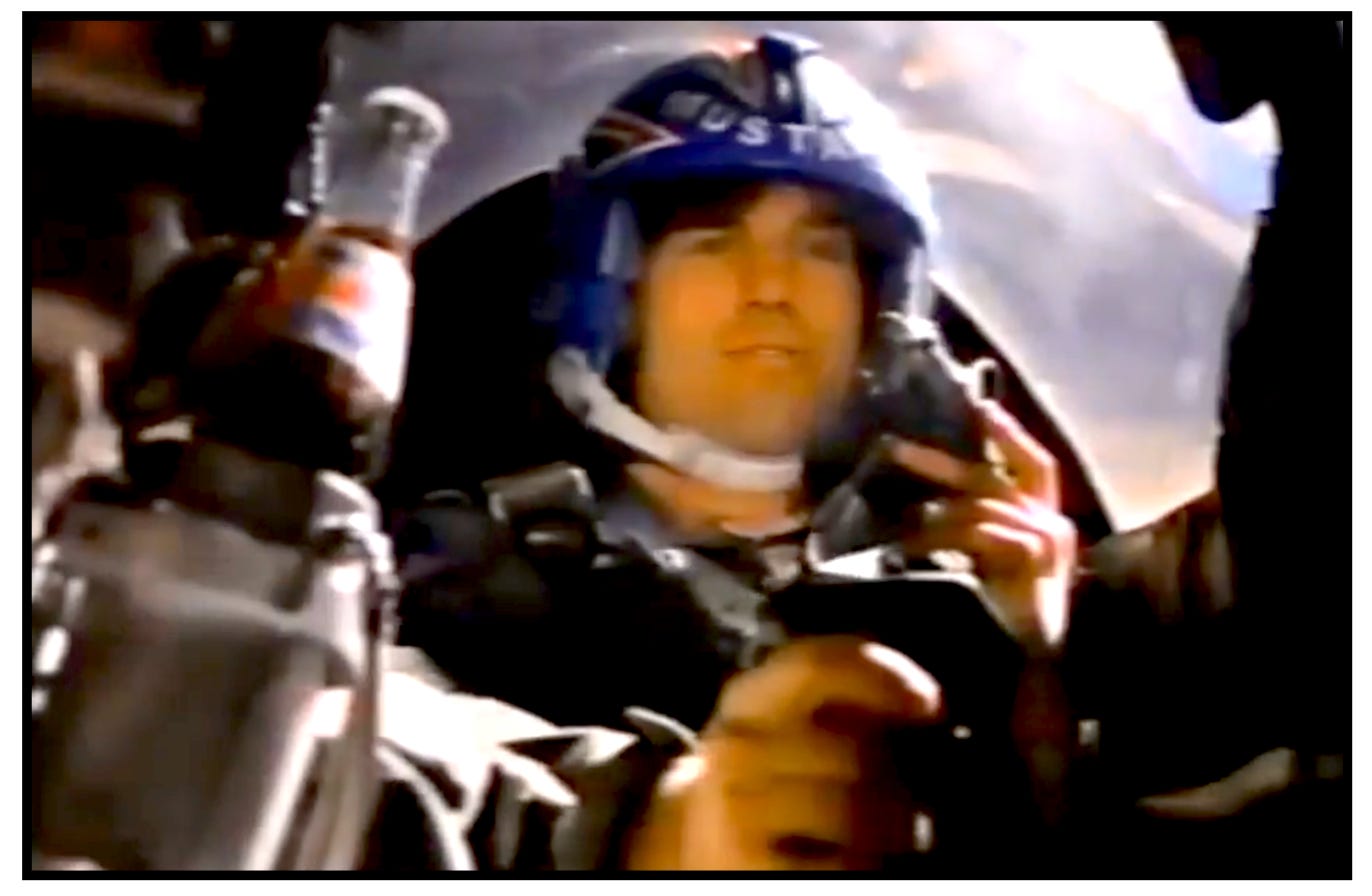
Pepsi created an original advertisement that was placed before the beginning of the movie on every Top Gun videocassette. Featuring a Tom-Cruise look-alike, the inventive commercial was fun and popular with viewers.
A staggering 1.9 million copies of Top Gun were pre-ordered before the videocassette went on sale. Eventually, the hit film became the best-selling pre-recorded videotape of all time, selling a record 2.9 million videocassettes in the U.S. and around the world.
Because of this, soon all of the other Hollywood studios began putting commercials for various products ahead of their movies on home video and began selling them directly to consumers.
This shift away from rental-only videotapes helped studios maximize their profits and eventually led to the death of video rental stores like Blockbuster across the country.
E.T. Returns to Earth and Lands in Your Living Room
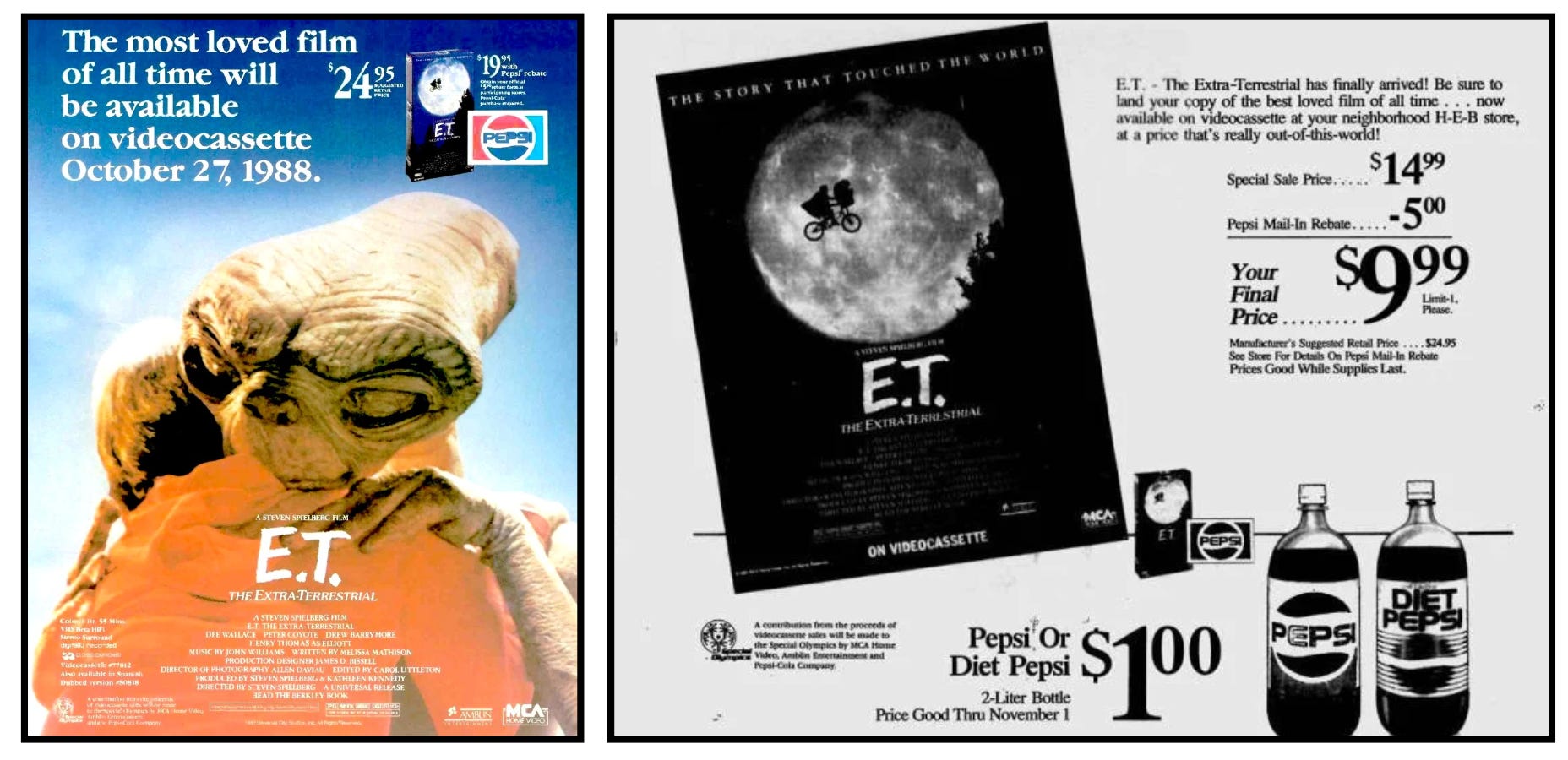
In 1988, E.T. was still the highest-grossing movie of all time, a record it would continue to hold until 1993 when it was overtaken by another Spielberg film, Jurassic Park.
Even so, Steven Spielberg was being pressured to release E.T. on home video by the Hollywood executives at Universal Pictures and its parent company, MCA (who had both financed and released E.T.). They were worried that the longer they waited, the more likely it was that someone, somewhere, would pirate the movie and sell bootleg copies of it around the world. Spielberg also worried about this happening and eventually agreed that it was time for E.T. to finally make its debut on home video.
Pepsi, who had helped make the Top Gun VHS videocassette debut a major success the year before, partnered with MCA in order to offer a $5.00 rebate off the suggested list price of $24.95 on all VHS videocassettes of E.T. This brought the final cost of the E.T. videotape down to $19.95.
In addition, the partnership allowed MCA to create carefully designed videocassettes for the movie, which included special measures to guard against piracy and phony tapes. These measures included putting the Macrovision anti-copying system on every tape, along with holograms, and special symbols on both the videocassettes and their boxes. In addition, the flap on each videocassette was a distinctive bright green instead of the usual black.
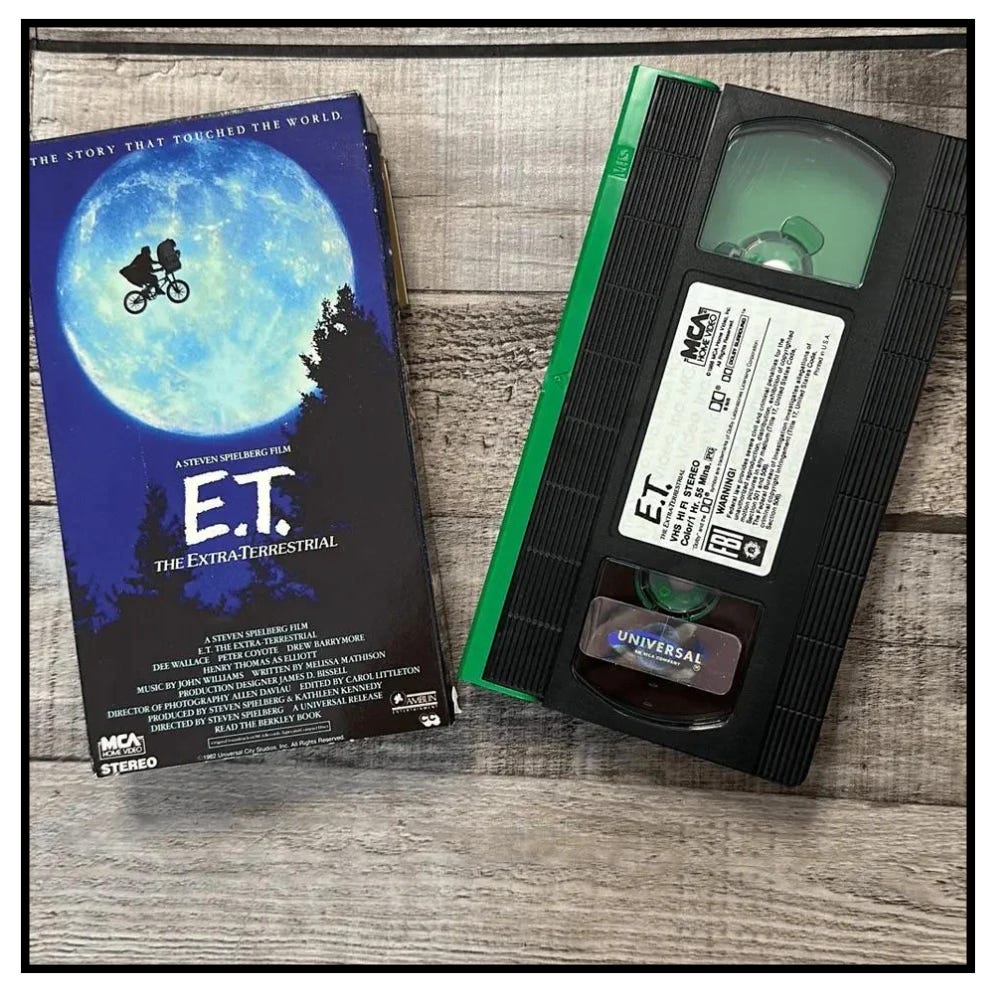
MCA also hired special security when E.T. was dubbed into more than a dozen different languages and hired guards at the warehouses storing and distributing the E.T. videocassettes. They also made the decision to release the E.T. videocassette on the same day all over the world as another way to prevent pirates from creating bootleg copies of the film. All of these security measures ended up costing MCA more than a million dollars.
As part of their agreement with MCA, Pepsi created an elaborate 25 million dollar ad campaign for the E.T. video release. This included an original TV commercial for the E.T. videotape that featured a young boy who vaguely looks like Henry Thomas in the movie.
As the commercial begins, the young boy sits on his bed drinking a can of Pepsi and throwing a baseball into the air, catching it in his glove. Suddenly, the ball freezes in midair and the boy lets out a gasp; then other baseballs rise into the air and begin rotating in a circle as the boy smiles. Bright flashing lights fill the room as the dead flowers on the boy’s desk come back to life. The boy rushes to the open window and says, “he’s coming back.”
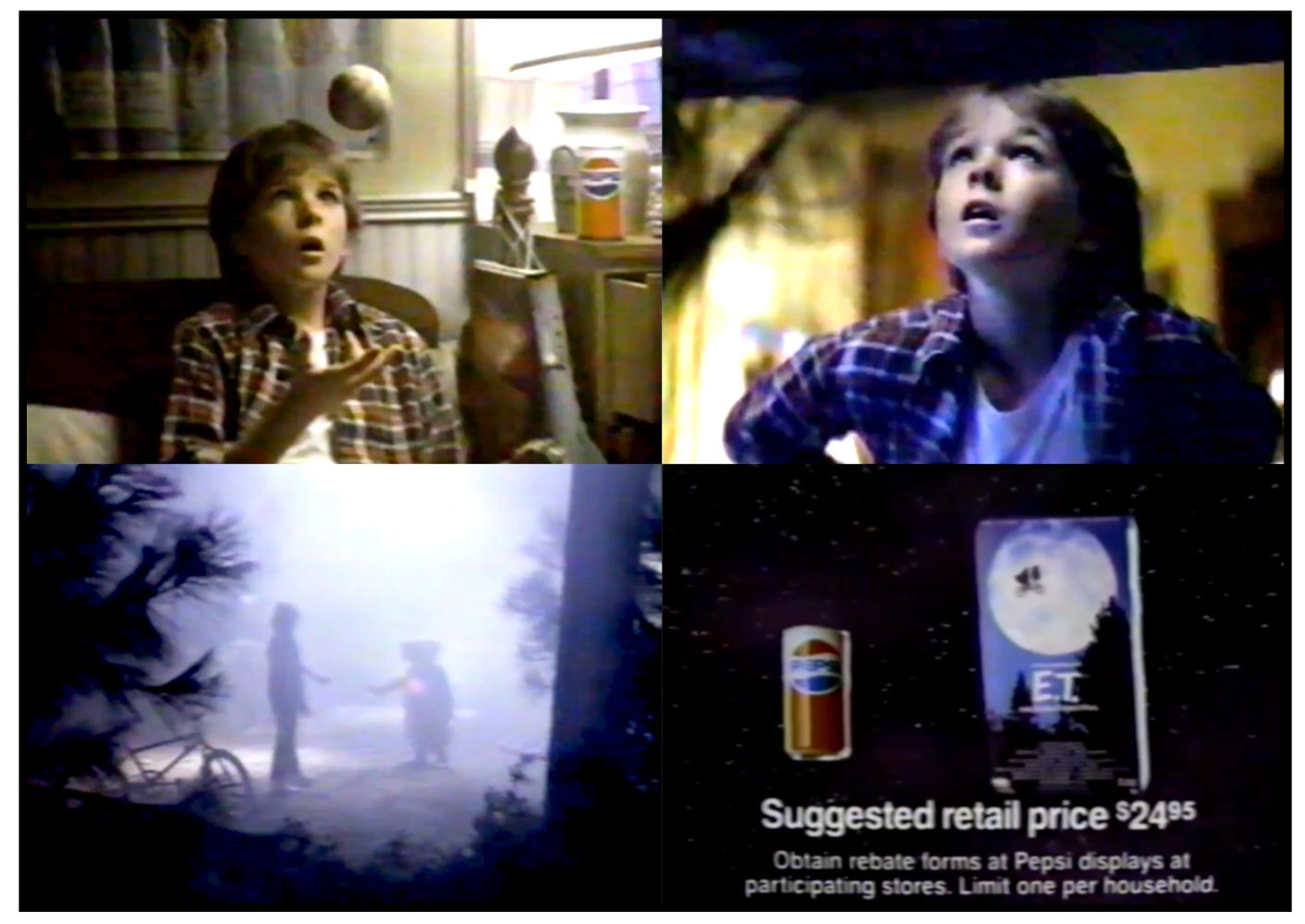
Next, we see the door of E.T.’s spaceship open as the boy rides his bike over to it. The boy and E.T. see each other for the first time since the ending of the movie. E.T. says, “E.T. home.” As the boy’s fingers and E.T.’s touch each other (like the artwork on the movie poster), a narrator says, “Pepsi-Cola is pleased to announce that E.T. has come home. Home on videocassette.”
Over 11 million copies of the E.T. videocassette were preordered before its October 27th, 1988 release date. Because of this high number of advance orders, MCA grossed 172 million dollars before the tapes were even made available for sale.
Eventually, more than 14 million copies of E.T. were sold, making it the best-selling videotape of the year. In order to protect the value of E.T. and future theatrical re-releases, MCA withdrew the videocassette from distribution approximately 8 months after its home video release date.
And so, after six years of stubborn resistance, Spielberg finally let E.T. land in your living room. The result? With 14 million copies sold and 172 million dollars in pre-order sales, E.T.’s home video release far exceeded anyone’s expectations. Even so, the film Spielberg had fought so hard to protect had become exactly what he feared: a commodity. A product with a Pepsi commercial attached to it. And yet, somehow, none of that seemed to matter because E.T. survived the VCR just fine.
What it didn’t survive quite as well was Steven Spielberg himself.
E.T.’s Unhappy 20th Anniversary
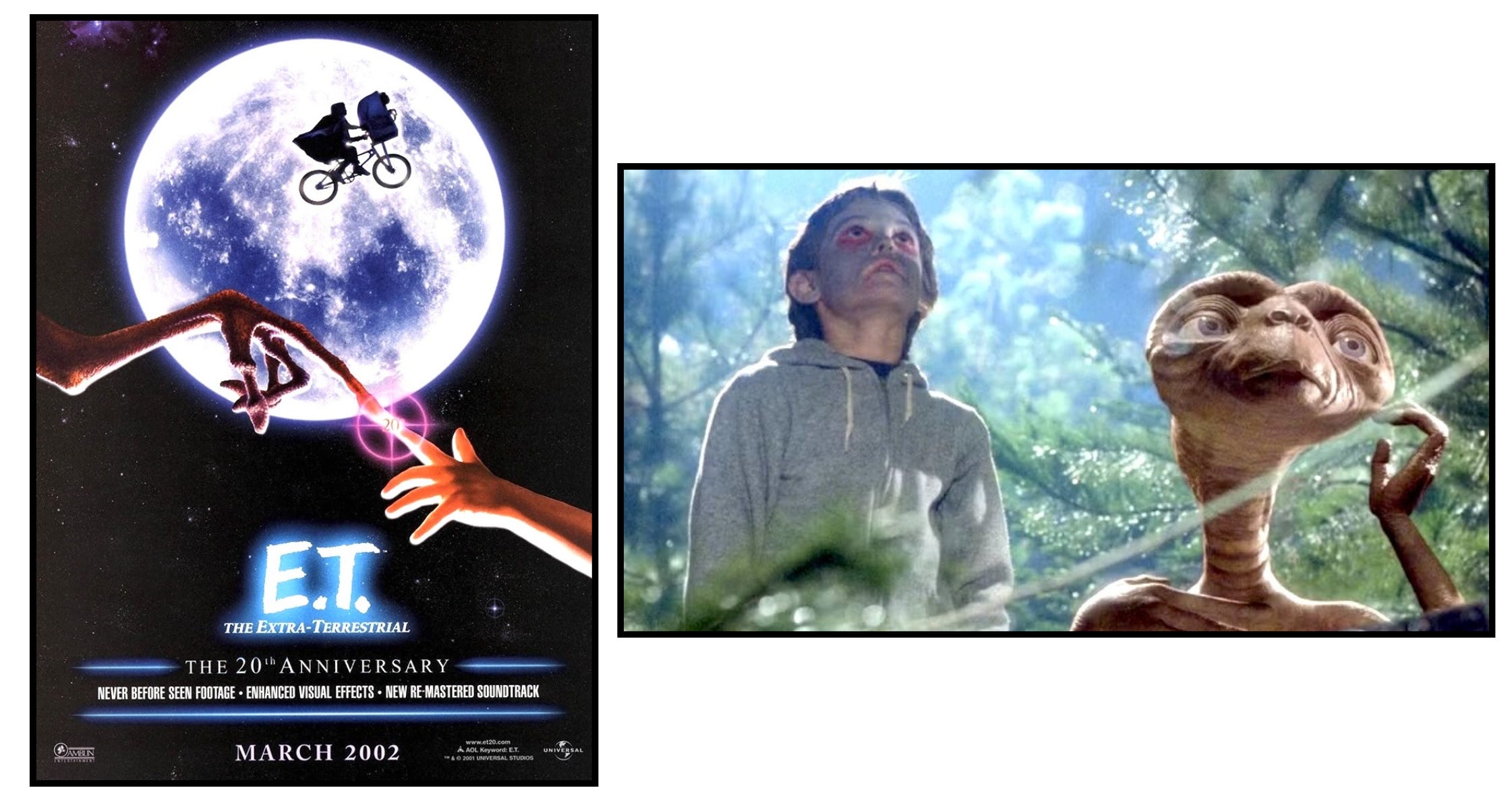
To celebrate its 20th Anniversary in 2002, Universal Pictures decided to re-release E.T. back in theaters. But rather than just release the original cut of the now-classic film, director Steven Spielberg revisited E.T. and made many changes that ended up not pleasing anyone. The main reason for doing this was the fear that audiences had seen E.T. so many times there was nothing to lure them back into theaters to see the movie again. After all, they already owned copies of the movie on home video.
The first change most people noticed was that Spielberg had replaced Carlo Rambaldi’s E.T. puppet in the original version with a digitally created E.T. that appeared in the opening scene and later in a scene set in a cornfield. In addition, Spielberg used digital technology to change E.T.’s facial expressions and smooth out his movements in many scenes throughout the movie. However, fans and even Elliot himself, Henry Thomas, complained that the added digital effects never matched Carlo Rambaldi’s original animatronic creations.
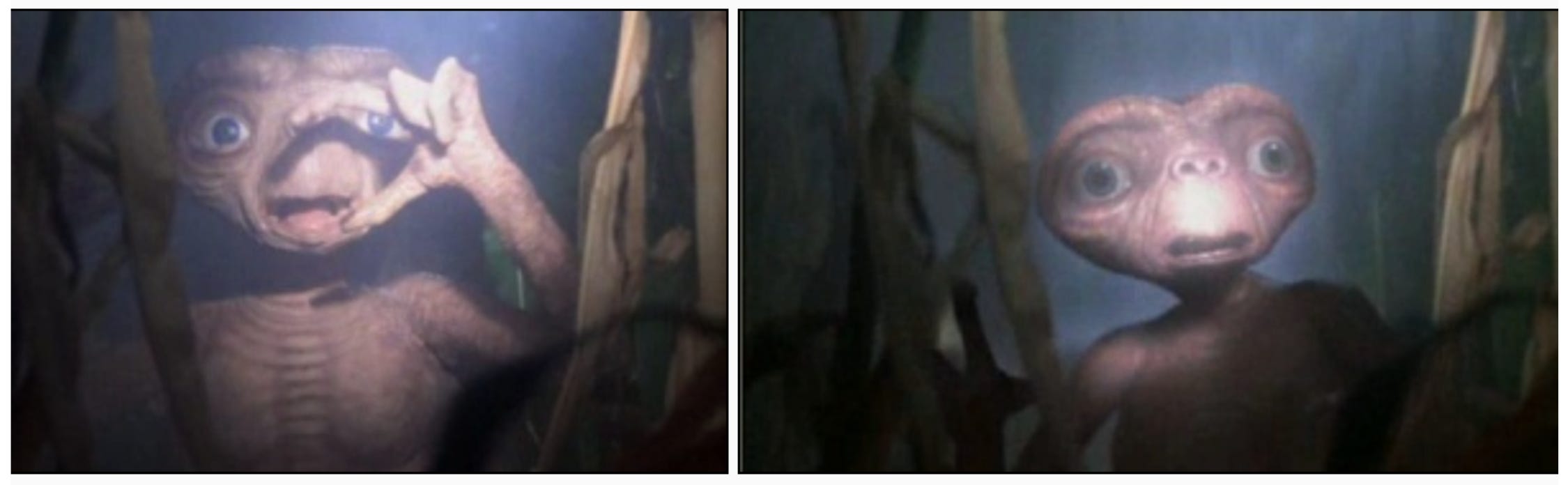
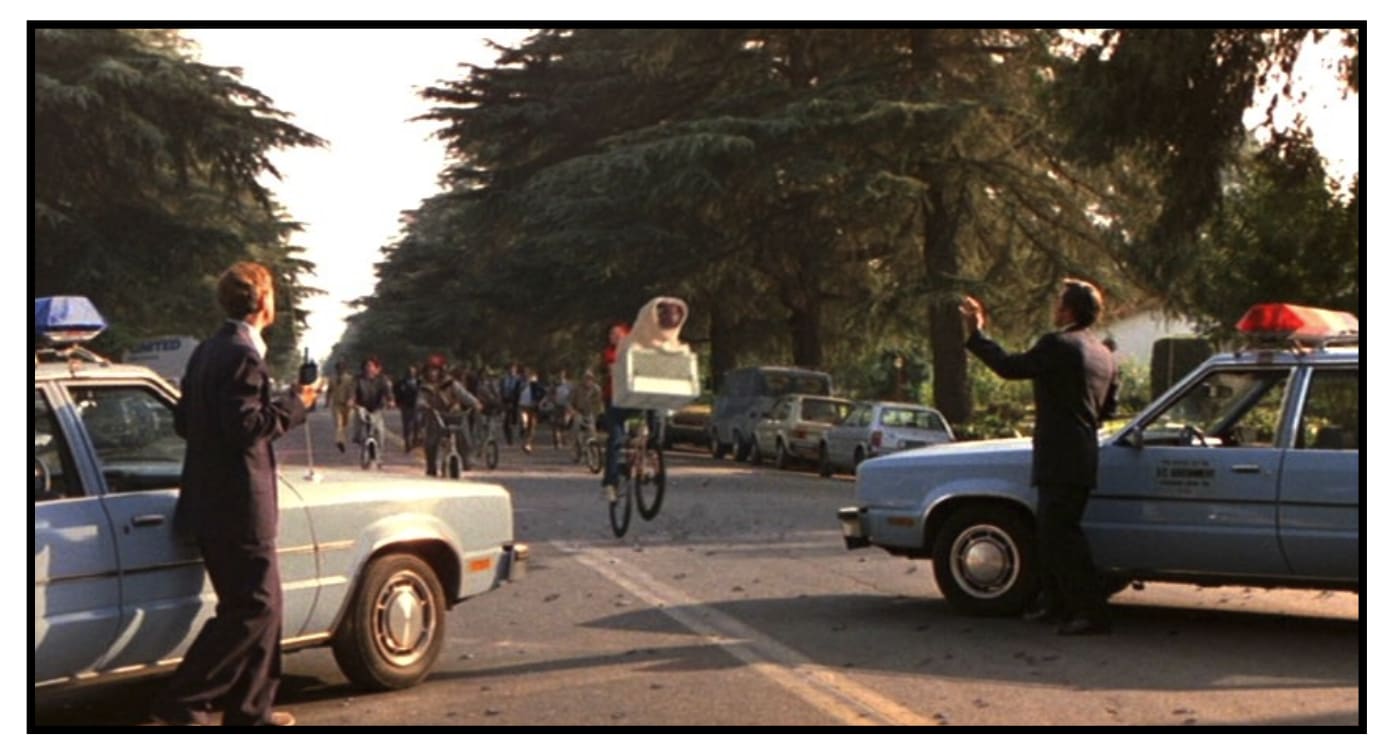
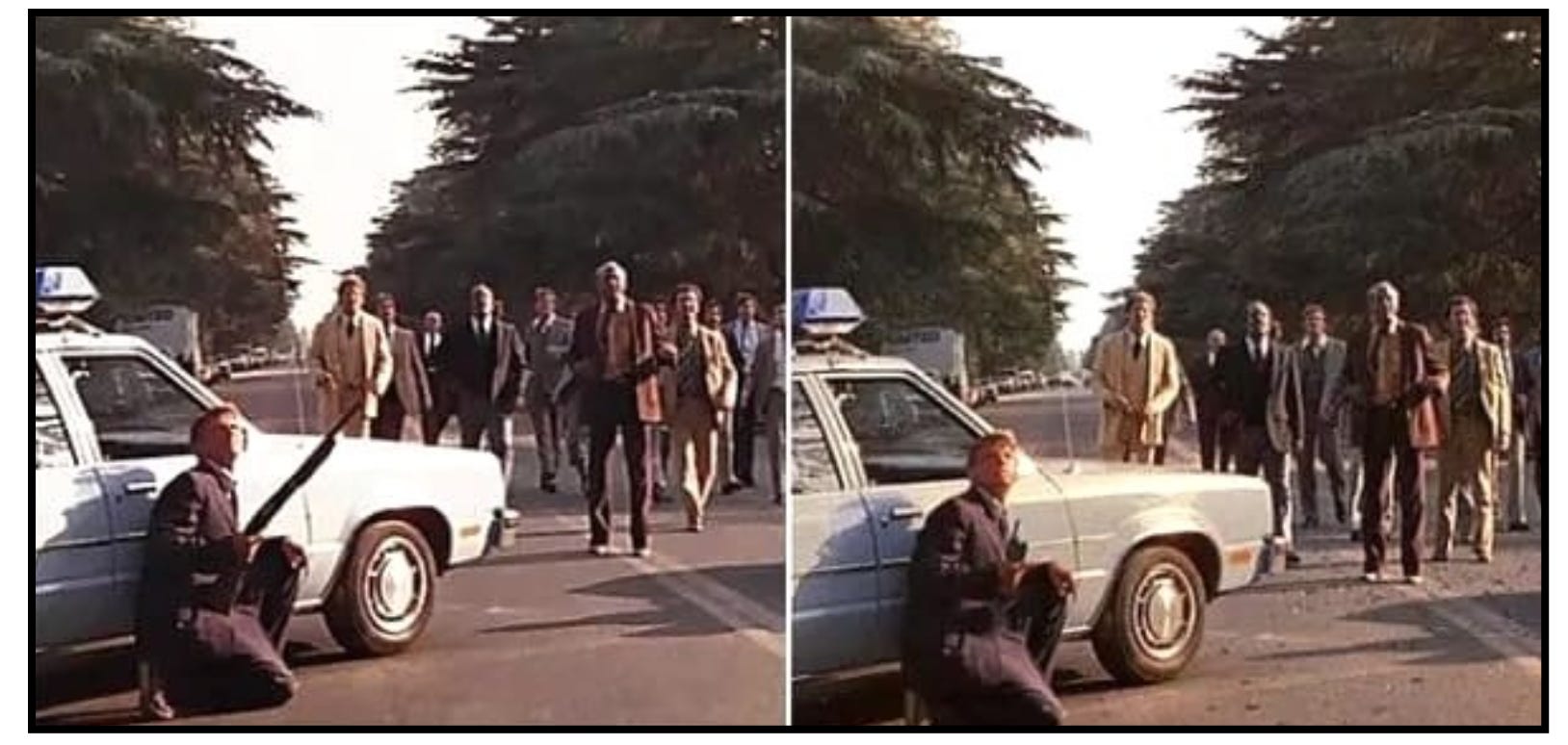
However, the biggest digital alteration is the now infamous removal of the Federal agents’ guns which were replaced with walkie-talkies during the film’s climactic bike chase. Why was this done? According to Spielberg, he wanted to make the film more “family friendly” and not advocate for gun violence. But, let’s be honest, F.B.I. agents waving walkie-talkies aren’t nearly as threatening as they were when they had guns, which showed the government would do anything to get E.T. back and made the kids look more heroic by risking their lives to save him.
This attempt to make the film more sanitized for today’s families also resulted in some of the dialogue being changed. Most notably this occurs in the scene as Elliot gets ready for Halloween. In the original version of the film, Elliot’s mother cries out: “You’re not going as a terrorist!” Now, because of what happened on 9/11, she cries out: “You’re not going as a hippie!” Do kids today even know what a hippie is anymore?
Thankfully, the moment when Elliot calls his brother “penis-breath” (which always got a big laugh whenever I saw the movie in theaters back in the 1980s) was left in the film.
Other changes included reinserting two scenes that were originally filmed but deleted from the final cut of the movie. In the sequence where Elliot stays home sick from school, Elliot shows E.T. how things work in the house. As he’s showing E.T. the bathtub, Elliot’s mother calls to check up on him. Meanwhile, E.T. has submerged himself in the water, causing Elliot to panic that E.T. might drown. A CGI version of E.T. was created and used for this scene, which again, sticks out because it doesn’t match the original E.T. puppet used in the rest of the sequence.
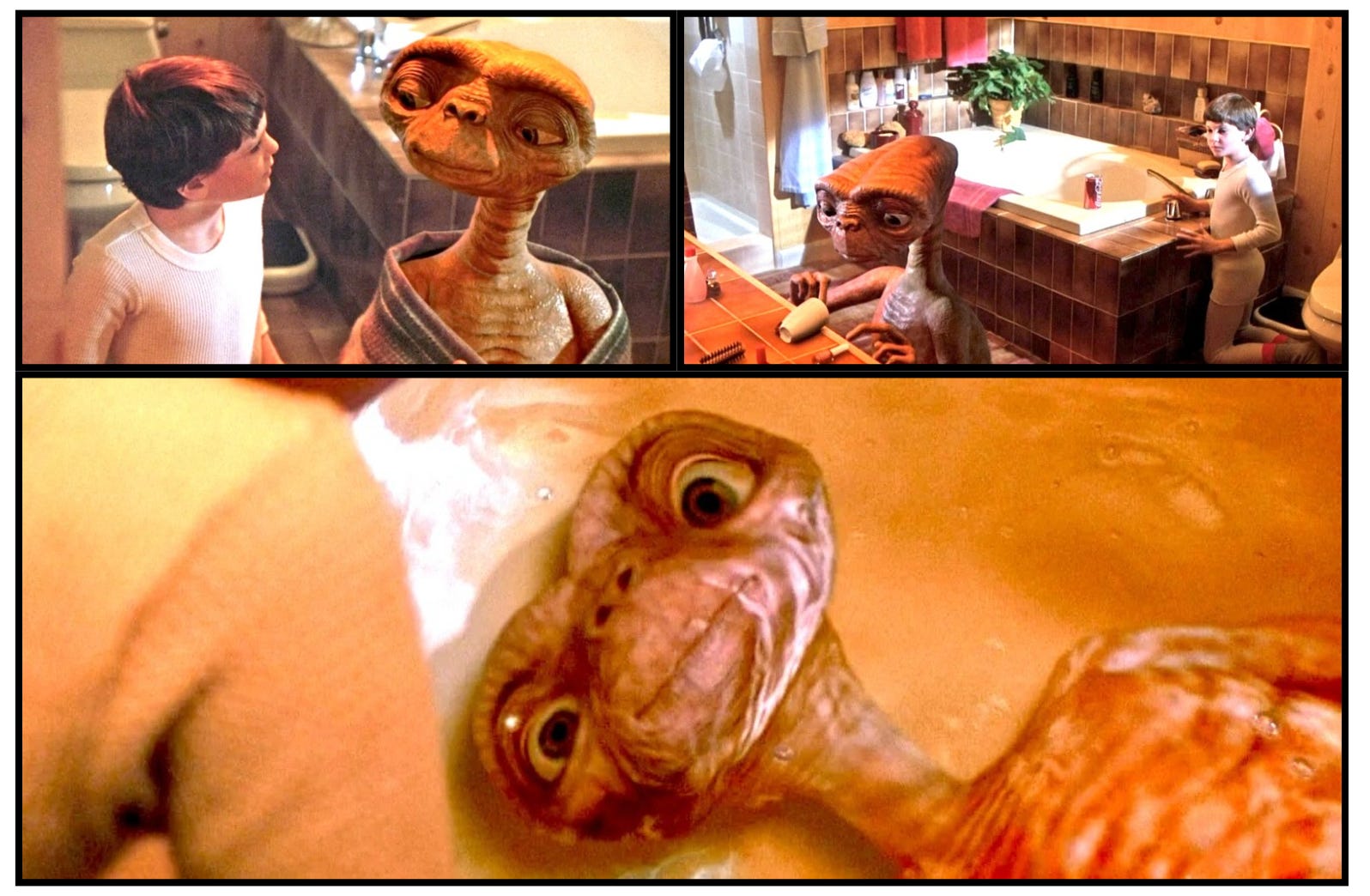
In the other deleted scene reinserted into the movie, Elliot’s mother searches for the children after they don’t return home on Halloween night. She finds Gertie and Mike but without Elliot. As her car is egged and nearby homes are toilet papered, Gertie reveals that Elliot went to the forest. Elliot’s mother orders the kids back into the car and she drives off.
The 20th Anniversary theatrical reissue of E.T. ended up grossing $69,177,751.00 from the U.S. and international box-office. Even so, many fans weren’t happy with this special edition, complaining that the changes Spielberg had made to the film weren’t necessary and that this new version of the film robbed people who loved E.T. of their memories of the original film.
Years later, while speaking at Time magazine’s 100 Summit in New York City, Steven Spielberg said he regretted the changes he had made to E.T., adding that he was disappointed in himself for doing it: “That was a mistake. I never should have done that. E.T. is a product of its era. No film should be revised based on the lenses we now are, either voluntarily, or being forced to peer through.”
And, for fans worried that Spielberg could become the next George Lucas, altering his movies and only making those altered versions available to the public, Spielberg promised to never do it again:
"So there's a really bad version of E.T. where I took my cue from Star Wars and the digital enhancements of A New Hope that George put in. I went ahead, because the marketing at Universal thought we needed something to get the audience in to see the movie, so I did a few touch-ups in the film. In those days, social media wasn't as profound as it is today. But what was just beginning erupted in a loud negative voice about, 'How could you ruin our favorite childhood film by taking the guns away and putting walkie-talkies in their hands?', among other things. So I learned a big lesson. That's the last time I ever decided to mess with the past. What's done is done, and I'll never go back into another movie I made, or have control over, to enhance or change it."
Fortunately, the original version of E.T. is the one available today on streaming, DVD, Blu-ray, and 4K Blu-ray discs.
Who Does E.T. Really Belong To?
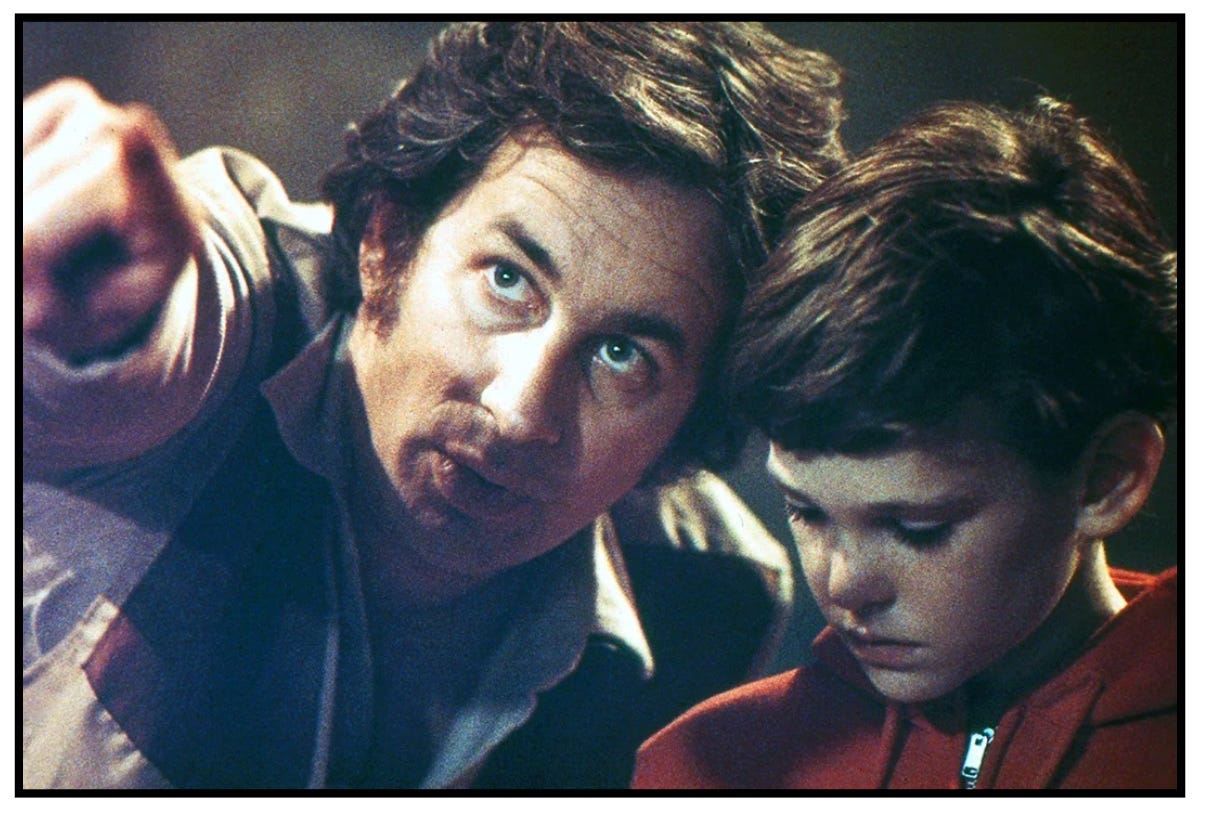
E.T. spent six years locked away from home video because Steven Spielberg believed some experiences were too sacred to be reduced to a home video release. As a film fanatic, I can understand where he was coming from. There’s nothing like seeing E.T. in a movie theater with an audience that’s laughing and crying together.
And maybe that’s what the 20th Anniversary controversy was really about. Fans weren’t just angry about walkie-talkies. They were angry that Spielberg had ruined their shared experience by changing something they had made their own.
Thankfully, Spielberg eventually admitted what the fans already knew and now everyone can enjoy E.T. exactly as it was meant to be seen, whether it’s at home or on a large screen at their local movie theater.
Do you remember seeing E.T. in your local movie theater?
What do you think about the 2002 changes to the movie?
Please share your comments below.
If you enjoyed this article, you might like these other posts too:


A year or so ago, I had the pleasure of showing E.T. to s local tv news reporter, who had never seen the movie. It was the 20th anniversary edition. It had been so long ago since I had seen the movie, that I didn't realize that changes had been made. Thankfully, we watched something in the extras, I believe, that talked about the changes. Going back to the beginning of your story, I struggled for quite a while trying to decide on whether to buy a VHS recorder or a Beta one. At the time, a stereo VHS recorder cost $1,200 to buy at Applause Video, and I could get a Sony Beta HiFi recorder for $795. Also, I could get a better quality recording on beta tapes than on VHS tapes, so I went with the Beta HiFi. My first purchased movie? The Never Ending Story! I still have it, but sadly, no machine to play it on. I recently checked eBay for beta machines, and ones that weren't being sold just for parts, are selling for around $400! That is insane! Really enjoyed reading this piece of history!!! Thank you, Jim!
Loving the historic angle here, Jim. I was born in 1984 so recall the magic of VHS tapes around the 90s (give or take a few years). We had a local "video-man" who'd arrive every Wednesday in his little van and we could rent a movie for a week. Great times.
I also wasn't aware of those changes in 2002 - the pictures you've included tell a story themselves.