
10 More Great But Obscure Rock Soundtracks
Here are some more of my favorite lesser-known rock movie soundtracks.

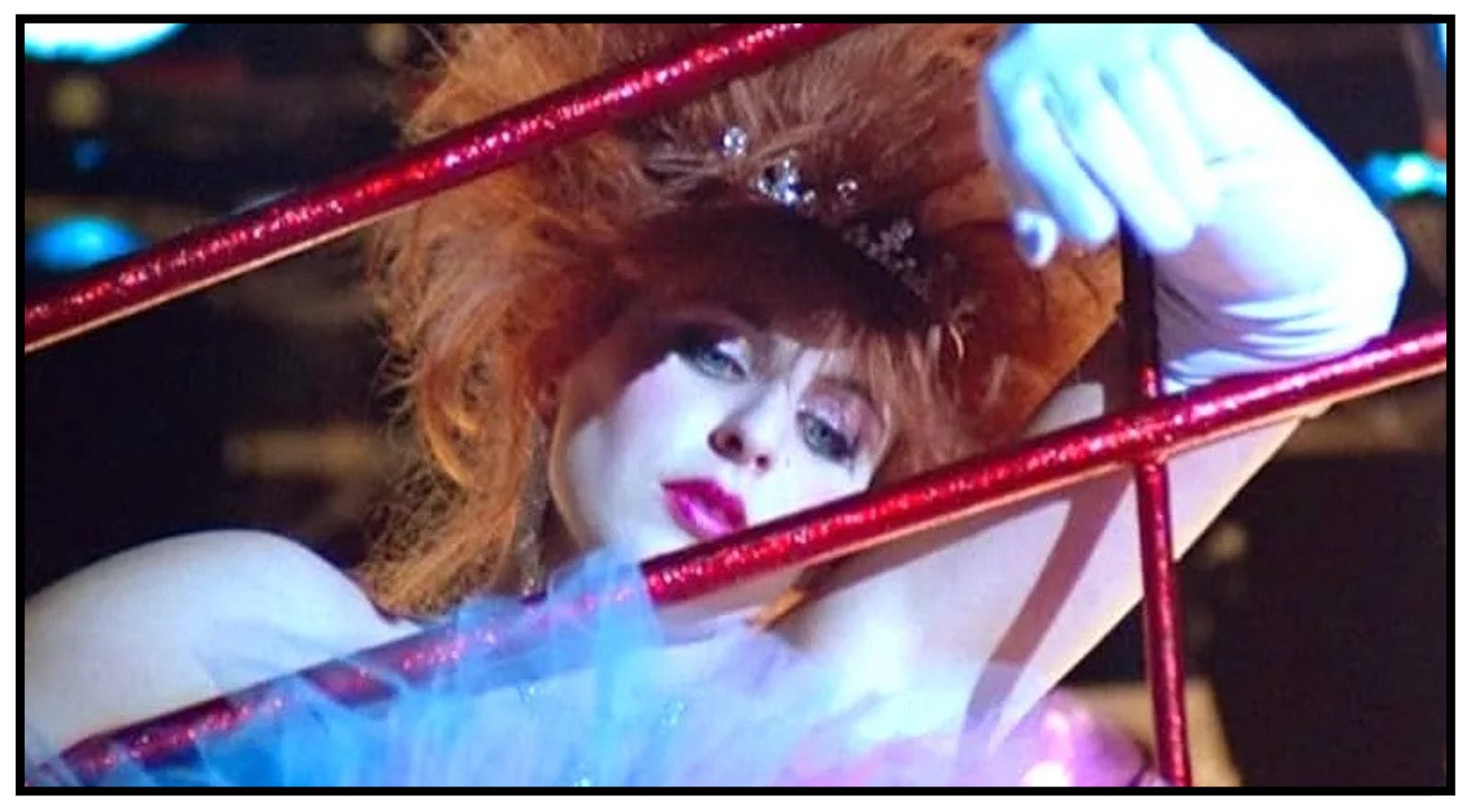
Last week’s piece, “10 Great But Obscure Rock Soundtracks,” got a much bigger response than I ever expected, and the best part was the comment section. A bunch of you jumped in with your own under-the-radar favorites, and honestly, a few of them stopped me cold. (If you missed my first post, you can read it here).
Originally, my first article had 20 obscure soundtracks, but it was too long, so I had to cut ten of them out. Now, here’s the part that made me smile. Several of the soundtracks you asked for were in that group I had to omit. Decarceration wanted to know “Where’s Phantom of the Paradise?” One In The Pipe and Pen Black both made the case for Hedwig and the Angry Inch. ktiranno put in a word for Rumble Fish, and Molly Pike named Absolute Beginners. Well, All four of them were part of the 10 I had to cut earlier and are now included below.
Just like last time, some of these come from films you’ve heard of but never got around to seeing. Others are from movies where the soundtrack outlived and out-earned the picture itself. And a few are from outright flops that still happened to be loaded with great music. If any of these titles are new to you, do yourself a favor and give them a listen. This is all music worth hearing, whether or not the movie ever found an audience at the box office.
And thank you to everyone else who packed the comments with their own recommendations:
Cardogsink suggested Grosse Pointe Blank;
RJ suggested Return of the Living Dead, Suburbia (1983), Xanadu (a full article about that movie is coming soon), and Risky Business.
Molly Pike requested Edgar Wright’s Shaun of the Dead, Hot Fuzz, Baby Driver, Bulworth, Cecil B. Demented, and But I’m a Cheerleader.
Both Pen Black and Juergen Podzkiewitz made the case for Still Crazy, a film I haven’t seen and didn’t know about until they named it. Now, I’ve learned it’s by the director of Breaking Glass, which I love, so I need to find a copy and watch it soon.
Pen Black also suggested Pink Floyd’s More (another film I haven’t seen), along with Performance, Paris, Texas, Diva, Fight Club, Lost Highway, and District 9.
Juergen Podzkiewitz also suggested Deep End (1970), which I love, and the Can soundtracks album.
Branchplant Country suggested Porky’s Revenge;
ktiranno suggested Sorcerer, Manhunter, Heat, and Thief;
Steven McCarthy named Boogie Nights, The Saint, Devil in a Blue Dress, and Pulp Fiction.
Thank you again for all of these great suggestions. Keep them coming!
Now, on to the music.
1. Absolute Beginners (1986)
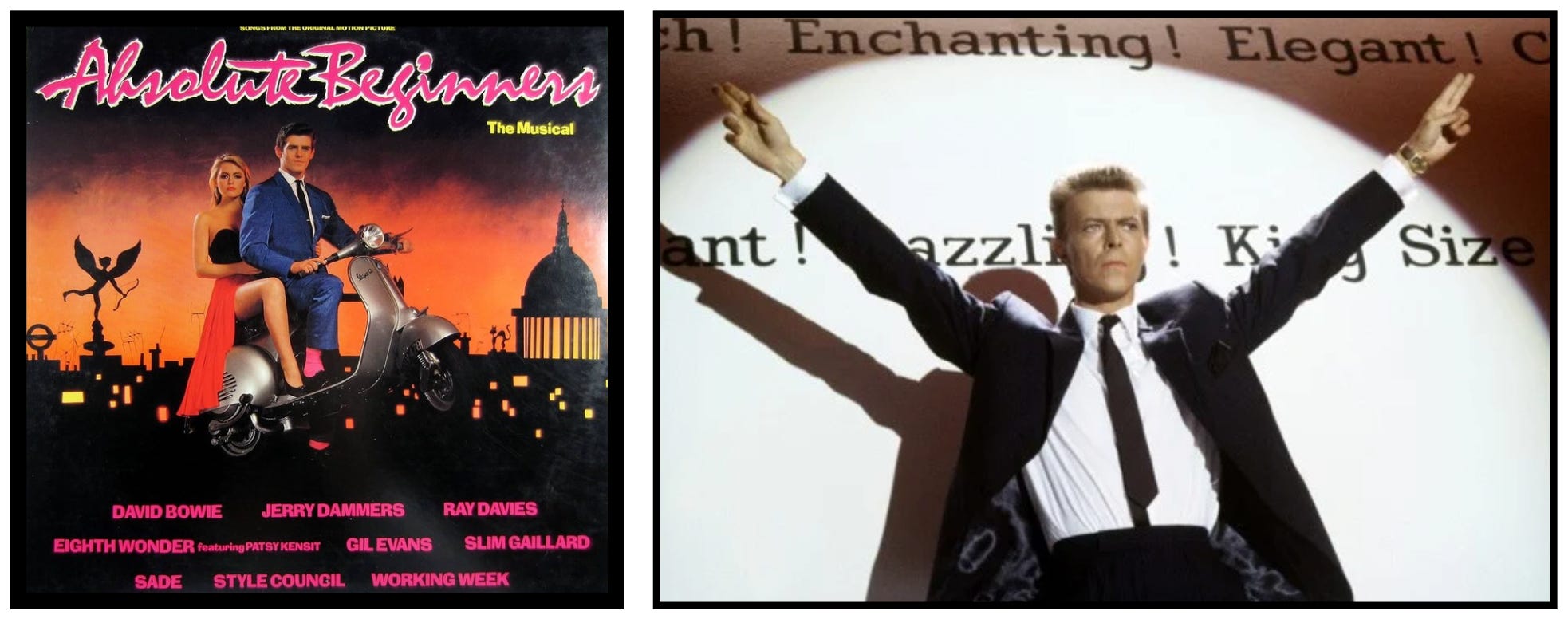
The Story: Based on the cult novel by Colin MacInnes and directed by Julien Temple, Absolute Beginners is a stylized musical about the dawn of the teenager in late 1950s London, England. The film is about a young photographer named Colin (Eddie O’Connell), as he tries to navigate the emerging teenage subculture of Soho while trying to win the love of the aspiring fashion designer Crepe Suzette (Patsy Kensit). At the same time, racial tensions in Notting Hill boil over and eventually both Colin and Crepe Suzette find themselves in the middle of a race riot.
Why the Soundtrack Rocks: Although the movie was a box-office failure (but I think it’s worth seeing, especially for the musical numbers), the soundtrack is fantastic. The album features David Bowie, Ray Davies, Sade, The Style Council, and other talented artists, who each contribute tracks that feel both period-accurate thanks to the jazzy arrangements by Gil Evans, and yet still very contemporary (for 1986) too.
Key Tracks: “Absolute Beginners” by David Bowie; “Have You Ever Had it Blue?” by The Style Council; “Quiet Life” by Ray Davies; “That’s Motivation” by Bowie again; and “Killer Blow” by Sade.
2. City of God (2002)
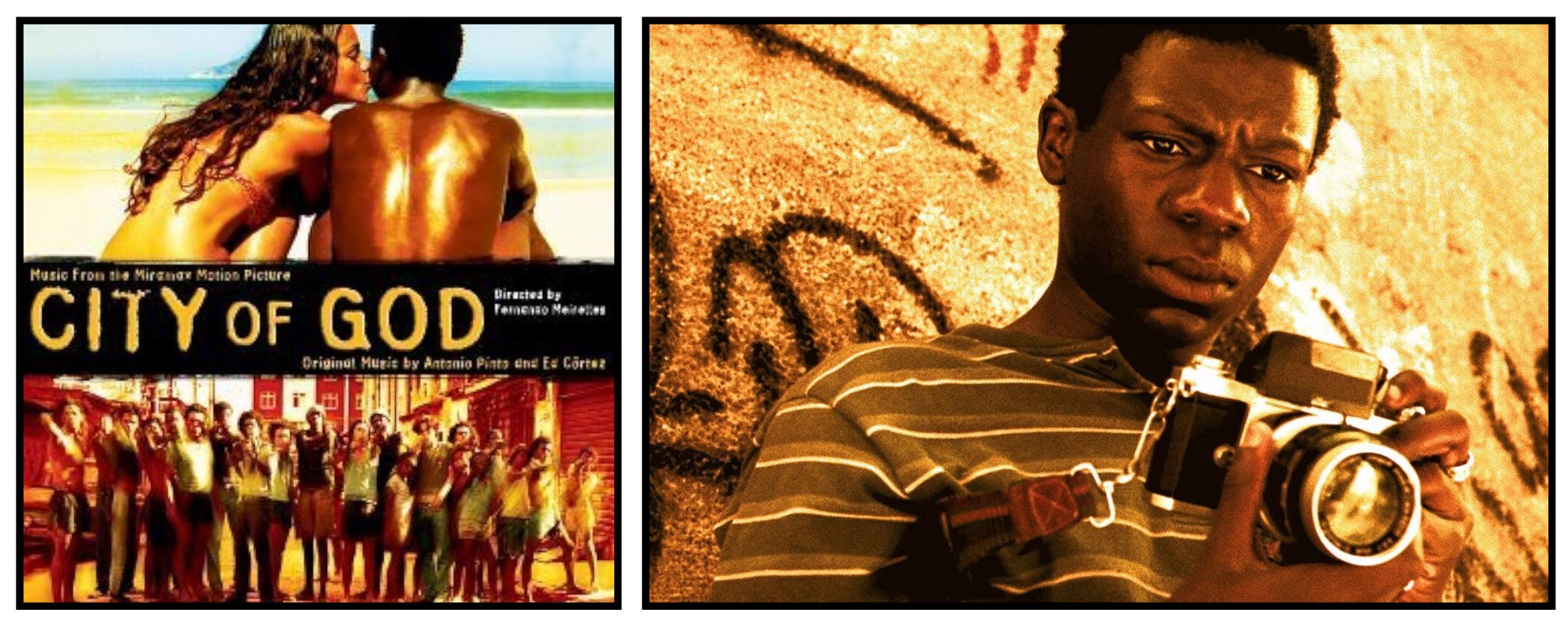
The Story: Set against the backdrop of Rio de Janeiro’s slums and spanning from the late 1960s to the early 1980s, City of God chronicles the brutal rise of organized crime through the starkly divergent paths of two young men.
While the ruthless and ambitious Li’l Zé grows up to become the slum’s dominant drug lord, Rocket uses his talent for photography to document the escalating gang warfare surrounding him. Ultimately, Rocket’s camera becomes his literal ticket out of the ghetto, while Li’l Zé’s empire is eventually destroyed by the violence he created.
Why the Soundtrack Rocks: Since the movie spans three decades, the music evolves from the acoustic samba and bossa nova of the 1960s to the more aggressive Latin funk, psychedelic rock, and disco of the 1970s. The result is a fantastic collection of period music that’s complemented by an original instrumental film score by Antonio Pinto and Ed Côrtez.
Key Tracks: “Metamorfose Ambulante” by Raul Seixas; “Na Rua, Na Chuva, Na Fazenda” by Hyldon; and “Nem Vem Que Não Tem” by Wilson Simonal.
3. Get Crazy (1983)
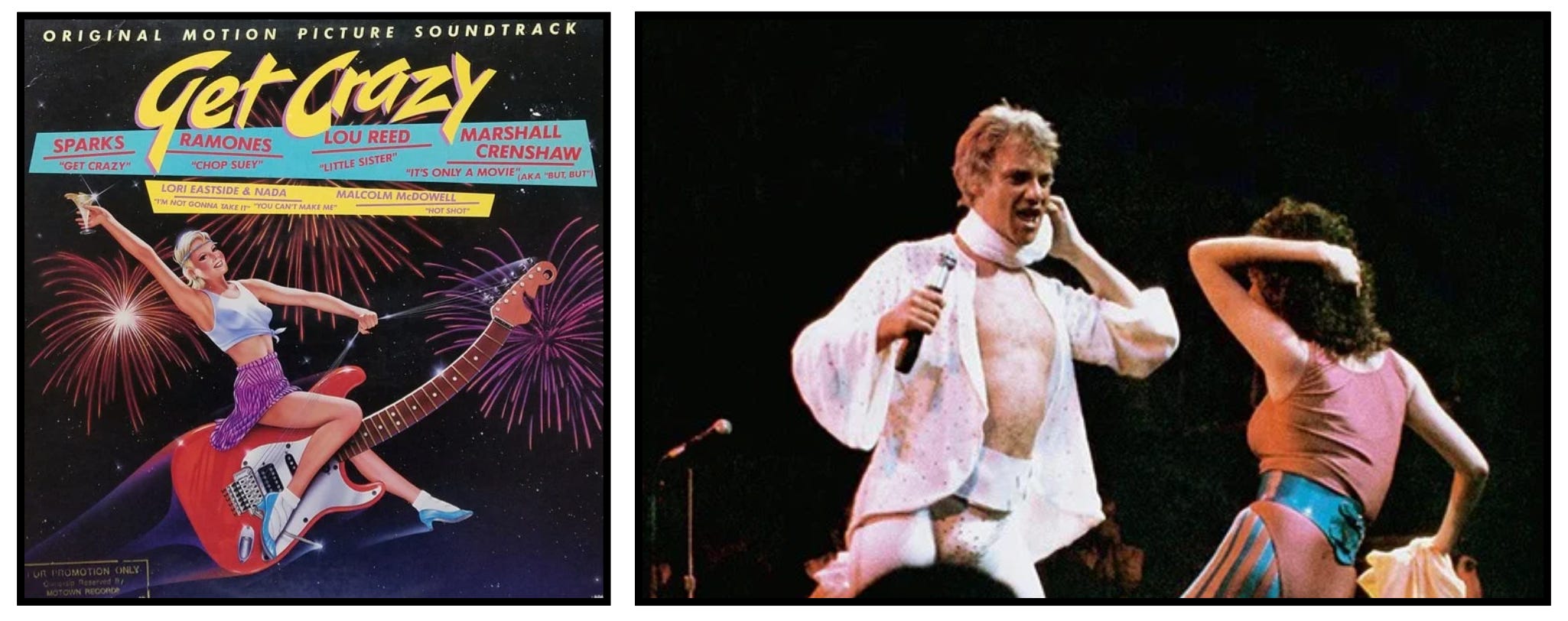
The Story: Directed by Allan Arkush (who also directed Rock ‘n’ Roll High School), Get Crazy is a comedy loosely inspired by Arkush’s experiences working at Fillmore East in the 1960s. Set on New Year’s Eve, 1982, the film is about the Saturn Theater’s owner and staff’s efforts to mount their 15th annual New Year’s Eve show. After the Saturn’s owner, Max Wolfe, suffers a sudden heart attack, the task of keeping the concert running on schedule falls on his stage manager, Neil Allen (Daniel Stern). Allen must contend with an arrogant Mick Jagger-like rock star named Reggie Wanker (Malcolm McDowell), a stoned 1960s hippie band leader named Captain Cloud (Howard Kaylan), an all-female punk group called Nada, and more, but the show must go on.
Why the Soundtrack Rocks: The soundtrack consists of a wide variety of songs that are often part clever parody and part homage to various styles of rock, including punk, synth-pop, blues-rock, and folk music. These include Sparks’ catchy title track, Malcolm McDowell’s vocals as Rock God Reggie Wanker, and The Ramones’ “Chop Suey.” The result is an irreverent but fun soundtrack to one of the most under-rated comedies of the early 1980s.
Key Tracks: “Chop Suey” by The Ramones; “Get Crazy” by Sparks; “Hot Shot” performed by Malcolm McDowell; “It’s Only a Movie” by Marshall Crenshaw; and “Little Sister” by Lou Reed.
4. Hedwig and the Angry Inch (2001)
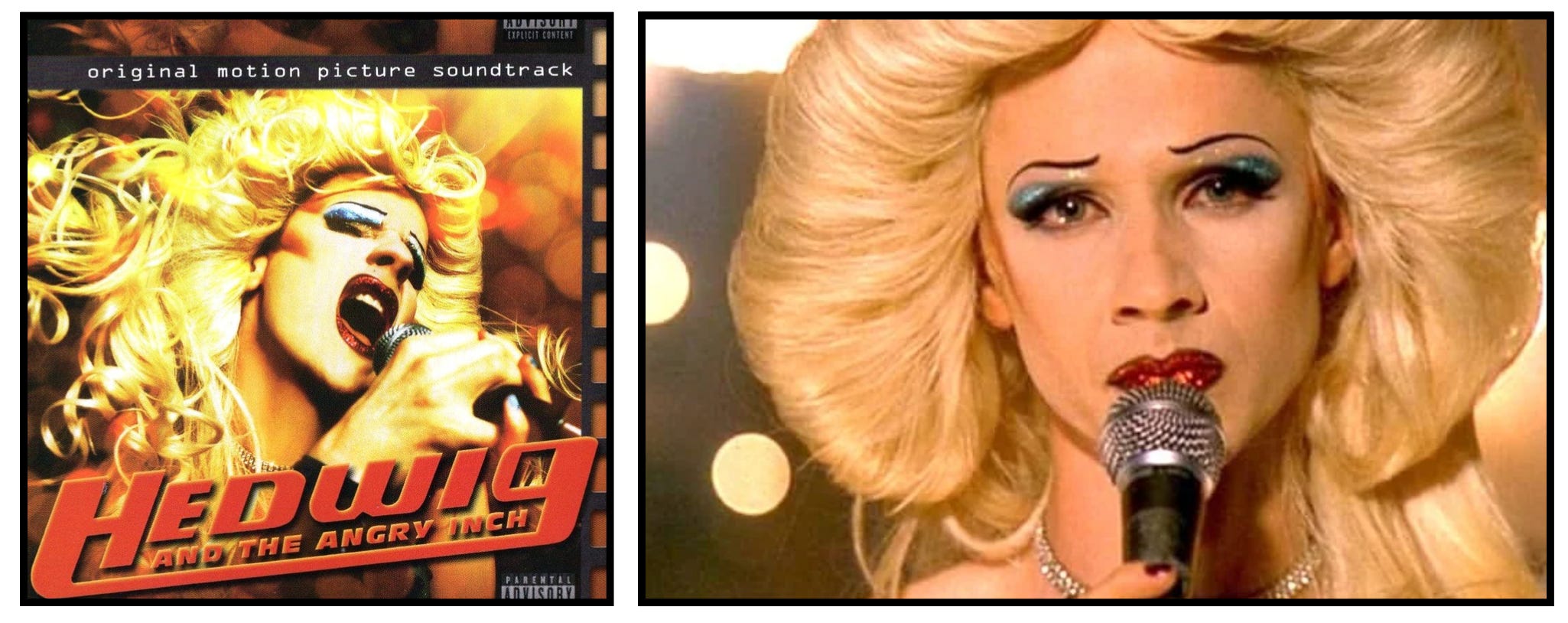
The Story: Adapted from the original stage musical created by Stephen Trask, John Cameron Mitchell directs and stars as Hedwig, an East German rock singer who fell in love with an American G.I. and underwent a botched gender-affirming surgery in order to marry the G.I. and flee to America with him. As the film begins, Hedwig shares her life story through a series of concerts at Bilgewater’s seafood restaurants.
Why the Soundtrack Rocks: Stephen Trask’s music, influenced by glam rock and power pop, is notable in the way it combines vulnerability, emotion, and storytelling with the high energy of rock and punk. Trask uses the songs in this movie to explain Hedwig’s complicated past. The music also acts as Hedwig’s testimony to the world too. Its raw glam/punk rock sensibility, powered by a hard-driving rhythm section, allows Trask to create memorable songs that explore gender, identity and the longing, that is grounded in Hedwig’s life experience.
Key Tracks: “Angry Inch,” “The Origin of Love,” “Wicked Little Town,” and “Wig In a Box.”
5. The Idolmaker (1980)
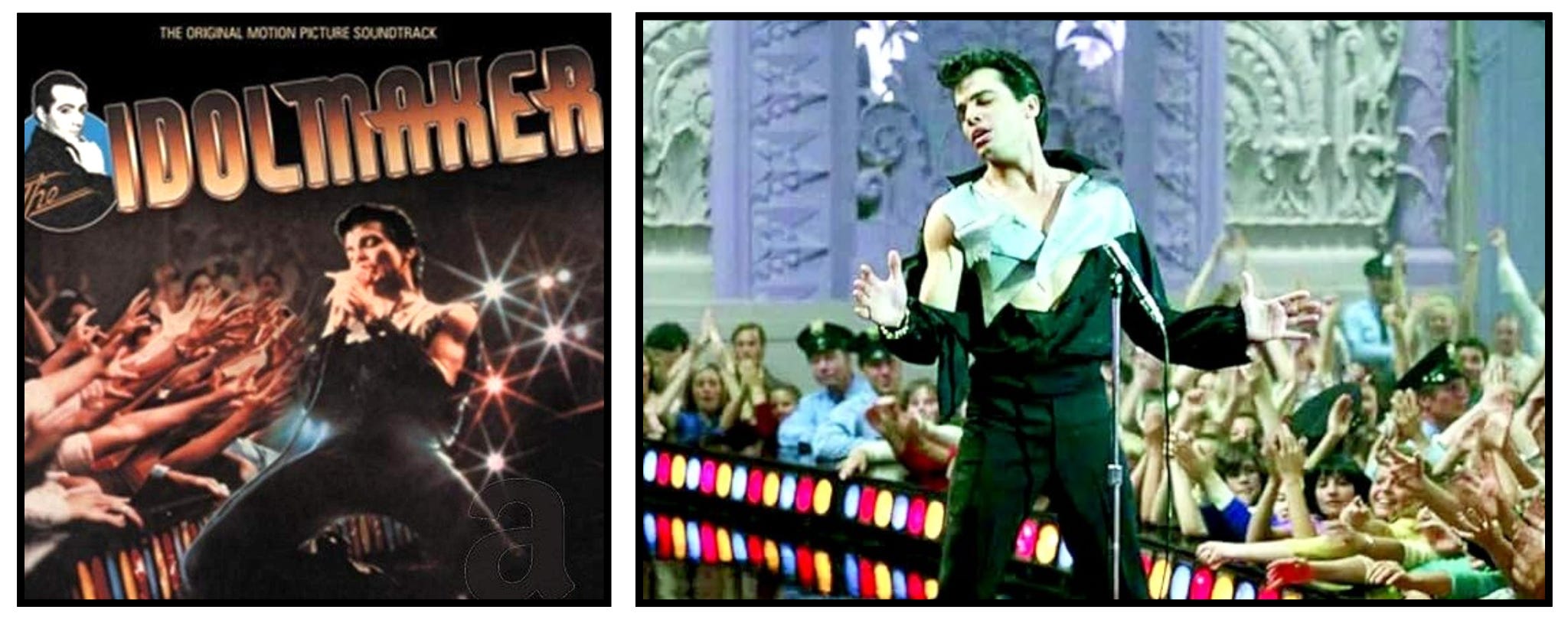
The Story: Taylor Hackford’s directorial debut stars Ray Sharkey as Vincent Vacarri, a ruthless and self-loathing talent manager who manufactures two teen idols out of untalented Brooklyn and Philadelphia kids. The film is loosely based on the real career of Bob Marcucci, who discovered and shaped Frankie Avalon and Fabian.
Why the Soundtrack Rocks: Jeff Barry, the legendary Brill Building songwriter behind “Be My Baby,” “Leader of the Pack,” and dozens of other girl-group classics, wrote a full suite of original songs for the movie that convincingly recreate the sound of early-1960s teen idol pop. The songs are so well-crafted they sound like lost hits from that time period.
Key Tracks: “Come and Get It,” “Here Is My Love,” “However Dark The Night,” and “Sweet Little Lover.”
6. Phantom of the Paradise (1974)
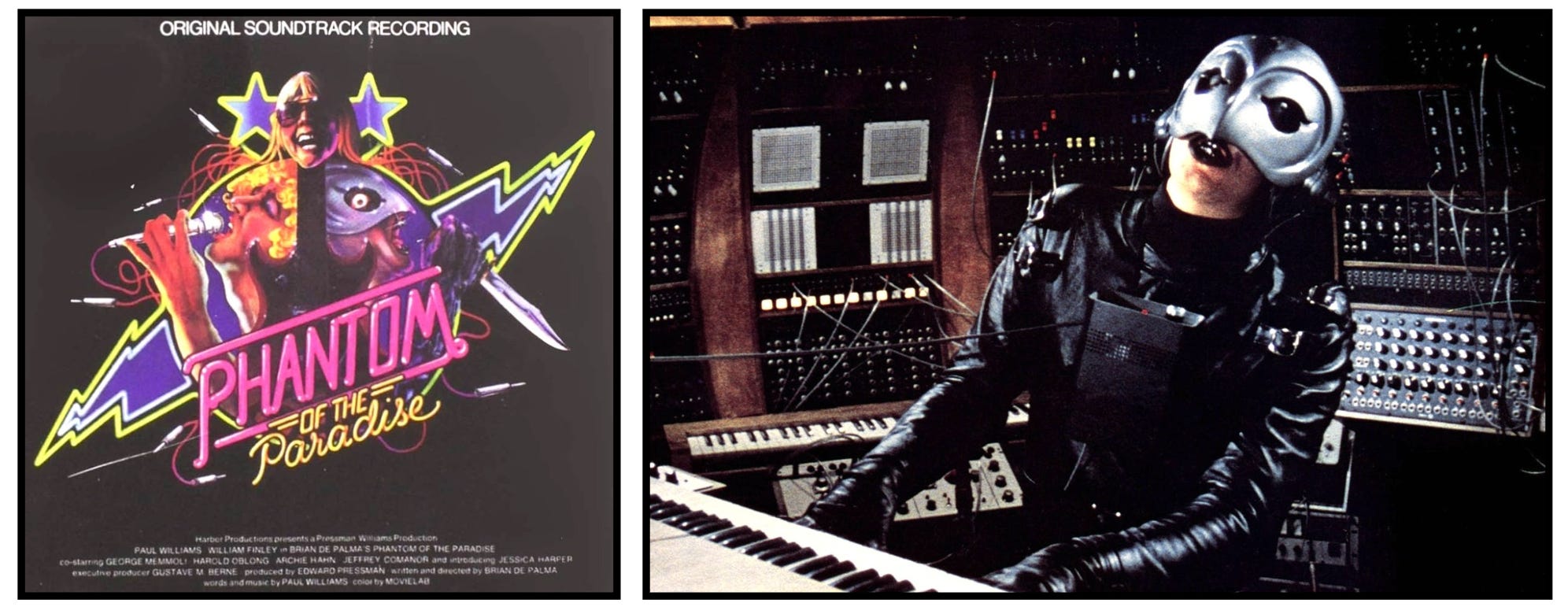
The Story: Brian De Palma’s rock opera weaves together Faust, The Phantom of the Opera, and The Picture of Dorian Gray. At the beginning of the film, a songwriter named Winslow Leach (William Finley), a talented but naive composer, has his epic rock cantata stolen by the rock music tycoon Swan (Paul Williams). After being framed, imprisoned, and horribly disfigured in a record-press accident, Winslow escapes and haunts Swan’s lavish new rock palace, “The Paradise,” wearing a silver owl mask and leather cape.
Why the Soundtrack Rocks: Paul Williams wrote every song, and the range is astonishing: Doo-wop, surf music, glam rock, and easy-listening ballads all coexist in both the film and on the soundtrack album. Williams also plays Swan, making him one of the rare songwriters to score and star in his own film. Daft Punk has cited the film and its soundtrack as a major influence on their music and the reason they wear helmets to hide their identity.
Key Tracks: “Faust,” “Old Souls,” “The Hell of It,” and “Upholstery.”
7. Rumble Fish (1983)
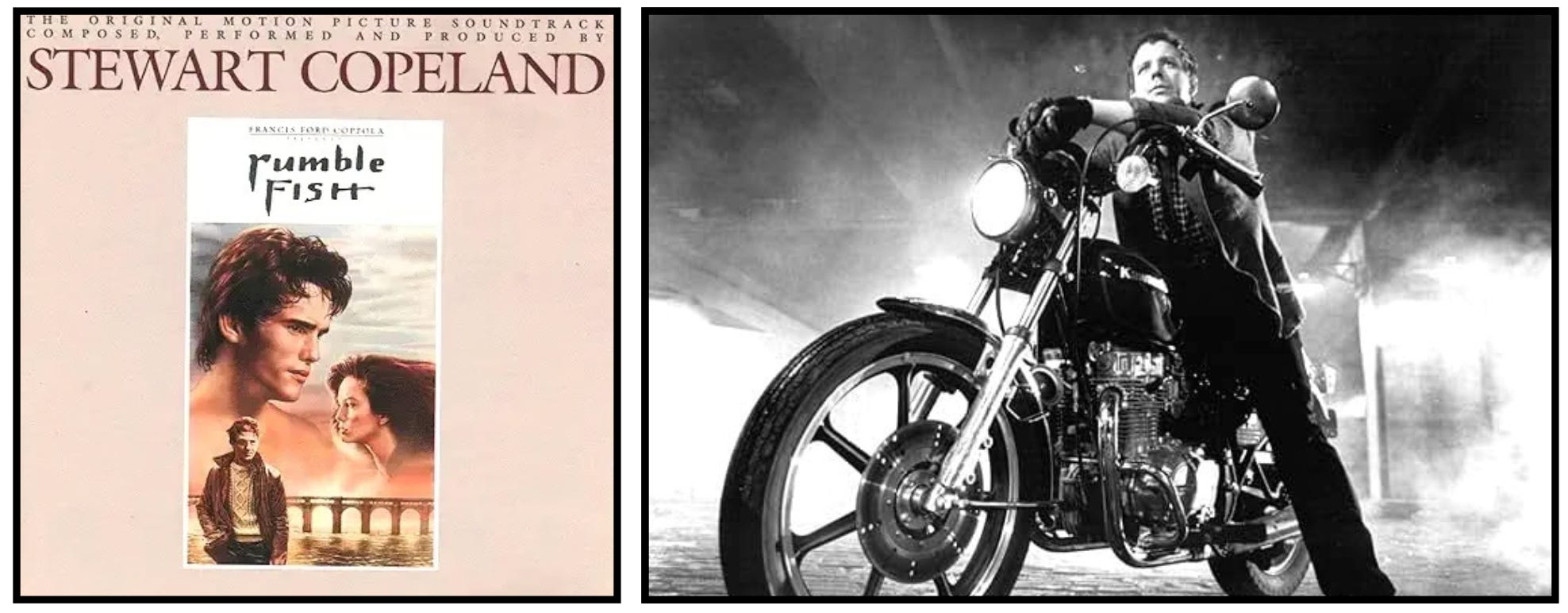
The Story: Directed by Francis Ford Coppola and adapted from a novel by S.E. Hinton, Rusty James (Matt Dillon) is a restless, street-level teenage hoodlum in Tulsa, Oklahoma. Rusty struggles to live up to the reputation of his older brother, known only as The Motorcycle Boy (Mickey Rourke). The Motorcycle Boy was once the revered leader of local street gangs, but he left town and returned disillusioned, colorblind, partially deaf, and no longer interested in the gang violence his brother worships.
After Rusty James gets suspended from school, dumped by his girlfriend Patty (Diane Lane), and lectured by his alcoholic father (Dennis Hopper), The Motorcycle Boy attempts to guide him away from his dead-end street life.
Why the Soundtrack Rocks: Stewart Copeland of The Police composed and performed the music, using percussion, synthesizers, ticking clocks, and chimes to create a score that’s as impressionistic as the film’s black-and-white cinematography. Copeland used a system he called “tick-tock music,” where mechanical clock sounds drive the rhythm, emphasizing the film’s preoccupation with time running out.
Key Tracks: “Brothers On Wheels,” “Don’t Box Me In” (featuring vocals by Stan Ridgway of Wall of Voodoo), “Our Mother Is Alive,” and “Tulsa Tango.”
8. Shock Treatment (1981)
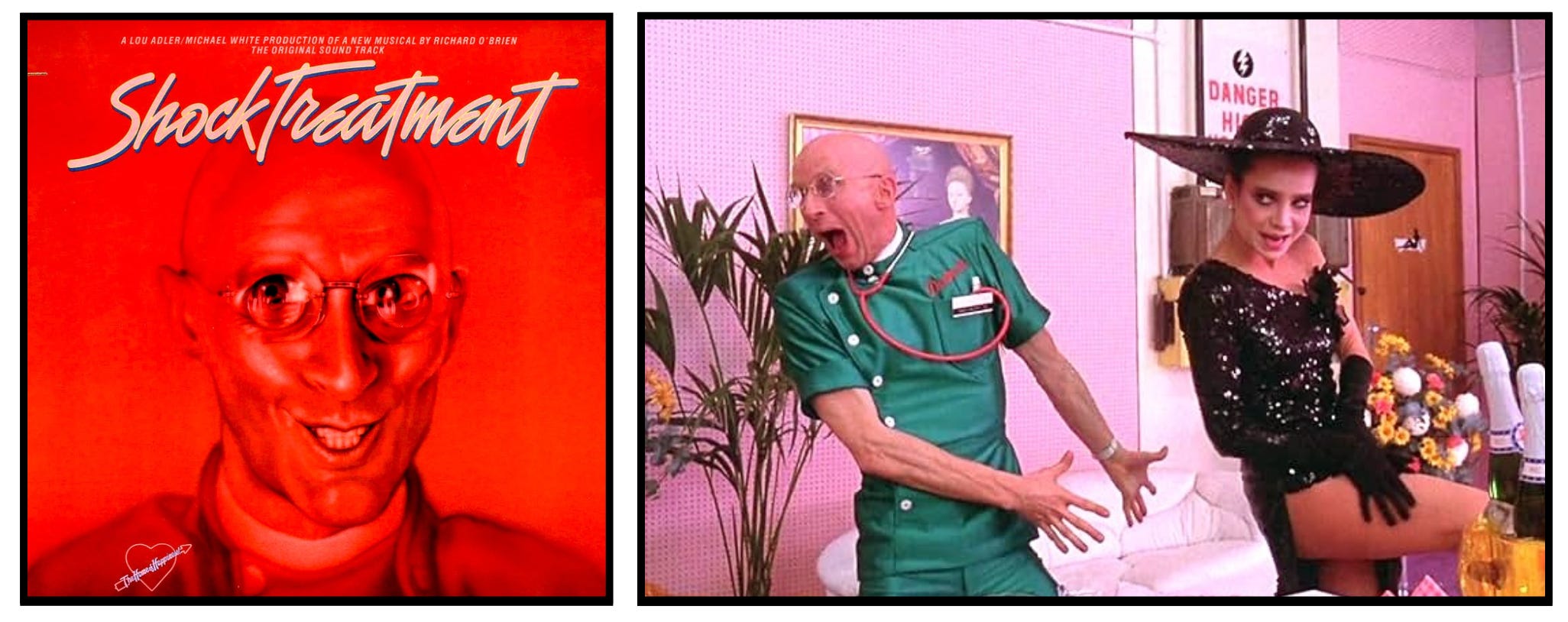
The Story: Richard O’Brien’s follow-up to The Rocky Horror Picture Show places Brad and Janet Majors (now played by Cliff De Young and Jessica Harper) on a corporate-owned television network that has taken over their hometown of Denton. Every citizen is either a game show contestant, a reality TV subject, or an audience member trapped inside a soundstage. O’Brien himself returns as the scheming doctor, Cosmo McKinley, along with some of the other Rocky Horror cast members.
Why the Soundtrack Rocks: As a composer, Richard O’Brien’s pop-rock songwriting evolved into more complex yet hummable tunes for this score, with horn arrangements and a new wave sound. The result is a tighter, more cohesive song score than Rocky Horror. It’s also a sharp satire of the Reagan-era culture wars. Even though the movie bombed at the box office, both the film and its soundtrack are a lot of fun and worth seeing.
Key Tracks: “Bitchin’ in the Kitchen,” “Denton, U.S.A.,” “Little Black Dress,” “Shock Treatment,” and “Thank God I’m a Man.”
9. Starstruck (1982)
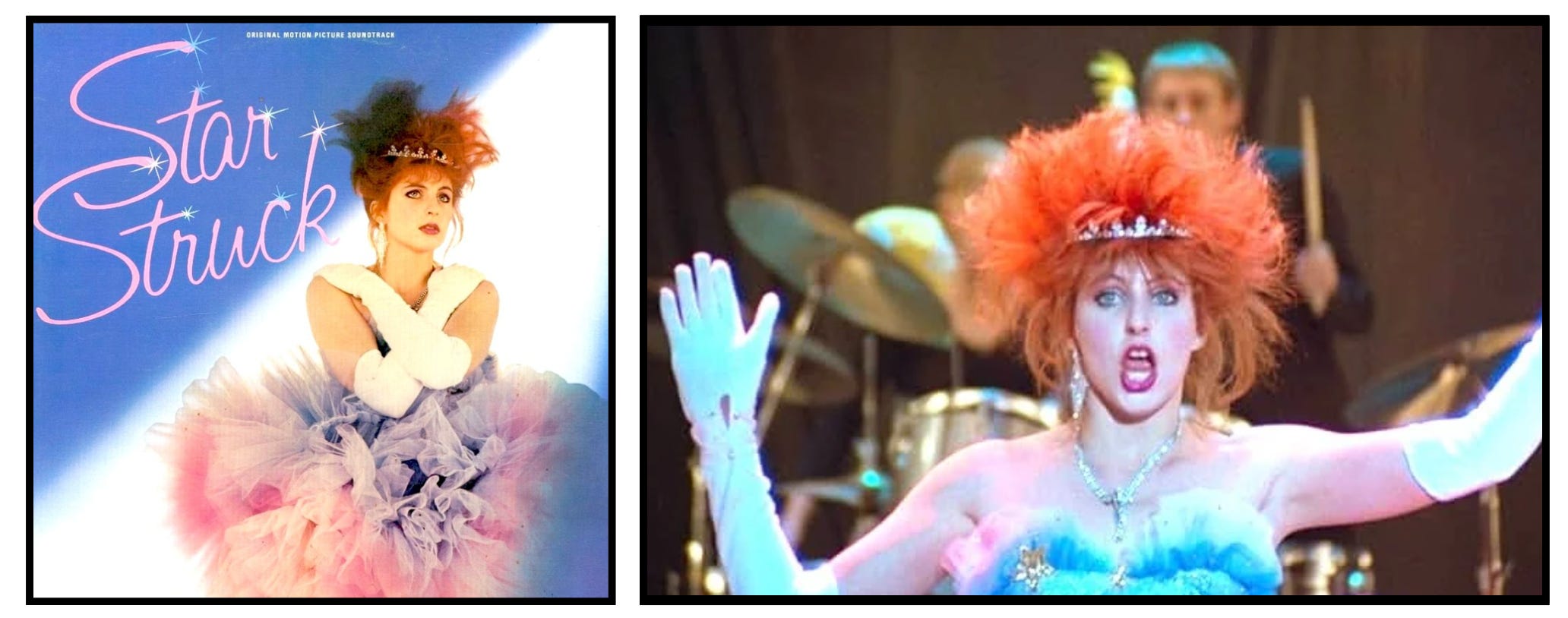
The Story: Directed by Gillian Armstrong, this vibrant 1982 Australian New Wave musical Starstruck follows Jackie Mullens (Jo Kennedy), who works as a bartender in her family’s struggling Sydney pub while dreaming of becoming a rock star. To save the pub from foreclosure and launch her career, Jackie’s ambitious 14-year-old cousin and manager, Robbie (Ross O’Donovan), orchestrates a series of wild, attention-grabbing publicity stunts across the city. Their chaotic efforts culminate in a high-stakes bid to get Jackie onto a major national television talent contest at the Sydney Opera House, turning the duo into overnight sensations.
Why the Soundtrack Rocks: Phil Judd, co-founder of Split Enz and later part of the band, The Swingers, wrote several of the songs, and Tim Finn, the other co-founder of Split Enz wrote “Body and Soul,” which became a hit single in Australia. The result is a soundtrack that retains the Enz sensibility and the first (and only) Australian new wave movie musical.
Key Tracks: “Body and Soul,” “I Want to Live in a House,” “It’s Not Enough,” “Monkey in Me,” “My Belief In You,” “Starstruck,” and “Temper Temper.”
10. Thumbsucker (2005)
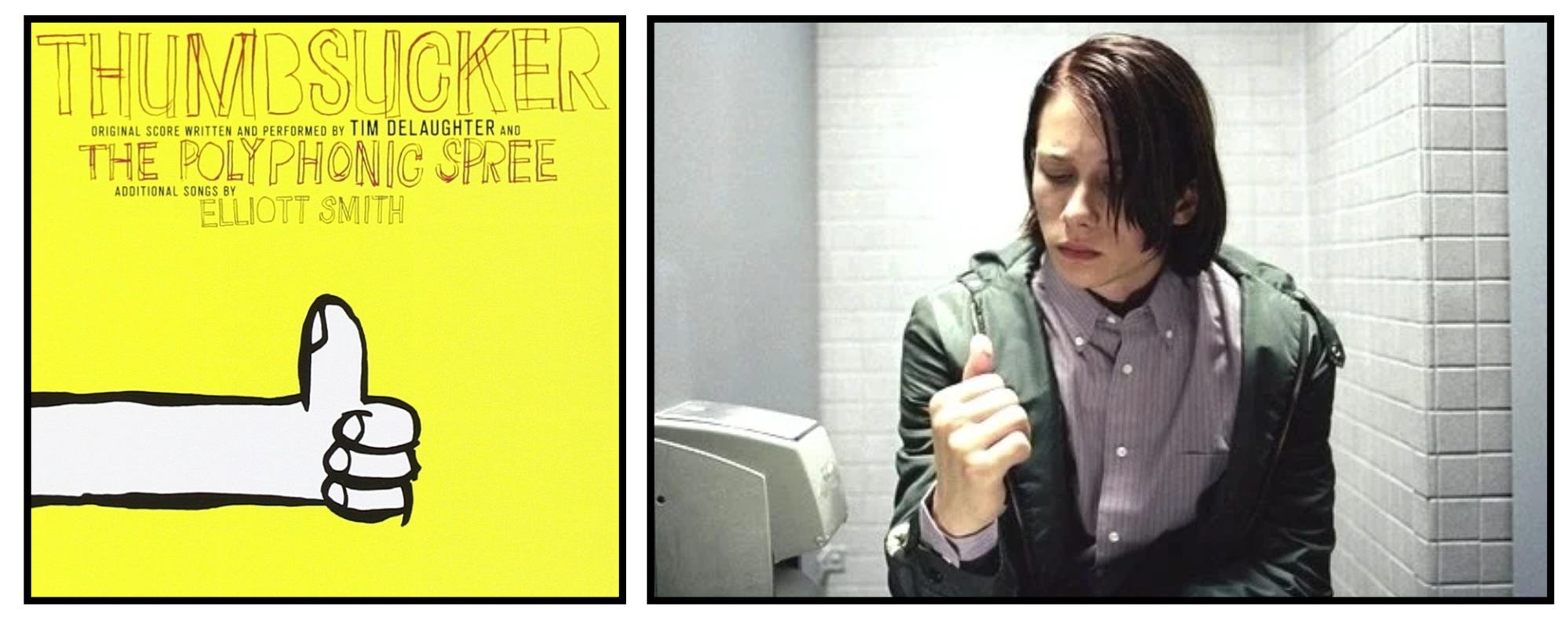
The Story: Thumbsucker (2005) is a quirky coming-of-age comedy-drama about Justin Cobb (Lou Pucci), a self-conscious 17-year-old living in Oregon who has an embarrassing secret: he still sucks his thumb in order to deal with his chronic anxiety. His mother, Audrey (Tilda Swinton), enables and coddles him, while his father (Vincent D’Onofrio), pushes him to grow up.
Desperate for a cure, Justin’s eccentric, New Age dentist (Keanu Reeves) uses hypnosis to successfully cure the thumb-sucking habit. However, this doesn’t fix Justin’s underlying anxieties. Eventually, Justin realizes that the adults in his life are just as confused and deeply insecure as he is.
Why the Soundtrack Rocks: Director Mike Mills originally chose Elliott Smith to score the entire film with a series of cover songs. Tragically, Smith committed suicide in 2003 before completing the score; in fact, he only recorded three songs: covers of Big Star’s “Thirteen” and Cat Stevens’ “Trouble,” along with an original composition, “Let’s Get Lost.” These were the last recordings Smith made before his death.
After attending a live performance of The Polyphonic Spree, director Mike Mills was impressed by their unique sound and the band’s leader Tim DeLaughter’s compositions. Shortly afterwards, Mills asked DeLaughter to step in and finish the score.
By retaining Elliott Smith’s acoustic tracks and augmenting them with Tim DeLaughter’s score (performed by his band, The Polyphonic Spree), the contrast in musical styles on the soundtrack effectively captures the ups and downs of being 17.
Key Tracks: “Acceptance,” “It Ends With a Fall,” and “Move Away and Shine” by Tim DeLaughter and performed by The Polyphonic Spree; and “Let’s Get Lost,” “Thirteen,” and “Trouble,” by Elliott Smith.
Bonus Selection: Electra Glide in Blue (1973)
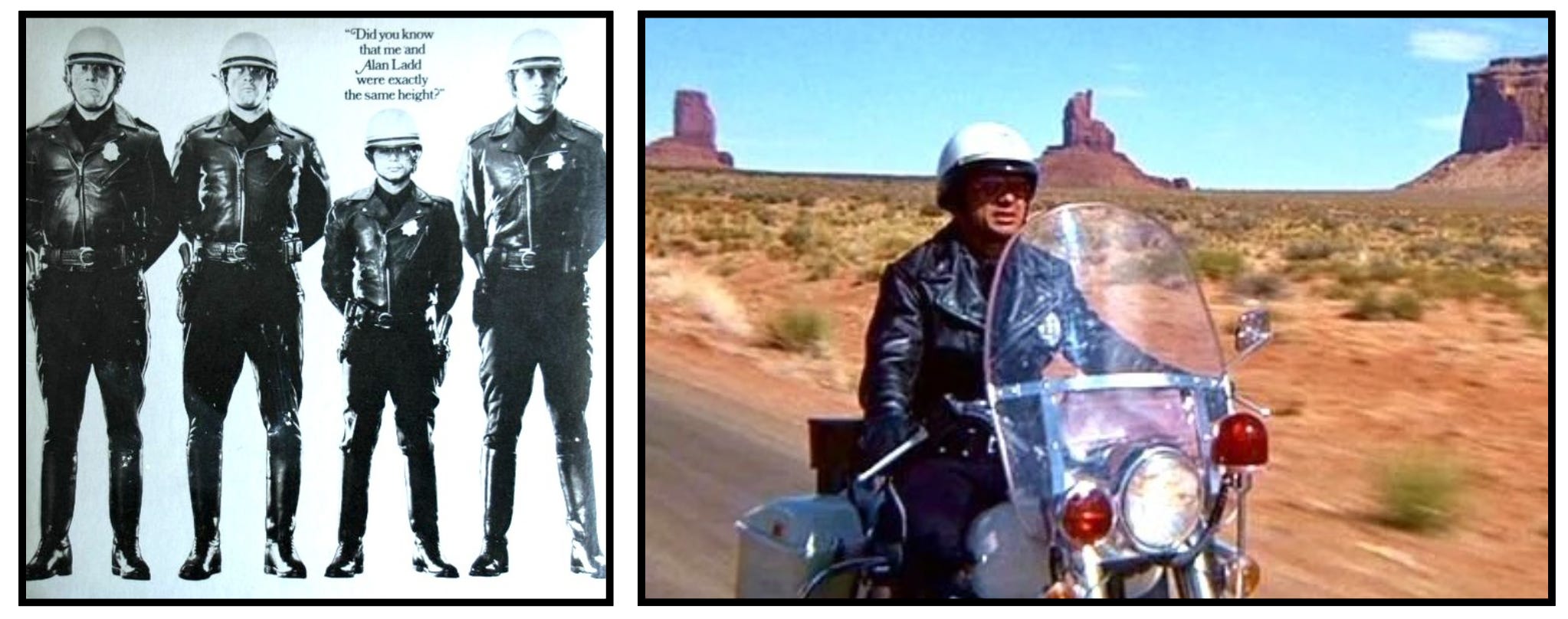
The Story: Electra Glide in Blue is a Neo-noir police drama directed James William Guercio (he produced many albums by the band, Chicago) that’s the exact opposite of the counterculture idealism found in Easy Rider.
The film is about John Wintergreen (Robert Blake), a short Arizona motorcycle patrolman who dreams of escaping the monotony of traffic enforcement to join the homicide division. When Wintergreen’s intuition helps him uncover a murder that everyone else has dismissed as a suicide, he earns his promotion. However, not long afterwards, Wintergreen becomes disillusioned by his new colleagues’ corruption, brutality, and lack of morals, and eventually finds himself at odds with his fellow policemen with devastating results.
One of the most subversive and nihilistic films of the 1970s, Electra Glide in Blue features a great performance by Robert Blake and evocative cinematography by Conrad Hall that contrasts the beauty of the American Southwest with the bleakness of Wintergreen’s life.
Why The Soundtrack Rocks: In addition to directing the film, writer/director James William Guercio also composed the score and produced the soundtrack album. The score blends a wide range of contrasting music styles together including psychedelic rock, country, and jazz funk with a more traditional orchestral score. The result is an excellent collection of music that Guercio expertly pairs with the images on the screen to show the contrast between the daily life of police work with the stark beauty of the Arizona desert.
Although the band Chicago didn’t officially participate on the soundtrack, Terry Kath, James Pankow, and Lee Loughnane made significant contributions to the score, by playing on the orchestral tracks. Kath also contributed many fine vocal performances, especially on the song, “Tell Me,” which was used to accompany cinematographer Conrad Hall’s acclaimed three and a half minute slow pullback shot which ends the movie.
Key Tracks: “The Chase,” “Overture,” “Prelude,” and “Tell Me,” (featuring vocals by Terry Kath).
Final Thoughts
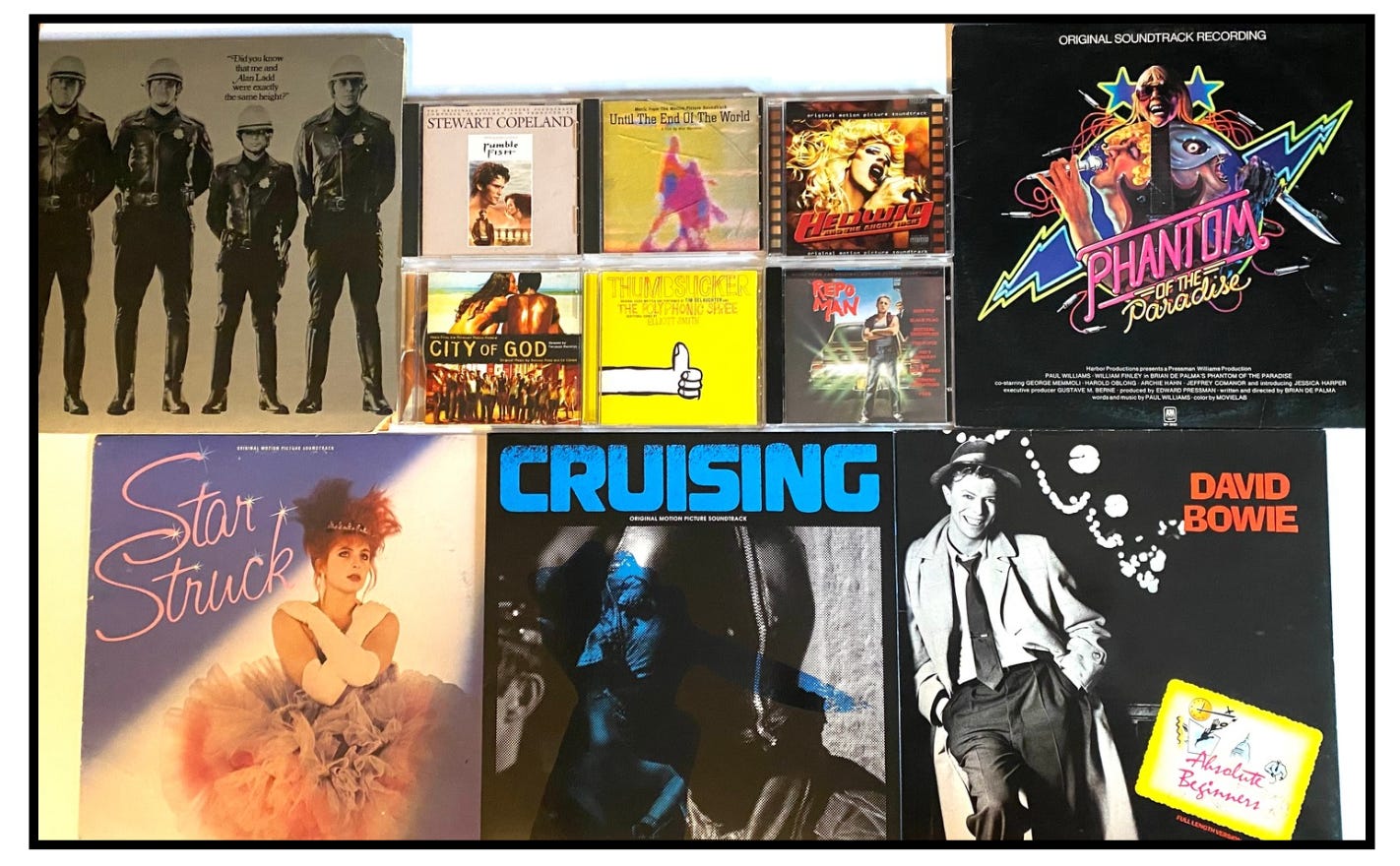
There’s no shortage of famous rock movie soundtracks that everybody already agrees are classics. This list was never about those. The titles above are the ones I actually keep reaching for, the deep cuts that have been in heavy rotation for me for years, and most of them never got a fraction of the credit they earned.
If you only track down one of them, make it Until The End of the World. I’ll go to the mat for that one.
So now I want to hear from you. Which of these are already in your rotation, and which one do you think I got completely wrong?
And the big question: what great obscure rock soundtrack did I leave off the list?
Drop it in the comments. Thanks for reading!
If you enjoyed this article, you might like these other ones too:


I found Neil Young’s soundtrack for Dead Man quite good—haunting.
I saw Phantom of the Paradise in the theater when I was in high school. I loved it, but felt I was the only person who had seen it. Years later I watched it on HS fully expecting it to be terrible, something only a teenage boy in Ohio would find exciting. But it has worn very well. It’s an excellent film with a great score.